
I recently submitted my PhD dissertation titled "Illiberalism Beyond Borders. Dissecting Russian and Turkish External Influence in Bosnia and Georgia" at @FU_Berlin. Interested in what I found? Read this thread ⬇️

More from Science

1. I find it remarkable that some medics and scientists aren’t raising their voices to make children as safe as possible. The comment about children being less infectious than adults is unsupported by evidence.
2. @c_drosten has talked about this extensively and @dgurdasani1 and @DrZoeHyde have repeatedly pointed out flaws in the studies which have purported to show this. Now for the other assertion: children are very rarely ill with COVID19.
3. Children seem to suffer less with acute illness, but we have no idea of the long-term impact of infection. We do know #LongCovid affects some children. @LongCovidKids now speaks for 1,500 children struggling with a wide range of long-term symptoms.
4. 1,500 children whose parents found a small campaign group. How many more are out there? We don’t know. ONS data suggests there might be many, but the issue hasn’t been studied sufficiently well or long enough for a definitive answer.
5. Some people have talked about #COVID19 being this generation’s Polio. According to US CDC, Polio resulted in inapparent infection in more than 99% of people. Severe disease occurred in a tiny fraction of those infected. Source:
I find it remarkable that a section of society not rejoicing that children very rarely ill with COVID compared to other viruses and much less infectious than adults
— Michael Absoud \U0001f499 (@MAbsoud) February 12, 2021
Instead trying prove the opposite!
Why??
2. @c_drosten has talked about this extensively and @dgurdasani1 and @DrZoeHyde have repeatedly pointed out flaws in the studies which have purported to show this. Now for the other assertion: children are very rarely ill with COVID19.
3. Children seem to suffer less with acute illness, but we have no idea of the long-term impact of infection. We do know #LongCovid affects some children. @LongCovidKids now speaks for 1,500 children struggling with a wide range of long-term symptoms.
4. 1,500 children whose parents found a small campaign group. How many more are out there? We don’t know. ONS data suggests there might be many, but the issue hasn’t been studied sufficiently well or long enough for a definitive answer.
5. Some people have talked about #COVID19 being this generation’s Polio. According to US CDC, Polio resulted in inapparent infection in more than 99% of people. Severe disease occurred in a tiny fraction of those infected. Source:

💥and so it begins..💥
It's time, my friends 🤩🤩
[Thread] #ProjectOdin
https://t.co/fO90N78fta
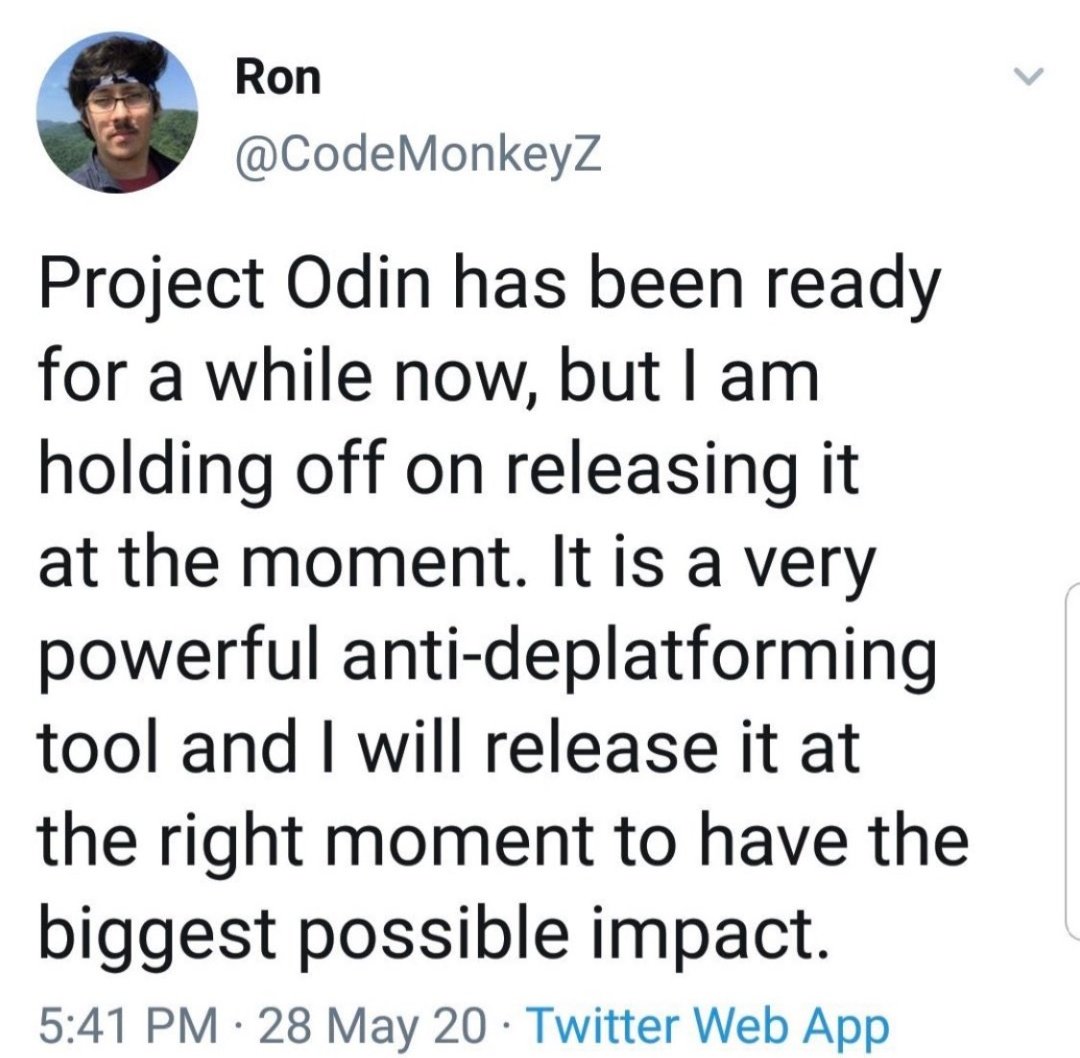
new quantum-based internet #ElonMusk #QVS #QFS
Political justification ⏬⏬
#ProjectOdin
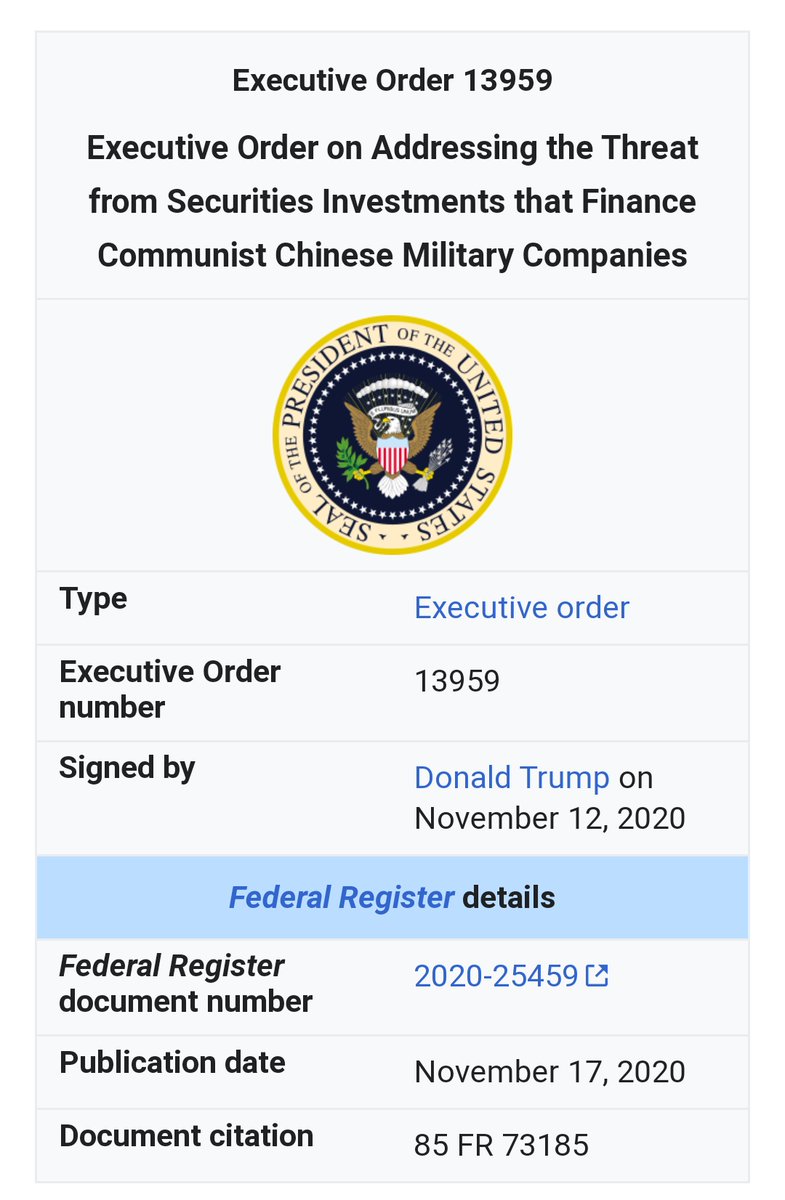
#ProjectOdin #Starlink #ElonMusk #QuantumInternet
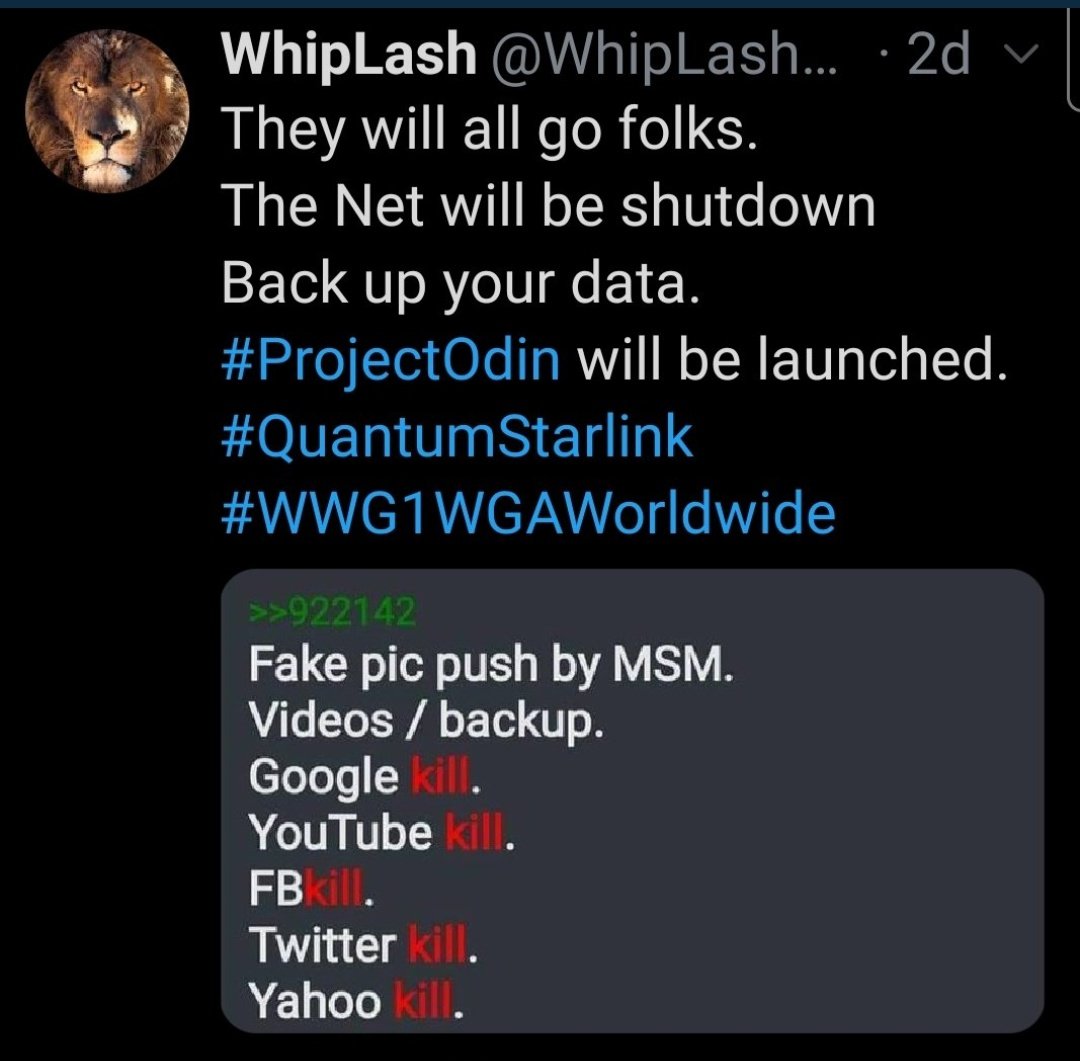
It's time, my friends 🤩🤩
[Thread] #ProjectOdin
The Alliance has Project Odin ready to go - the new quantum-based internet. #ElonMusk #QVS #QFS #ProjectOdin
— Der Preu\xdfe Parler: @DerPreusse (@DerPreusse1963) January 12, 2021
https://t.co/fO90N78fta
new quantum-based internet #ElonMusk #QVS #QFS
Political justification ⏬⏬
#ProjectOdin
#ProjectOdin #Starlink #ElonMusk #QuantumInternet


So it turns out that an organization I thought was doing good work, the False Memory Syndrome Foundation (associated with Center for Inquiry, James Randi, and Martin Gardner) was actually caping for pedophiles. Uhhhh oops?
Since this, bizarrely, turned out to be one of my longest videos ever (??) here's a quick thread to sum it up for those of you like myself with short attention spans. 1/10
In the '90s the False Memory Syndrome Foundation was founded to call attention to the problem of adults suddenly "remembering" child abuse that never actually happened, often under hypnosis. Skeptics like James Randi & Martin Gardner joined their board. 2/10
A new article reveals that the FMSF was founded by parents who had been credibly and PRIVATELY accused of molestation by their now-adult daughter. They publicized the accusation, destroyed the daughter's reputation, and started the foundation. 3/10
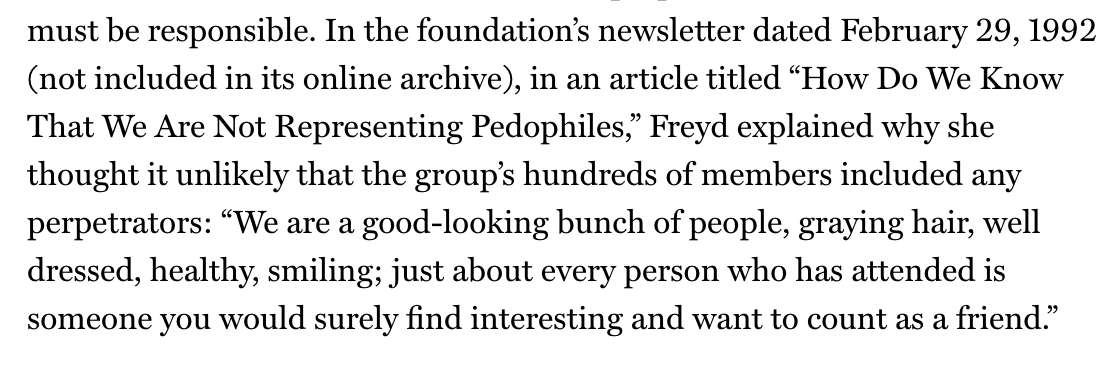
The FMSF assumed any accused pedo who joined was innocent, saying "We are a good-looking bunch of people, graying hair, well dressed, healthy, smiling; just about every person who has attended is someone you would surely find interesting and want to count as a friend" 😬 4/10
I was Wrong about False Memories: Satanic Panic, Pedophiles, Ted Bundy, and the Lost in the Mall Studies https://t.co/6XKTfGOqwl
— skepchicks (@skepchicks) January 15, 2021
Since this, bizarrely, turned out to be one of my longest videos ever (??) here's a quick thread to sum it up for those of you like myself with short attention spans. 1/10
In the '90s the False Memory Syndrome Foundation was founded to call attention to the problem of adults suddenly "remembering" child abuse that never actually happened, often under hypnosis. Skeptics like James Randi & Martin Gardner joined their board. 2/10
A new article reveals that the FMSF was founded by parents who had been credibly and PRIVATELY accused of molestation by their now-adult daughter. They publicized the accusation, destroyed the daughter's reputation, and started the foundation. 3/10
The FMSF assumed any accused pedo who joined was innocent, saying "We are a good-looking bunch of people, graying hair, well dressed, healthy, smiling; just about every person who has attended is someone you would surely find interesting and want to count as a friend" 😬 4/10

"The new answer to a 77-year-old problem"
😭
https://t.co/hm9NoaU4nr
https://t.co/8fKDiKjSWc
https://t.co/jkaicC1F2x
https://t.co/PpxWT4Jef4
😭
The new answer to a 77-year-old problem in data analysis, published today in @naturemethods. Instead of significance tests, use estimation graphics. Our software suite DABEST makes it easy for everyone to visualize effect sizes.https://t.co/UzwXJ7EUC5 pic.twitter.com/VtxyY0xaRM
— Adam Claridge-Chang (@adamcchang) June 19, 2019
https://t.co/hm9NoaU4nr
Open letter to journal editors: dynamite plots must die. Dynamite plots, also known as bar and line graphs, hide important information. Editors should require authors to show readers the data and avoid these plots. https://t.co/0GNKEIUCJL pic.twitter.com/OS9ytEFRZN
— Rafael Irizarry (@rafalab) February 22, 2019
https://t.co/8fKDiKjSWc
Couldn't find D3 code for grouped horisontal box plots that show data points so I made this @mbostock @thisisalfie https://t.co/cQjDPhyZdw pic.twitter.com/y6RNmDB2p3
— Ulrik Lyngs (@ulyngs) June 28, 2017
https://t.co/jkaicC1F2x
made a pkg for pirate plots in ggplot: add any of points/means/bars/CIs/violins \u2013 better than ye olde bar/box plotshttps://t.co/Z2m2kW3hsl pic.twitter.com/npAirPQexM
— Mika Braginsky (@mbraginsky) September 28, 2017
https://t.co/PpxWT4Jef4
See the new #PowerBI visual awesomeness for data points & sources, box-&-whisker plots! https://t.co/dOmgoxWfDE pic.twitter.com/HAUOAMJEJW
— Microsoft Power BI (@MSPowerBI) February 1, 2016
You May Also Like









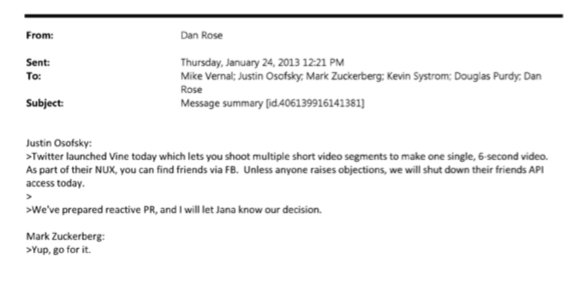
BREAKING: @CommonsCMS @DamianCollins just released previously sealed #Six4Three @Facebook documents:
Some random interesting tidbits:
1) Zuck approves shutting down platform API access for Twitter's when Vine is released #competition
2) Facebook engineered ways to access user's call history w/o alerting users:
Team considered access to call history considered 'high PR risk' but 'growth team will charge ahead'. @Facebook created upgrade path to access data w/o subjecting users to Android permissions dialogue.
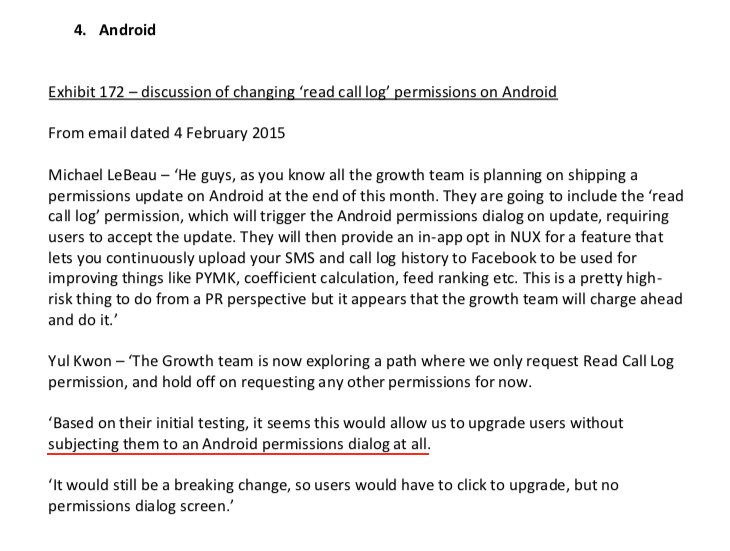
3) The above also confirms @kashhill and other's suspicion that call history was used to improve PYMK (People You May Know) suggestions and newsfeed rankings.
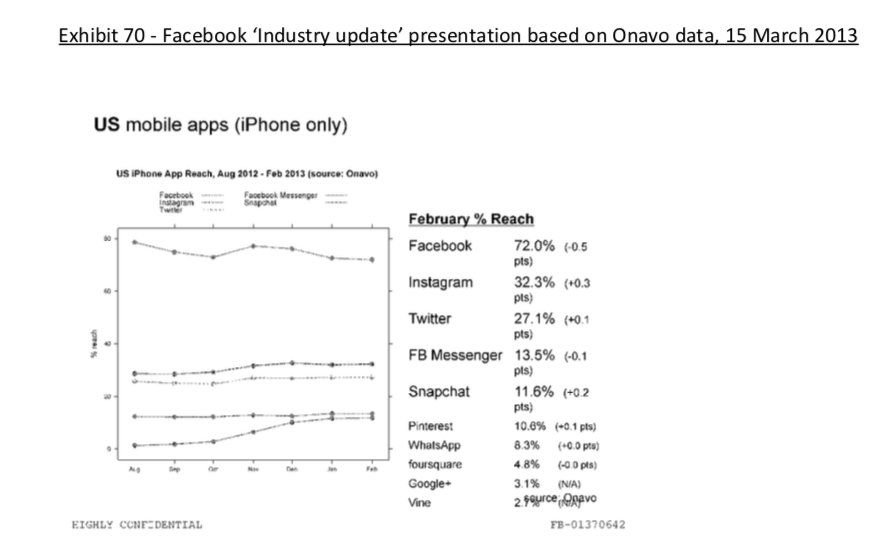
4) Docs also shed more light into @dseetharaman's story on @Facebook monitoring users' @Onavo VPN activity to determine what competitors to mimic or acquire in 2013.
https://t.co/PwiRIL3v9x
Some random interesting tidbits:
1) Zuck approves shutting down platform API access for Twitter's when Vine is released #competition
2) Facebook engineered ways to access user's call history w/o alerting users:
Team considered access to call history considered 'high PR risk' but 'growth team will charge ahead'. @Facebook created upgrade path to access data w/o subjecting users to Android permissions dialogue.
3) The above also confirms @kashhill and other's suspicion that call history was used to improve PYMK (People You May Know) suggestions and newsfeed rankings.
4) Docs also shed more light into @dseetharaman's story on @Facebook monitoring users' @Onavo VPN activity to determine what competitors to mimic or acquire in 2013.
https://t.co/PwiRIL3v9x