Folks asked about my reverse outline process so here's a thread..
Simple concept, go through each substantive chapter & log the topic of each paragraph in one line. I do this by hand on a legal pad, so the description has to be super brief. 1/
#SocAF #PhDChat #AcademicChatter
Reverse outlined my book manuscript today...highly recommend doing this for any manuscript. It allows you to see things you might not see otherwise and really consider the organization. #SocAF #AcademicChatter #PhDChat
— Brittany P. Battle, PhD (@Dr_B_Pearl) November 1, 2020


More from Science




Epic thread incoming:
I'm going to answer the question so many people have been asking this week:
WHAT IS PROJECT X???
Here's the definitive thread to tell you - and show you -precisely what Project X is
Grab a drink, sit down with me and let's #TalkLiberation
<3
1/?
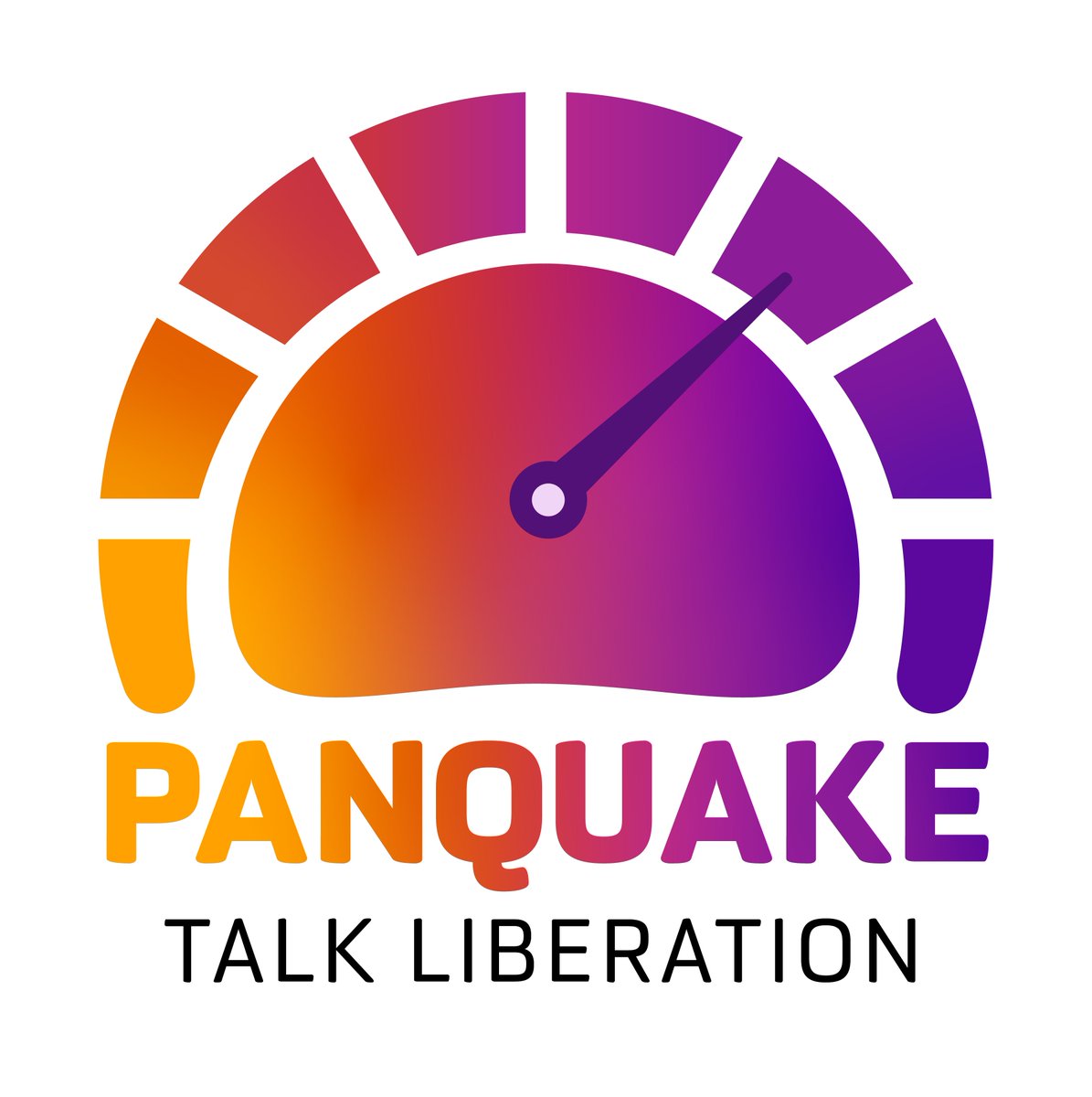
"Project X" is actually called "PanQuake".
Pan means "all". Quake is the huge effect our voices can have when our communications are uncensored and when we have access to brand new functionality that *enhances* our social reach, rather than diminishes it
Here's our logo:
2/?
You can follow the fledgling official PanQuake Twitter account here: @pan_quake and see our super cool new website here: https://t.co/F7wLSeM6aK
You can find our donation page here: https://t.co/VICFnsR0RX
Keep reading this thread to find out why we created it & what it is
3/?
SPOILER ALERT: Much of the content below this point is from my personal slides & speech notes from today's launch event. That stream got totally ruined by (big) tech problems, but I'm happy to report everything is turning out wonderfully
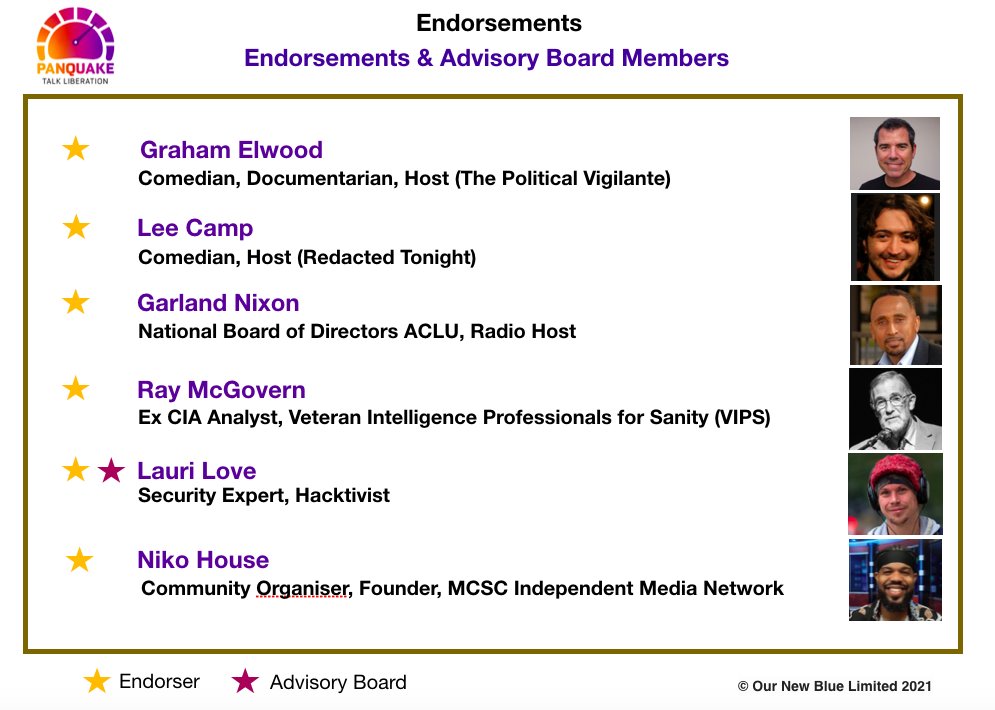
Here are some of our most high profile & dedicated public advocates for PanQuake - many of whom were scheduled to appear at our launch. All of whom stuck around for hours, to do a prerecord of the event, which is being edited, processed & uploaded for you as I write this.
5/?
I'm going to answer the question so many people have been asking this week:
WHAT IS PROJECT X???
Here's the definitive thread to tell you - and show you -precisely what Project X is
Grab a drink, sit down with me and let's #TalkLiberation
<3
1/?
"Project X" is actually called "PanQuake".
Pan means "all". Quake is the huge effect our voices can have when our communications are uncensored and when we have access to brand new functionality that *enhances* our social reach, rather than diminishes it
Here's our logo:
2/?
You can follow the fledgling official PanQuake Twitter account here: @pan_quake and see our super cool new website here: https://t.co/F7wLSeM6aK
You can find our donation page here: https://t.co/VICFnsR0RX
Keep reading this thread to find out why we created it & what it is
3/?
SPOILER ALERT: Much of the content below this point is from my personal slides & speech notes from today's launch event. That stream got totally ruined by (big) tech problems, but I'm happy to report everything is turning out wonderfully
Not one single team member or guest left. We are all still here, smiling not crying, as we record this event and will get it out to you all very soon :)
— Suzie Dawson (@Suzi3D) January 17, 2021
I'm so proud of everyone, what an amazing crewhttps://t.co/RmE0BicIXF
Here are some of our most high profile & dedicated public advocates for PanQuake - many of whom were scheduled to appear at our launch. All of whom stuck around for hours, to do a prerecord of the event, which is being edited, processed & uploaded for you as I write this.
5/?

You May Also Like


@franciscodeasis https://t.co/OuQaBRFPu7
Unfortunately the "This work includes the identification of viral sequences in bat samples, and has resulted in the isolation of three bat SARS-related coronaviruses that are now used as reagents to test therapeutics and vaccines." were BEFORE the

chimeric infectious clone grants were there.https://t.co/DAArwFkz6v is in 2017, Rs4231.
https://t.co/UgXygDjYbW is in 2016, RsSHC014 and RsWIV16.
https://t.co/krO69CsJ94 is in 2013, RsWIV1. notice that this is before the beginning of the project
starting in 2016. Also remember that they told about only 3 isolates/live viruses. RsSHC014 is a live infectious clone that is just as alive as those other "Isolates".
P.D. somehow is able to use funds that he have yet recieved yet, and send results and sequences from late 2019 back in time into 2015,2013 and 2016!
https://t.co/4wC7k1Lh54 Ref 3: Why ALL your pangolin samples were PCR negative? to avoid deep sequencing and accidentally reveal Paguma Larvata and Oryctolagus Cuniculus?
Unfortunately the "This work includes the identification of viral sequences in bat samples, and has resulted in the isolation of three bat SARS-related coronaviruses that are now used as reagents to test therapeutics and vaccines." were BEFORE the
chimeric infectious clone grants were there.https://t.co/DAArwFkz6v is in 2017, Rs4231.
https://t.co/UgXygDjYbW is in 2016, RsSHC014 and RsWIV16.
https://t.co/krO69CsJ94 is in 2013, RsWIV1. notice that this is before the beginning of the project
starting in 2016. Also remember that they told about only 3 isolates/live viruses. RsSHC014 is a live infectious clone that is just as alive as those other "Isolates".
P.D. somehow is able to use funds that he have yet recieved yet, and send results and sequences from late 2019 back in time into 2015,2013 and 2016!
https://t.co/4wC7k1Lh54 Ref 3: Why ALL your pangolin samples were PCR negative? to avoid deep sequencing and accidentally reveal Paguma Larvata and Oryctolagus Cuniculus?

The entire discussion around Facebook’s disclosures of what happened in 2016 is very frustrating. No exec stopped any investigations, but there were a lot of heated discussions about what to publish and when.
In the spring and summer of 2016, as reported by the Times, activity we traced to GRU was reported to the FBI. This was the standard model of interaction companies used for nation-state attacks against likely US targeted.
In the Spring of 2017, after a deep dive into the Fake News phenomena, the security team wanted to publish an update that covered what we had learned. At this point, we didn’t have any advertising content or the big IRA cluster, but we did know about the GRU model.
This report when through dozens of edits as different equities were represented. I did not have any meetings with Sheryl on the paper, but I can’t speak to whether she was in the loop with my higher-ups.
In the end, the difficult question of attribution was settled by us pointing to the DNI report instead of saying Russia or GRU directly. In my pre-briefs with members of Congress, I made it clear that we believed this action was GRU.
The story doesn\u2019t say you were told not to... it says you did so without approval and they tried to obfuscate what you found. Is that true?
— Sarah Frier (@sarahfrier) November 15, 2018
In the spring and summer of 2016, as reported by the Times, activity we traced to GRU was reported to the FBI. This was the standard model of interaction companies used for nation-state attacks against likely US targeted.
In the Spring of 2017, after a deep dive into the Fake News phenomena, the security team wanted to publish an update that covered what we had learned. At this point, we didn’t have any advertising content or the big IRA cluster, but we did know about the GRU model.
This report when through dozens of edits as different equities were represented. I did not have any meetings with Sheryl on the paper, but I can’t speak to whether she was in the loop with my higher-ups.
In the end, the difficult question of attribution was settled by us pointing to the DNI report instead of saying Russia or GRU directly. In my pre-briefs with members of Congress, I made it clear that we believed this action was GRU.