#MadagascarFrogs
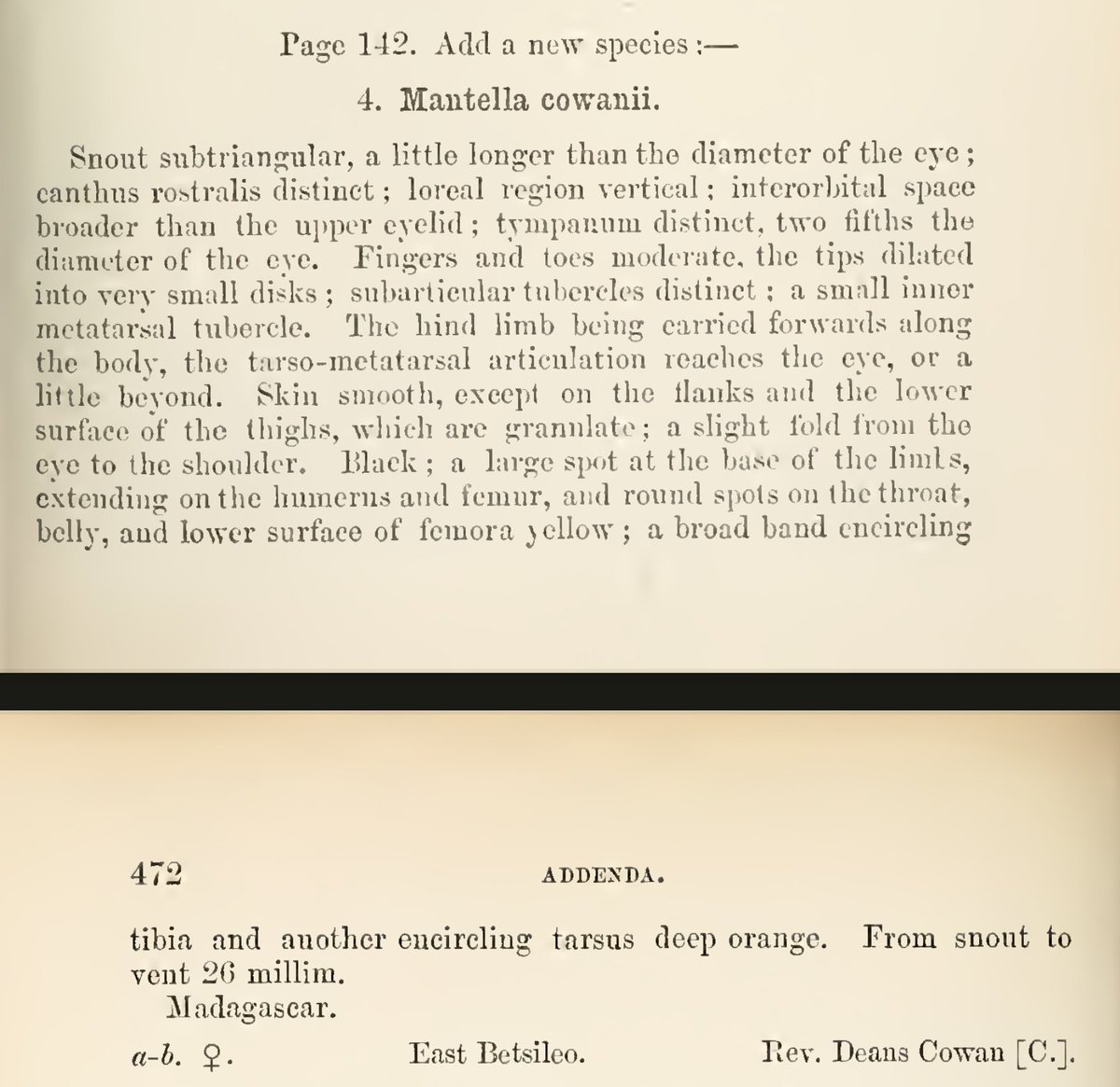
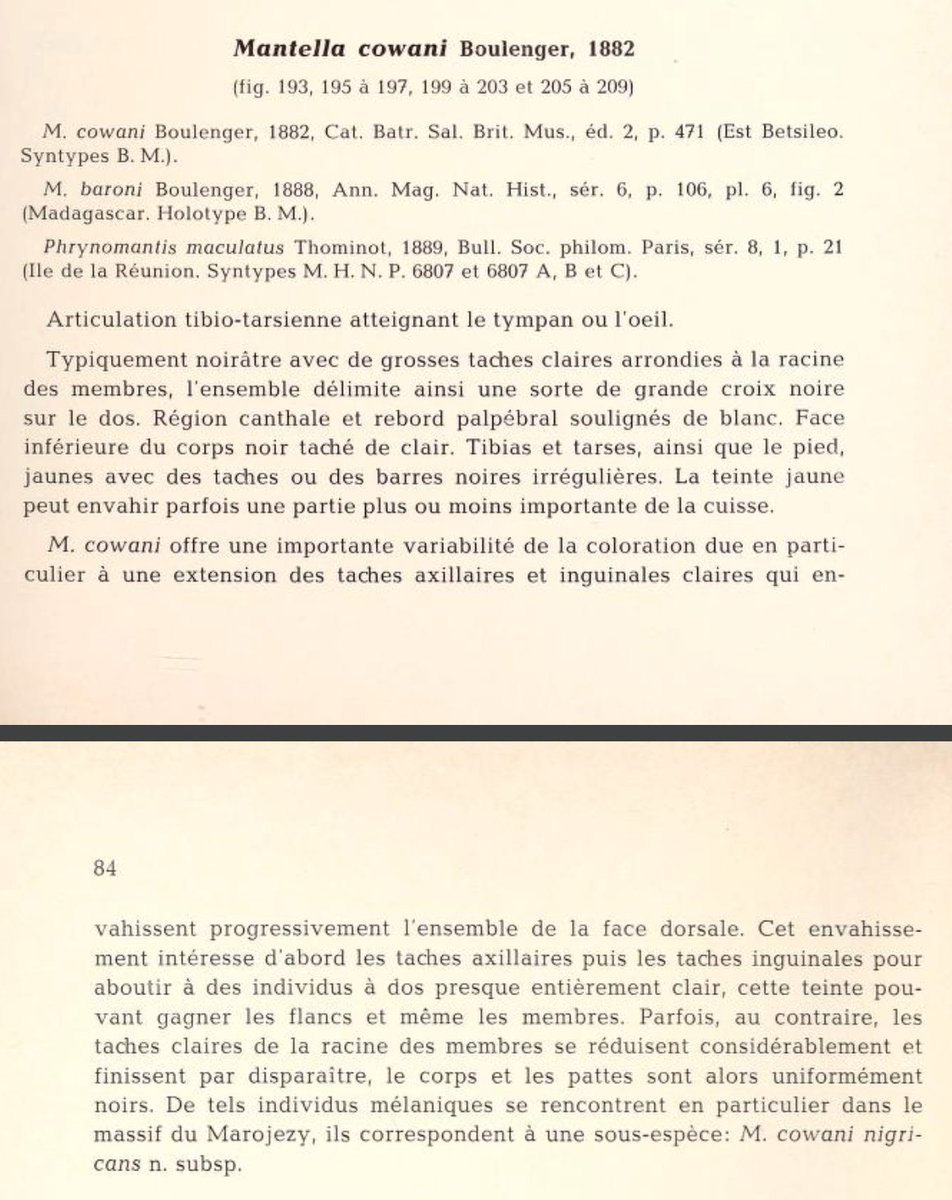
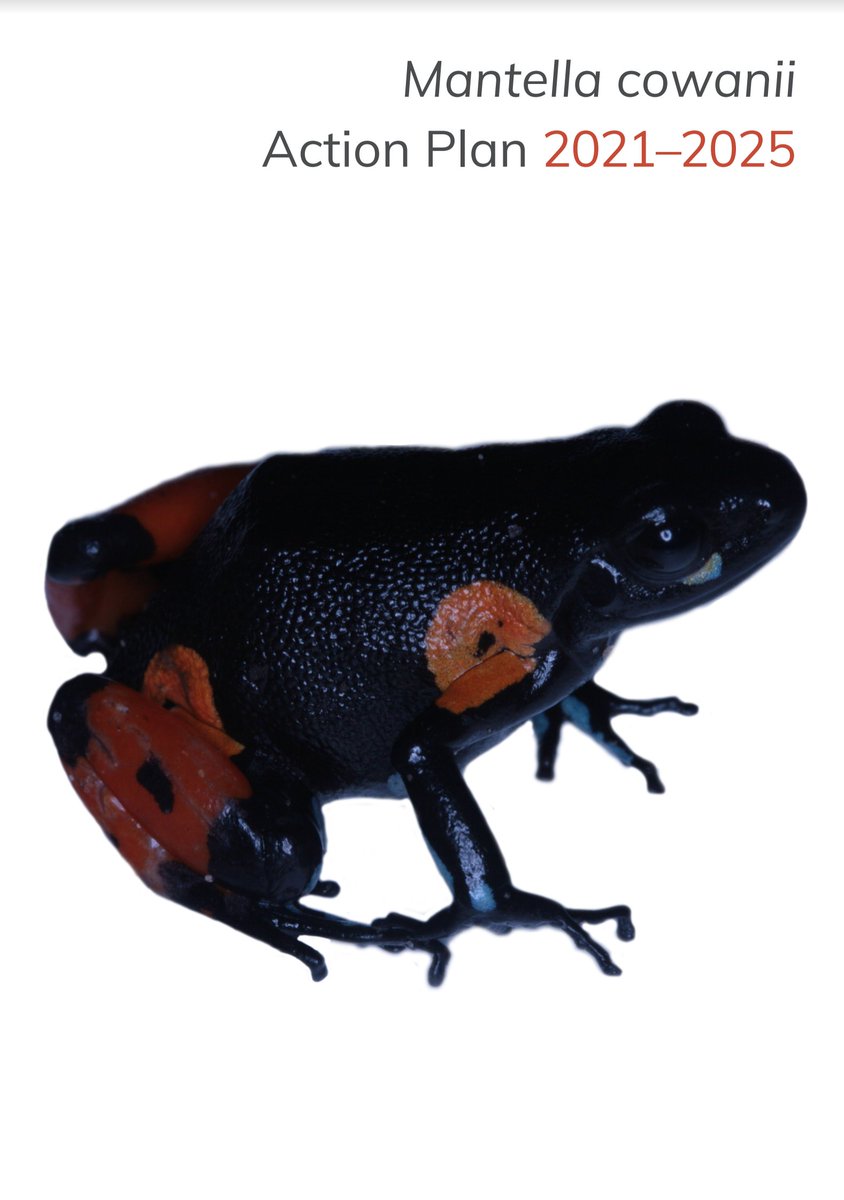
It's another stunning Malagasy #dartfrog/#poisonfrog for today's #FrogOfTheDay, #42 Mantella cowani Boulenger, 1882! A highly threatened, actively conserved and managed frog from the highlands of central #Madagascar
#MadagascarFrogs
📸D.Edmonds/CalPhotos

#MadagascarFrogs
#MadagascarFrogs
#MadagascarFrogs
https://t.co/dwaHMbrYbj
#MadagascarFrogs
📸B.Freiermuth/CalPhotos

#MadagascarFrogs
📸Mantella cowanii Action Plan, 2021–2025 (on which more below)

#MadagascarFrogs
https://t.co/VMFGZ7tP0Y
https://t.co/9uFZ7KBRzZ
https://t.co/gJXip5xMTv
#MadagascarFrogs
#MadagascarFrogs
https://t.co/SAON3F2VqF
#MadagascarFrogs
#MadagascarFrogs
https://t.co/ozm89CMSSR
More from Science





1/ Automobiles and Intake Fraction. Since cars are back in the news I thought I would retweet this model result I offered in early April 2020. I focused only on 1 micron particles & accounted for windows completely closed & cracked slightly open.
2/ Related air exchange rates were based on experimental results in literature for mid-sized sedans. Particle deposition to indoor surfaces were accounted for, as the surface to volume ratio in a 3 m3 cab is large. An important outcome was the intake fraction (IF)
3/ Here, IF is the number of particles (or virions in collective particles) inhaled by a receptor DIVIDED BY the number or particles (or virions in collective particles) emitted by an infector.
4/ Integrated over the two hour drive (in this example) the IF for all windows closed & a receptor at rest is 0.08 (8% of what comes out of the infectors respiratory system ends up in the respiratory system of the receptor). 8%! That is a very high intake factor.
5/ With additional ventilation from cracking a window open drops the IF to 0.012 (1.2%) still relatively high. Can get lower by opening more windows.
Simulation: Riding in car for 120 min w/ infected passenger who seems fine other than a cough every few mins. (1) a lot of SARS-CoV-2 virus (in fine aerosol particles) accumulation in car cabin w/ windows closed; (2) cracking window open slightly = dramatic reduction. #COVID19 pic.twitter.com/bCmrmnLUPG
— Dr. Richard Corsi (@CorsIAQ) April 4, 2020
2/ Related air exchange rates were based on experimental results in literature for mid-sized sedans. Particle deposition to indoor surfaces were accounted for, as the surface to volume ratio in a 3 m3 cab is large. An important outcome was the intake fraction (IF)
3/ Here, IF is the number of particles (or virions in collective particles) inhaled by a receptor DIVIDED BY the number or particles (or virions in collective particles) emitted by an infector.
4/ Integrated over the two hour drive (in this example) the IF for all windows closed & a receptor at rest is 0.08 (8% of what comes out of the infectors respiratory system ends up in the respiratory system of the receptor). 8%! That is a very high intake factor.
5/ With additional ventilation from cracking a window open drops the IF to 0.012 (1.2%) still relatively high. Can get lower by opening more windows.

You May Also Like



12 TRADING SETUPS which experts are using.
These setups I found from the following 4 accounts:
1. @Pathik_Trader
2. @sourabhsiso19
3. @ITRADE191
4. @DillikiBiili
Share for the benefit of everyone.
Here are the setups from @Pathik_Trader Sir first.
1. Open Drive (Intraday Setup explained)
Bactesting results of Open Drive
2. Two Price Action setups to get good long side trade for intraday.
1. PDC Acts as Support
2. PDH Acts as
Example of PDC/PDH Setup given
These setups I found from the following 4 accounts:
1. @Pathik_Trader
2. @sourabhsiso19
3. @ITRADE191
4. @DillikiBiili
Share for the benefit of everyone.
Here are the setups from @Pathik_Trader Sir first.
1. Open Drive (Intraday Setup explained)
#OpenDrive#intradaySetup
— Pathik (@Pathik_Trader) April 16, 2019
Sharing one high probability trending setup for intraday.
Few conditions needs to be met
1. Opening should be above/below previous day high/low for buy/sell setup.
2. Open=low (for buy)
Open=high (for sell)
(1/n)
Bactesting results of Open Drive
Already explained strategy of #opendrive
— Pathik (@Pathik_Trader) May 27, 2020
Backtested results in 30 stocks and nifty, banknifty.
Success ratio : approx 40-45%
RR average 1:2
Entry as per strategy
Stoploss = Open level
Exit 3:15 PM Or SL
39 months 14 months -ve, 25 +ve
Yearly all 4 years +ve performance. pic.twitter.com/nGqhzMKGVy
2. Two Price Action setups to get good long side trade for intraday.
1. PDC Acts as Support
2. PDH Acts as
So today we will discuss two more price action setups to get good long side trade for intraday.
— Pathik (@Pathik_Trader) June 20, 2020
1. PDC Acts as Support
2. PDH Acts as Support
Example of PDC/PDH Setup given
#nifty
— Pathik (@Pathik_Trader) June 23, 2020
This is how it created long setup by taking support at PDC.
hopefully shared setup on last weekend helped. pic.twitter.com/2mduSUpMn5