So I've been reporting a story about how you'd fix the impeachment process. It doesn't work for removal, as currently designed. Impeachment was built for a political system without parties. It fails in a system with polarized parties.
I spent a long time talking to @LilyMasonPhD about this and basically talked myself out of the idea this is fixable.
Impeachment is not, historically, a way we convict and remove wayward presidents, and it never reliably will be.
More from Ezra Klein
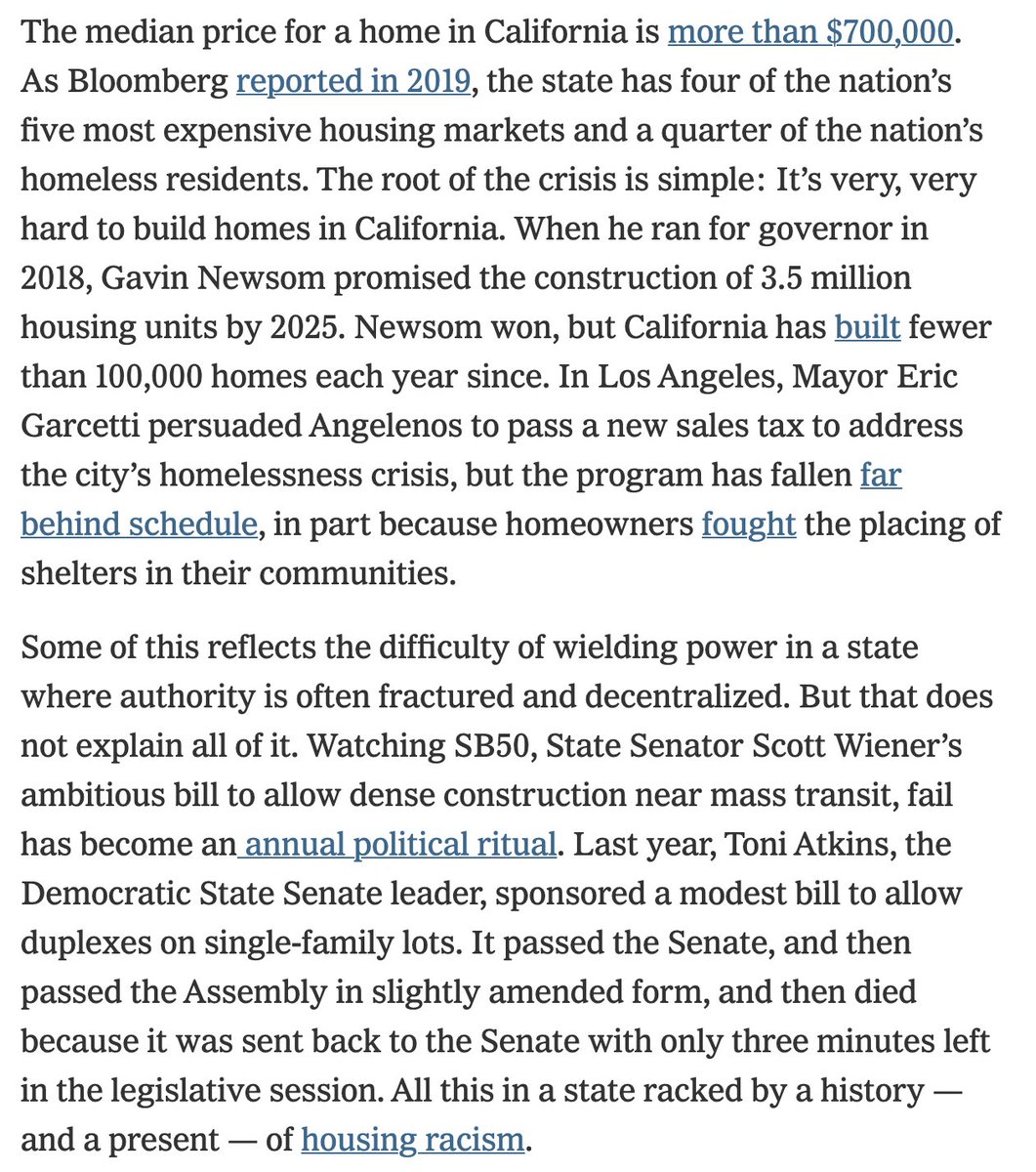
So I'd recommend reading this thread from Dave, but I thought about some of these policies, and how they fit into the whole, a lot, and want to offer a different interpretation.
I think California is world leading on progressivism that doesn't ask anyone to give anything up, or accept any major change, right now.
That's what I mean by symbolically progressive, operationally conservative.
Take the 100% renewable energy standard. As @leahstokes has written, these policies often fail in practice. I note our leadership on renewable energy in the piece, but the kind of politics we see on housing and transportation are going foil that if they don't change.
Creating a statewide consumer financial protection agency is great! But again, you're not asking most voters to give anything up or accept any actual changes.
I don't see that as balancing the scales on, say, high-speed rail.
CA is willing to vote for higher taxes, new agencies, etc. It was impressive when LA passed Measure H, a new sales tax to fund homeless shelters. And depressing to watch those same communities pour into the streets to protest shelters being placed near them. That's the rub.
It's very in vogue to bash California and this doesn't even reach to some things that deserve scorn, like the continuing control of the Western States Petroleum Association and the state Chamber of Commerce in policymaking. And yet-https://t.co/vHZ6GM7QF8
— David Dayen (@ddayen) February 11, 2021
I think California is world leading on progressivism that doesn't ask anyone to give anything up, or accept any major change, right now.
That's what I mean by symbolically progressive, operationally conservative.
Take the 100% renewable energy standard. As @leahstokes has written, these policies often fail in practice. I note our leadership on renewable energy in the piece, but the kind of politics we see on housing and transportation are going foil that if they don't change.
Creating a statewide consumer financial protection agency is great! But again, you're not asking most voters to give anything up or accept any actual changes.
I don't see that as balancing the scales on, say, high-speed rail.
CA is willing to vote for higher taxes, new agencies, etc. It was impressive when LA passed Measure H, a new sales tax to fund homeless shelters. And depressing to watch those same communities pour into the streets to protest shelters being placed near them. That's the rub.
This is a piece I've been thinking about for a long time. One of the most dominant policy ideas in Washington is that policy should, always and everywhere, move parents into paid labor. But what if that's wrong?
My reporting here convinced me that there's no large effect in either direction on labor force participation from child allowances. Canada has a bigger one than either Romney or Biden are considering, and more labor force participation among women.
But what if that wasn't true?
Forcing parents into low-wage, often exploitative, jobs by threatening them and their children with poverty may be counted as a success by some policymakers, but it’s a sign of a society that doesn’t value the most essential forms of labor.
The problem is in the very language we use. If I left my job as a New York Times columnist to care for my 2-year-old son, I’d be described as leaving the labor force. But as much as I adore him, there is no doubt I’d be working harder. I wouldn't have stopped working!
I tried to render conservative objections here fairly. I appreciate that @swinshi talked with me, and I'm sorry I couldn't include everything he said. I'll say I believe I used his strongest arguments, not more speculative ones, in the piece.
My reporting here convinced me that there's no large effect in either direction on labor force participation from child allowances. Canada has a bigger one than either Romney or Biden are considering, and more labor force participation among women.
But what if that wasn't true?
Forcing parents into low-wage, often exploitative, jobs by threatening them and their children with poverty may be counted as a success by some policymakers, but it’s a sign of a society that doesn’t value the most essential forms of labor.
The problem is in the very language we use. If I left my job as a New York Times columnist to care for my 2-year-old son, I’d be described as leaving the labor force. But as much as I adore him, there is no doubt I’d be working harder. I wouldn't have stopped working!
I tried to render conservative objections here fairly. I appreciate that @swinshi talked with me, and I'm sorry I couldn't include everything he said. I'll say I believe I used his strongest arguments, not more speculative ones, in the piece.
I appreciate his intellectual curiosity and effort. I have quibbles. But my big disappointment is there was no mention of unintended consequences, which we discussed and which are kind of THE core conservative concern on this issue.
— \U0001d682\U0001d68c\U0001d698\U0001d69d\U0001d69d \U0001d686\U0001d692\U0001d697\U0001d69c\U0001d691\U0001d692\U0001d699 (@swinshi) February 18, 2021
What we're seeing from Trump and his allies today is an autocratic attempt. It's not a competent one, and it probably won't be an effective one. But that's what it is. And far worse would follow if it succeeded.
As @mashagessen explained in this interview, using Balint Magyar's framework, an autocratic attempt is "the first stage when autocracy is still reversible by electoral means."
The point is to make the regime's rule irreversible by electoral means, which is explicitly what Trump, et al, are trying right now.
"Then, at some point, there comes the autocratic breakthrough when you can no longer use electoral means to reverse that autocracy."
"Then autocratic consolidation, where it’s just consolidating ever more power and money, making it ever less possible to change."
There is an element of farce to Trump's tweets, his actions, his cronies. It makes it easy for many to discount what he's actually saying, and trying. https://t.co/GwC3KGbpkC
It's fitting for the internet era, when the worst ideas and figures come layered in irony.
STOP THE COUNT!
— Donald J. Trump (@realDonaldTrump) November 5, 2020
As @mashagessen explained in this interview, using Balint Magyar's framework, an autocratic attempt is "the first stage when autocracy is still reversible by electoral means."
The point is to make the regime's rule irreversible by electoral means, which is explicitly what Trump, et al, are trying right now.
"Then, at some point, there comes the autocratic breakthrough when you can no longer use electoral means to reverse that autocracy."
"Then autocratic consolidation, where it’s just consolidating ever more power and money, making it ever less possible to change."
There is an element of farce to Trump's tweets, his actions, his cronies. It makes it easy for many to discount what he's actually saying, and trying. https://t.co/GwC3KGbpkC
It's fitting for the internet era, when the worst ideas and figures come layered in irony.
— Brian Beutler (@brianbeutler) November 5, 2020
More from Politics

My piece in the NY Times today: "the Trump administration is denying applications submitted to the United States Citizenship and Immigration Services at a rate 37 percent higher than the Obama administration did in 2016."
Based on this analysis: "Denials for immigration benefits—travel documents, work permits, green cards, worker petitions, etc.—increased 37 percent since FY 2016. On an absolute basis, FY 2018 will see more than about 155,000 more denials than FY 2016." https://t.co/Bl0naOO0sh
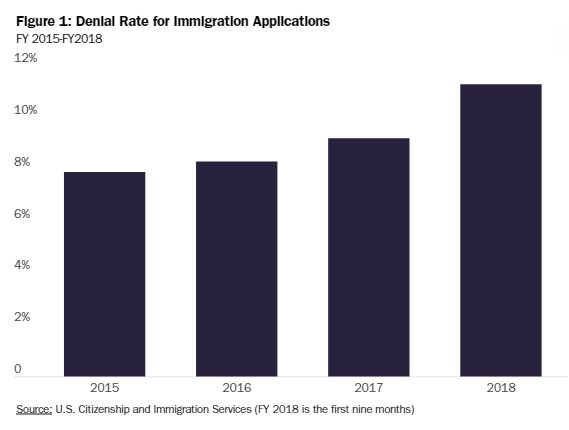
"This increase in denials cannot be credited to an overall rise in applications. In fact, the total number of applications so far this year is 2 percent lower than in 2016. It could be that the higher denial rate is also discouraging some people from applying at all.."
Thanks to @gsiskind for his insightful comments. The increase in denials, he said, is “significant enough to make one think that Congress must have passed legislation changing the requirements. But we know they have not.”
My conclusion:
Based on this analysis: "Denials for immigration benefits—travel documents, work permits, green cards, worker petitions, etc.—increased 37 percent since FY 2016. On an absolute basis, FY 2018 will see more than about 155,000 more denials than FY 2016." https://t.co/Bl0naOO0sh
"This increase in denials cannot be credited to an overall rise in applications. In fact, the total number of applications so far this year is 2 percent lower than in 2016. It could be that the higher denial rate is also discouraging some people from applying at all.."
Thanks to @gsiskind for his insightful comments. The increase in denials, he said, is “significant enough to make one think that Congress must have passed legislation changing the requirements. But we know they have not.”
My conclusion:

We’ve been getting calls and outreach from Queens residents all day about this.
The community’s response? Outrage.
Amazon is a billion-dollar company. The idea that it will receive hundreds of millions of dollars in tax breaks at a time when our subway is crumbling and our communities need MORE investment, not less, is extremely concerning to residents here.
When we talk about bringing jobs to the community, we need to dig deep:
- Has the company promised to hire in the existing community?
- What’s the quality of jobs + how many are promised? Are these jobs low-wage or high wage? Are there benefits? Can people collectively bargain?
Displacement is not community development. Investing in luxury condos is not the same thing as investing in people and families.
Shuffling working class people out of a community does not improve their quality of life.
We need to focus on good healthcare, living wages, affordable rent. Corporations that offer none of those things should be met w/ skepticism.
It’s possible to establish economic partnerships w/ real opportunities for working families, instead of a race-to-the-bottom competition.
The community’s response? Outrage.
Amazon will divide its second headquarters evenly between New York's Long Island City and Arlington County's Crystal City neighborhoods. Other cities may also receive major sites. https://t.co/c1lKmeQinX
— The Wall Street Journal (@WSJ) November 13, 2018
Amazon is a billion-dollar company. The idea that it will receive hundreds of millions of dollars in tax breaks at a time when our subway is crumbling and our communities need MORE investment, not less, is extremely concerning to residents here.
When we talk about bringing jobs to the community, we need to dig deep:
- Has the company promised to hire in the existing community?
- What’s the quality of jobs + how many are promised? Are these jobs low-wage or high wage? Are there benefits? Can people collectively bargain?
Displacement is not community development. Investing in luxury condos is not the same thing as investing in people and families.
Shuffling working class people out of a community does not improve their quality of life.
We need to focus on good healthcare, living wages, affordable rent. Corporations that offer none of those things should be met w/ skepticism.
It’s possible to establish economic partnerships w/ real opportunities for working families, instead of a race-to-the-bottom competition.


Here we go. Tag 4 des Impeachments. Trumps Verteidigung.
Es wird argumentiert, dass Trump nur habe sicherstellen wollen, dass die Wahl fair abgelaufen sei. Die Verteidigung zeigt Clips einzelner Demokraten, die der Zertifizierung von Trumps Stimmen 2016 widersprechen. (Dass es 2016 keinen von Obama gesandten Mob aufs Kapitol gab?Egal!)
Die intellektuelle Unehrlichkeit ist so unfassbar, ich weiß kaum, wo ich hier überhaupt anfangen soll; so viele fucking Strohmänner auf einmal.
Die Verteidigung spielt random Clips, in denen Demokraten “fight” sagen, fast zehn Minuten lang. Weil Trump 20mal am 6. Januar “fight” gesagt hat. Dies ist kein Witz. Komisch, dass sonst die Folge nie war, dass ein Mob das Kapitol gestürmt hat und Pence hängen wollte
“Dieser Fall geht um politischen Hass” Ich mein, ja. “Die House Managers hassen Donald Trump.”
So close.
Michael van der Veen begins Trump's defense: "The article of impeachment now before the Senate is an unjust and blatantly unconstitutional act of political vengeance" pic.twitter.com/xRaZHEPIaC
— Aaron Rupar (@atrupar) February 12, 2021
Es wird argumentiert, dass Trump nur habe sicherstellen wollen, dass die Wahl fair abgelaufen sei. Die Verteidigung zeigt Clips einzelner Demokraten, die der Zertifizierung von Trumps Stimmen 2016 widersprechen. (Dass es 2016 keinen von Obama gesandten Mob aufs Kapitol gab?Egal!)
Die intellektuelle Unehrlichkeit ist so unfassbar, ich weiß kaum, wo ich hier überhaupt anfangen soll; so viele fucking Strohmänner auf einmal.
Die Verteidigung spielt random Clips, in denen Demokraten “fight” sagen, fast zehn Minuten lang. Weil Trump 20mal am 6. Januar “fight” gesagt hat. Dies ist kein Witz. Komisch, dass sonst die Folge nie war, dass ein Mob das Kapitol gestürmt hat und Pence hängen wollte
WATCH: Trump's defense plays nearly 10 minutes of clips showing Democrats using the word "fight," to defend Trump using the word "fight" about 20 times in his speech to supporters before the Capitol riot began https://t.co/YUg7sgxuDX pic.twitter.com/3eMNp7E2S2
— CBS News (@CBSNews) February 12, 2021
“Dieser Fall geht um politischen Hass” Ich mein, ja. “Die House Managers hassen Donald Trump.”
So close.