
Democrats have a lot of good ideas to help people fast, and visibly. They have good ideas for deepening democracy, like the "For The People Act." But if they let Senate Republicans filibuster everything, they will lose in 2022, and they will deserve it.
More from Ezra Klein
What we're seeing from Trump and his allies today is an autocratic attempt. It's not a competent one, and it probably won't be an effective one. But that's what it is. And far worse would follow if it succeeded.
As @mashagessen explained in this interview, using Balint Magyar's framework, an autocratic attempt is "the first stage when autocracy is still reversible by electoral means."
The point is to make the regime's rule irreversible by electoral means, which is explicitly what Trump, et al, are trying right now.
"Then, at some point, there comes the autocratic breakthrough when you can no longer use electoral means to reverse that autocracy."
"Then autocratic consolidation, where it’s just consolidating ever more power and money, making it ever less possible to change."
There is an element of farce to Trump's tweets, his actions, his cronies. It makes it easy for many to discount what he's actually saying, and trying. https://t.co/GwC3KGbpkC
It's fitting for the internet era, when the worst ideas and figures come layered in irony.
STOP THE COUNT!
— Donald J. Trump (@realDonaldTrump) November 5, 2020
As @mashagessen explained in this interview, using Balint Magyar's framework, an autocratic attempt is "the first stage when autocracy is still reversible by electoral means."
The point is to make the regime's rule irreversible by electoral means, which is explicitly what Trump, et al, are trying right now.
"Then, at some point, there comes the autocratic breakthrough when you can no longer use electoral means to reverse that autocracy."
"Then autocratic consolidation, where it’s just consolidating ever more power and money, making it ever less possible to change."
There is an element of farce to Trump's tweets, his actions, his cronies. It makes it easy for many to discount what he's actually saying, and trying. https://t.co/GwC3KGbpkC
It's fitting for the internet era, when the worst ideas and figures come layered in irony.
— Brian Beutler (@brianbeutler) November 5, 2020
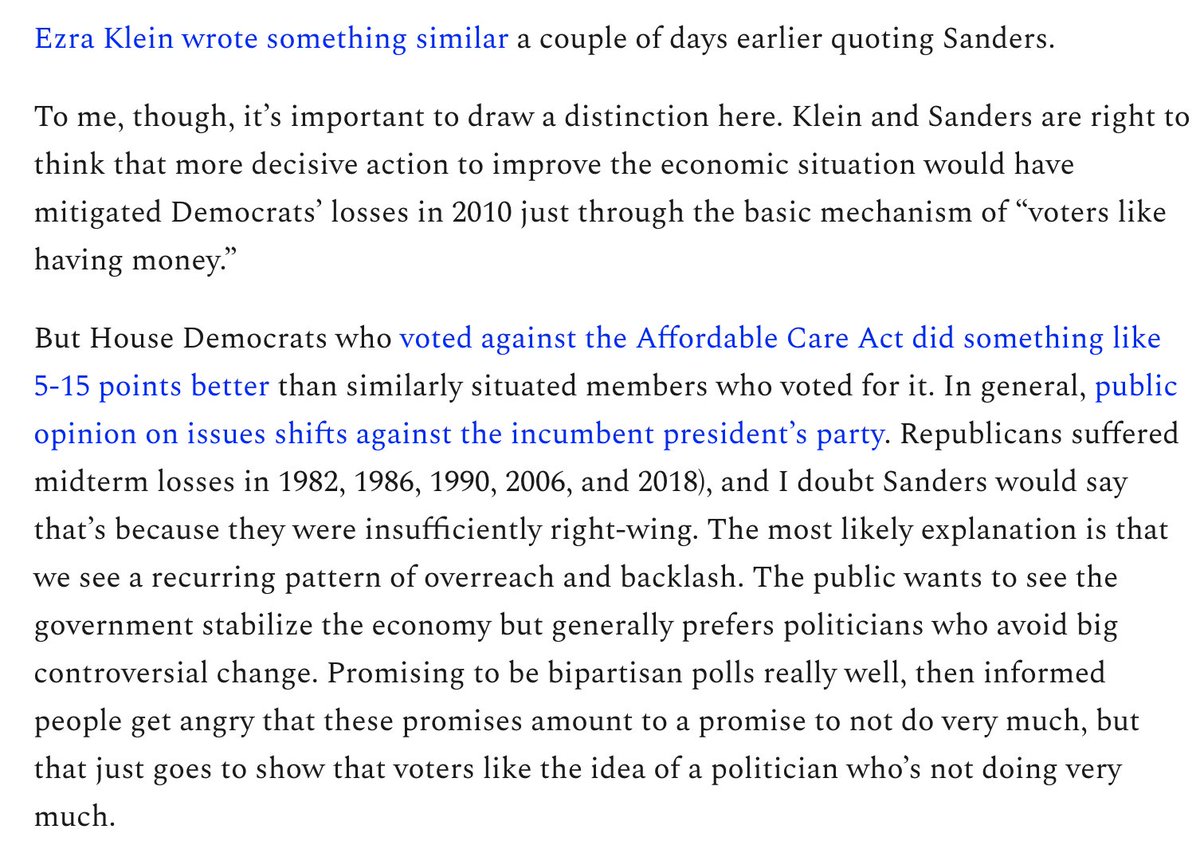
This is a good @mattyglesias post about techno-politics but I want to quibble with the part of it that’s about my essay on the policy feedback loops you can build by Just Helping People Fast. Matt writes: https://t.co/MuBlgQV6LW
Over at Mischiefs of Faction, @Smotus makes a similar point: https://t.co/al6fS5tZXP
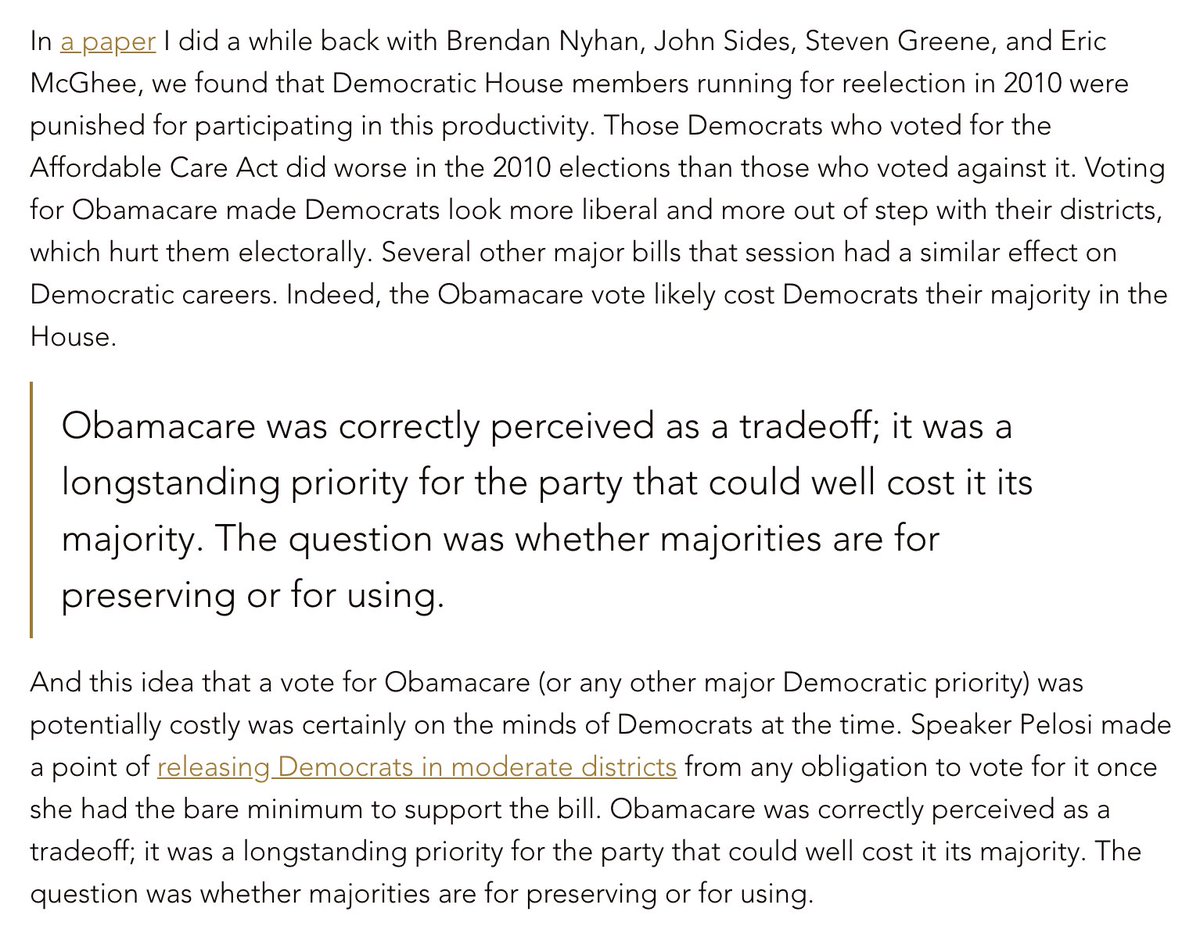
I want to be clear here: I’m saying that the Affordable Care act was, from a political perspective, badly designed, and that *a different health care plan* might’ve led to a better Dem performance in 2010. But these arguments don't grapple with that.
To @Smotus’s point, Pelosi released those House Democrats at the end, not the beginning. Having covered the beginning of this, I can tell you a lot of those Democrats thought a bipartisan health care bill would be great politics for them!
But they didn’t get that.
This is key. The ACA was built on the political theory that:
1. Bipartisan policy is easier to pass — and more popular once passed.
2. Working off of the Heritage Foundation/Romney template could get you a bipartisan health bill.
1 was probably right. 2 was utterly wrong.
Over at Mischiefs of Faction, @Smotus makes a similar point: https://t.co/al6fS5tZXP
I want to be clear here: I’m saying that the Affordable Care act was, from a political perspective, badly designed, and that *a different health care plan* might’ve led to a better Dem performance in 2010. But these arguments don't grapple with that.
To @Smotus’s point, Pelosi released those House Democrats at the end, not the beginning. Having covered the beginning of this, I can tell you a lot of those Democrats thought a bipartisan health care bill would be great politics for them!
But they didn’t get that.
This is key. The ACA was built on the political theory that:
1. Bipartisan policy is easier to pass — and more popular once passed.
2. Working off of the Heritage Foundation/Romney template could get you a bipartisan health bill.
1 was probably right. 2 was utterly wrong.
This is a piece I've been thinking about for a long time. One of the most dominant policy ideas in Washington is that policy should, always and everywhere, move parents into paid labor. But what if that's wrong?
My reporting here convinced me that there's no large effect in either direction on labor force participation from child allowances. Canada has a bigger one than either Romney or Biden are considering, and more labor force participation among women.
But what if that wasn't true?
Forcing parents into low-wage, often exploitative, jobs by threatening them and their children with poverty may be counted as a success by some policymakers, but it’s a sign of a society that doesn’t value the most essential forms of labor.
The problem is in the very language we use. If I left my job as a New York Times columnist to care for my 2-year-old son, I’d be described as leaving the labor force. But as much as I adore him, there is no doubt I’d be working harder. I wouldn't have stopped working!
I tried to render conservative objections here fairly. I appreciate that @swinshi talked with me, and I'm sorry I couldn't include everything he said. I'll say I believe I used his strongest arguments, not more speculative ones, in the piece.
My reporting here convinced me that there's no large effect in either direction on labor force participation from child allowances. Canada has a bigger one than either Romney or Biden are considering, and more labor force participation among women.
But what if that wasn't true?
Forcing parents into low-wage, often exploitative, jobs by threatening them and their children with poverty may be counted as a success by some policymakers, but it’s a sign of a society that doesn’t value the most essential forms of labor.
The problem is in the very language we use. If I left my job as a New York Times columnist to care for my 2-year-old son, I’d be described as leaving the labor force. But as much as I adore him, there is no doubt I’d be working harder. I wouldn't have stopped working!
I tried to render conservative objections here fairly. I appreciate that @swinshi talked with me, and I'm sorry I couldn't include everything he said. I'll say I believe I used his strongest arguments, not more speculative ones, in the piece.
I appreciate his intellectual curiosity and effort. I have quibbles. But my big disappointment is there was no mention of unintended consequences, which we discussed and which are kind of THE core conservative concern on this issue.
— \U0001d682\U0001d68c\U0001d698\U0001d69d\U0001d69d \U0001d686\U0001d692\U0001d697\U0001d69c\U0001d691\U0001d692\U0001d699 (@swinshi) February 18, 2021
More from For later read



How I created content in 2020
A thread...
Back in Aug 2016, I started creating content to share my experiences as an entrepreneur.
Over 3 years I had put out 1,200+ hours of content - posting every week without
Little did I know that something I started almost 4 years back would give my life an entirely new direction.
At the end of 2019, my biggest platform was LinkedIn with ~700K followers.
In Jan 2020, I decided to build a team that would help me with the content.
I ran a month long recruitment drive to hire a team of interns.
It comprised 4 detailed rounds - starting with my loved 20 questions, then an assignment, then a WhatsApp video round and finally F2F.
Through 1,200+ applications, I finally selected 6 profiles, starting March.
I am a firm believer in @peterthiel's one task, one person philosophy
So the team was structured such that everyone was responsible for ONLY one task
1. Content ideas
2. Videography
3. Video editing
4. LinkedIn (+TikTok) distribution
5. FB+IG distribution
6. YouTube distribution
A thread...
Back in Aug 2016, I started creating content to share my experiences as an entrepreneur.
Over 3 years I had put out 1,200+ hours of content - posting every week without
August 2016.
— Ankur Warikoo (@warikoo) October 2, 2020
It has been 3 months since LinkedIn had launched its video feature.
And I had been waiting for it to be activated on my profile.
A thread...
Little did I know that something I started almost 4 years back would give my life an entirely new direction.
At the end of 2019, my biggest platform was LinkedIn with ~700K followers.
In Jan 2020, I decided to build a team that would help me with the content.
I ran a month long recruitment drive to hire a team of interns.
It comprised 4 detailed rounds - starting with my loved 20 questions, then an assignment, then a WhatsApp video round and finally F2F.
Through 1,200+ applications, I finally selected 6 profiles, starting March.
I am a firm believer in @peterthiel's one task, one person philosophy
So the team was structured such that everyone was responsible for ONLY one task
1. Content ideas
2. Videography
3. Video editing
4. LinkedIn (+TikTok) distribution
5. FB+IG distribution
6. YouTube distribution

I’ve asked Byers to clarify, but as I read this tweet, it seems that Bret Stephens included an unredacted use of the n-word in his column this week to make a point, and the column got spiked—maybe as a result?
Four times. The column used the n-word (in the context of a quote) four times. https://t.co/14vPhQZktB
For context: In 2019, a Times reporter was reprimanded for several incidents of racial insensitivity on a trip with high school students, including one in which he used the n-word in a discussion of racial slurs.
That incident became public late last month, and late last week, after 150 Times employees complained about how it had been handled, the reporter in question resigned.
In the course of all that, the Times' executive editor said that the paper does not "tolerate racist language regardless of intent.” This was the quote that Bret Stephens was pushing back against in his column. (Which, again, was deep-sixed by the paper.)
Stephens goes on in his column (which never saw light of day) to cite famous Lee Atwater quote that uses racial slur, and which NYT has cited \u201cat least seven times.\u201d
— Dylan Byers (@DylanByers) February 11, 2021
"Is this now supposed to be a scandal?\u201d he asks.
...
Four times. The column used the n-word (in the context of a quote) four times. https://t.co/14vPhQZktB
That is correct. In his draft he quotes Atwater using the word (4 times) and he does not redact it.
— Dylan Byers (@DylanByers) February 11, 2021
For context: In 2019, a Times reporter was reprimanded for several incidents of racial insensitivity on a trip with high school students, including one in which he used the n-word in a discussion of racial slurs.
That incident became public late last month, and late last week, after 150 Times employees complained about how it had been handled, the reporter in question resigned.
In the course of all that, the Times' executive editor said that the paper does not "tolerate racist language regardless of intent.” This was the quote that Bret Stephens was pushing back against in his column. (Which, again, was deep-sixed by the paper.)

This response to my tweet is a common objection to targeted advertising.
@KevinCoates correct me if I'm wrong, but basic point seems to be that banning targeted ads will lower platform profits, but will mostly be beneficial for consumers.
Some counterpoints 👇
1) This assumes that consumers prefer contextual ads to targeted ones.
This does not seem self-evident to me
Research also finds that firms choose between ad. targeting vs. obtrusiveness 👇
If true, the right question is not whether consumers prefer contextual ads to targeted ones. But whether they prefer *more* contextual ads vs *fewer* targeted
2) True, many inframarginal platforms might simply shift to contextual ads.
But some might already be almost indifferent between direct & indirect monetization.
Hard to imagine that *none* of them will respond to reduced ad revenue with actual fees.
3) Policy debate seems to be moving from:
"Consumers are insufficiently informed to decide how they share their data."
To
"No one in their right mind would agree to highly targeted ads (e.g., those that mix data from multiple sources)."
IMO the latter statement is incorrect.
@KevinCoates correct me if I'm wrong, but basic point seems to be that banning targeted ads will lower platform profits, but will mostly be beneficial for consumers.
Some counterpoints 👇
That targeted ads allow for "free" products for consumers is a common talking point and we're going to see more of it in the coming months.: https://t.co/Xty3My3f0u (1/14)
— Kevin Coates (@KevinCoates) February 16, 2021
1) This assumes that consumers prefer contextual ads to targeted ones.
This does not seem self-evident to me
Great post by @Sherman1890 got me thinking about the future of targeted ads.
— Dirk Auer (@AuerDirk) February 12, 2021
More and more tools (privacy labels, ad blockers, GDPR) enable consumers to opt-out from targeted ads - can limit the data platforms receive or block ads altogether.
The end of targeted ads? \U0001f9f5\U0001f447 https://t.co/MA6A3BrUWq
Research also finds that firms choose between ad. targeting vs. obtrusiveness 👇
If true, the right question is not whether consumers prefer contextual ads to targeted ones. But whether they prefer *more* contextual ads vs *fewer* targeted
2) True, many inframarginal platforms might simply shift to contextual ads.
But some might already be almost indifferent between direct & indirect monetization.
Hard to imagine that *none* of them will respond to reduced ad revenue with actual fees.
3) Policy debate seems to be moving from:
"Consumers are insufficiently informed to decide how they share their data."
To
"No one in their right mind would agree to highly targeted ads (e.g., those that mix data from multiple sources)."
IMO the latter statement is incorrect.
You May Also Like




https://t.co/6cRR2B3jBE
Viruses and other pathogens are often studied as stand-alone entities, despite that, in nature, they mostly live in multispecies associations called biofilms—both externally and within the host.
https://t.co/FBfXhUrH5d

Microorganisms in biofilms are enclosed by an extracellular matrix that confers protection and improves survival. Previous studies have shown that viruses can secondarily colonize preexisting biofilms, and viral biofilms have also been described.

...we raise the perspective that CoVs can persistently infect bats due to their association with biofilm structures. This phenomenon potentially provides an optimal environment for nonpathogenic & well-adapted viruses to interact with the host, as well as for viral recombination.

Biofilms can also enhance virion viability in extracellular environments, such as on fomites and in aquatic sediments, allowing viral persistence and dissemination.

Viruses and other pathogens are often studied as stand-alone entities, despite that, in nature, they mostly live in multispecies associations called biofilms—both externally and within the host.
https://t.co/FBfXhUrH5d
Microorganisms in biofilms are enclosed by an extracellular matrix that confers protection and improves survival. Previous studies have shown that viruses can secondarily colonize preexisting biofilms, and viral biofilms have also been described.
...we raise the perspective that CoVs can persistently infect bats due to their association with biofilm structures. This phenomenon potentially provides an optimal environment for nonpathogenic & well-adapted viruses to interact with the host, as well as for viral recombination.
Biofilms can also enhance virion viability in extracellular environments, such as on fomites and in aquatic sediments, allowing viral persistence and dissemination.

Margatha Natarajar murthi - Uthirakosamangai temple near Ramanathapuram,TN
#ArudraDarisanam
Unique Natarajar made of emerlad is abt 6 feet tall.
It is always covered with sandal paste.Only on Thriuvadhirai Star in month Margazhi-Nataraja can be worshipped without sandal paste.

After removing the sandal paste,day long rituals & various abhishekam will be https://t.co/e1Ye8DrNWb day Maragatha Nataraja sannandhi will be closed after anointing the murthi with fresh sandal paste.Maragatha Natarajar is covered with sandal paste throughout the year

as Emerald has scientific property of its molecules getting disturbed when exposed to light/water/sound.This is an ancient Shiva temple considered to be 3000 years old -believed to be where Bhagwan Shiva gave Veda gyaana to Parvati Devi.This temple has some stunning sculptures.

#ArudraDarisanam
Unique Natarajar made of emerlad is abt 6 feet tall.
It is always covered with sandal paste.Only on Thriuvadhirai Star in month Margazhi-Nataraja can be worshipped without sandal paste.
After removing the sandal paste,day long rituals & various abhishekam will be https://t.co/e1Ye8DrNWb day Maragatha Nataraja sannandhi will be closed after anointing the murthi with fresh sandal paste.Maragatha Natarajar is covered with sandal paste throughout the year
as Emerald has scientific property of its molecules getting disturbed when exposed to light/water/sound.This is an ancient Shiva temple considered to be 3000 years old -believed to be where Bhagwan Shiva gave Veda gyaana to Parvati Devi.This temple has some stunning sculptures.


So friends here is the thread on the recommended pathway for new entrants in the stock market.
Here I will share what I believe are essentials for anybody who is interested in stock markets and the resources to learn them, its from my experience and by no means exhaustive..
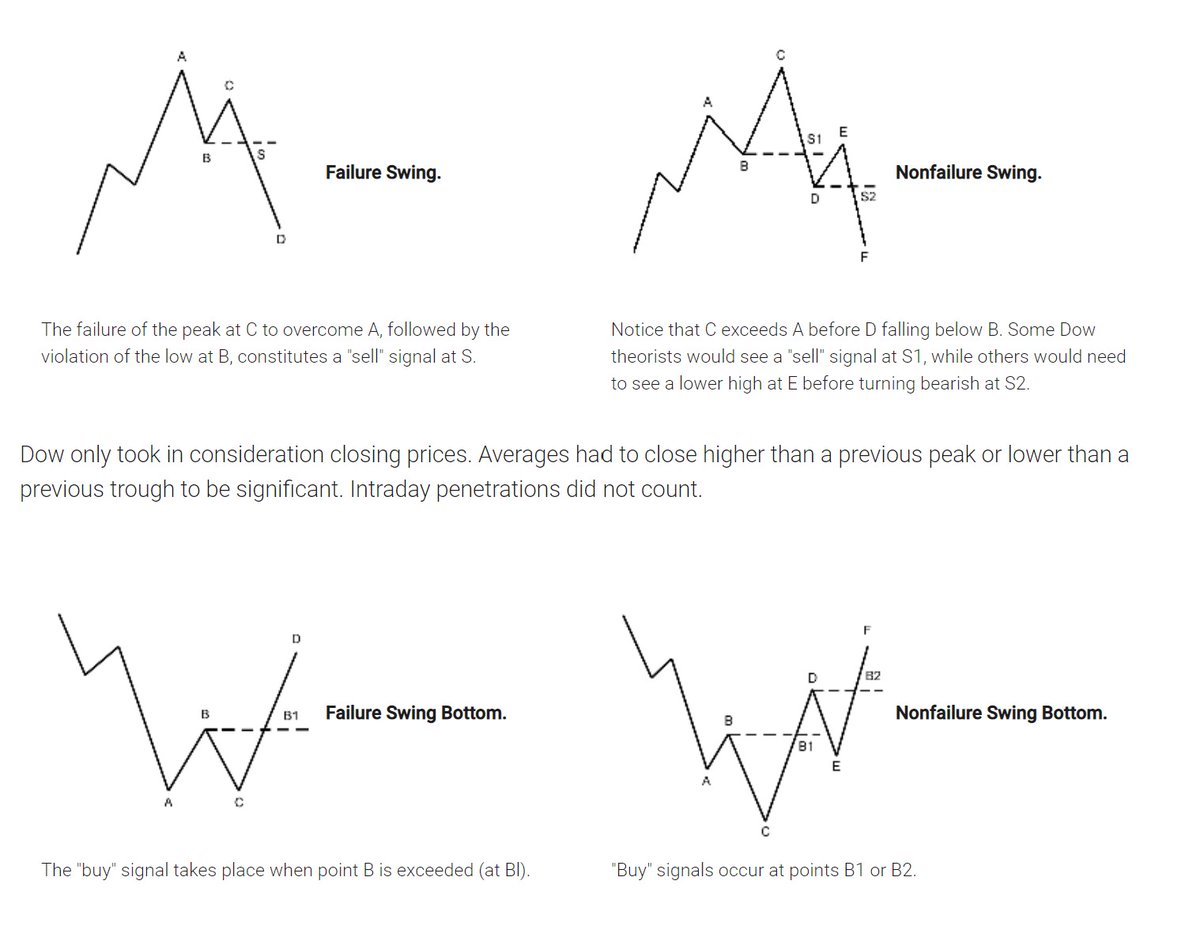
First the very basic : The Dow theory, Everybody must have basic understanding of it and must learn to observe High Highs, Higher Lows, Lower Highs and Lowers lows on charts and their
Even those who are more inclined towards fundamental side can also benefit from Dow theory, as it can hint start & end of Bull/Bear runs thereby indication entry and exits.
Next basic is Wyckoff's Theory. It tells how accumulation and distribution happens with regularity and how the market actually
Dow theory is old but
Here I will share what I believe are essentials for anybody who is interested in stock markets and the resources to learn them, its from my experience and by no means exhaustive..
First the very basic : The Dow theory, Everybody must have basic understanding of it and must learn to observe High Highs, Higher Lows, Lower Highs and Lowers lows on charts and their
Even those who are more inclined towards fundamental side can also benefit from Dow theory, as it can hint start & end of Bull/Bear runs thereby indication entry and exits.
Next basic is Wyckoff's Theory. It tells how accumulation and distribution happens with regularity and how the market actually
Dow theory is old but
Old is Gold....
— Professor (@DillikiBiili) January 23, 2020
this Bharti Airtel chart is a true copy of the Wyckoff Pattern propounded in 1931....... pic.twitter.com/tQ1PNebq7d