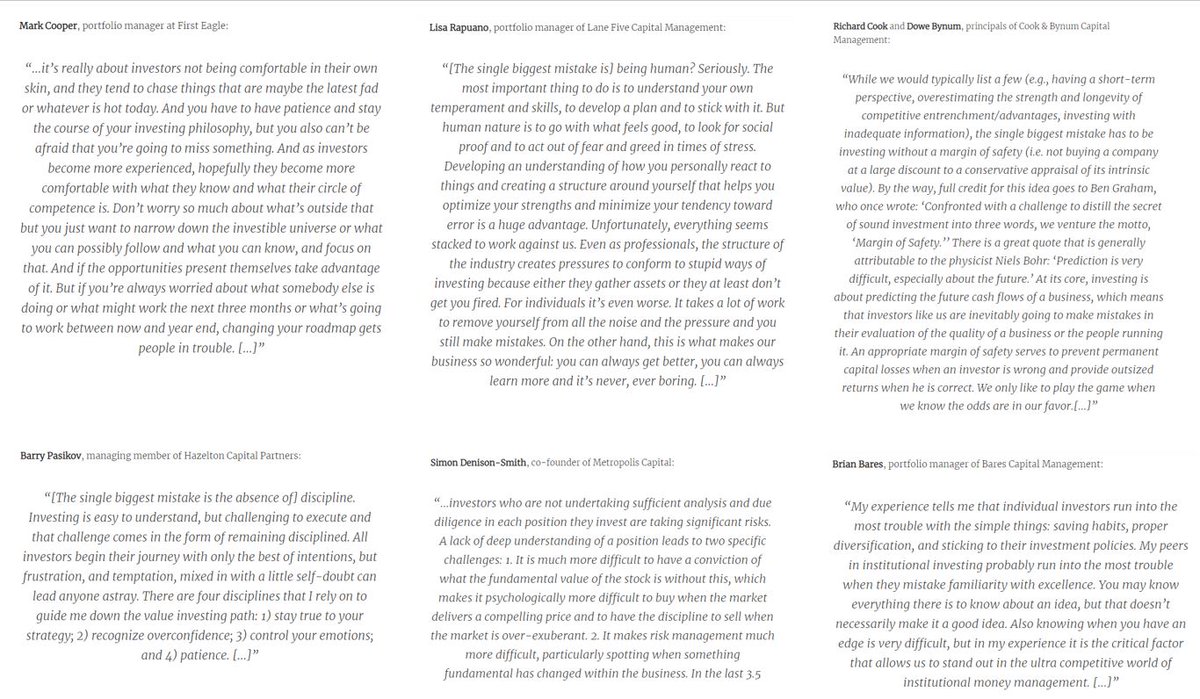
Phenomenal article/compilation on "The Biggest Mistakes Investors Make". h/t @manualofideas @JMihaljevic 👏
cc: @dmuthuk @Gautam__Baid @saxena_puru
My fav pts in the thread below


More from Ram Bhupatiraju


🔟Investing Philosophies I greatly admire. Learning from the best Investing Teams out there (that match your Philosophy/Strategy) and improving your own process is one of the best investing hacks. What are some others that you admire?
🔟of my principles at the end.
⬇️⬇️
1⃣ Buffett : Gotta start with the🐐
https://t.co/RKO4BAMbpT
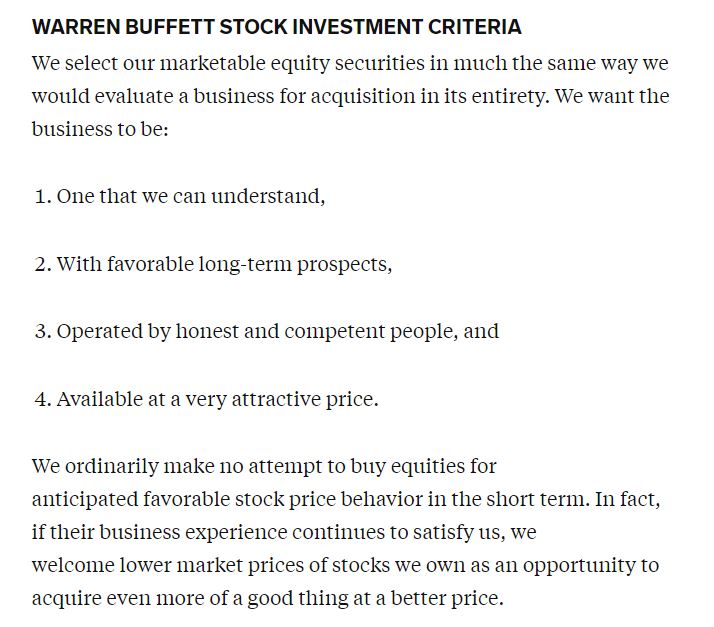
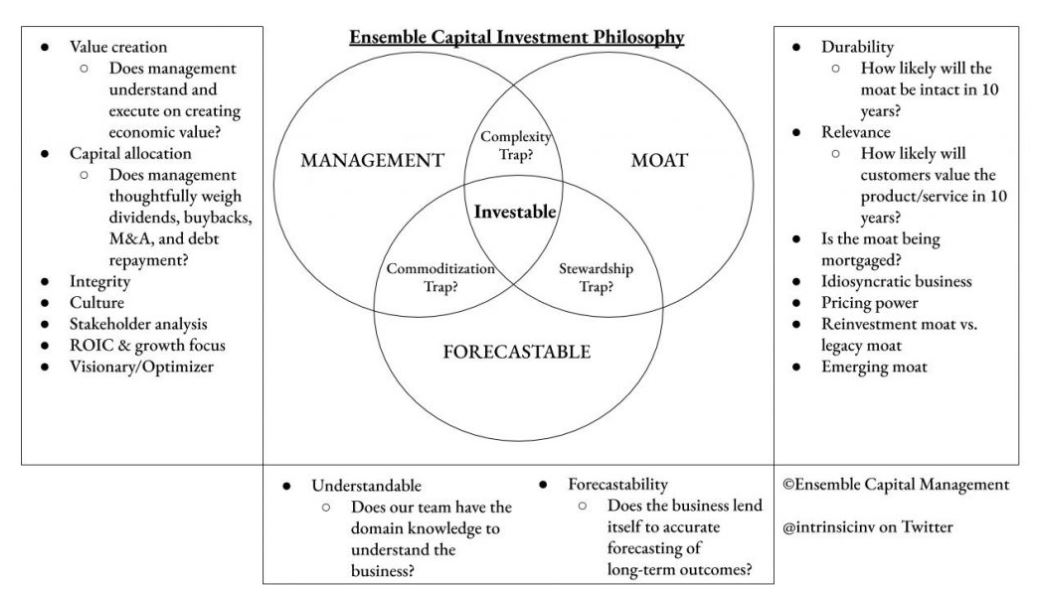
2⃣ Ensemble Capital : @IntrinsicInv @ToddWenning
https://t.co/6Cozku3Vmn
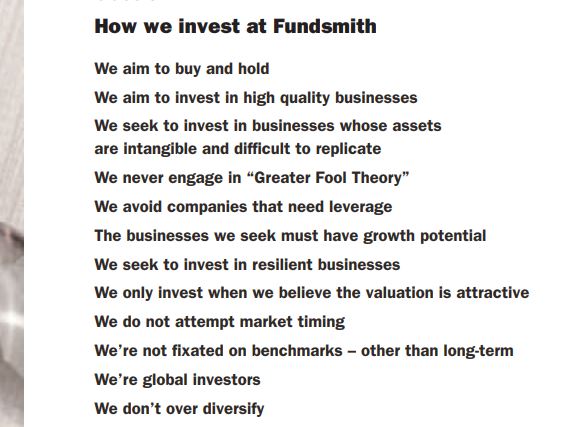
3⃣ Fundsmith : Terry Smith
https://t.co/WqBHvN4RiU
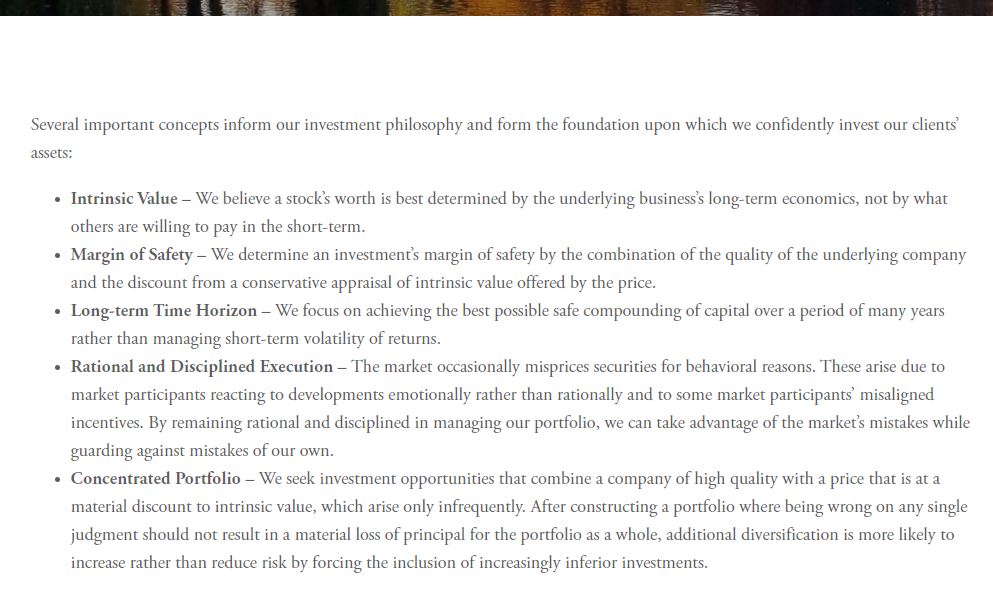
4⃣ Silver Ring Value Partners : Gary Mishuris
https://t.co/hjDC2VBIum
🔟of my principles at the end.
⬇️⬇️
1⃣ Buffett : Gotta start with the🐐
https://t.co/RKO4BAMbpT
2⃣ Ensemble Capital : @IntrinsicInv @ToddWenning
https://t.co/6Cozku3Vmn
3⃣ Fundsmith : Terry Smith
https://t.co/WqBHvN4RiU
4⃣ Silver Ring Value Partners : Gary Mishuris
https://t.co/hjDC2VBIum


More from Investing


THE MONEY PRINTING GAME:
A pleb's guide to using @Keeper_DAO's hiding game to acquire $Rook below market price and arb it like a pro.
Before reading this thread, please read this one to provide a bit of context:
https://t.co/jLeUJRIjLG
Here we go!
1/
Before we really get into the meat of this... please do understand that the hiding game is currently in alpha. Hardware wallets don't work w/ it yet (they will soon).
Sometimes orders go unfilled (improving every day).
2/
A bit more context:
Limit orders on an amm aren't limit orders in the traditional sense. They are actually arbitrage opportunities for keepers. Keepers are bots that operate in the dark forest of ethereum.
3/
Now, let's say you use a service like 1inch or matcha to set your limit orders.
Let's say eth is $900 and you want to sell at $1000.
Eth pumps to $1040 rapidly, a keeper fills your limit order for $1000... everyone is happy. But wait... who gets the extra $40 here?
4/
Hint: it's not you! But what if you could?
This is where the hiding game comes in.
https://t.co/6sBlUWfw00
When you submit a limit order through the hiding game, @Keeper_DAO takes the $40 (or w/e amount) referenced above (this is MEV) and pushes it to the treasury.
5/
A pleb's guide to using @Keeper_DAO's hiding game to acquire $Rook below market price and arb it like a pro.
Before reading this thread, please read this one to provide a bit of context:
https://t.co/jLeUJRIjLG
Here we go!
1/
Ok I couldn't resist myself...
— 0x_Infinitum (@CryptoMessiah) February 3, 2021
OOOONNEEE more $Rook post.
Before i get into the REALLY cool shit i want to talk about, let me discuss the arb mining mechanics that were present during the initial distribution phase.
See this image, that's the keeperdao treasury.
1/ pic.twitter.com/Z2sMsZN9jo
Before we really get into the meat of this... please do understand that the hiding game is currently in alpha. Hardware wallets don't work w/ it yet (they will soon).
Sometimes orders go unfilled (improving every day).
2/
A bit more context:
Limit orders on an amm aren't limit orders in the traditional sense. They are actually arbitrage opportunities for keepers. Keepers are bots that operate in the dark forest of ethereum.
3/
Now, let's say you use a service like 1inch or matcha to set your limit orders.
Let's say eth is $900 and you want to sell at $1000.
Eth pumps to $1040 rapidly, a keeper fills your limit order for $1000... everyone is happy. But wait... who gets the extra $40 here?
4/
Hint: it's not you! But what if you could?
This is where the hiding game comes in.
https://t.co/6sBlUWfw00
When you submit a limit order through the hiding game, @Keeper_DAO takes the $40 (or w/e amount) referenced above (this is MEV) and pushes it to the treasury.
5/

Having a finance degree did not make me a better investor.
Rather, I learned 10x more about investing from Twitter University.
🧵 Here are 5 threads from world-class Fintwitters.
What you learn: Build an investing checklist.
From: @BrianFeroldi, writer at Motley
What you learn: Read 10Ks like a Hedge Fund
From: @FabiusMercurius
What you learn: Perform a DCF analysis.
From: @10kdiver
What you learn: When to sell your stocks
From: @borrowed_ideas, founder at
Rather, I learned 10x more about investing from Twitter University.
🧵 Here are 5 threads from world-class Fintwitters.
What you learn: Build an investing checklist.
From: @BrianFeroldi, writer at Motley
1/ How to create an investment checklist (thread)
— Brian Feroldi (@BrianFeroldi) December 8, 2020
Checklists are an amazing, FREE, underutilized investing tool
Here's the step-by-step process for how to create your own
\u2b07\ufe0f\u2b07\ufe0f\u2b07\ufe0f\u2b07\ufe0f\u2b07\ufe0f\u2b07\ufe0f\u2b07\ufe0f\u2b07\ufe0f\u2b07\ufe0f
What you learn: Read 10Ks like a Hedge Fund
From: @FabiusMercurius
\U0001f9d0How to Read 10Ks Like a Hedge Fund\U0001f9d0
— Ming Zhao (@FabiusMercurius) May 7, 2021
\u201cFundamentals don\u2019t matter anymore!\u201d I\u2019ve heard this a lot lately on Fintwit.\U0001f644
But, for those who\u2019ve diversify beyond $GME and $DOGE, here\u2019s a primer on what metrics fundamental buy-side PMs look at and why:
(real examples outlined)
\U0001f447 pic.twitter.com/tLlNRvpnDK
What you learn: Perform a DCF analysis.
From: @10kdiver
1/
— 10-K Diver (@10kdiver) August 8, 2020
Get a cup of coffee.
In this thread, I'll show you how to do a DCF analysis.
For those unfamiliar, DCF = Discounted Cash Flow.
What you learn: When to sell your stocks
From: @borrowed_ideas, founder at
You May Also Like


“We don’t negotiate salaries” is a negotiation tactic.
Always. No, your company is not an exception.
A tactic I don’t appreciate at all because of how unfairly it penalizes low-leverage, junior employees, and those loyal enough not to question it, but that’s negotiation for you after all. Weaponized information asymmetry.
Listen to Aditya
And by the way, you should never be worried that an offer would be withdrawn if you politely negotiate.
I have seen this happen *extremely* rarely, mostly to women, and anyway is a giant red flag. It suggests you probably didn’t want to work there.
You wish there was no negotiating so it would all be more fair? I feel you, but it’s not happening.
Instead, negotiate hard, use your privilege, and then go and share numbers with your underrepresented and underpaid colleagues. […]
Always. No, your company is not an exception.
A tactic I don’t appreciate at all because of how unfairly it penalizes low-leverage, junior employees, and those loyal enough not to question it, but that’s negotiation for you after all. Weaponized information asymmetry.
Listen to Aditya
"we don't negotiate salaries" really means "we'd prefer to negotiate massive signing bonuses and equity grants, but we'll negotiate salary if you REALLY insist" https://t.co/80k7nWAMoK
— Aditya Mukerjee, the Otterrific \U0001f3f3\ufe0f\u200d\U0001f308 (@chimeracoder) December 4, 2018
And by the way, you should never be worried that an offer would be withdrawn if you politely negotiate.
I have seen this happen *extremely* rarely, mostly to women, and anyway is a giant red flag. It suggests you probably didn’t want to work there.
You wish there was no negotiating so it would all be more fair? I feel you, but it’s not happening.
Instead, negotiate hard, use your privilege, and then go and share numbers with your underrepresented and underpaid colleagues. […]