This thread is for investors or those who are interested in CDSL as an investment. Often the central reason quoted for an investment here is the gush of FCF the business produces and some float money also to boot. But this argument ignores a central problem as well. (1/11)
https://t.co/DZCmOJ0TFi
(3/11)
https://t.co/071lwnnwJ4
(4/11)


https://t.co/ss1bYu5qGM
The recently introduced Buyback Tax is also a bummer, no doubt. (7/11)

https://t.co/nhcpvkllMS
(11/11)
More from Dinesh Sairam


More from Ideas



22 Powerful Ideas from Startup Founders
Startups succeed when they solve
Choose your customers
Resist the lure of new ideas when the real work begins:
Consider all paths and points of
Startups succeed when they solve
\u201cA genuine intention to solve a problem\u201d is the best startup strategy you can have.
— Al Caan (@caan_al) January 15, 2022
Do not lose sight of the intention behind your service, as you scale up.
Choose your customers
$600 Client \u2014 Complain, complain, complain
— Will Cannon (@iamwillcannon) September 12, 2021
$60,000 Client \u2014 \u201cMoney sent, thanks\u201d
Resist the lure of new ideas when the real work begins:
Beginner\u2019s Dilemma:
— Barrett O'Neill (@barrettjoneill) February 6, 2022
New endeavors are so challenging that other options appear an easier route to success.
If you choose to switch, rather than iterate and optimize, you\u2019ll always be a beginner.
And things will always seem hard.
Consider all paths and points of
90% of new startups fail.
— Chris Munn (@chrisxmunn) February 4, 2022
Consider buying a business instead.

1/ A orders chips. Supplier says "supply is getting tight." A triples order to store them in a warehouse. Supplier tells other customers supply is even tighter. They order extra chips. Quickly there are more chips in warehouses than toilet paper in garages during the pandemic.
2/ Intel's Gelsinger: "I don’t expect the chip industry is back to a healthy supply-demand situation until ’23. For a variety of industries, I think it’s still getting worse before it gets better.”
Are chips in warehouses the prime cause of the shortage? No. Demand is higher.
3/ "Software eating the world" means rising demand for chips.
I'm skeptical that this increase in chip demand is "transitory."
Fabs and backhoes don't increase with Moore's law. https://t.co/m7ZreQTzow
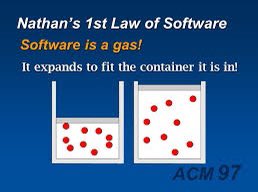
4/ If you invert Nathan's 1st Law:
Software can't expand faster than the chips and memory that enables its magic.
Broadcom's CEO believes chip production is a mature industry that will return to lower growth. I disagree in the medium term at least.
2/ Intel's Gelsinger: "I don’t expect the chip industry is back to a healthy supply-demand situation until ’23. For a variety of industries, I think it’s still getting worse before it gets better.”
Are chips in warehouses the prime cause of the shortage? No. Demand is higher.
3/ "Software eating the world" means rising demand for chips.
I'm skeptical that this increase in chip demand is "transitory."
Fabs and backhoes don't increase with Moore's law. https://t.co/m7ZreQTzow
4/ If you invert Nathan's 1st Law:
Software can't expand faster than the chips and memory that enables its magic.
Broadcom's CEO believes chip production is a mature industry that will return to lower growth. I disagree in the medium term at least.