
The number of pets that we spot while morning and evening walks have noticeably increased over the last few months. These companions are great in emotional support, and a natural therapy for 🧠
More from Sajal Kapoor

5 webinars/conclaves since May 2020 and over 100 stock ideas shared. Still not enough :)
Twitter should be like that airport shuttle service, the moment you walk out (start following someone) - there should be a chauffeur (new stock idea) ready to drive you to your destination!
[Free CDMO Masterclass #18] https://t.co/208eQbYKEF
[Free Art of Investing] https://t.co/bHvUqnpiTE
[Paid IIC Dec 2020 on SeQuent] https://t.co/3iDO438Et9
[Charity fund raise on Unseen Trends in Biotechnology] https://t.co/eNi1x1qwhH
[Q&A on APIs]
Twitter should be like that airport shuttle service, the moment you walk out (start following someone) - there should be a chauffeur (new stock idea) ready to drive you to your destination!
[Free CDMO Masterclass #18] https://t.co/208eQbYKEF
[Free Art of Investing] https://t.co/bHvUqnpiTE
[Paid IIC Dec 2020 on SeQuent] https://t.co/3iDO438Et9
[Charity fund raise on Unseen Trends in Biotechnology] https://t.co/eNi1x1qwhH
[Q&A on APIs]
@connectgurmeet Real estate - unseen exposure
Playing real estate and home improvement structural story in \U0001f1ee\U0001f1f3 via a focused proxy consumption \U0001f9fa
— Conviction | Patience (@unseenvalue) January 10, 2020
1. Asian Paints
2. Pidilite
3. SHIL (Hindware portfolio)
4. Fragrance SpecChem (Kelkar & Fairchem)
Consumption | Proxy Consumption
More from Ideas






This thread is for investors or those who are interested in CDSL as an investment. Often the central reason quoted for an investment here is the gush of FCF the business produces and some float money also to boot. But this argument ignores a central problem as well. (1/11)
I completely agree that CDSL is a business that produces ample amount of Free Cash. So, it begs the question: "What are they doing with all that cash?" Generally, firms can utilize the cash on their books in 4 ways: Dividends, Acquisitions, Capex/Investments and Buybacks. (2/11)
CDSL does have a Dividend Payout Ratio of ~35-40%. But Dividends are the least efficient way of utilizing cash, due to the Triple Taxation on Dividends. More
Handled well, Inorganic Growth is so lucrative that some companies build their business models around acquisitions (Say, MSSL or Cyient). However, CDSL literally CAN'T be one such company. Read 7 (c) of the below regulatory document to know more:
https://t.co/071lwnnwJ4
(4/11)

CDSL can also reinvest cash into their own business, like most companies do. But CDSL (And most Exchanges) have little need for Capex/Reinvestment. CDSL's IPO came in at Rs. 523.99 Crores. Two years in, the Cash and Investments on their books stands at Rs. 650 Crores. (5/11)

I completely agree that CDSL is a business that produces ample amount of Free Cash. So, it begs the question: "What are they doing with all that cash?" Generally, firms can utilize the cash on their books in 4 ways: Dividends, Acquisitions, Capex/Investments and Buybacks. (2/11)
CDSL does have a Dividend Payout Ratio of ~35-40%. But Dividends are the least efficient way of utilizing cash, due to the Triple Taxation on Dividends. More
Handled well, Inorganic Growth is so lucrative that some companies build their business models around acquisitions (Say, MSSL or Cyient). However, CDSL literally CAN'T be one such company. Read 7 (c) of the below regulatory document to know more:
https://t.co/071lwnnwJ4
(4/11)
CDSL can also reinvest cash into their own business, like most companies do. But CDSL (And most Exchanges) have little need for Capex/Reinvestment. CDSL's IPO came in at Rs. 523.99 Crores. Two years in, the Cash and Investments on their books stands at Rs. 650 Crores. (5/11)
You May Also Like




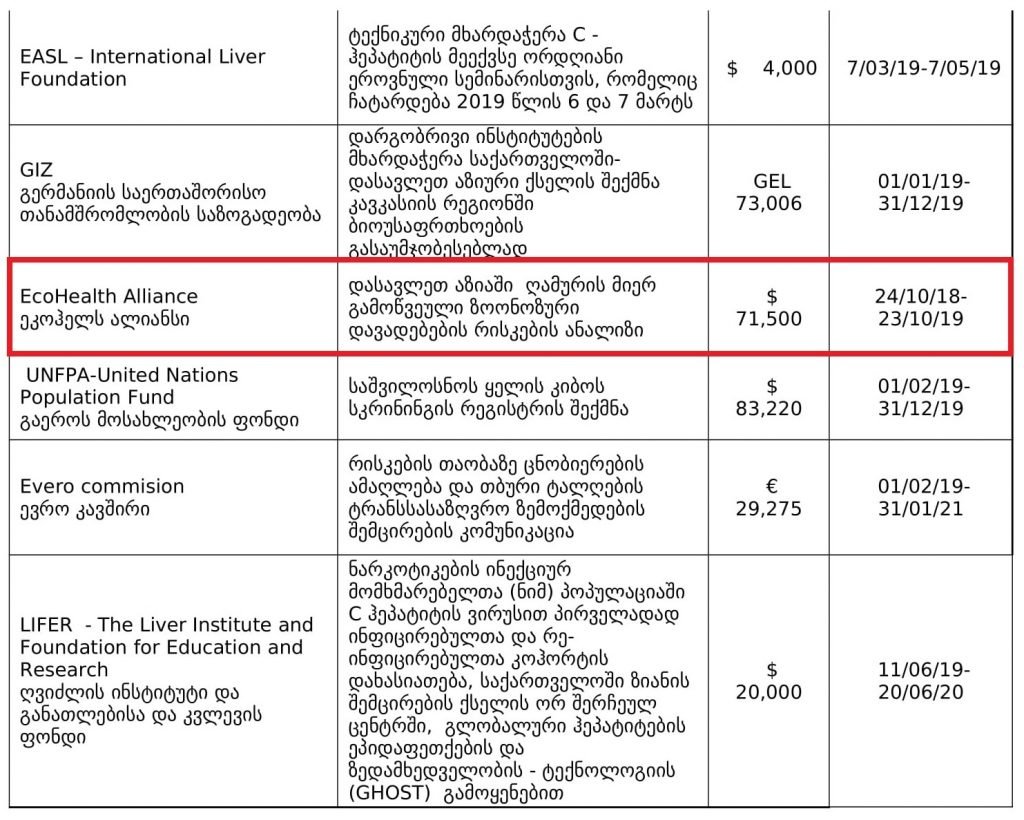
1. Project 1742 (EcoHealth/DTRA)
Risks of bat-borne zoonotic diseases in Western Asia
Duration: 24/10/2018-23 /10/2019
Funding: $71,500
@dgaytandzhieva
https://t.co/680CdD8uug
2. Bat Virus Database
Access to the database is limited only to those scientists participating in our ‘Bats and Coronaviruses’ project
Our intention is to eventually open up this database to the larger scientific community
https://t.co/mPn7b9HM48
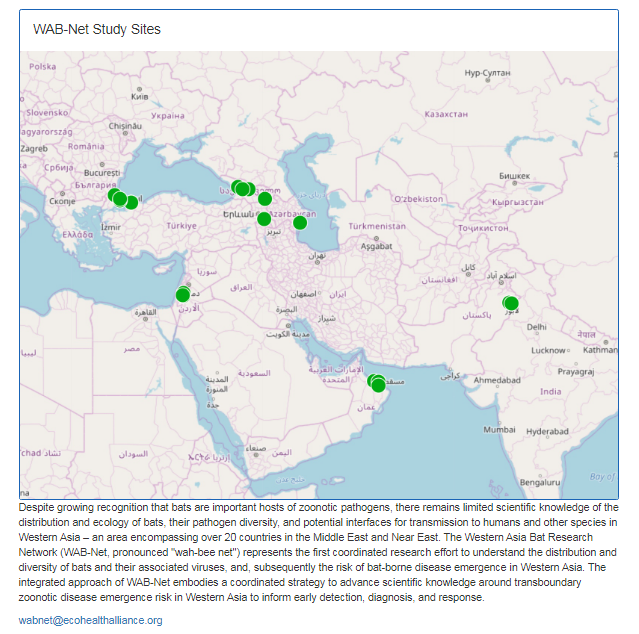
3. EcoHealth Alliance & DTRA Asking for Trouble
One Health research project focused on characterizing bat diversity, bat coronavirus diversity and the risk of bat-borne zoonotic disease emergence in the region.
https://t.co/u6aUeWBGEN
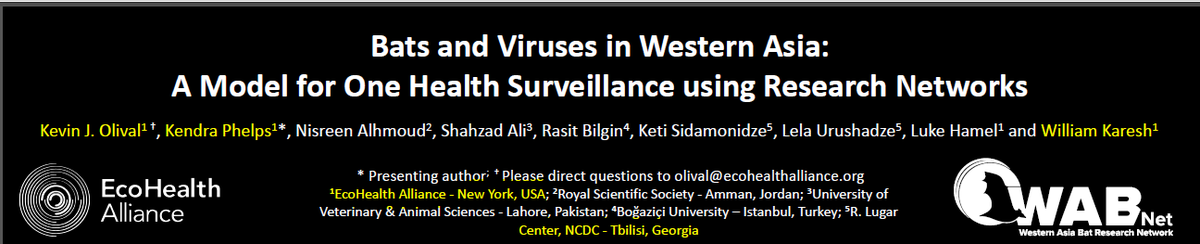
4. Phelps, Olival, Epstein, Karesh - EcoHealth/DTRA
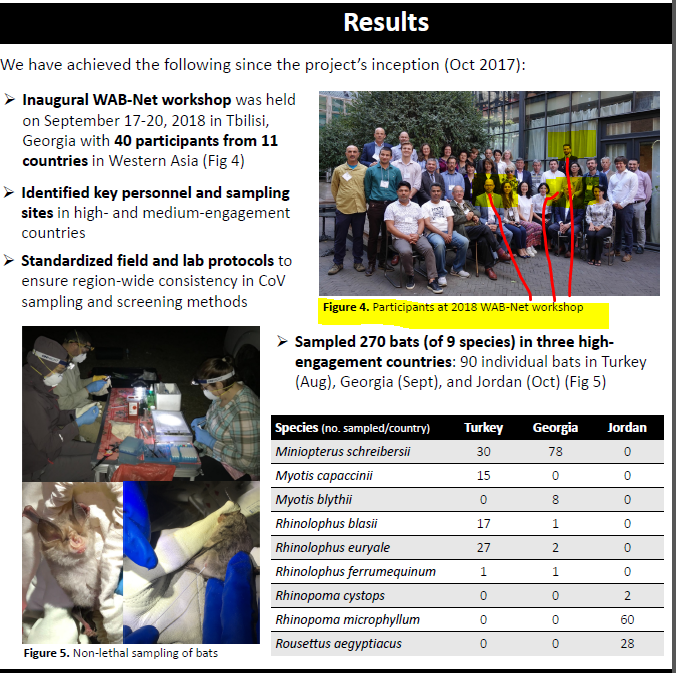
5, Methods and Expected Outcomes
(Unexpected Outcome = New Coronavirus Pandemic)
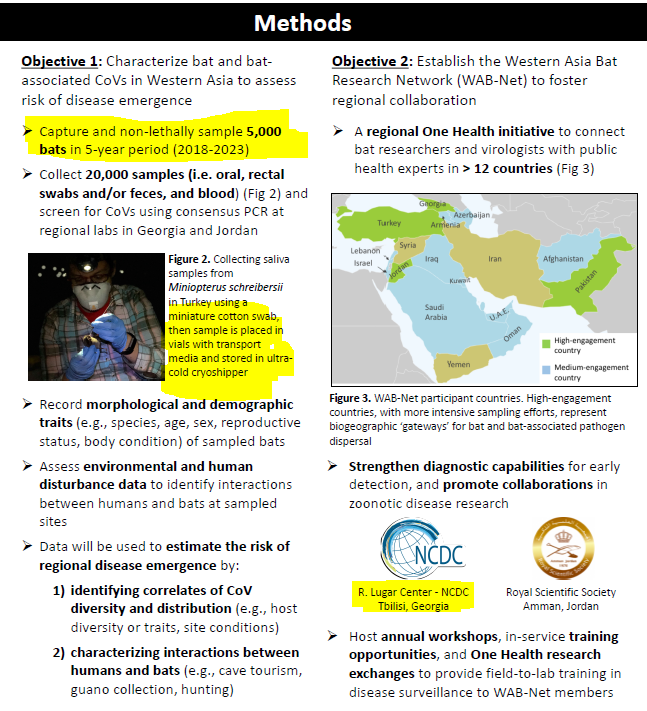
Risks of bat-borne zoonotic diseases in Western Asia
Duration: 24/10/2018-23 /10/2019
Funding: $71,500
@dgaytandzhieva
https://t.co/680CdD8uug
2. Bat Virus Database
Access to the database is limited only to those scientists participating in our ‘Bats and Coronaviruses’ project
Our intention is to eventually open up this database to the larger scientific community
https://t.co/mPn7b9HM48
3. EcoHealth Alliance & DTRA Asking for Trouble
One Health research project focused on characterizing bat diversity, bat coronavirus diversity and the risk of bat-borne zoonotic disease emergence in the region.
https://t.co/u6aUeWBGEN
4. Phelps, Olival, Epstein, Karesh - EcoHealth/DTRA
5, Methods and Expected Outcomes
(Unexpected Outcome = New Coronavirus Pandemic)