[THREAD] I want to talk a little bit about how people who are struggling with their mental health may appear to the outside world and why some things contribute to stigma even when we are not aware of them. I often complaints from families or partners.
More from Omar Bazza
More from Health


1/
Remember woman who tuk multiple @SriSriTattva products 4 range of problems frm diabetes 2 gas 2 liver disease & developed liver failure, listed for liver transplant?
Here is original thread:
https://t.co/PXxI1Slyv2
23 samples, Analysis results
#MedTwitter #livertwitter

2/
Before I go into results, I must say this was overwhelming. There was SO MUCH the lab identified, impossible to put everything here. So I made a summary. At the end of this thread, I have linked a full analysis described in Excel format. Some results were VERY concerning
3/
How did we analyse?
Here R links 2 methods
They R high end, done under strict protocols
Frm Ministry of Forest, Environment, Climate / NABL approvd Lab
ICP-OES https://t.co/O1CLhqVQAu
GC MSMS https://t.co/zRJoXyWQIr
FTIR https://t.co/goAembQ08p
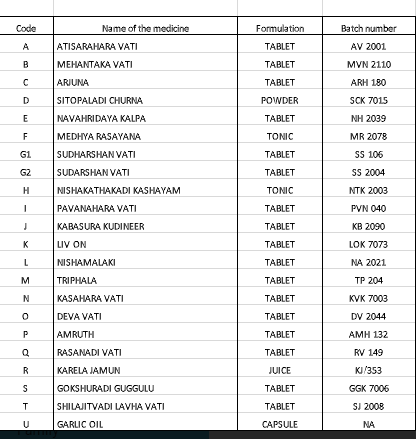
Here is list V analysed 👇
4/
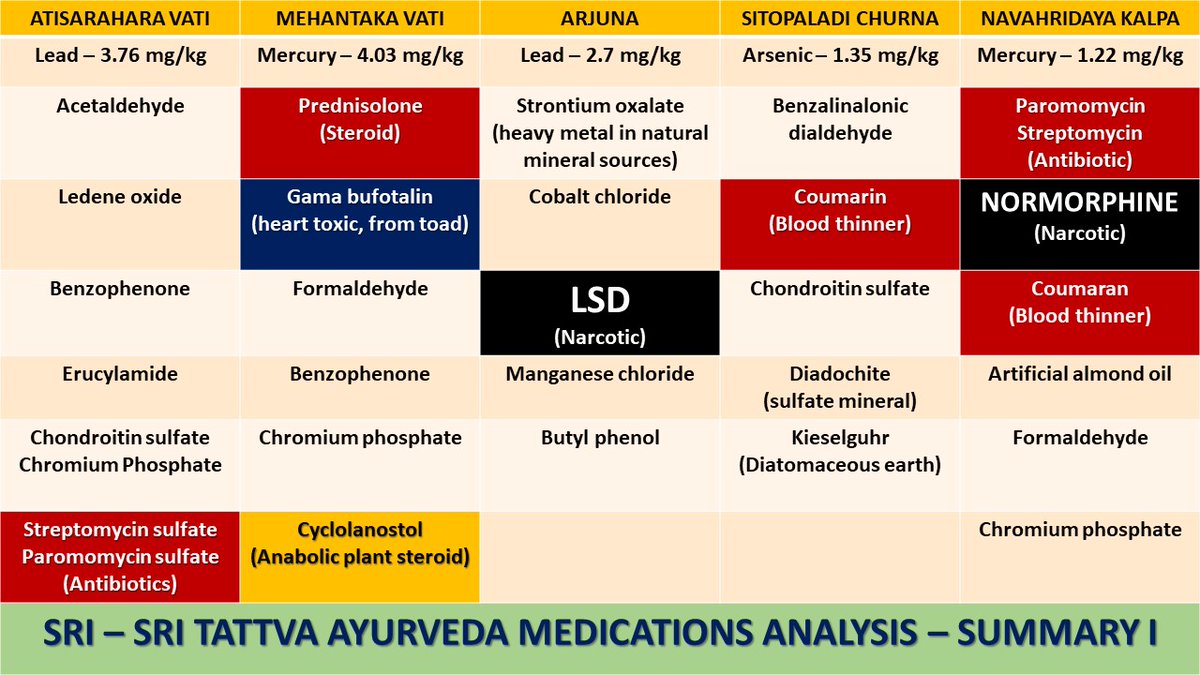
Sample names written on top (each column).
First 5 samples: C what we identified in #Ayurveda #medicines
Antibiotics
Steroids (anabolic/synthetic)
#NARCOTICS - LSD, Morphine
Blood thinners (possible reason Y bleeding tests were off the roof in the patient)
Heavy metals!
5/
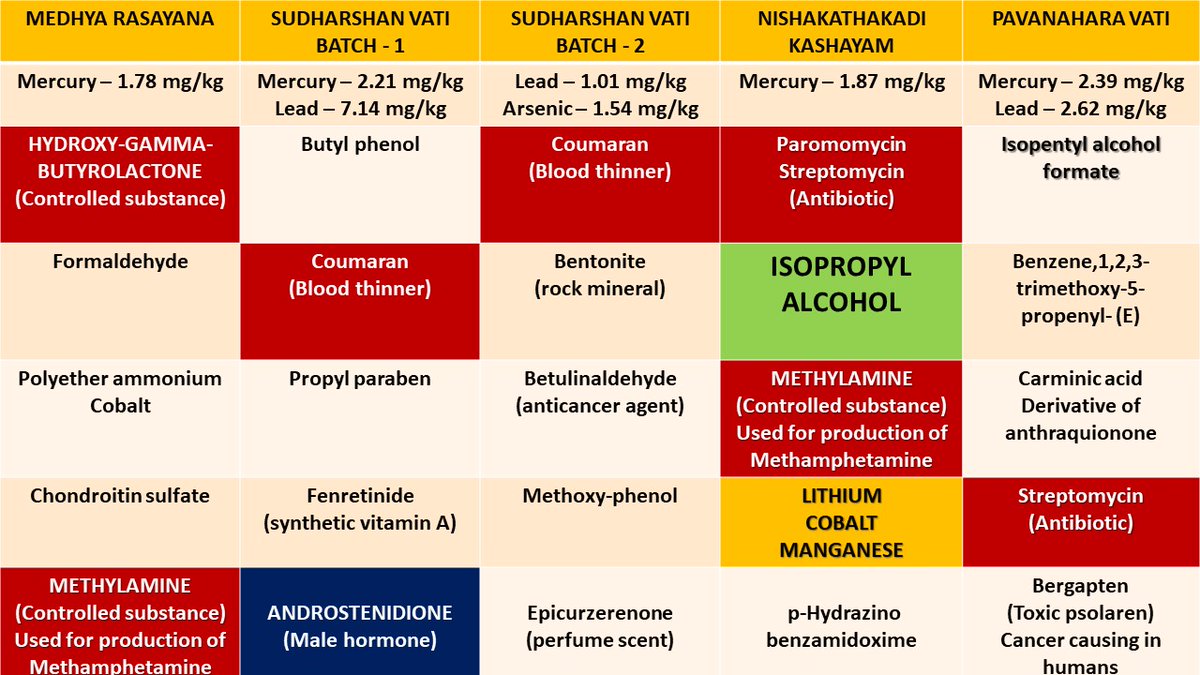
Next 5 samples (total 10 now)
Mercury is clear winner. Almost all samples
See controlled substances - Butyrolactones https://t.co/CPz0FwPEOm, methylamine https://t.co/OZnXY7U9UQ
Alcohols, industrial solvents
Rare metals - cobalt, lithium
Again lots of blood thinners
#Ayush
Remember woman who tuk multiple @SriSriTattva products 4 range of problems frm diabetes 2 gas 2 liver disease & developed liver failure, listed for liver transplant?
Here is original thread:
https://t.co/PXxI1Slyv2
23 samples, Analysis results
#MedTwitter #livertwitter
Middle-aged woman wit jaundice (bilirubin 34), liver failure. Liver #Transplant this week.
— (Cyriac) Abby Philips (@drabbyphilips) December 7, 2020
\U0001f633Cause\U0001f447#Ayurveda #medicines total 23\U0001f616 by @SriSriTattva & @SriSri 3-6 mnth 4 sugar, pressure, #COVID19 #ImmuneBoosters, #memory, #liver tonic.
Sent 4 analysis.#livertwitter #MedTwitter pic.twitter.com/uz3FCiVJ3f
2/
Before I go into results, I must say this was overwhelming. There was SO MUCH the lab identified, impossible to put everything here. So I made a summary. At the end of this thread, I have linked a full analysis described in Excel format. Some results were VERY concerning
3/
How did we analyse?
Here R links 2 methods
They R high end, done under strict protocols
Frm Ministry of Forest, Environment, Climate / NABL approvd Lab
ICP-OES https://t.co/O1CLhqVQAu
GC MSMS https://t.co/zRJoXyWQIr
FTIR https://t.co/goAembQ08p
Here is list V analysed 👇
4/
Sample names written on top (each column).
First 5 samples: C what we identified in #Ayurveda #medicines
Antibiotics
Steroids (anabolic/synthetic)
#NARCOTICS - LSD, Morphine
Blood thinners (possible reason Y bleeding tests were off the roof in the patient)
Heavy metals!
5/
Next 5 samples (total 10 now)
Mercury is clear winner. Almost all samples
See controlled substances - Butyrolactones https://t.co/CPz0FwPEOm, methylamine https://t.co/OZnXY7U9UQ
Alcohols, industrial solvents
Rare metals - cobalt, lithium
Again lots of blood thinners
#Ayush