Or it's important to them that others believe that they're actually depressed, not "just sad."
I know some people who seem (to me) more concerned with receiving VALIDATION for their mental health issues than solving them.
They seem to care most about other people BELIEVING their problems are real.
I'm curious about this.
Or it's important to them that others believe that they're actually depressed, not "just sad."
If no one cuts you slack because of your mental health stuff, maybe you're in a really bad place, so you need people to believe you.
https://t.co/07v275i2gt
While she said some things I agree with, I rolled by eyes at her use of the word "trauma" because it seemed to me a transparent way to show political support to folks who's trauma narratives are important to...
I guess there's a general thing here: the more you can claim to have been harmed, the more likely people are to rally to support you.
I was once in a social dynamic where I would construct things such that I was visibly sad or put upon, because that was the only way I knew to revive (a type of) affection.
They need it, and they need it to be believed, because that's the only way they can feel loved and supported.
(Though that begs the question of WHY people have that need.)
The establishment certifies that this problem is HARD, you're not expected to just be able to trivially solve it. Which gives one protection against others' claims (or even demands) that you can and should.
Do you have a story for what's going on?
More from Eli Tyre
My catch all thread for this discussion of AI risk in relation to Critical Rationalism, to summarize what's happened so far and how to go forward, from here.
I started by simply stating that I thought that the arguments that I had heard so far don't hold up, and seeing if anyone was interested in going into it in depth with
So far, a few people have engaged pretty extensively with me, for instance, scheduling video calls to talk about some of the stuff, or long private chats.
(Links to some of those that are public at the bottom of the thread.)
But in addition to that, there has been a much more sprawling conversation happening on twitter, involving a much larger number of people.
Having talked to a number of people, I then offered a paraphrase of the basic counter that I was hearing from people of the Crit Rat persuasion.
I started by simply stating that I thought that the arguments that I had heard so far don't hold up, and seeing if anyone was interested in going into it in depth with
CritRats!
— Eli Tyre (@EpistemicHope) December 26, 2020
I think AI risk is a real existential concern, and I claim that the CritRat counterarguments that I've heard so far (keywords: universality, person, moral knowledge, education, etc.) don't hold up.
Anyone want to hash this out with me?https://t.co/Sdm4SSfQZv
So far, a few people have engaged pretty extensively with me, for instance, scheduling video calls to talk about some of the stuff, or long private chats.
(Links to some of those that are public at the bottom of the thread.)
But in addition to that, there has been a much more sprawling conversation happening on twitter, involving a much larger number of people.
Having talked to a number of people, I then offered a paraphrase of the basic counter that I was hearing from people of the Crit Rat persuasion.
ELI'S PARAPHRASE OF THE CRIT RAT STORY ABOUT AGI AND AI RISK
— Eli Tyre (@EpistemicHope) January 5, 2021
There are two things that you might call "AI".
The first is non-general AI, which is a program that follows some pre-set algorithm to solve a pre-set problem. This includes modern ML.
CritRats!
I think AI risk is a real existential concern, and I claim that the CritRat counterarguments that I've heard so far (keywords: universality, person, moral knowledge, education, etc.) don't hold up.
Anyone want to hash this out with
For instance, while I heartily agree with lots of what is said in this video, I don't think that the conclusion about how to prevent (the bad kind of) human extinction, with regard to AGI, follows.
There are a number of reasons to think that AGI will be more dangerous than most people are, despite both people and AGIs being qualitatively the same sort of thing (explanatory knowledge-creating entities).
And, I maintain, that because of practical/quantitative (not fundamental/qualitative) differences, the development of AGI / TAI is very likely to destroy the world, by default.
(I'm not clear on exactly how much disagreement there is. In the video above, Deutsch says "Building an AGI with perverse emotions that lead it to immoral actions would be a crime."
I think AI risk is a real existential concern, and I claim that the CritRat counterarguments that I've heard so far (keywords: universality, person, moral knowledge, education, etc.) don't hold up.
Anyone want to hash this out with
In general, I am super up for short (1 to 10 hour) adversarial collaborations.
— Eli Tyre (@EpistemicHope) December 23, 2020
If you think I'm wrong about something, and want to dig into the topic with me to find out what's up / prove me wrong, DM me.
For instance, while I heartily agree with lots of what is said in this video, I don't think that the conclusion about how to prevent (the bad kind of) human extinction, with regard to AGI, follows.
There are a number of reasons to think that AGI will be more dangerous than most people are, despite both people and AGIs being qualitatively the same sort of thing (explanatory knowledge-creating entities).
And, I maintain, that because of practical/quantitative (not fundamental/qualitative) differences, the development of AGI / TAI is very likely to destroy the world, by default.
(I'm not clear on exactly how much disagreement there is. In the video above, Deutsch says "Building an AGI with perverse emotions that lead it to immoral actions would be a crime."
More from Health

1/16
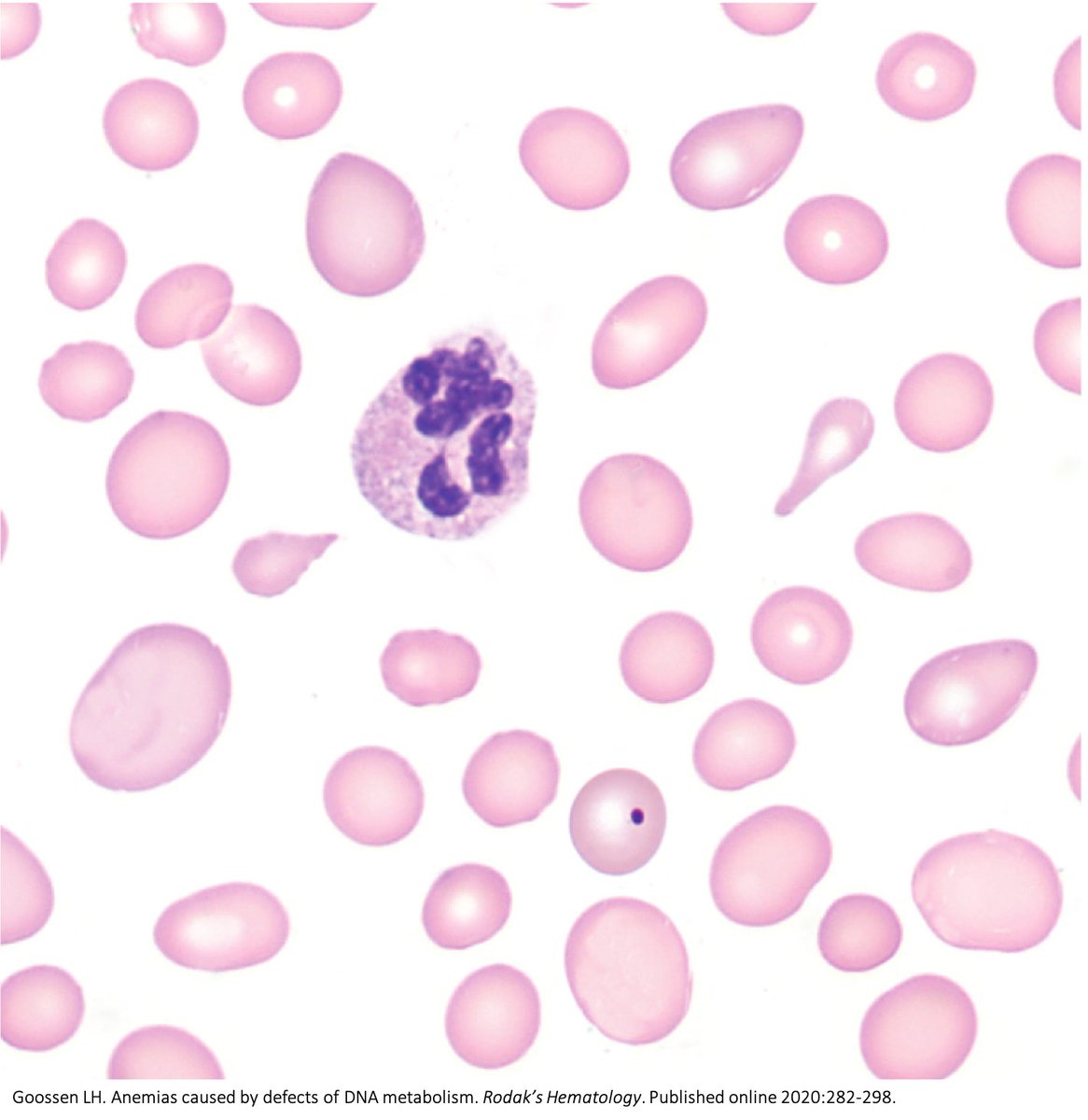
Why do B12 and folate deficiencies lead to HUGE red blood cells?
And, if the issue is DNA synthesis, why are red blood cells (which don't have DNA) the key cell line affected?
For answers, we'll have to go back a few billion years.
2/
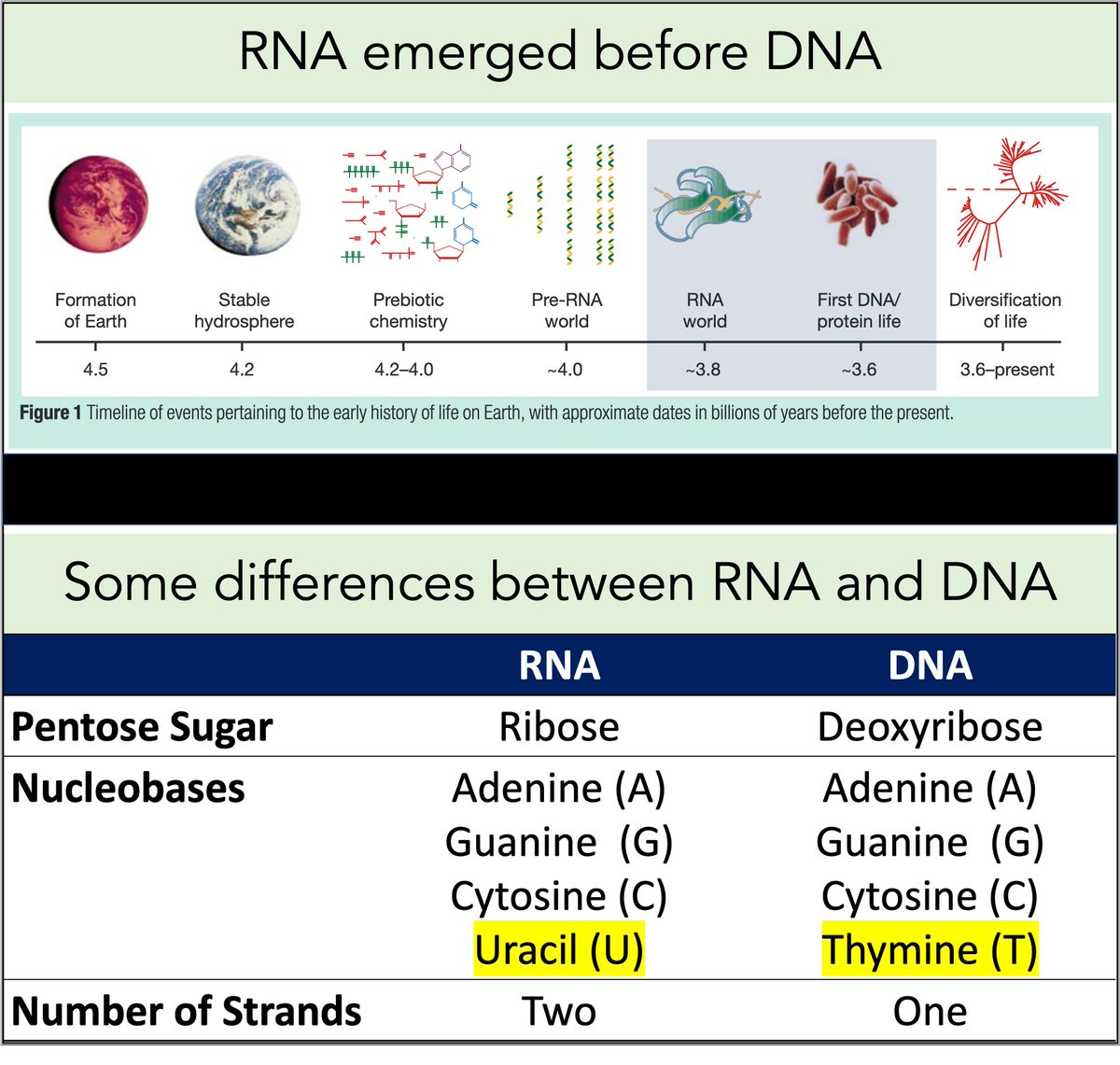
RNA came first. Then, ~3-4 billion years ago, DNA emerged.
Among their differences:
🔹RNA contains uracil
🔹DNA contains thymine
But why does DNA contains thymine (T) instead of uracil (U)?
https://t.co/XlxT6cLLXg
3/
🔑Cytosine (C) can undergo spontaneous deamination to uracil (U).
In the RNA world, this meant that U could appear intensionally or unintentionally. This is clearly problematic. How can you repair RNA when you can't tell if something is an error?
https://t.co/bIZGviHBUc
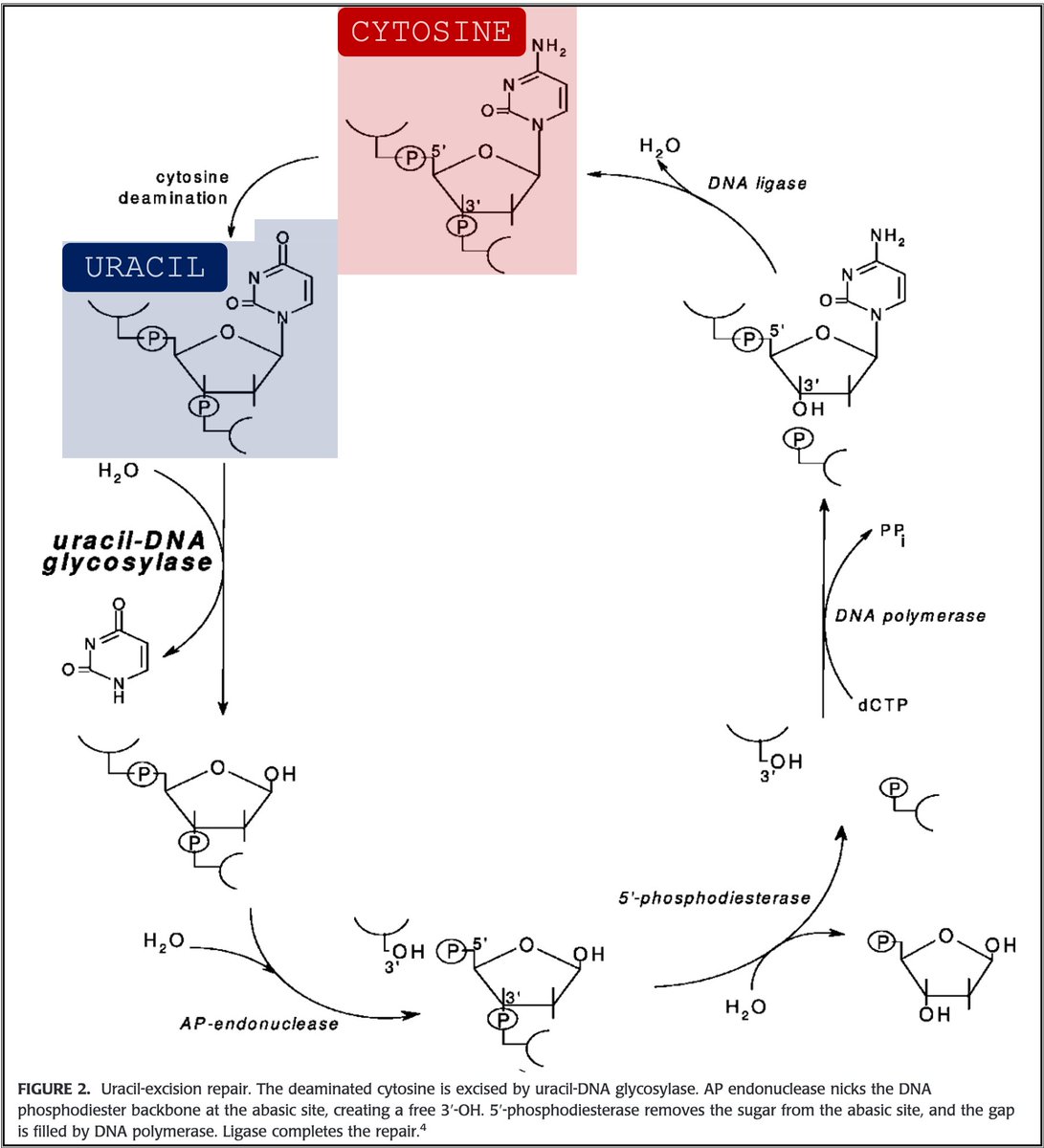
4/
DNA's use of T instead of U means that spontaneous C → U deamination can be corrected without worry that an intentional U is being removed.
DNA requires greater stability than RNA so the transition to a thymine-based structure was beneficial.
https://t.co/bIZGviHBUc
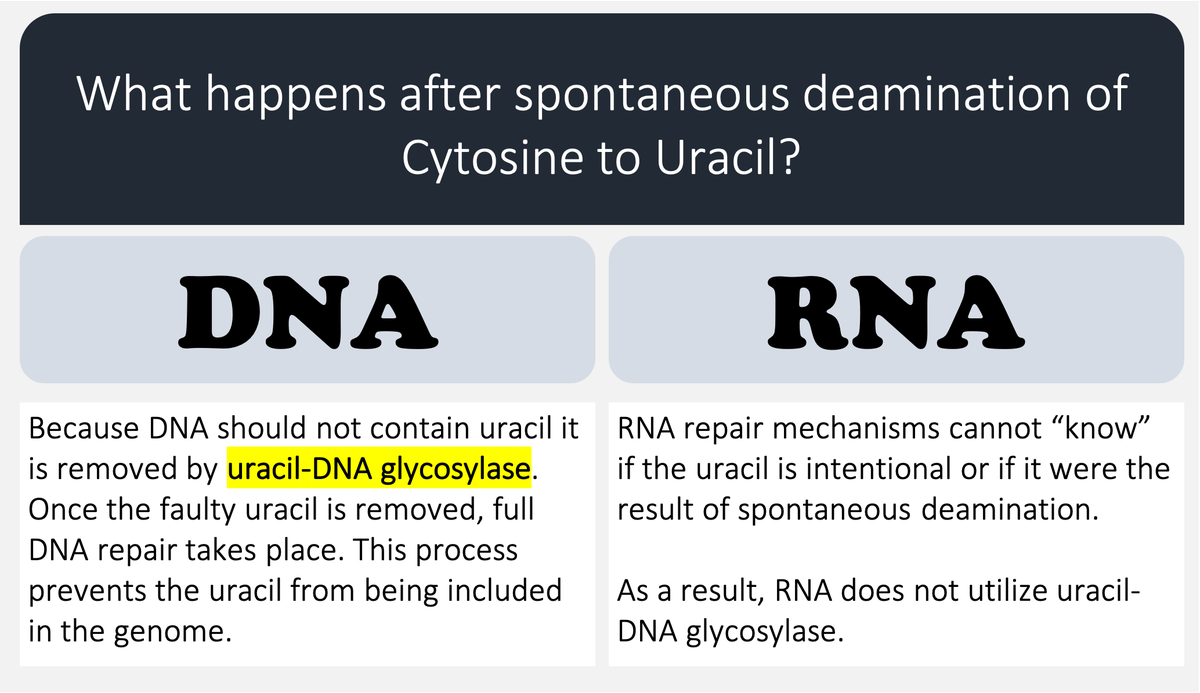
5/
Let's return to megaloblastic anemia secondary to B12 or folate deficiency.
When either is severely deficient deoxythymidine monophosphate (dTMP*) production is hindered. With less dTMP, DNA synthesis is abnormal.
[*Note: thymine is the base in dTMP]
https://t.co/AnDUtKkbZh
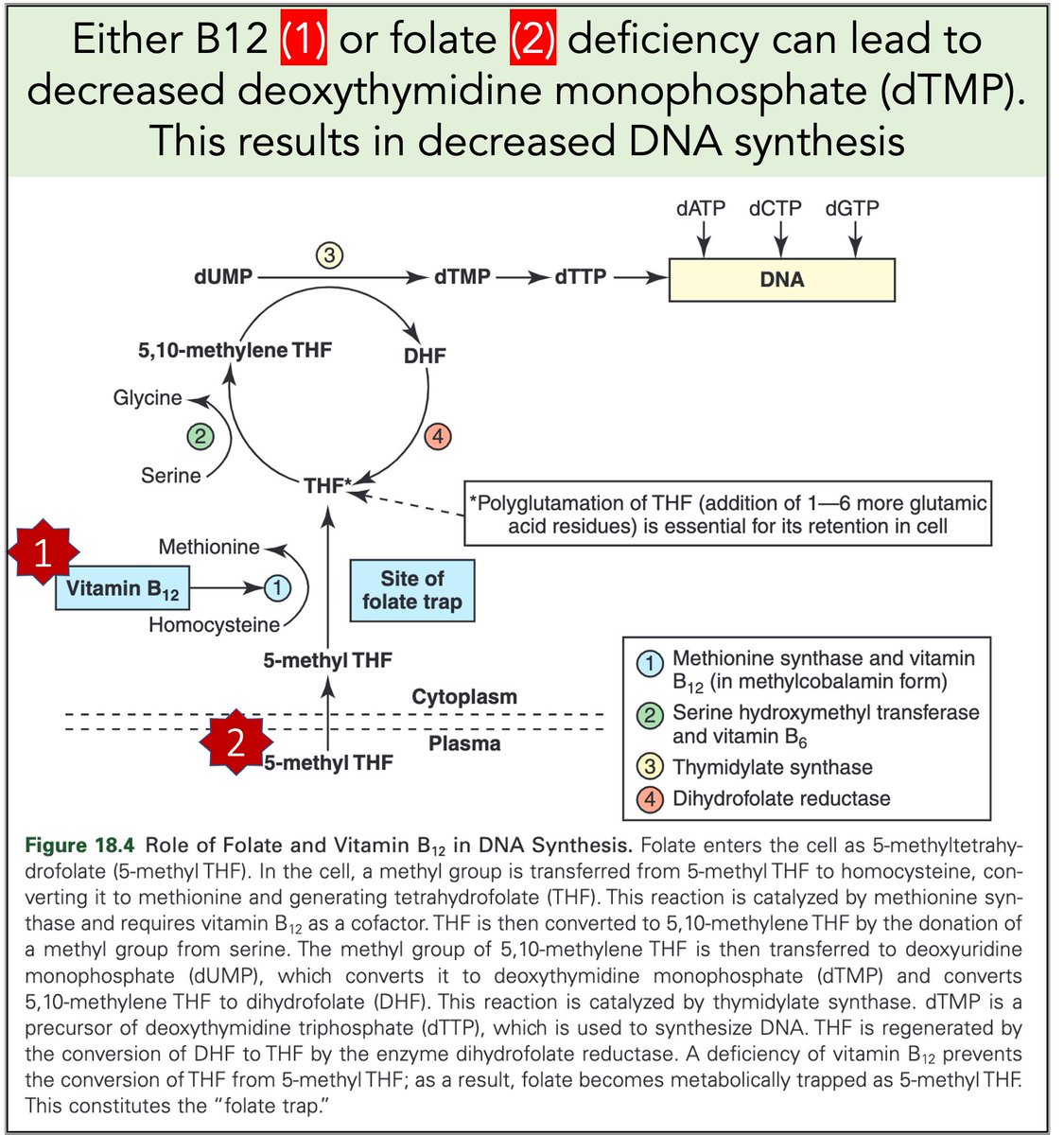
Why do B12 and folate deficiencies lead to HUGE red blood cells?
And, if the issue is DNA synthesis, why are red blood cells (which don't have DNA) the key cell line affected?
For answers, we'll have to go back a few billion years.
2/
RNA came first. Then, ~3-4 billion years ago, DNA emerged.
Among their differences:
🔹RNA contains uracil
🔹DNA contains thymine
But why does DNA contains thymine (T) instead of uracil (U)?
https://t.co/XlxT6cLLXg
3/
🔑Cytosine (C) can undergo spontaneous deamination to uracil (U).
In the RNA world, this meant that U could appear intensionally or unintentionally. This is clearly problematic. How can you repair RNA when you can't tell if something is an error?
https://t.co/bIZGviHBUc
4/
DNA's use of T instead of U means that spontaneous C → U deamination can be corrected without worry that an intentional U is being removed.
DNA requires greater stability than RNA so the transition to a thymine-based structure was beneficial.
https://t.co/bIZGviHBUc
5/
Let's return to megaloblastic anemia secondary to B12 or folate deficiency.
When either is severely deficient deoxythymidine monophosphate (dTMP*) production is hindered. With less dTMP, DNA synthesis is abnormal.
[*Note: thymine is the base in dTMP]
https://t.co/AnDUtKkbZh


No-regret #hydrogen:
Charting early steps for H₂ infrastructure in Europe.
👉Summary of conclusions of a new study by @AgoraEW @AFRY_global @Ma_Deutsch @gnievchenko (1/17)
https://t.co/YA50FA57Em
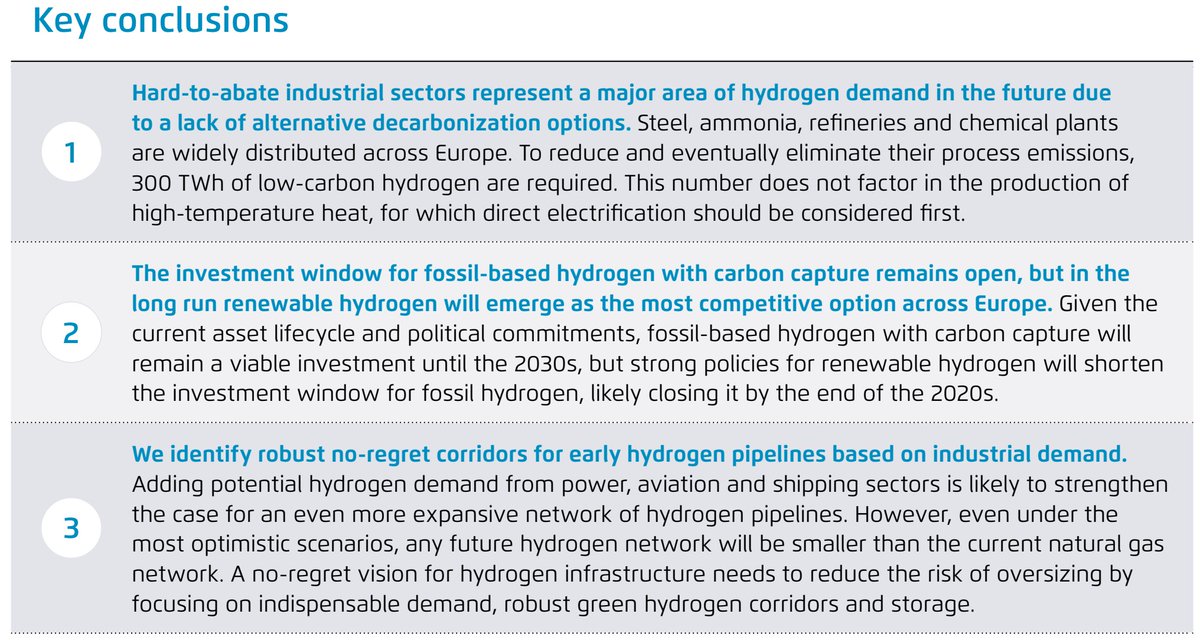
The idea behind this study is that future hydrogen demand is highly uncertain and we don’t want to spend tens of billions of euros to repurpose a network which won’t be needed. For instance, hydrogen in ground transport is a hotly debated topic https://t.co/RlnqDYVzpr (2/17)
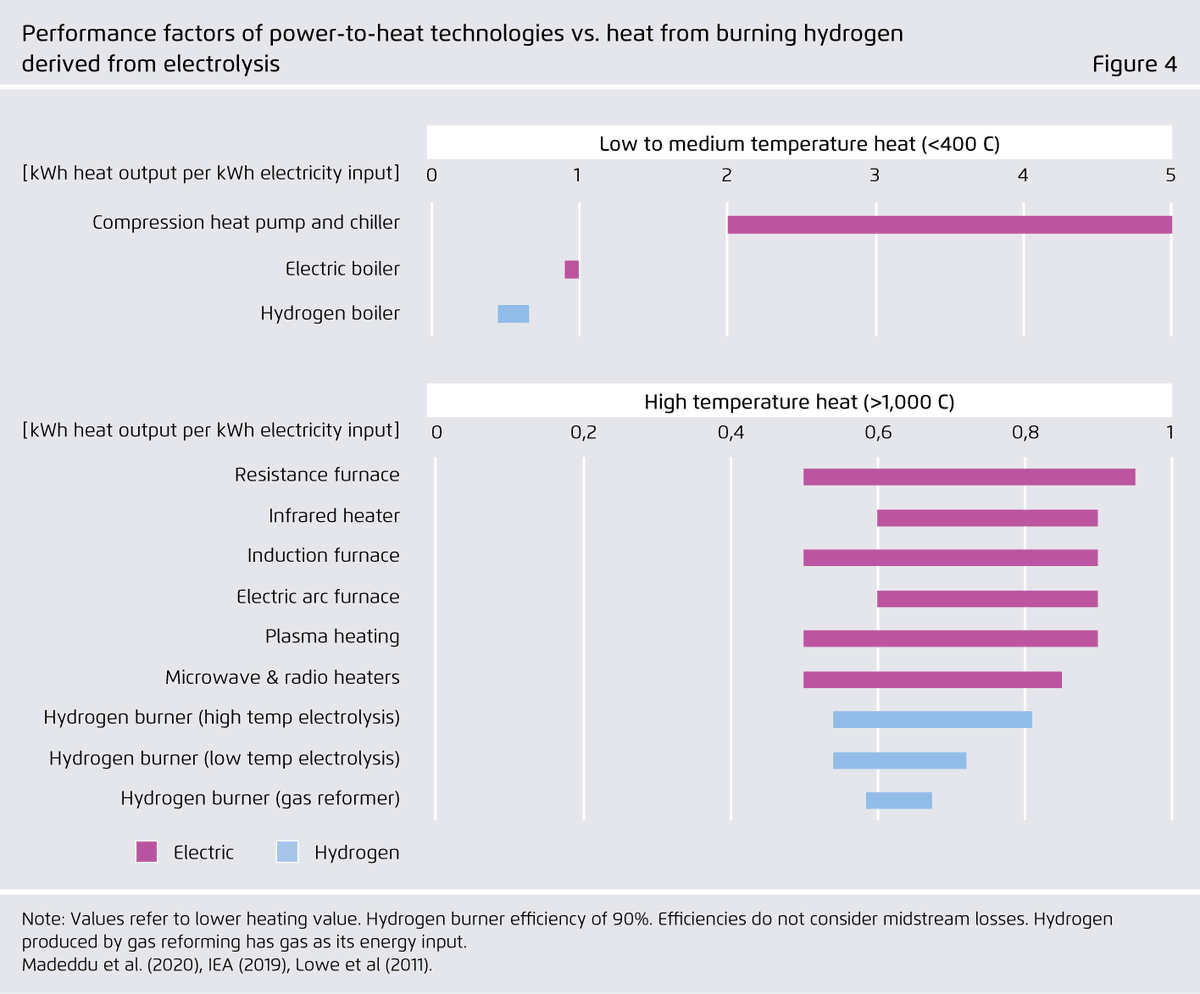
Similar things can be said about heat. 40% of today’s industrial natural gas use in the EU goes to heat below 100°C and therefore is within range of electric heat pumps – whose performance factors far exceed 100%. (3/17)

Even for higher temperatures, a range of power-to-heat (PtH) options can be more energy-efficient than hydrogen and should be considered first. Available PtH technologies can cover all temperature levels needed in industrial production (e.g. electric arc furnace: 3500°C). (4/17)
In our view, hydrogen use for feedstock and chemical reactions is the only inescapable source of industrial hydrogen demand in Europe that does not lend itself to electrification. Examples include ammonia, steel, and petrochemical industries. (5/17)
Charting early steps for H₂ infrastructure in Europe.
👉Summary of conclusions of a new study by @AgoraEW @AFRY_global @Ma_Deutsch @gnievchenko (1/17)
https://t.co/YA50FA57Em
The idea behind this study is that future hydrogen demand is highly uncertain and we don’t want to spend tens of billions of euros to repurpose a network which won’t be needed. For instance, hydrogen in ground transport is a hotly debated topic https://t.co/RlnqDYVzpr (2/17)
Similar things can be said about heat. 40% of today’s industrial natural gas use in the EU goes to heat below 100°C and therefore is within range of electric heat pumps – whose performance factors far exceed 100%. (3/17)
Even for higher temperatures, a range of power-to-heat (PtH) options can be more energy-efficient than hydrogen and should be considered first. Available PtH technologies can cover all temperature levels needed in industrial production (e.g. electric arc furnace: 3500°C). (4/17)
In our view, hydrogen use for feedstock and chemical reactions is the only inescapable source of industrial hydrogen demand in Europe that does not lend itself to electrification. Examples include ammonia, steel, and petrochemical industries. (5/17)

1/15
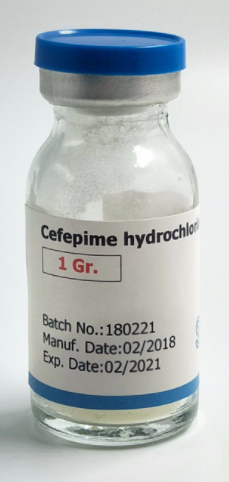
Why can cefepime cause neurological toxicity?
And why is renal failure the main risk factor for this complication?
The answer requires us to learn about cefepime's structure and why it unexpectedly binds to a certain CNS receptor.
#MedTwitter #Tweetorial
2/
Let's establish a few facts about cefepime:
🔺4th generation cephalosporin antibiotic
🔺Excretion = exclusively in the urine (mostly as unchanged drug)
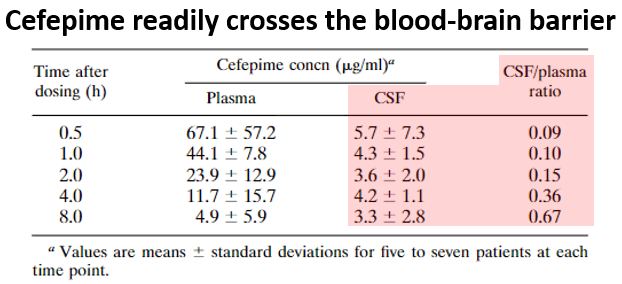
🔺Readily crosses the blood-brain barrier (so it easily accesses the brain)
https://t.co/rjYG1BfGPR
3/
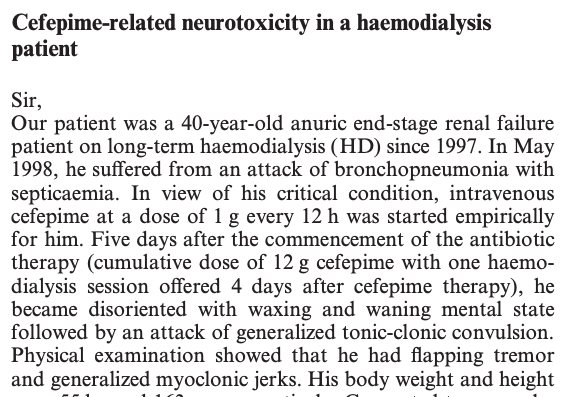
The first report of cefepime neurotoxicity was in 1999.
A patient w/ renal failure received high doses of cefepime and then developed encephalopathy, tremors, myoclonic jerks, and tonic-clonic seizures.
✅All symptoms resolved after hemodialysis.
https://t.co/u7JLVitQpp
4/
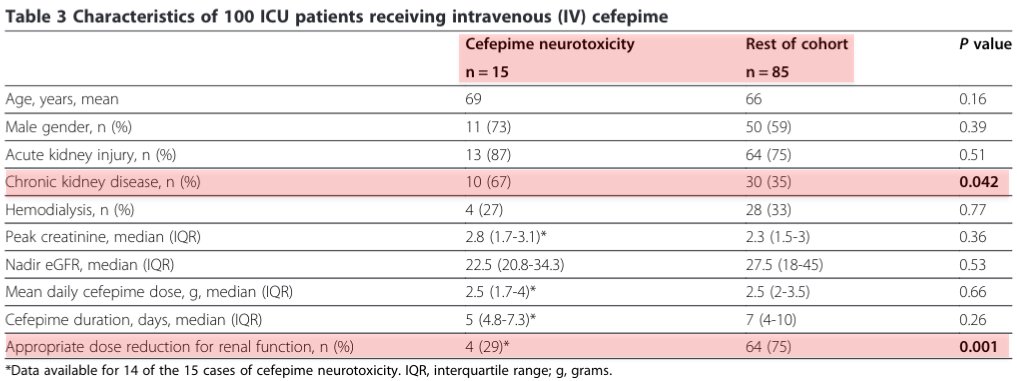
Cefepime neurotoxicity is surprisingly common, occurring in up to 15% of treated critically ill patients (w/ symptoms varying from encephalopathy to seizures).
💡The main risk factors = renal failure and lack of dose adjustment for renal function.
https://t.co/nxbnzSq8AR
5/
What about cefepime induces neurotoxicity?
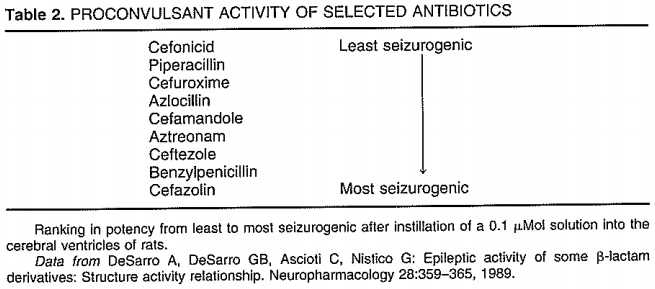
One clue is that it's not the only antibiotic that causes neurotoxicity, particularly seizures.
This actually is a class effect w/ other beta-lactam antibiotics (including penicillins and carbapenems).
https://t.co/Lf4BhON9IY
Why can cefepime cause neurological toxicity?
And why is renal failure the main risk factor for this complication?
The answer requires us to learn about cefepime's structure and why it unexpectedly binds to a certain CNS receptor.
#MedTwitter #Tweetorial
2/
Let's establish a few facts about cefepime:
🔺4th generation cephalosporin antibiotic
🔺Excretion = exclusively in the urine (mostly as unchanged drug)
🔺Readily crosses the blood-brain barrier (so it easily accesses the brain)
https://t.co/rjYG1BfGPR
3/
The first report of cefepime neurotoxicity was in 1999.
A patient w/ renal failure received high doses of cefepime and then developed encephalopathy, tremors, myoclonic jerks, and tonic-clonic seizures.
✅All symptoms resolved after hemodialysis.
https://t.co/u7JLVitQpp
4/
Cefepime neurotoxicity is surprisingly common, occurring in up to 15% of treated critically ill patients (w/ symptoms varying from encephalopathy to seizures).
💡The main risk factors = renal failure and lack of dose adjustment for renal function.
https://t.co/nxbnzSq8AR
5/
What about cefepime induces neurotoxicity?
One clue is that it's not the only antibiotic that causes neurotoxicity, particularly seizures.
This actually is a class effect w/ other beta-lactam antibiotics (including penicillins and carbapenems).
https://t.co/Lf4BhON9IY