
And this sometimes leaves me wondering if my standards are unreasonable.
There's a particular kind of romantic partnership, with a certain sort of person, that I've wanted since I became a self-aware, directed agent at around age 15.
And this sometimes leaves me wondering if my standards are unreasonable.
These days, I'm rarely directly or viscerally in contact with it.
[I might elaborate on the wrongness sometime.]
All of this is still reasonably fluid.)
All the other "options" pale markedly in comparison. It becomes obvious that they're not what I want.
It seems so...obvious, or in some sense, ordinary. It feels like it should be...well, not easy, but not crazily hard.
And then I feel confused that I've been going around in the world for more than a decade and I've had so few hits. It's not clear if I've ever gotten close.
No, it's the world that's crazy, the thing that I want is obviously Good and obviously worth guarding.
The thing that I'm longing for is real. I'm not just hallucinating.
There's something that my love is FOR.
I SHOULDN'T follow false gods because maybe they're the only ones there are. There's something that's not false.
And I'll stubbornly persist in half-heartedly seeking the thing, without really feeling why, mostly on the basis of a trust that the other time-slices of me are on to something real.
What should I do? What should I try?
Maybe I should maintain resolve and never give up until I find a way.
Maybe I should be "optimistic." Trust that it will work out, and doors will open.
Maybe I need to be coming from a place of Surrender. (That IS what the trope book says.)
Which can be brutal, and is off the table if the person can't own their end of the connection.
More from Eli Tyre
CritRats!
I think AI risk is a real existential concern, and I claim that the CritRat counterarguments that I've heard so far (keywords: universality, person, moral knowledge, education, etc.) don't hold up.
Anyone want to hash this out with
For instance, while I heartily agree with lots of what is said in this video, I don't think that the conclusion about how to prevent (the bad kind of) human extinction, with regard to AGI, follows.
There are a number of reasons to think that AGI will be more dangerous than most people are, despite both people and AGIs being qualitatively the same sort of thing (explanatory knowledge-creating entities).
And, I maintain, that because of practical/quantitative (not fundamental/qualitative) differences, the development of AGI / TAI is very likely to destroy the world, by default.
(I'm not clear on exactly how much disagreement there is. In the video above, Deutsch says "Building an AGI with perverse emotions that lead it to immoral actions would be a crime."
I think AI risk is a real existential concern, and I claim that the CritRat counterarguments that I've heard so far (keywords: universality, person, moral knowledge, education, etc.) don't hold up.
Anyone want to hash this out with
In general, I am super up for short (1 to 10 hour) adversarial collaborations.
— Eli Tyre (@EpistemicHope) December 23, 2020
If you think I'm wrong about something, and want to dig into the topic with me to find out what's up / prove me wrong, DM me.
For instance, while I heartily agree with lots of what is said in this video, I don't think that the conclusion about how to prevent (the bad kind of) human extinction, with regard to AGI, follows.
There are a number of reasons to think that AGI will be more dangerous than most people are, despite both people and AGIs being qualitatively the same sort of thing (explanatory knowledge-creating entities).
And, I maintain, that because of practical/quantitative (not fundamental/qualitative) differences, the development of AGI / TAI is very likely to destroy the world, by default.
(I'm not clear on exactly how much disagreement there is. In the video above, Deutsch says "Building an AGI with perverse emotions that lead it to immoral actions would be a crime."
My catch all thread for this discussion of AI risk in relation to Critical Rationalism, to summarize what's happened so far and how to go forward, from here.
I started by simply stating that I thought that the arguments that I had heard so far don't hold up, and seeing if anyone was interested in going into it in depth with
So far, a few people have engaged pretty extensively with me, for instance, scheduling video calls to talk about some of the stuff, or long private chats.
(Links to some of those that are public at the bottom of the thread.)
But in addition to that, there has been a much more sprawling conversation happening on twitter, involving a much larger number of people.
Having talked to a number of people, I then offered a paraphrase of the basic counter that I was hearing from people of the Crit Rat persuasion.
I started by simply stating that I thought that the arguments that I had heard so far don't hold up, and seeing if anyone was interested in going into it in depth with
CritRats!
— Eli Tyre (@EpistemicHope) December 26, 2020
I think AI risk is a real existential concern, and I claim that the CritRat counterarguments that I've heard so far (keywords: universality, person, moral knowledge, education, etc.) don't hold up.
Anyone want to hash this out with me?https://t.co/Sdm4SSfQZv
So far, a few people have engaged pretty extensively with me, for instance, scheduling video calls to talk about some of the stuff, or long private chats.
(Links to some of those that are public at the bottom of the thread.)
But in addition to that, there has been a much more sprawling conversation happening on twitter, involving a much larger number of people.
Having talked to a number of people, I then offered a paraphrase of the basic counter that I was hearing from people of the Crit Rat persuasion.
ELI'S PARAPHRASE OF THE CRIT RAT STORY ABOUT AGI AND AI RISK
— Eli Tyre (@EpistemicHope) January 5, 2021
There are two things that you might call "AI".
The first is non-general AI, which is a program that follows some pre-set algorithm to solve a pre-set problem. This includes modern ML.
More from For later read




Hi @EdinburghUni @EHRC @EHRCChair @KishwerFalkner @RJHilsenrath @trussliz @GEOgovuk
The DIVERSITY INFORMATION section in yr job application mentions 'legal equality duties'. You then ask "What is your gender identity?" with options
Female
Male
Non-binary
Not-listed
Other
1/13
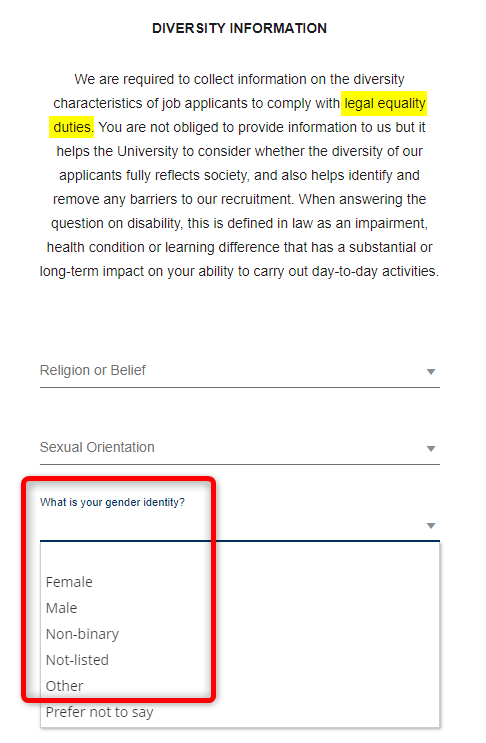
'Gender identity' is not a protected characteristic under the Equality Act 2010 and is not defined in the Act.
https://t.co/qisFhCiV1u
2/13
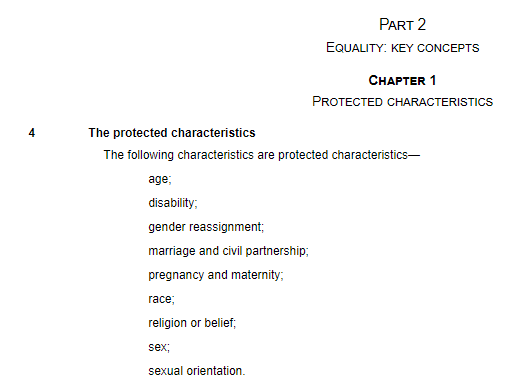
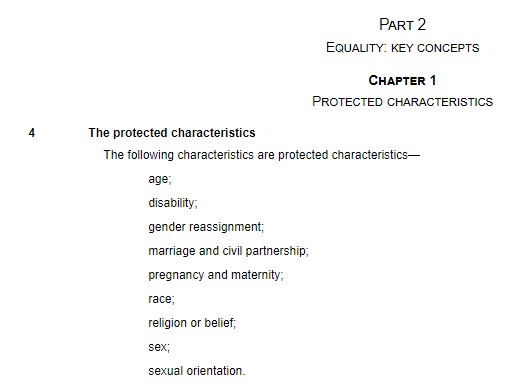
Sex is the protected characteristic and the only two possible options for sex are 'Female' and 'Male' as defined in the Act and consistent with biology - 'non-binary' and 'other' are not valid options.
https://t.co/CEJ0gkr6nF
'Gender identity' is not a synonym for sex.
3/13

You then ask "Does your gender identity match your sex registered at birth?"
4/13
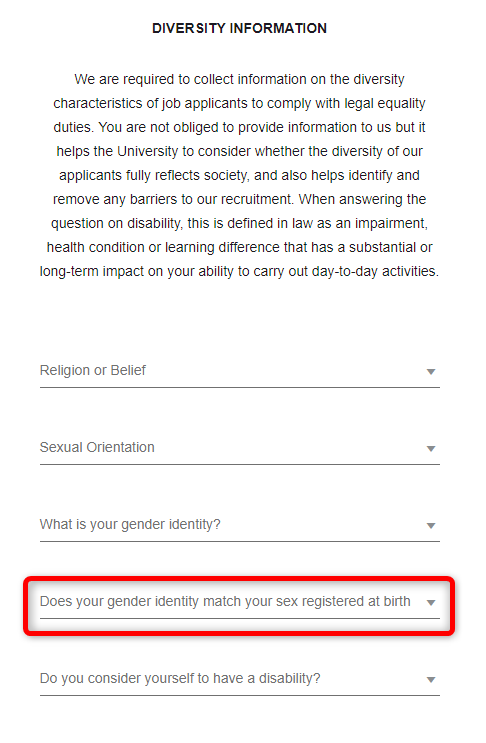
Again, 'gender identity' is not a protected characteristic under the Equality Act 2010 and is not defined in the Act.
https://t.co/qisFhCiV1u
5/13
The DIVERSITY INFORMATION section in yr job application mentions 'legal equality duties'. You then ask "What is your gender identity?" with options
Female
Male
Non-binary
Not-listed
Other
1/13
'Gender identity' is not a protected characteristic under the Equality Act 2010 and is not defined in the Act.
https://t.co/qisFhCiV1u
2/13
Sex is the protected characteristic and the only two possible options for sex are 'Female' and 'Male' as defined in the Act and consistent with biology - 'non-binary' and 'other' are not valid options.
https://t.co/CEJ0gkr6nF
'Gender identity' is not a synonym for sex.
3/13
You then ask "Does your gender identity match your sex registered at birth?"
4/13
Again, 'gender identity' is not a protected characteristic under the Equality Act 2010 and is not defined in the Act.
https://t.co/qisFhCiV1u
5/13


You May Also Like









Neo-nazi group #PatriotFront held a photo op in #Chicago last weekend & is currently marching around #DC so it's as good time as any to compile a list of their identified members for folks to watch for
Who are these chuds?
Patriot Front broke away from white nationalist org Vanguard America following #unitetheright in #charlottesville after James Alex Fields was seen with a VA shield before driving his car into a crowd, murdering Heather Heyer & injuring dozens of others
Syed Robbie Javid a.k.a. Sayed Robbie Javid or Robbie Javid of Alexandria,
Antoine Bernard Renard (a.k.a. “Charlemagne MD” on Discord) from Rockville, MD.
https://t.co/ykEjdZFDi6

Brandon Troy Higgs, 25, from Reisterstown,
Who are these chuds?
Patriot Front broke away from white nationalist org Vanguard America following #unitetheright in #charlottesville after James Alex Fields was seen with a VA shield before driving his car into a crowd, murdering Heather Heyer & injuring dozens of others
Syed Robbie Javid a.k.a. Sayed Robbie Javid or Robbie Javid of Alexandria,
Happy Monday everyone :-) Let's ring in September by reacquainting ourselves with Virginia neo-Nazi and NSC Dixie affiliate Sayed "Robbie" Javid, now known by "Reform the States". Robbie is an explicitly genocidal neo-Nazi, so lets get to know him a bit better!
— Garfield but Anti-Fascist (@AntifaGarfield) August 31, 2020
CW on this thread pic.twitter.com/3gzxrIo9HD
Antoine Bernard Renard (a.k.a. “Charlemagne MD” on Discord) from Rockville, MD.
https://t.co/ykEjdZFDi6
Brandon Troy Higgs, 25, from Reisterstown,

I hate when I learn something new (to me) & stunning about the Jeff Epstein network (h/t MoodyKnowsNada.)
Where to begin?
So our new Secretary of State Anthony Blinken's stepfather, Samuel Pisar, was "longtime lawyer and confidant of...Robert Maxwell," Ghislaine Maxwell's Dad.
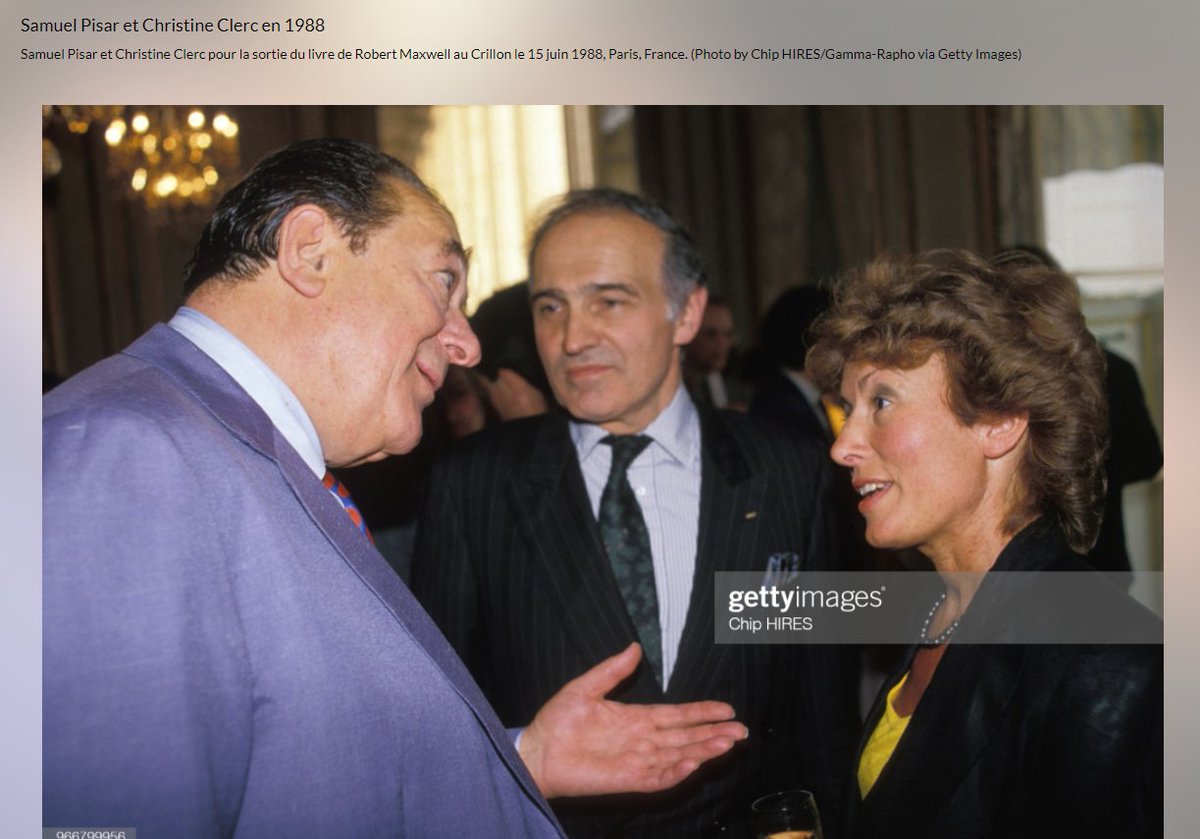
"Pisar was one of the last people to speak to Maxwell, by phone, probably an hour before the chairman of Mirror Group Newspapers fell off his luxury yacht the Lady Ghislaine on 5 November, 1991." https://t.co/DAEgchNyTP

OK, so that's just a coincidence. Moving on, Anthony Blinken "attended the prestigious Dalton School in New York City"...wait, what? https://t.co/DnE6AvHmJg
Dalton School...Dalton School...rings a
Oh that's right.
The dad of the U.S. Attorney General under both George W. Bush & Donald Trump, William Barr, was headmaster of the Dalton School.
Donald Barr was also quite a
I'm not going to even mention that Blinken's stepdad Sam Pisar's name was in Epstein's "black book."
Lots of names in that book. I mean, for example, Cuomo, Trump, Clinton, Prince Andrew, Bill Cosby, Woody Allen - all in that book, and their reputations are spotless.
Where to begin?
So our new Secretary of State Anthony Blinken's stepfather, Samuel Pisar, was "longtime lawyer and confidant of...Robert Maxwell," Ghislaine Maxwell's Dad.
"Pisar was one of the last people to speak to Maxwell, by phone, probably an hour before the chairman of Mirror Group Newspapers fell off his luxury yacht the Lady Ghislaine on 5 November, 1991." https://t.co/DAEgchNyTP
OK, so that's just a coincidence. Moving on, Anthony Blinken "attended the prestigious Dalton School in New York City"...wait, what? https://t.co/DnE6AvHmJg
Dalton School...Dalton School...rings a
Oh that's right.
The dad of the U.S. Attorney General under both George W. Bush & Donald Trump, William Barr, was headmaster of the Dalton School.
Donald Barr was also quite a
Donald Barr had a way with words. pic.twitter.com/JdRBwXPhJn
— Rudy Havenstein, listening to Nas all day. (@RudyHavenstein) September 17, 2020
I'm not going to even mention that Blinken's stepdad Sam Pisar's name was in Epstein's "black book."
Lots of names in that book. I mean, for example, Cuomo, Trump, Clinton, Prince Andrew, Bill Cosby, Woody Allen - all in that book, and their reputations are spotless.

1/OK, data mystery time.
This New York Times feature shows China with a Gini Index of less than 30, which would make it more equal than Canada, France, or the Netherlands. https://t.co/g3Sv6DZTDE
That's weird. Income inequality in China is legendary.
Let's check this number.
2/The New York Times cites the World Bank's recent report, "Fair Progress? Economic Mobility across Generations Around the World".
The report is available here:
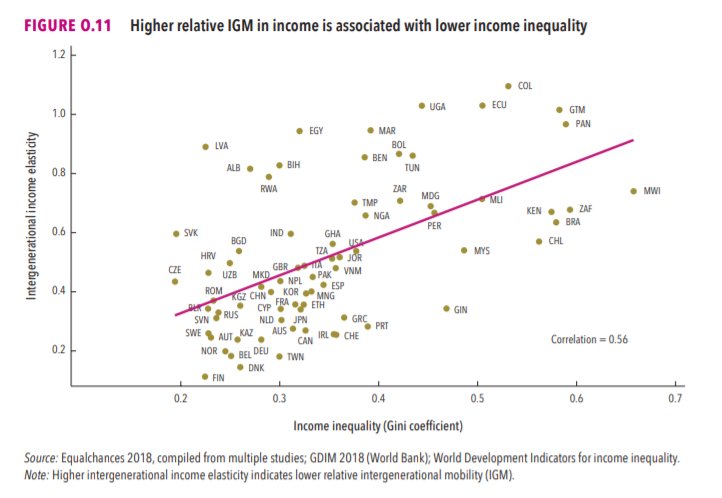
3/The World Bank report has a graph in which it appears to show the same value for China's Gini - under 0.3.
The graph cites the World Development Indicators as its source for the income inequality data.
4/The World Development Indicators are available at the World Bank's website.
Here's the Gini index: https://t.co/MvylQzpX6A
It looks as if the latest estimate for China's Gini is 42.2.
That estimate is from 2012.
5/A Gini of 42.2 would put China in the same neighborhood as the U.S., whose Gini was estimated at 41 in 2013.
I can't find the <30 number anywhere. The only other estimate in the tables for China is from 2008, when it was estimated at 42.8.
This New York Times feature shows China with a Gini Index of less than 30, which would make it more equal than Canada, France, or the Netherlands. https://t.co/g3Sv6DZTDE
That's weird. Income inequality in China is legendary.
Let's check this number.
2/The New York Times cites the World Bank's recent report, "Fair Progress? Economic Mobility across Generations Around the World".
The report is available here:
3/The World Bank report has a graph in which it appears to show the same value for China's Gini - under 0.3.
The graph cites the World Development Indicators as its source for the income inequality data.
4/The World Development Indicators are available at the World Bank's website.
Here's the Gini index: https://t.co/MvylQzpX6A
It looks as if the latest estimate for China's Gini is 42.2.
That estimate is from 2012.
5/A Gini of 42.2 would put China in the same neighborhood as the U.S., whose Gini was estimated at 41 in 2013.
I can't find the <30 number anywhere. The only other estimate in the tables for China is from 2008, when it was estimated at 42.8.