Categories Government

This will go pretty in depth FYI.
I couldn't possibly guess why Six Days in Fallujah is being revived at a time when US army recruitment is at an all time low.
— Daniel Ahmad (@ZhugeEX) February 11, 2021
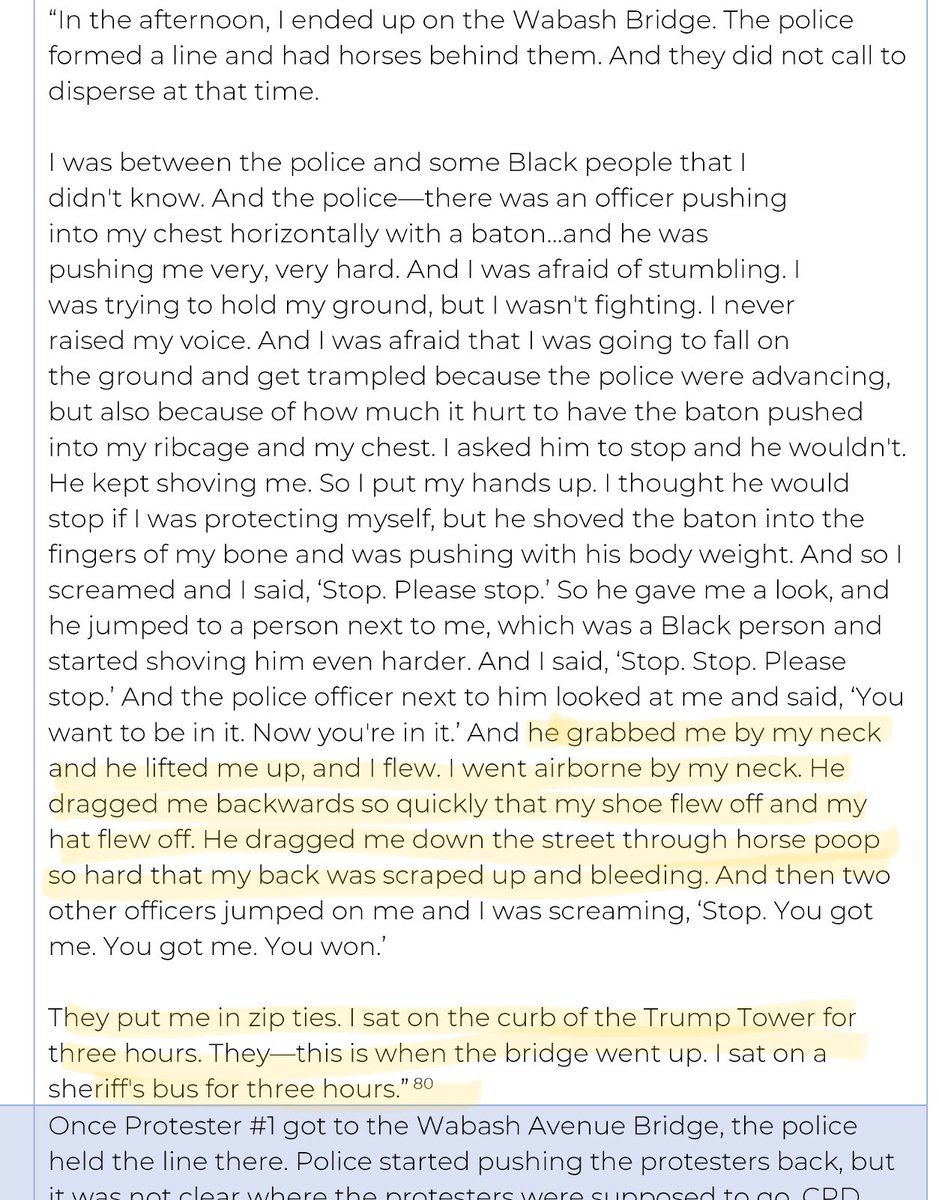
This reboot is from the same people that worked with the FBI and CIA on training systems and is basing its game on excusing US war crimes. pic.twitter.com/5H8vVqKh9s
The core reason why I'm doing this thread is because:
1. It's clear the developers are marketing the game a certain way.
2. This is based on something that actually happened, a war crime no less. I don't have issues with shooter games in general ofc.
Firstly, It's important to acknowledge that the Iraq war was an illegal war, based on lies, a desire for regime change and control of resources in the region.
These were lies that people believed and still believe to this day.
It's also important to mention that the action taken by these aggressors is the reason there was a battle in Fallujah in the first place. People became resistance fighters because they were left with nothing but death and destruction all around them after the illegal invasion.
This is where one of the first red flags comes up.
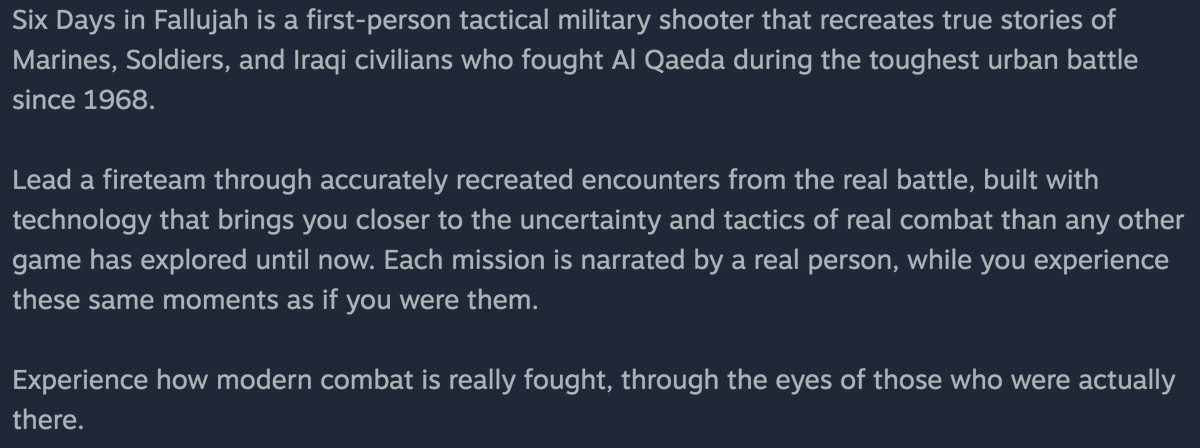
The game is very much from an American point of view, as shown in the description.
When it mentions Iraqi civilians, it doesn't talk about them as victims, but mentions them as being pro US, fighting alongside them.


And I said, when that "response" - which you can read here https://t.co/gLEJzuqoAx - was published that every single notional rebuttal by Government of a claim made by the New York Times was false, misleading or both.
And it's time for me to make good.
Here's the first "rebuttal" by Government to the New York Times' claim that: "The government handed out thousands of contracts to fight the virus, some of them in a secretive V.I.P. lane."

A number of points might be made.
(1) Government cannot say the NYT got it wrong. (2) the NAO found the VIP lane (later renamed the high-priority lane) "sat alongside" the normal lane. And I have shown elsewhere VIP contracts were handled by different teams all the way through.
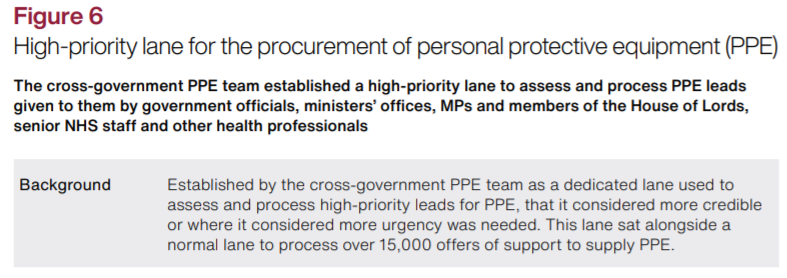
(3) Although Govt says "offers of support raised by Opposition MPs were dealt with expeditiously" the NAO report does not record any referrals made by an Opposition MP leading to a contract - and the Government response telling does not say any did.






with fewer rights for Brits in their own country & across the EU/EEA.
And that there is not a lot more official opposition/media attention & anger about it
.
Even more so when I read the following from 2010 by the "Taxpayers Alliance"
@bakerstherald Thanks for bringing this to my attention when the MSM - for whatever reason - is so noticably reticent to expose these would be quickly evolving (sounds better/less sinister)
Fight it. Hard. Or you'll find yourself living in a totally deregulated 'zone' where the corruption and cronyism you see in government now will look like a toddlers fucking picnic! This is a brief glimpse of what will come: https://t.co/8ktTmElDmW
— Louise Crossley \U0001f577\U0001f41f3.5% #NotMovingOn (@CandidePeel) December 28, 2020
From 2010
"As long as anyone can remember, Britain's old industrial heartlands have been a disaster area. Once they'd lost their traditional industries like steel and shipbuilding, something very bad happened to them - they seemed to lose the will to live. And as we've blogged
many times (eg here), despite decades of political promises and billions of tax-funded support, they have never managed to leave the high dependency unit. For example, when last sighted - in 2007-08 at the height of the biggest economic boom the world has ever seen -


-One god
-1000 gods
-no god
One can reject their faith of birth & adopt a new one.
This is LIBERTY of THOUGHT, EXPRESSION, BELIEF & FAITH that Constitution gives everyone. This Ordinance takes away this liberty & says 'aise kaise?!' [1/n]
The\xa0ordinance on unlawful religious conversions, promulgated by U.P govt, has not been sent to MHA for examination, according to MHA's reply to an RTI filed by The Hindu. A similar Bill passed by Rajasthan in 2008 is still under examination in MHA though.https://t.co/3rEIZMVx4Y
— vijaita singh (@vijaita) January 31, 2021
Before we go on, remember that conversion does not mean that one stops being an Indian citizen or that they become 'lesser' Indians for some reason. This law thinks that freedom of religion is antithetical to India's identity, which'd be funny if it weren't dangerous [2/n]
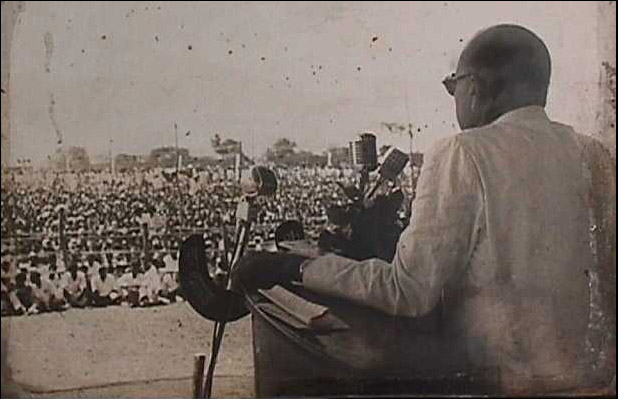
The Ordinance defines mass conversion as 'two or more people converting', which means if spouses convert together it is a crime. This is a picture of Babasaheb at Deekshabhoomi, leading conversion of a 'mass' from Hinduism to Buddhism. The Ordinance makes this a crime [3/n]
This law creates the concept of a 'convertor' which is an absurd idea. Many people convert to religion by independent study or by learning about other religions. This wrongly presumes that every conversion is a product of some conspiracy. [4/n]
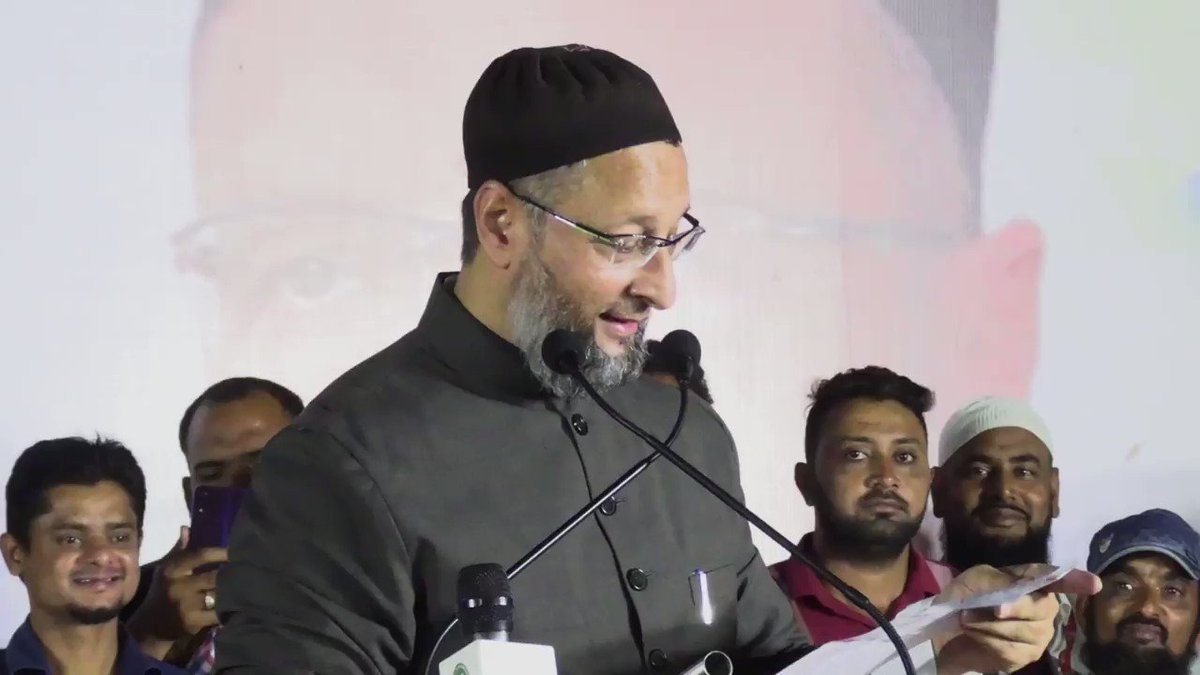
Section 3 also prohibits anyone who "convinces" a person to convert. What if a person says that "I believe in Islam, for these specific reasons" & someone is convinced by these reasons? For anyone who respects independent thinking & free choice this cannot be a crime. [5/n]