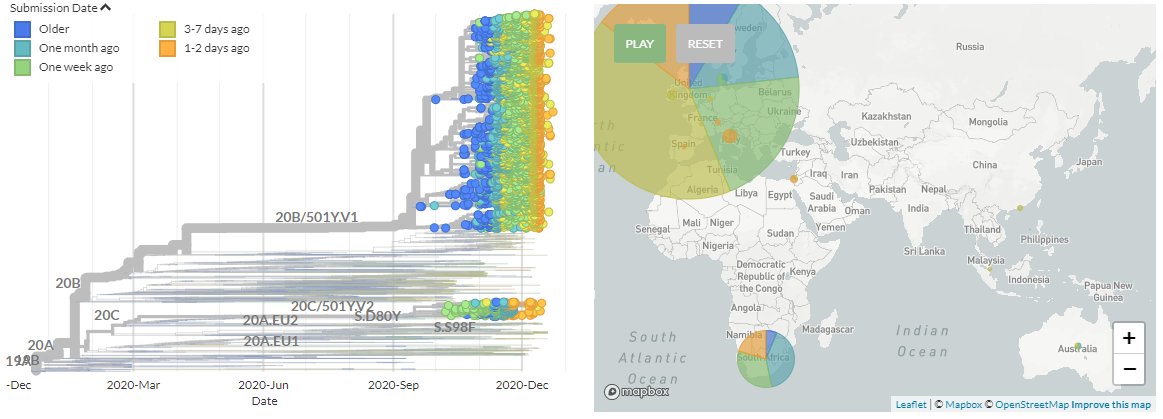
Happy Tuesday! The latest focal S:N501 build is now updated with sequences from 11 Jan.
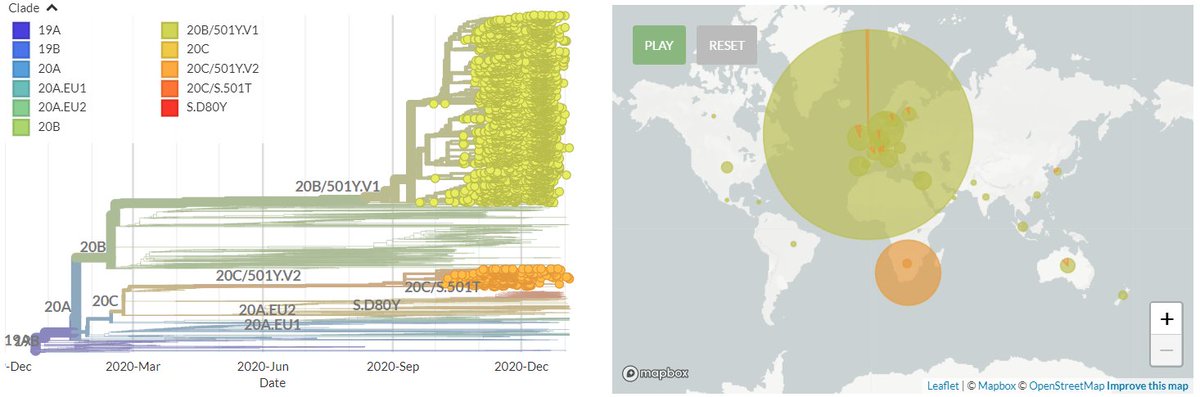
There are 101 new sequences in the 501Y.V1 (B.1.1.7 #b117) & 501Y.V2 variants.

Additionally, I'll include some updates on S:E484K in this thread.

1/20

https://t.co/dXx6nk6Llz

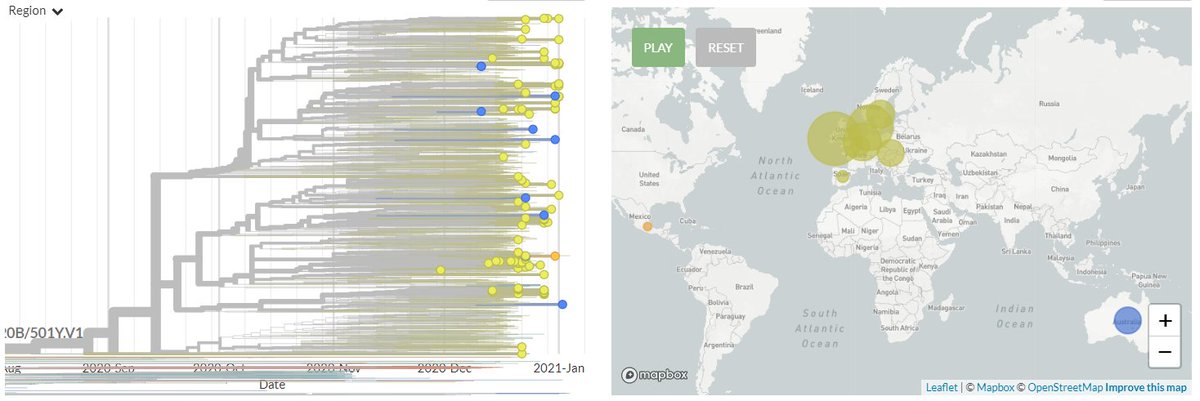
There are 97 new non-UK sequences in 501Y.V1, including the first sequences in the cluster from Slovakia, Mexico, & Belgium, plus additional sequences from the Netherlands, Denmark, Australia, Spain, Ireland, & Sweden.

2/20
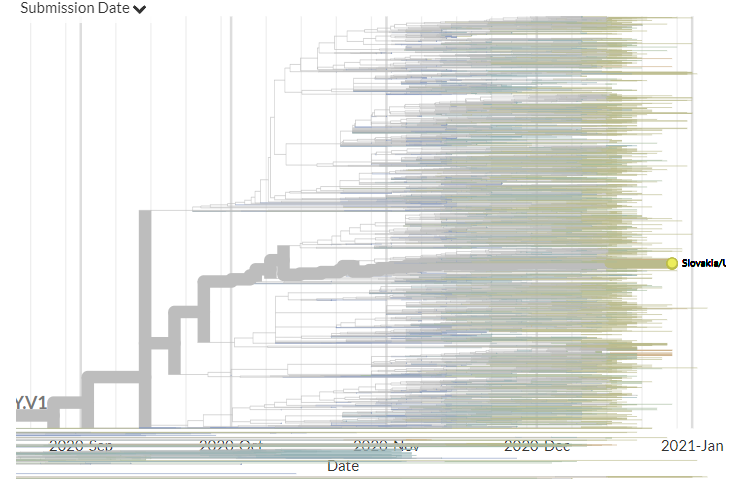
Slovakia has 10 sequences that fall in 501Y.V1 for the first time. These are closely linked, & likely indicate a single introduction and ongoing transmission (remember: vertical distance is not meaningful on the same branch - position of the 2 English samples is arbitrary).

3/20
Belgium has 5 sequences in 501Y.V1 for the 1st time, indicating 3 separate intros. 3 seqs cluster together (zoomed, divergence), indicating a single introduction. The connection to Netherlands might indicate transmission, or 2 transmissions from same diversity in the UK.

4/20
Mexico also has a sequence that falls into 501Y.V1 for the first time.

5/20
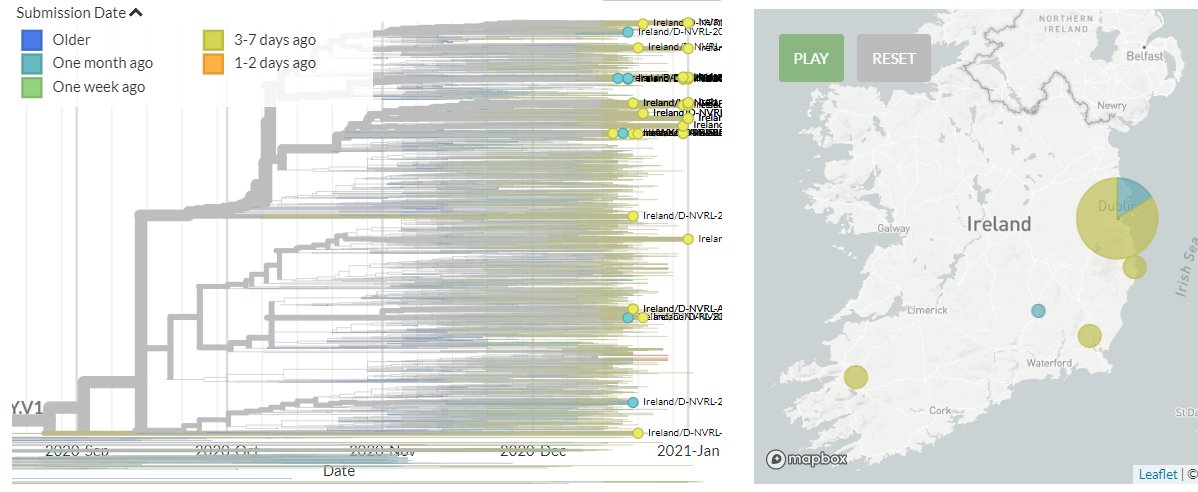
Ireland has 36 new sequences. Many represent separate introductions, but some do cluster with older sequences & may represent local transmission, or introductions from the same UK diversity.

6/20
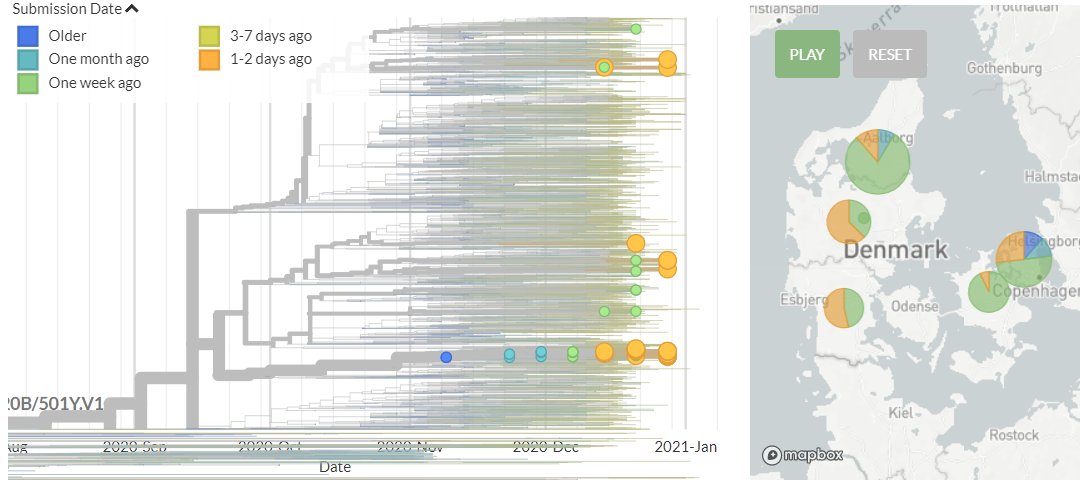
Denmark has 29 new sequences (orange). These represent both new introductions, and further expansion of the large cluster (zoomed view).

7/20
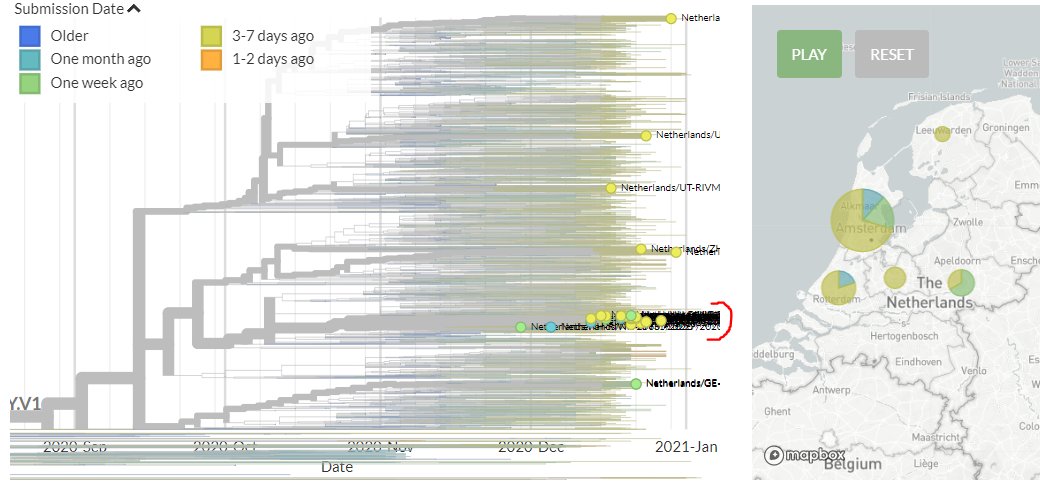
The Netherlands have 6 new sequences. All fall within the section of the tree marked in red.
Zooming in, the new sequences are marked in red: 2 are separate introductions. Zooming in further (divergence view), cluster at the top are identical to an older sequence.

8/20
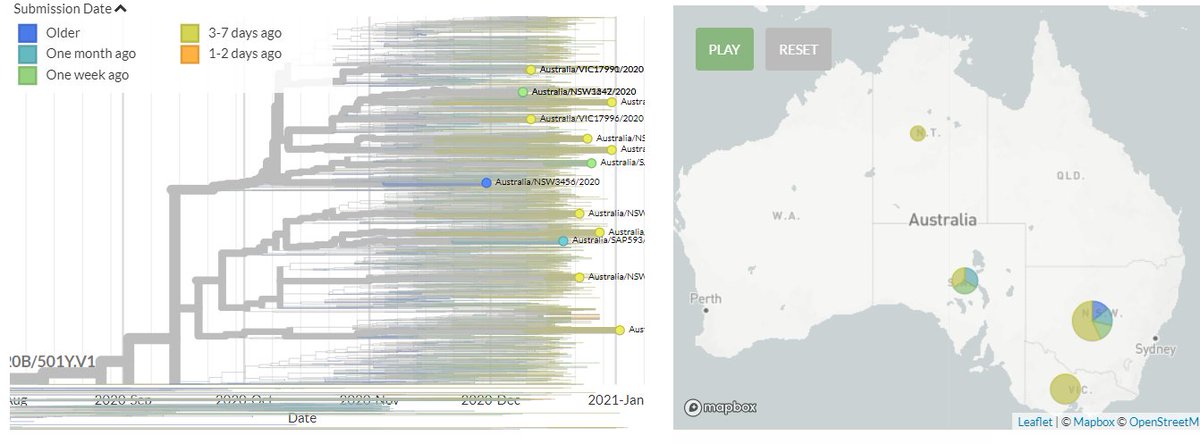
Australia has 6 new sequences, including the first from Northern Territory and Victoria. 1 pair of sequences from Victoria are identical to each other, representing one introduction.

9/20
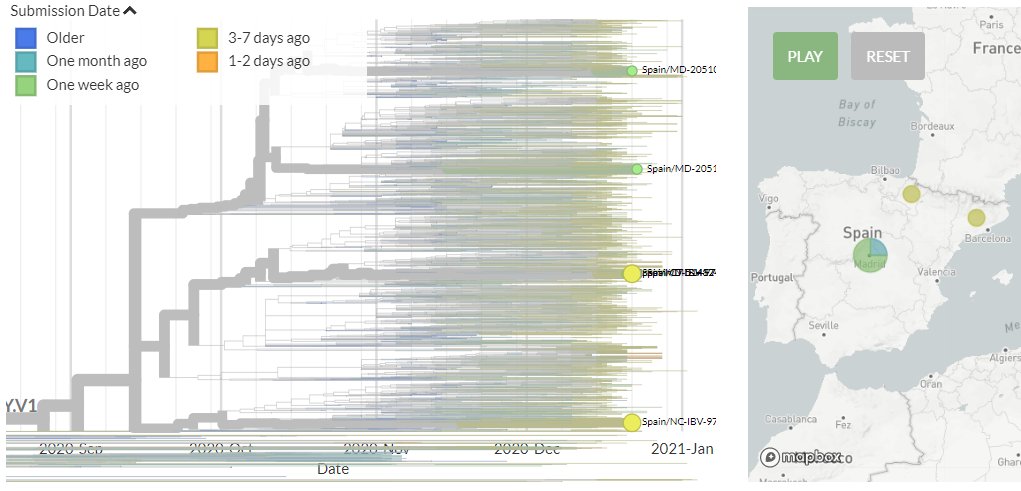
Spain has 2 new sequences (yellow). One represents a separate introduction. The other links to older Spanish sequences, but it's unclear from sequences alone if this is local transmission or transmissions from a common source.

10/20
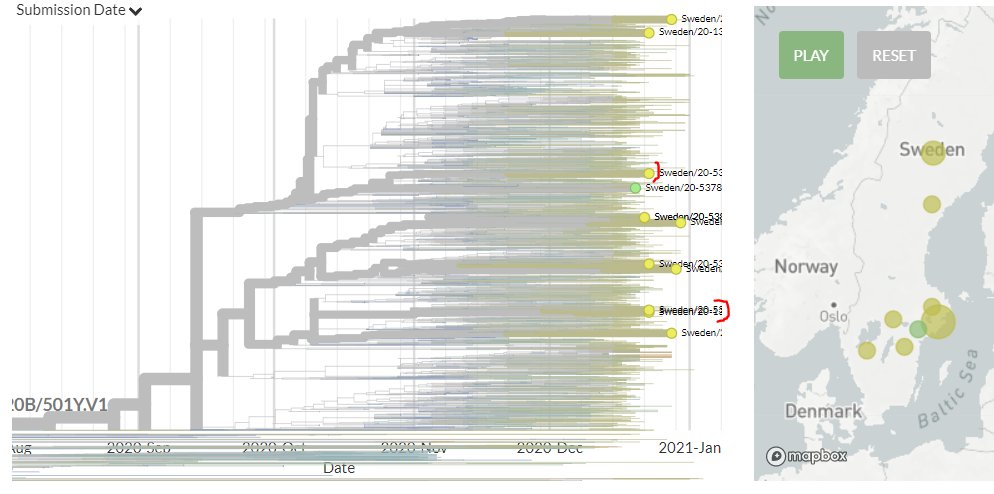
Sweden has 2 new sequences, marked in red. Both represent independent introductions. The second one is hard to see, but zooming in shows this more clearly.

11/20
Now turning to 501Y.V2:

There are 4 new non-South African sequences in 501Y.V2, including the first from Ireland (3) and the Netherlands (1).

12/20
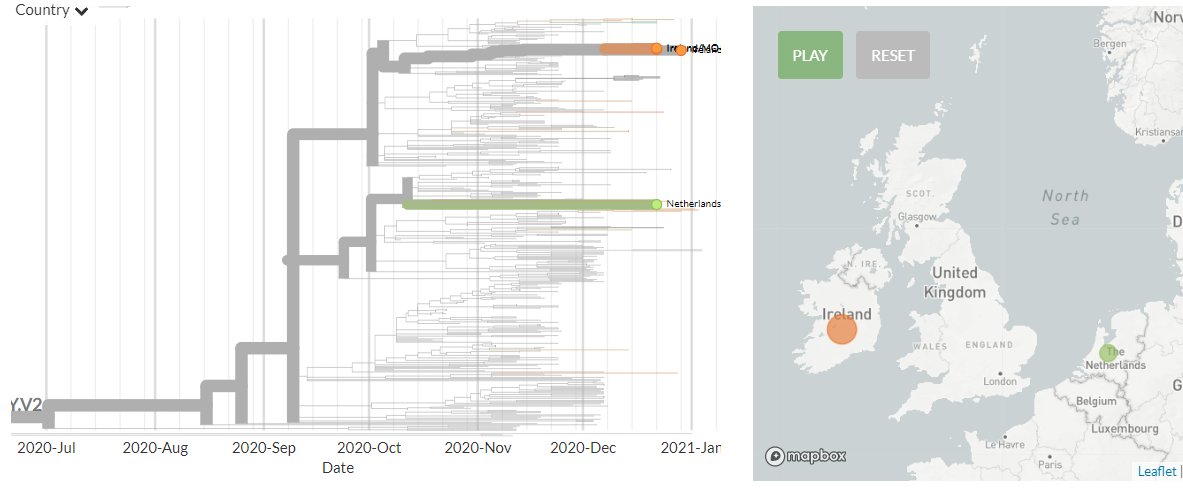
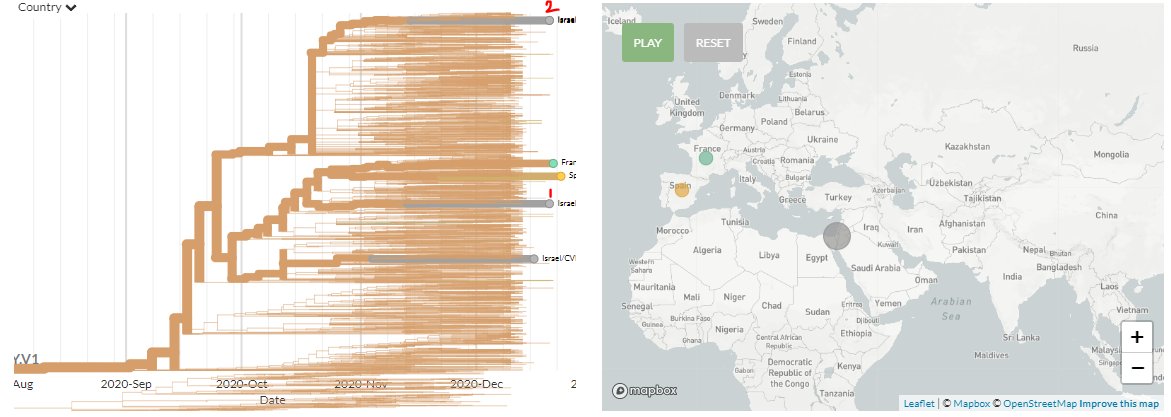
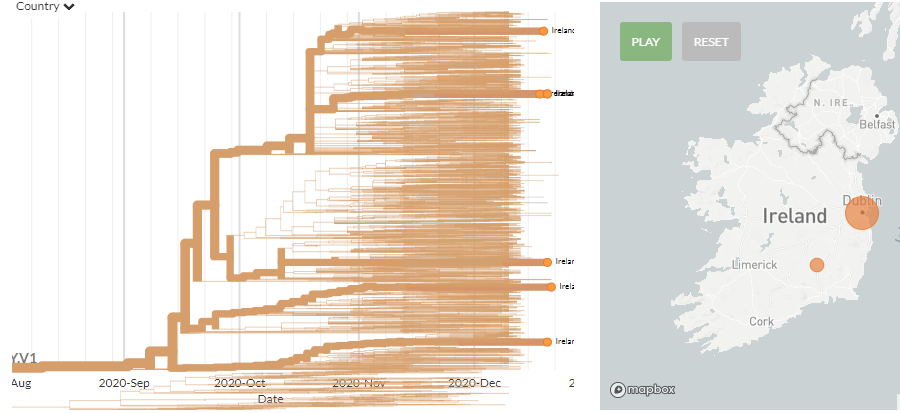
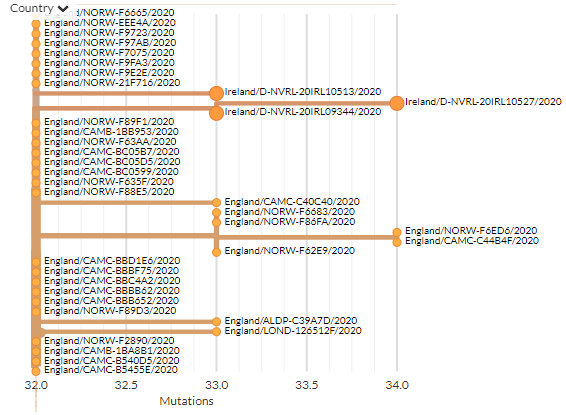
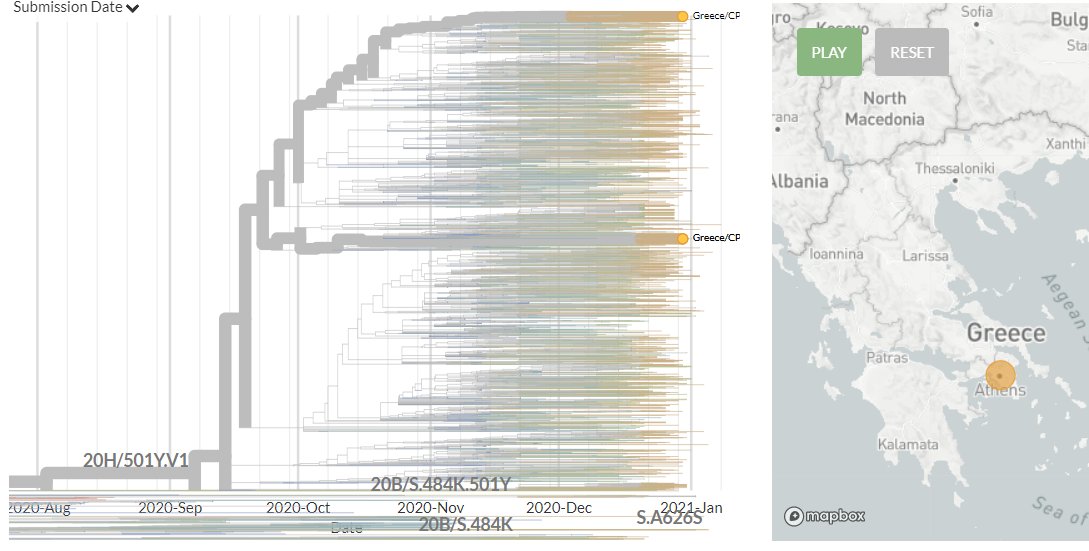
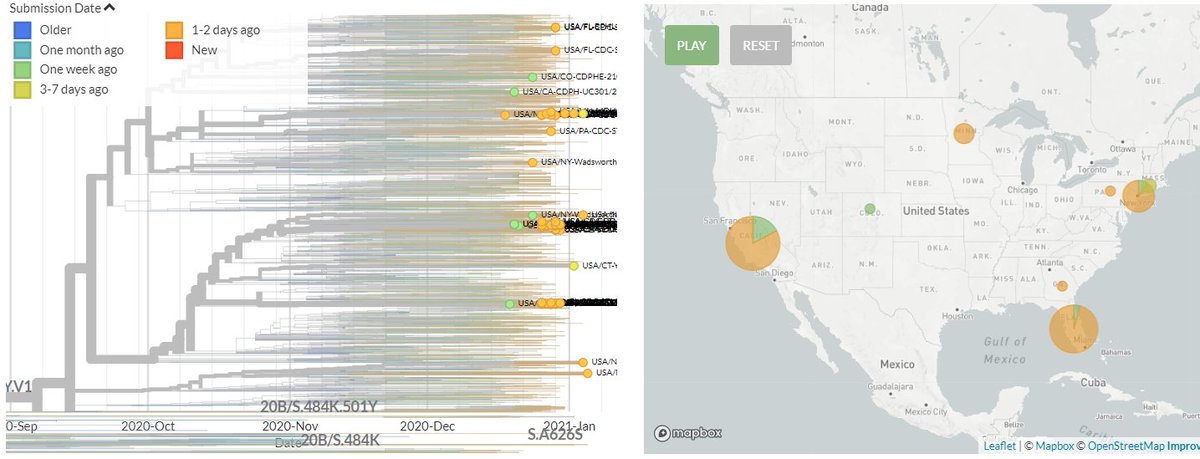
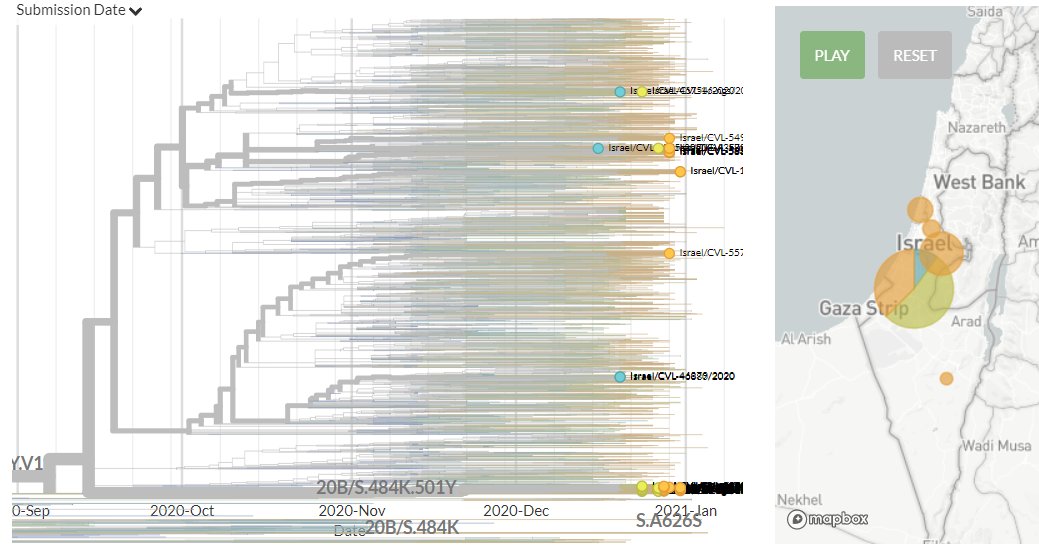
Ireland has 3 sequences in 501Y.V2 for the first time. They cluster together, and may indicate either local transmission, or a common exposure (pictures 1 & 2).

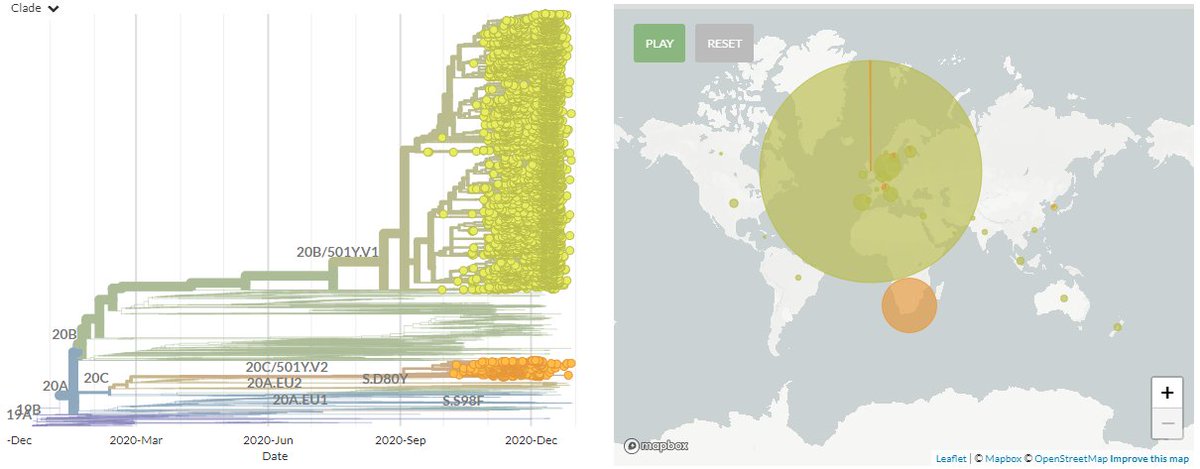
The Netherlands has its first sequence in 501Y.V2 (picture 3).

13/20
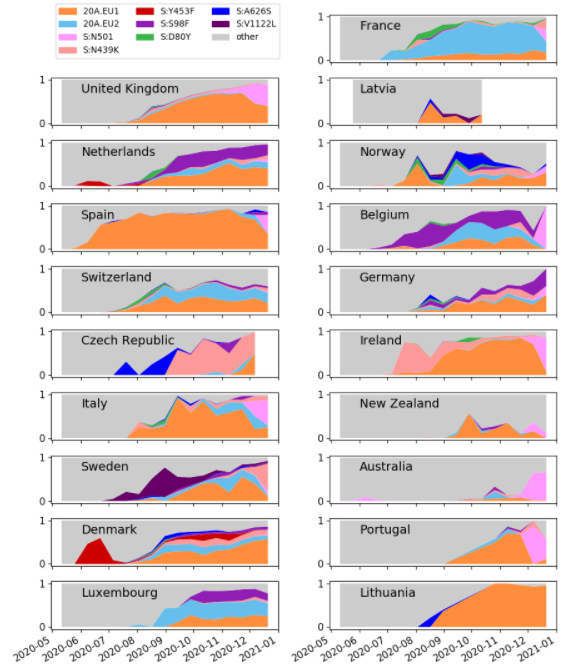
As usual, the updated country graphs are also available. As always, interpret with care: countries are selectively sequencing to track 501Y.V1, so proportions of sequences are not representative for many countries.

14/20

https://t.co/c7wlQOLRiq
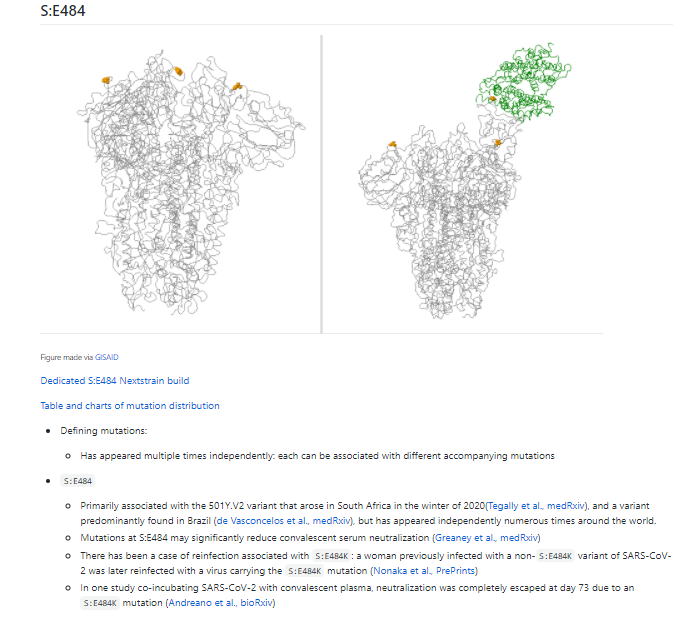
Finally, an updated focal S:E484 build is also up.

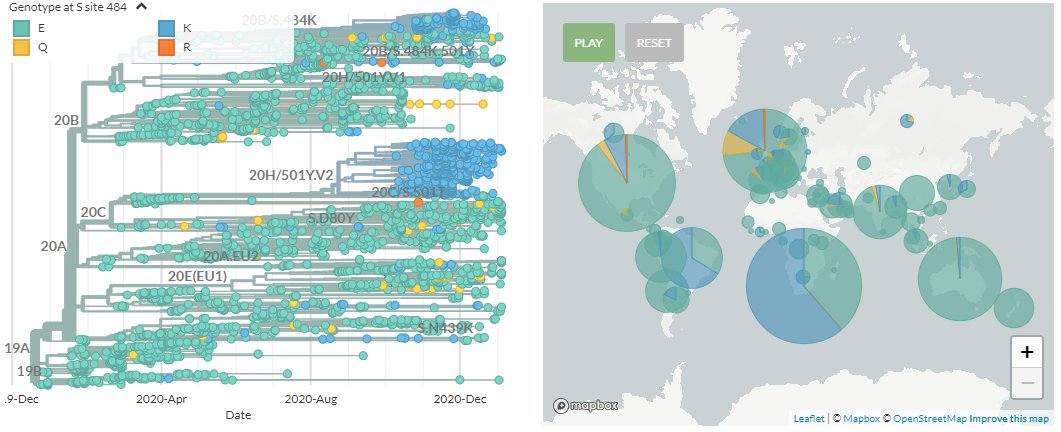
S:E484K is found predominantly in the 501Y.V2 variant, & in a cluster of sequences primarily in Brazil, though it has appeared numerous times in the past.

15/20

https://t.co/Od95D6DL74
S:E484K has been discussed recently as there are suggestions it may impact how well the immune system can recognise the virus, particularly if you've been infected with SARS-CoV-2 before.

Links to the studies are on https://t.co/SmanZBHpse

16/20
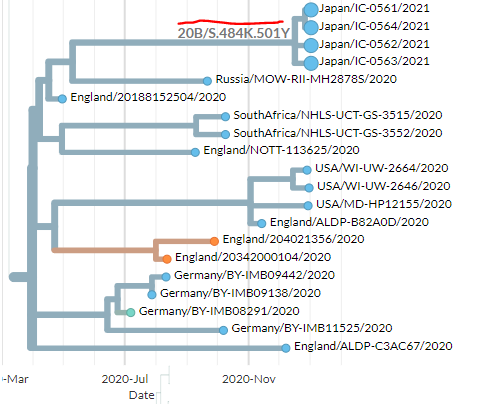
Additionally, over the weekend, travellers from Brazil to Japan were found to be infected with a novel variant with many mutations, including S:E484K & S:N501Y.
Translated report linked below.

17/20

https://t.co/G1ITeT3MoV
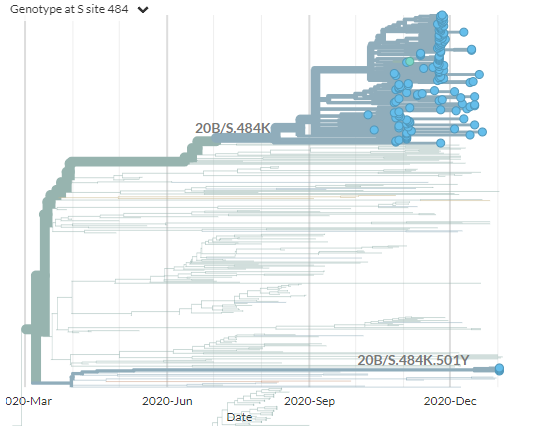
To help viewers identify these new samples from Japan, I've added a *temporarily* label to the S:E484K build: 20B/S.484K.501Y.

Additionally, I've added a *temporary* label to the Brazilian cluster with S:E484K: 20B/S.484K.

18/20
Interestingly, though the recent Japanese sequences carry S:E484K & seem to originate from Brazil, they do *not* branch from the larger 484K cluster in Brazil, but instead sit on a long branch separately within the 20B Clade.

19/20
Getting case numbers down saves #LivesAndLivelihoods, and reduces #SARSCoV2's opportunities to explore situations with unique selection pressures, potentially resulting in mutations expanding that we'd rather not see.

Help make my updates more boring: bring cases down!

20/20
PS - For related but slightly-different-angle updates on 501Y.V1 (B.1.1.7) & 501Y.V2 (B.1.351), you should follow @AineToole & keep an eye on her tweets about updated reports!

https://t.co/fZDQqwvJmr

21/20

More from Dr Emma Hodcroft

🎉Happy New Year!🎉

To kick off 2021, here's an update on:
- S:N501 variants (501Y.V1/V2) with data from 31 Dec 2020
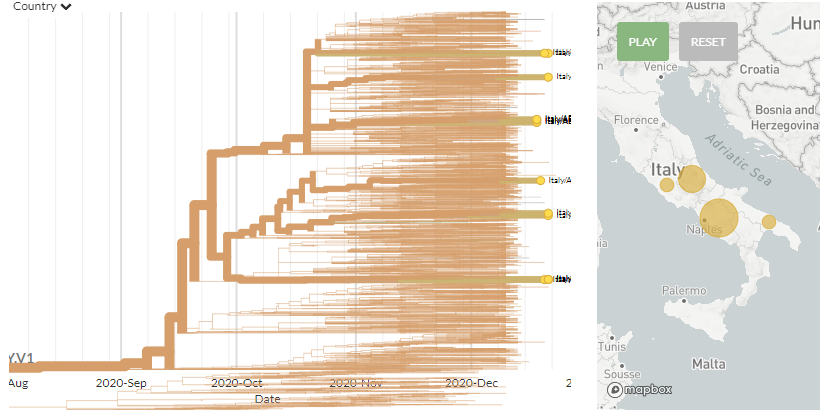
- 69/70del variants
- 20A.EU1 variant (most prevalent variant in Europe)

(Here are some fireworks that look a bit like phylogenies! 🎆)

1/23


The latest sequences from 31 Dec show new sequences in the S:N501Y.V1 variant (originating from SE England) from Netherlands, Denmark, Australia, Italy, Canada, the USA, Germany, Switzerland, & India.

2/23

S:N501 link
https://t.co/TfHfPgBEBS

Image link
https://t.co/3aCKv1pAcI


Canada, Germany, & Switzerland all have sequences that fall in 501Y.V1 for the first time, scattered across the tree.

3/23


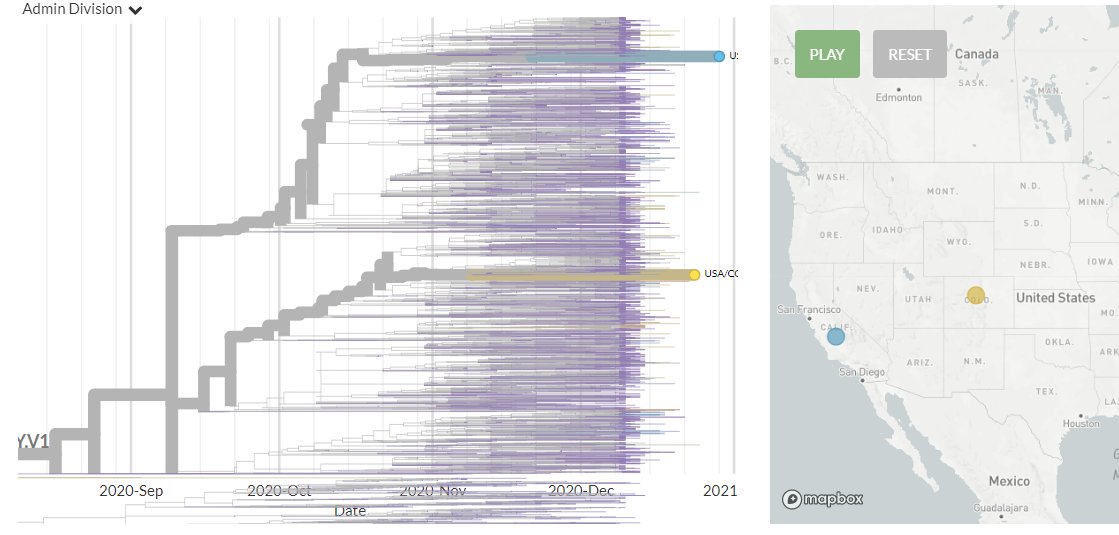
The USA also has its first 2 sequences that fall in 501Y.V1, from Colorado & California. India also had its first 3 sequences, also from different regions.

In both cases, the sequences are not connected, indicating separate introductions.

4/23


In countries with previous sequences:

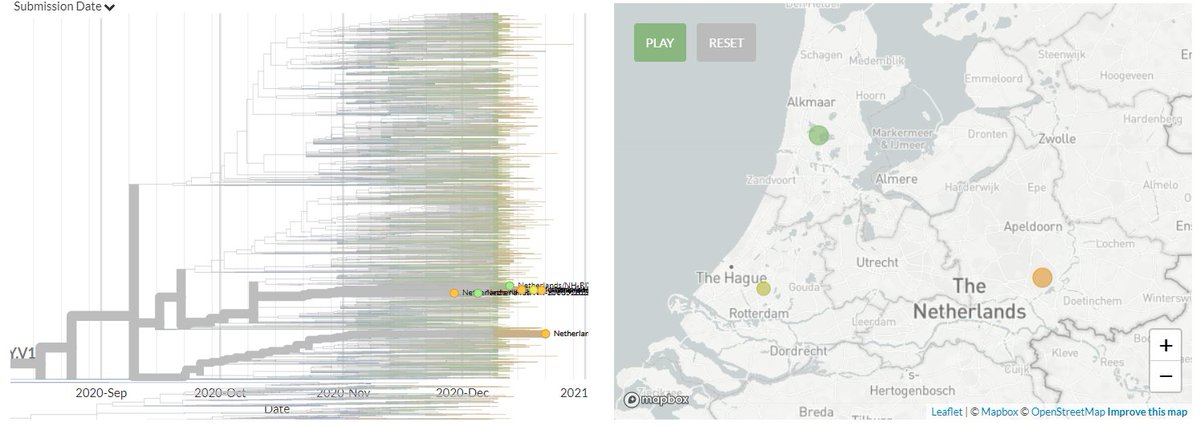
6 new sequences from Netherlands, in orange/yellow (green are older).
1 is clearly separate - zooming in (& in divergence view, coloured by country) it is harder to determine the relationship between the others.

5/23
Each day brings new challenges, but here's an update to the dedicated S.N501 build, using data from 6 Jan 2021 to keep you going.

There are 42 new non-UK sequences in 501Y.V1 (B.1.1.7) & 7 new non-South-African sequences in 501Y.V2.

1/14

https://t.co/kT1gFsSZn0
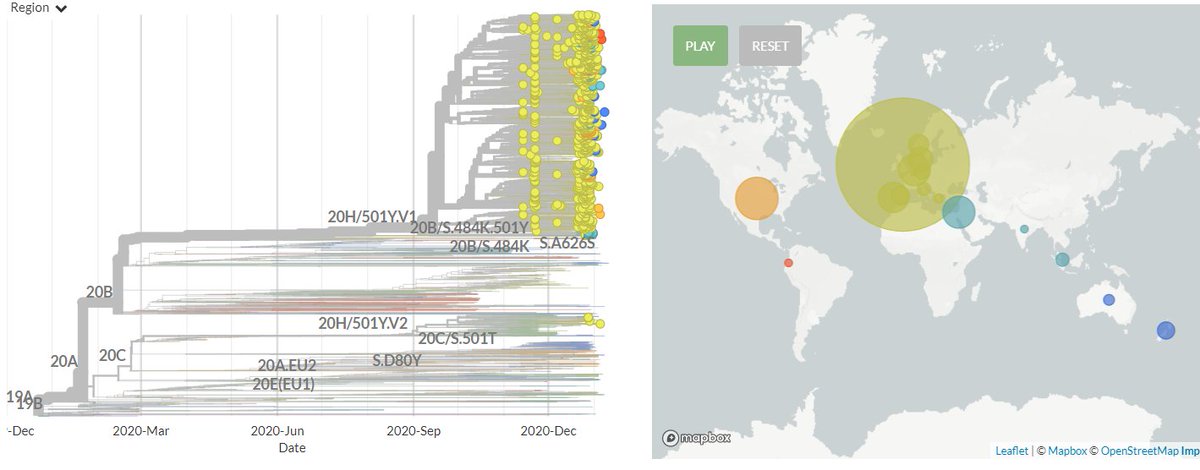

There are 42 new non-UK sequences in 501Y.V1 from the Netherlands, Italy, Hong Kong, Finland, Sweden, Germany, USA, Switzerland, Brazil, and the first sequence from 501Y.V1 in Oman.

https://t.co/XA8VR8HiEq

2/14


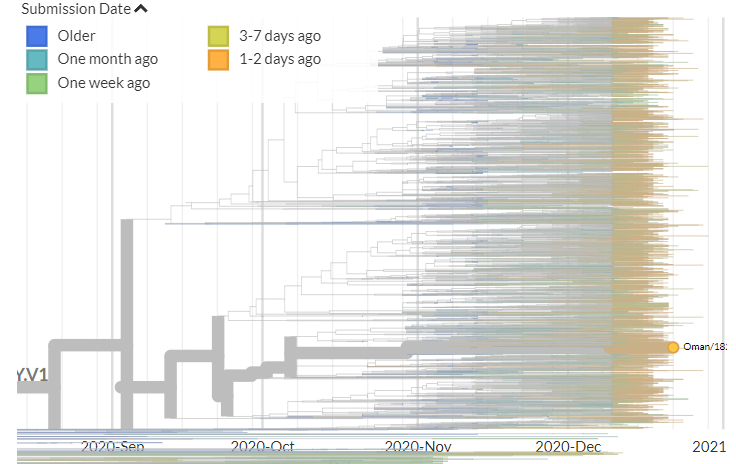
Oman has their first sequence which falls into 501Y.V1:

3/14


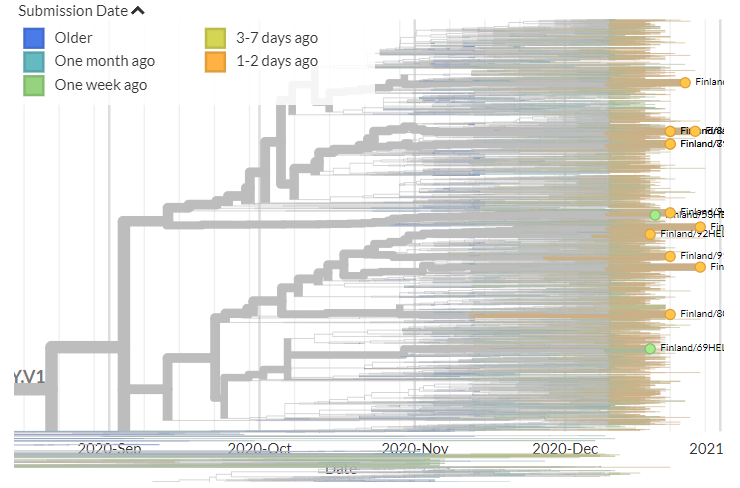
Finland has 12 new sequences (orange), which mostly represent separate introductions. Zooming in (divergence view), we can see 3 of the new sequences are identical (red), which may indicate the cases are connected.

4/14


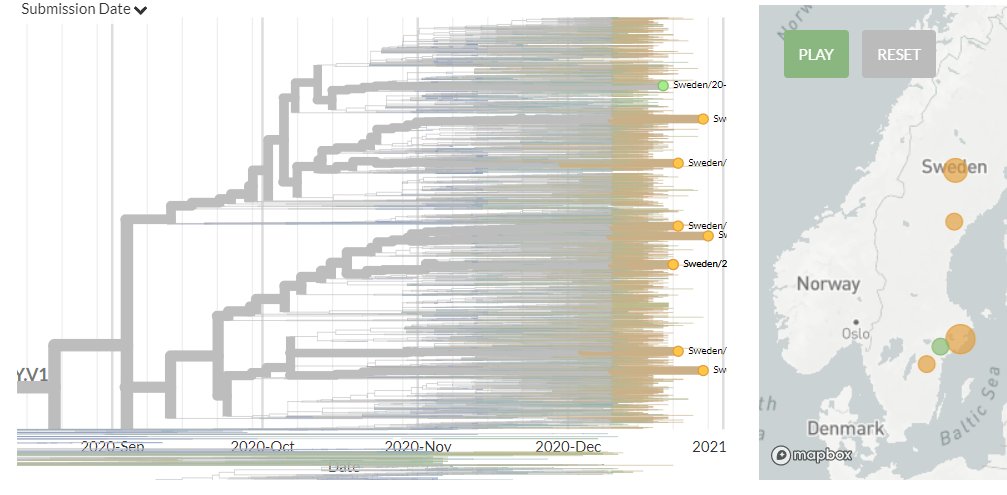
Sweden has 8 new sequences (orange), which indicate separate introductions.

5/14
Lots of tweets about this today!
Let's see what we can see in the focal S:E484 build!

Phylogenetics (what I do - making 'family trees' from virus genetics) can be very informative to see how different variants are spreading, and how cases

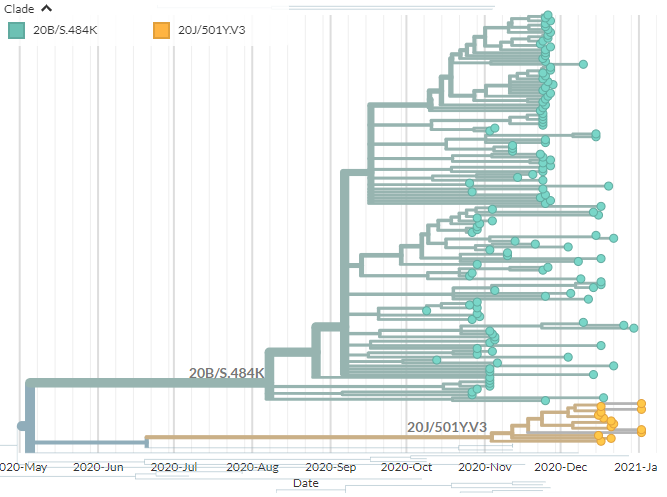
There are two variants circulating predominantly in Brazil:
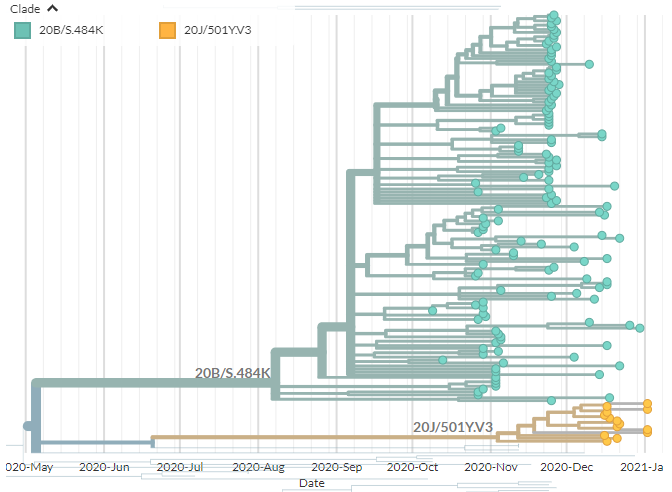
- 20B/S.484K seems to be older & more widespread. It has (among others) a mutation at position 484
- 20J/501Y.V3 is smaller & detected recently. It has mutations at 501 *and* 484.

2/10

https://t.co/Cw5u2kuATa


The variant predominantly in the UK (501Y.V1 / B.1.1.7) and the variant predominantly in South Africa (501Y.V2) also both have 501. 501Y.V2 *also* has the 484K mutation.

Why are there concerns about these mutations? You can read more at https://t.co/wVE7ubYBoy!

3/10


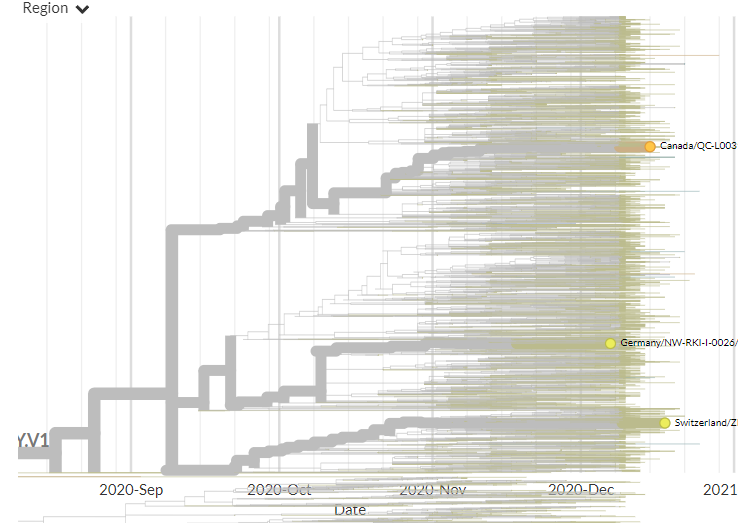
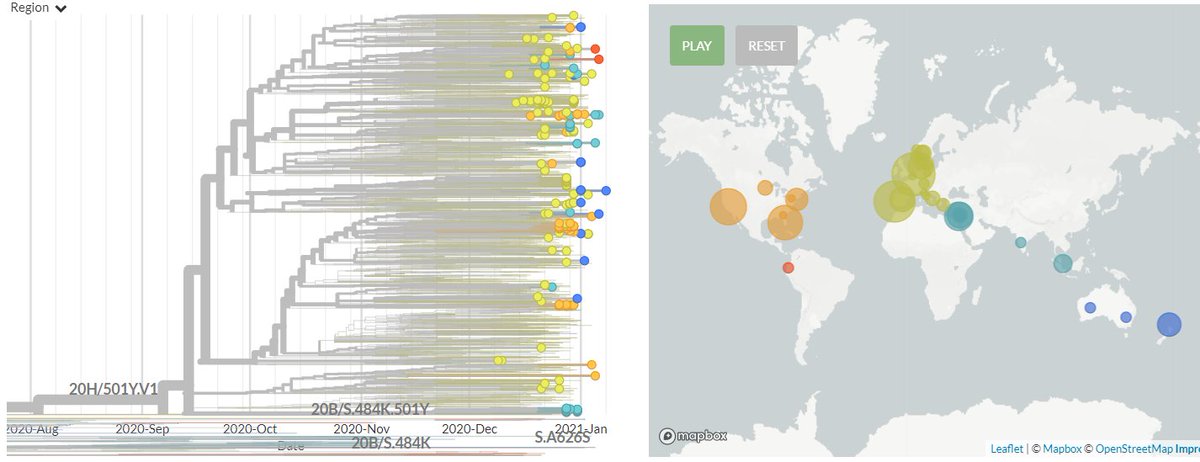
The view below is from an analysis focusing on sequences with a mutation at 484. It shows all the samples in the 2 variants (20B/S.484K & 20J/501Y.V3) & how they're related. More closely related = closer together (very, very roughly).

4/10


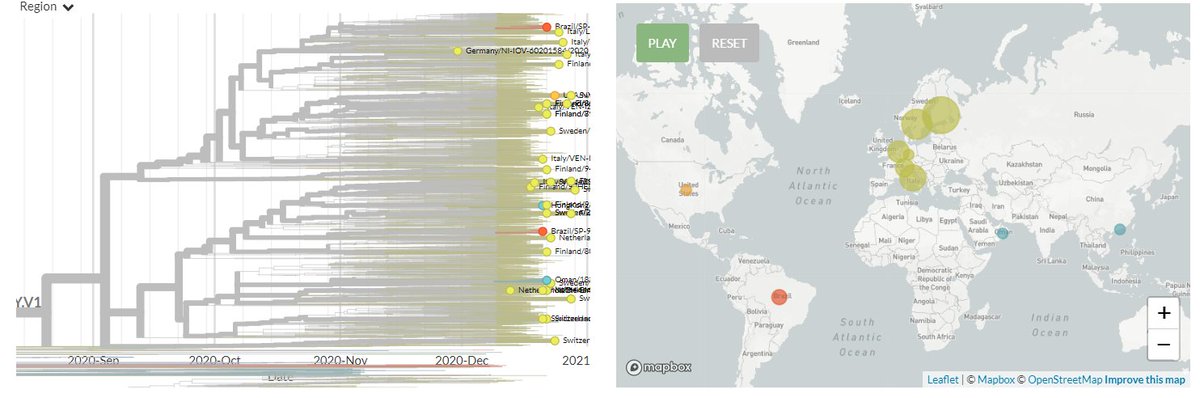
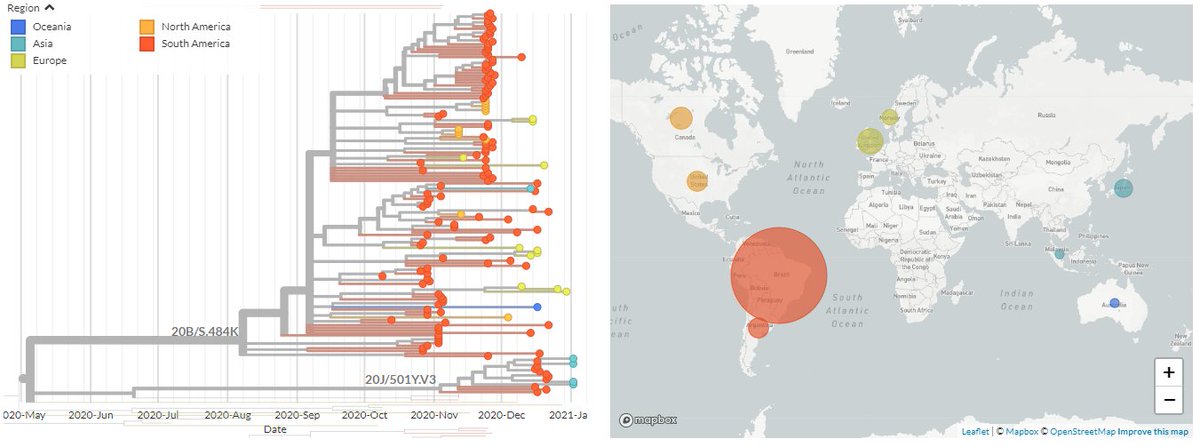
We can colour these samples by region to see where they're from. As we expect - most are in Brazil! A few are in Argentina (also red).

5/10

https://t.co/Cw5u2kuATa

More from For later read

You May Also Like

1/ Some initial thoughts on personal moats:

Like company moats, your personal moat should be a competitive advantage that is not only durable—it should also compound over time.

Characteristics of a personal moat below:


2/ Like a company moat, you want to build career capital while you sleep.

As Andrew Chen noted:


3/ You don’t want to build a competitive advantage that is fleeting or that will get commoditized

Things that might get commoditized over time (some longer than


4/ Before the arrival of recorded music, what used to be scarce was the actual music itself — required an in-person artist.

After recorded music, the music itself became abundant and what became scarce was curation, distribution, and self space.

5/ Similarly, in careers, what used to be (more) scarce were things like ideas, money, and exclusive relationships.

In the internet economy, what has become scarce are things like specific knowledge, rare & valuable skills, and great reputations.
1/“What would need to be true for you to….X”

Why is this the most powerful question you can ask when attempting to reach an agreement with another human being or organization?

A thread, co-written by @deanmbrody:


2/ First, “X” could be lots of things. Examples: What would need to be true for you to

- “Feel it's in our best interest for me to be CMO"
- “Feel that we’re in a good place as a company”
- “Feel that we’re on the same page”
- “Feel that we both got what we wanted from this deal

3/ Normally, we aren’t that direct. Example from startup/VC land:

Founders leave VC meetings thinking that every VC will invest, but they rarely do.

Worse over, the founders don’t know what they need to do in order to be fundable.

4/ So why should you ask the magic Q?

To get clarity.

You want to know where you stand, and what it takes to get what you want in a way that also gets them what they want.

It also holds them (mentally) accountable once the thing they need becomes true.

5/ Staying in the context of soliciting investors, the question is “what would need to be true for you to want to invest (or partner with us on this journey, etc)?”

Multiple responses to this question are likely to deliver a positive result.