With that said, for my frog and frog-adjacent bros and sisters:
OK I am going to be tackling this as surveillance/open source intel gathering exercise, because that is my background. I blew away 3 years of my life doing site acquisition/reconnaissance for a certain industry that shall remain unnamed and believe there is significant carryover.
If I did thred on finding/acquiring decent raw land would that be something pepo are interested in
— Ovcharka (@ouroboros_outis) January 18, 2021
I think I know a bunch of weird tips/tricks for selection at this point that it might help u guys, lemme know
With that said, for my frog and frog-adjacent bros and sisters:
Zillow is obvious one, but there are many good sites like Billy Land, Classic Country Land, Landwatch, etc. and many of these specialize in owner financing (more on that later.) Do NOT treat these as authoritative sources - trust plat maps and parcel viewers.
Okay, everyone knows how to google "raw land in x state" but there are other resources out there, including state Departments of Natural Resources, foreclosure auctions, etc. Finding the land you like is the easy part. Let's do a case study.
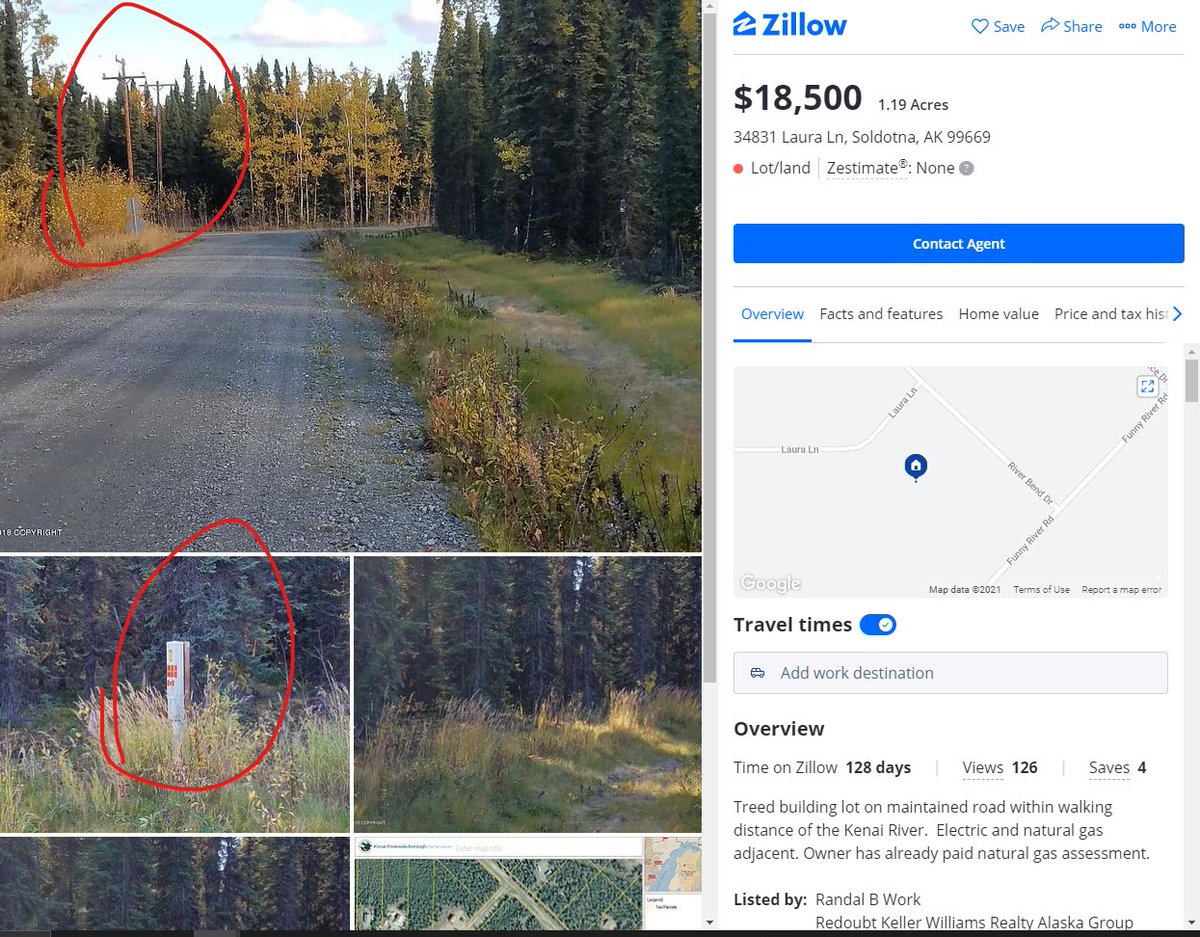
Note: visible power, power/fiber pedestal, utility corridor, nearby commercial enterprise(s), and utility pole shadows visible.
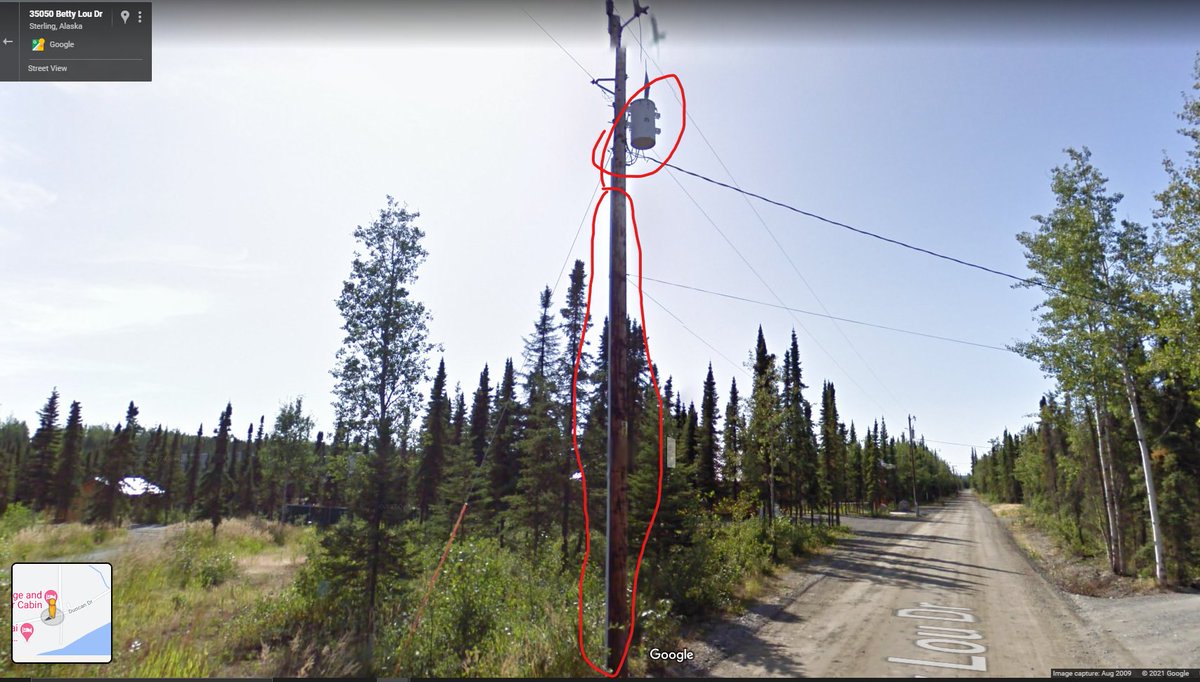
Everyone knows what a transformer looks like, even if you don't know you know. This is where a transmission or distribution line jumps down in voltage to "consumer" voltage. This is a good sign.
Note the conduit casing down the length of pole.
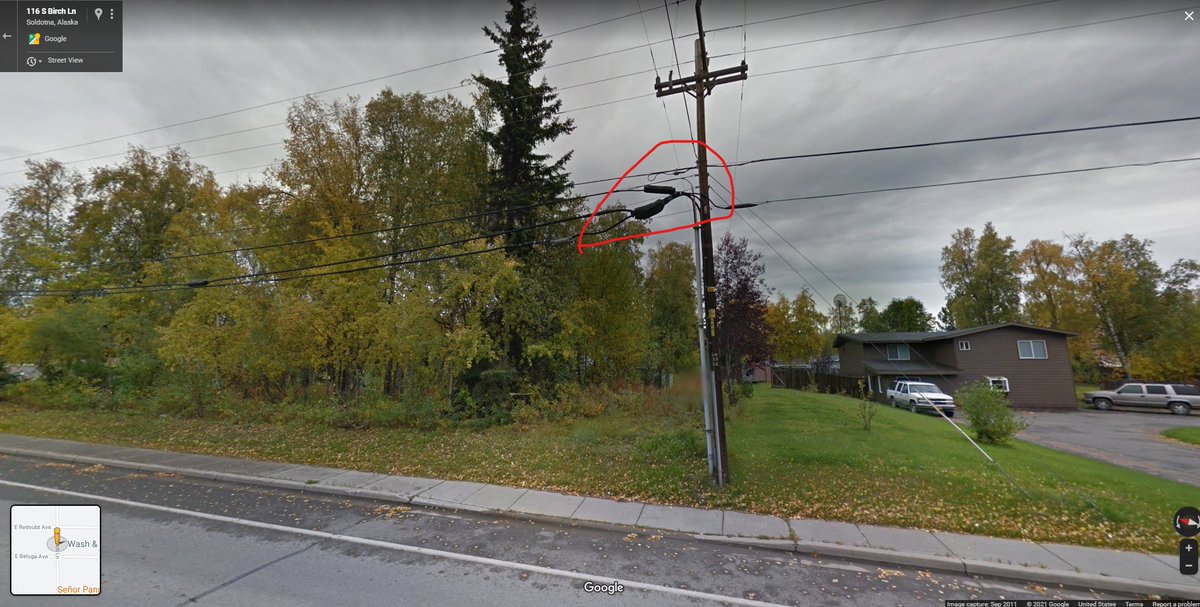
Now for fiber, for my work-from-home homesteaders - I had to pan over a bit to find this, but this is a good indicator that *someone* is pushing wired internet in the area.
Many ISPs will have coverage maps as well.
I designed these networks for years. If a tower is nearby, you can prob get internet.
Hey there's our parcel ID number! We can use this to look up tax info at the county/borough level. Kenai's site is down right now but just imagine all the owner info appearing here.
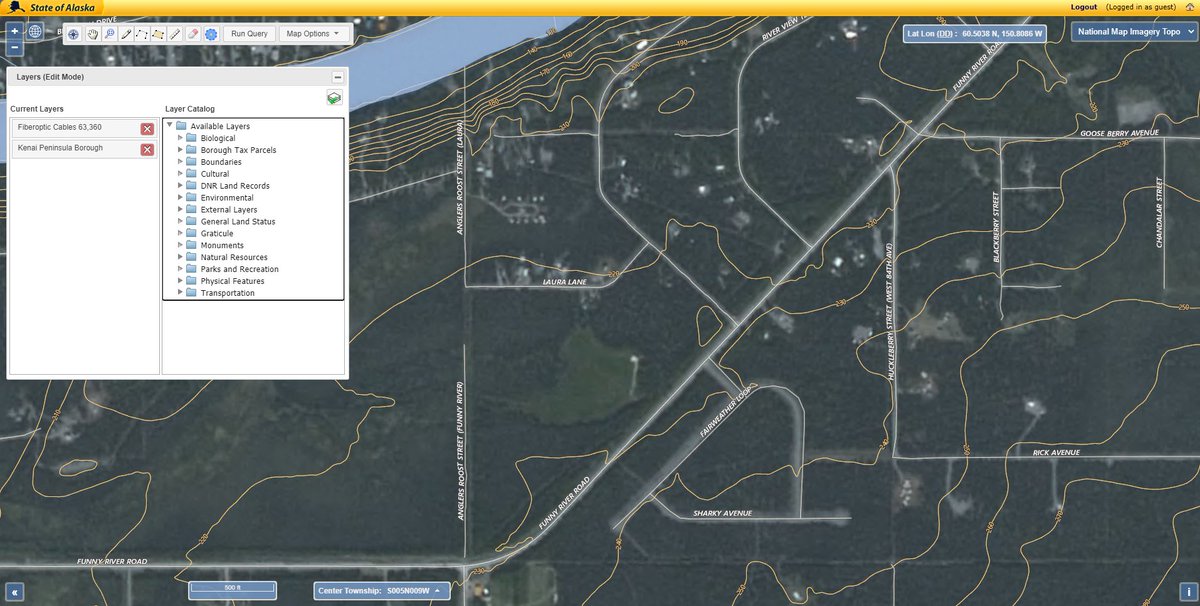
If you prefer, you can do this yourself in QGIS.
Saves us a lot of travel time and getting our hopes up.
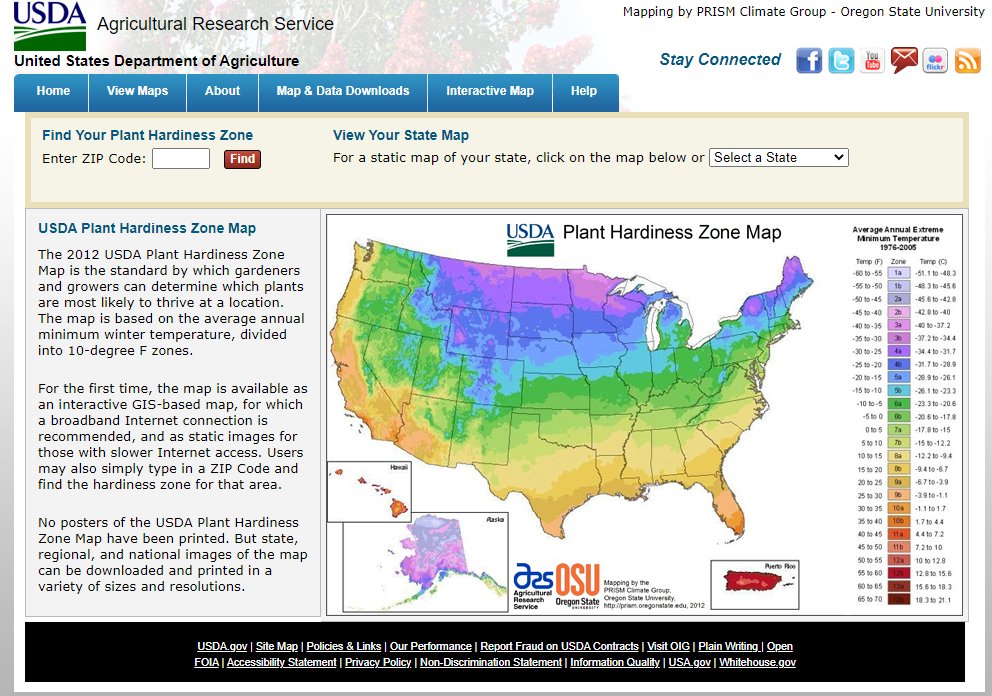
Look at all we can grow in central Kenai!
It's important to avoid wetlands because in many parts of the country they can be considered protected habitats for waterfowl. They're also a PAIN to remediate.
Wetlands are obvious indicator septic will not work -
But a lot of properties are not so fortunate. Many I looked at in Oregon last year had well depths of over 900'. Not a typo - 900+ feet.
You should also check for deeded - in writing - access.
These can usually be determined via the plat of survey, which you should dig up for every property you look at.
More from Education

Admission and Scholarship in Germany (Part A)
As promised, let's start the year by discussing Germany.
Tag your friends, take fruit juice and unwind this thread🧵:
In Part A, I will discuss what you need to know about Admission and Scholarship in Germany, In Part B, I will show you how to practically apply and get funding.
Read the following general facts about Germany:
1. About 80-90% of the Universities are tuition-free.
However, in some states, you may be asked to pay about 1000-3000 Euros/semester, which covers student union fees and travel tickets around the state for a semester.
2. Most Msc students don't search for scholarships. Instead, they look for a block account of about 10, 000
Euros.
Read: https://t.co/sg9sZomuxA.
3. From the block account, the Govt pays you about 850 Euros monthly for Living expenses.
Check:
4. If you can find a way to get the block account, you have the chance of recouping your money back and much more because student job is around 1000 Euros/month, and it's about 20-40hrs /week.
Read:
As promised, let's start the year by discussing Germany.
Tag your friends, take fruit juice and unwind this thread🧵:
In Part A, I will discuss what you need to know about Admission and Scholarship in Germany, In Part B, I will show you how to practically apply and get funding.
Read the following general facts about Germany:
1. About 80-90% of the Universities are tuition-free.
However, in some states, you may be asked to pay about 1000-3000 Euros/semester, which covers student union fees and travel tickets around the state for a semester.
2. Most Msc students don't search for scholarships. Instead, they look for a block account of about 10, 000
Euros.
Read: https://t.co/sg9sZomuxA.
3. From the block account, the Govt pays you about 850 Euros monthly for Living expenses.
Check:
4. If you can find a way to get the block account, you have the chance of recouping your money back and much more because student job is around 1000 Euros/month, and it's about 20-40hrs /week.
Read:




Dear @Ofstednews
*Re: Teachers have passed the test the Government have failed*
My letter in response to @GavinWilliamson's request for parents to complain about online provision of learning during global pandemic. It might appeal to parents & #EduTwitter alike. THREAD⬇️
I would like to echo the recent recommendation of my MP, who I understand has education as one of their priorities.
They lead with religious and political faith, and I'd like you to lend from their methods of applying faith over fact, if you could.
You see, I have faith in schools communicating clearly, consistently and safely as the facts have demonstrated they can. Unlike the cabinet.
Schools have acknowledged the fear and confusion communities have suffered when this government has failed to deliver clear and consistent messages that lend to 'common sense'.
This, despite the fact their 'common sense' pleas for the contradicting that of their own dangerous behaviour.
*Re: Teachers have passed the test the Government have failed*
My letter in response to @GavinWilliamson's request for parents to complain about online provision of learning during global pandemic. It might appeal to parents & #EduTwitter alike. THREAD⬇️
I would like to echo the recent recommendation of my MP, who I understand has education as one of their priorities.
They lead with religious and political faith, and I'd like you to lend from their methods of applying faith over fact, if you could.
You see, I have faith in schools communicating clearly, consistently and safely as the facts have demonstrated they can. Unlike the cabinet.
Priti Patel announces even more deaths than I was expecting: "Three hundred thousand, thirty four, nine hundred and seventy four thousand"
— Parody Boris Johnson (@BorisJohnson_MP) April 11, 2020
That's almost twelvty ten squidillion.#COVID19 #pritipatel pic.twitter.com/Jf7a5E7BfI
Schools have acknowledged the fear and confusion communities have suffered when this government has failed to deliver clear and consistent messages that lend to 'common sense'.
This, despite the fact their 'common sense' pleas for the contradicting that of their own dangerous behaviour.


A list of cool websites you might now know about
A thread 🧵
1) Learn Anything - Search tools for knowledge discovery that helps you understand any topic through the most efficient
2) Grad Speeches - Discover the best commencement speeches.
This website is made by me
3) What does the Internet Think - Find out what the internet thinks about anything
4) https://t.co/vuhT6jVItx - Send notes that will self-destruct after being read.
A thread 🧵
1) Learn Anything - Search tools for knowledge discovery that helps you understand any topic through the most efficient
2) Grad Speeches - Discover the best commencement speeches.
This website is made by me
3) What does the Internet Think - Find out what the internet thinks about anything
4) https://t.co/vuhT6jVItx - Send notes that will self-destruct after being read.