
The #NGSS propose diff experiences 4 Ss n sci classrooms, a ‘practice turn’. Recognizing this, we (Hyunju Lee @LonghurstMax @tjscience Dan Coster @LisaLundgren21 ) sensed a need 4 a survey 4 Ss 2 report their experiencs. Here’s a thread👇abt it 1/n


Excited 2 c this out, 'Next generation science classrooms: The development of a questionnaire for examining student experiences in science
— Todd Campbell (@dtcampbe) January 26, 2021
classrooms' out w @LonghurstMax @tjscience @LisaLundgren21 et al - DM me if interested n a copy!#NGSS @CSSSupervisors #NGSSChat @NGSS_tweeps pic.twitter.com/MypVw1xqTW
Say you want to share your research on Twitter using a thread. How do you do it succinctly, effectively, and coherently? Boy, have I got a thread for you!#AcademicTwitter #SciComm 1/9
— Lisa Lundgren, PhD (she/her) (@LisaLundgren21) September 4, 2019
More from Education


Last month I presented seven sentences in seven different languages, all written in a form of the Chinese-character script. The challenge was to identify the languages and, if possible, provide a
Here again are those seven sentences:
1) 他的剑从船上掉到河里去
2) 於世𡗉番𧡊哭唭𢆥尼歲㐌外四𨑮
3) 入良沙寢矣見昆腳烏伊四是良羅
4) 佢而家喺邊喥呀
5) 夜久毛多都伊豆毛夜幣賀岐都麻碁微爾夜幣賀岐都久流曾能夜幣賀岐袁
6) 其劍自舟中墜於水
7) 今天愛晚特語兔吃二魚佛午飯
Six of those seven sentences are historically attested. One is not: I invented #7. I’m going to dive into an exploration of that seventh sentence in today’s thread.
Sentence #7 is an English-language sentence written sinographically — that is, using graphs that originate in the Chinese script. I didn’t do this for fun (even though it is fun), or as a proposal for a new way to write
I did it as a thought experiment. Why? Because thinking about how the modern Chinese script might be adapted to write modern English can give us valuable insights into historical instances of script borrowing, like those that took place centuries ago in Japan, Korea, and Vietnam.
\U0001f17b\U0001f130\U0001f17d\U0001f176\U0001f184\U0001f130\U0001f176\U0001f174 \U0001f180\U0001f184\U0001f178\U0001f189
— zev handel (@ZevHandel) December 17, 2020
The following sentences are in seven different languages, all written in Chinese-character script (or a modification of it). Can you identify the languages?
Sentences are in thread.
(1/3)
Here again are those seven sentences:
1) 他的剑从船上掉到河里去
2) 於世𡗉番𧡊哭唭𢆥尼歲㐌外四𨑮
3) 入良沙寢矣見昆腳烏伊四是良羅
4) 佢而家喺邊喥呀
5) 夜久毛多都伊豆毛夜幣賀岐都麻碁微爾夜幣賀岐都久流曾能夜幣賀岐袁
6) 其劍自舟中墜於水
7) 今天愛晚特語兔吃二魚佛午飯
Six of those seven sentences are historically attested. One is not: I invented #7. I’m going to dive into an exploration of that seventh sentence in today’s thread.
Sentence #7 is an English-language sentence written sinographically — that is, using graphs that originate in the Chinese script. I didn’t do this for fun (even though it is fun), or as a proposal for a new way to write
7) \u4eca\u5929\u611b\u665a\u7279\u8a9e\u5154\u5403\u4e8c\u9b5a\u4f5b\u5348\u98ef \u2013 Modern English
— zev handel (@ZevHandel) December 21, 2020
Today I want you to each two fish for lunch.
That this sentence is a written form of English is undeniable, as the sentence is made up entirely of English words following the rules of English grammar. 23/
I did it as a thought experiment. Why? Because thinking about how the modern Chinese script might be adapted to write modern English can give us valuable insights into historical instances of script borrowing, like those that took place centuries ago in Japan, Korea, and Vietnam.

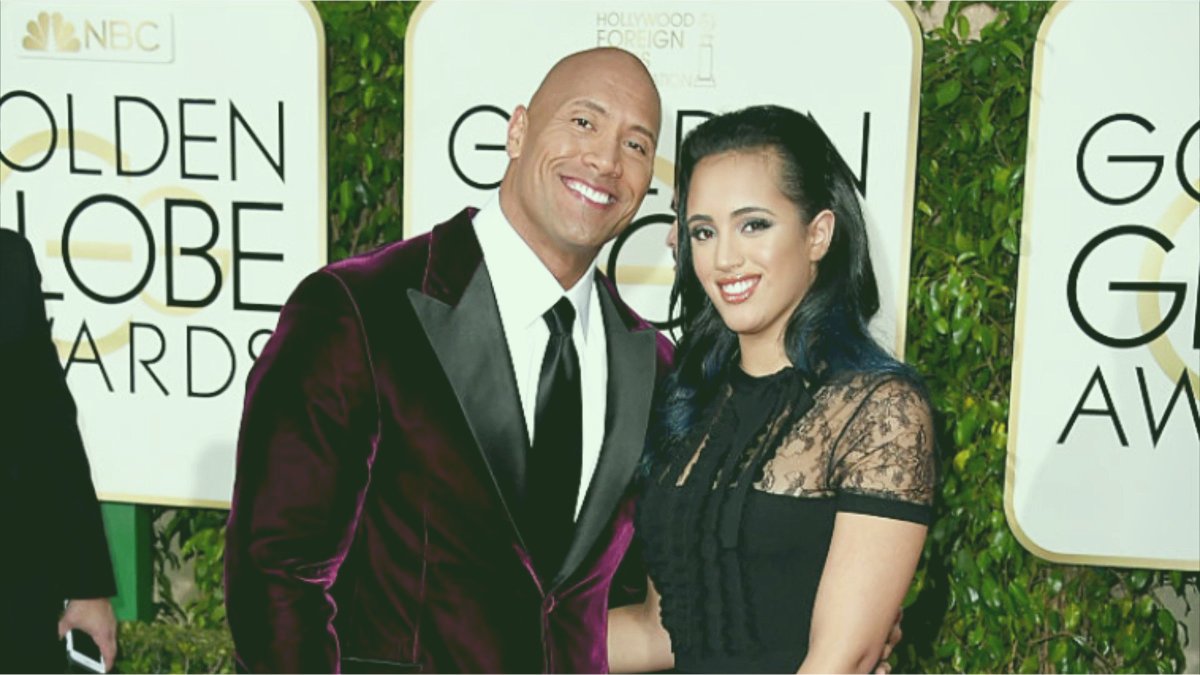
Trending news of The Rock's daughter Simone Johnson's announcing her new Stage Name is breaking our Versus tool because "Wrestling Name" isn't in our database!
Here's the most useful #Factualist comparison pages #Thread 🧵
What is the difference between “pseudonym” and “stage name?”
Pseudonym means “a fictitious name (more literally, a false name), as those used by writers and movie stars,” while stage name is “the pseudonym of an entertainer.”
https://t.co/hT5XPkTepy #english #wiki #wikidiff
People also found this comparison helpful:
Alias #versus Stage Name: What’s the difference?
Alias means “another name; an assumed name,” while stage name means “the pseudonym of an entertainer.”
https://t.co/Kf7uVKekMd #Etymology #words
Another common #question:
What is the difference between “alias” and “pseudonym?”
As nouns alias means “another name; an assumed name,” while pseudonym means “a fictitious name (more literally, a false name), as those used by writers and movie
Here is a very basic #comparison: "Name versus Stage Name"
As #nouns, the difference is that name means “any nounal word or phrase which indicates a particular person, place, class, or thing,” but stage name means “the pseudonym of an
Here's the most useful #Factualist comparison pages #Thread 🧵
What is the difference between “pseudonym” and “stage name?”
Pseudonym means “a fictitious name (more literally, a false name), as those used by writers and movie stars,” while stage name is “the pseudonym of an entertainer.”
https://t.co/hT5XPkTepy #english #wiki #wikidiff
People also found this comparison helpful:
Alias #versus Stage Name: What’s the difference?
Alias means “another name; an assumed name,” while stage name means “the pseudonym of an entertainer.”
https://t.co/Kf7uVKekMd #Etymology #words
Another common #question:
What is the difference between “alias” and “pseudonym?”
As nouns alias means “another name; an assumed name,” while pseudonym means “a fictitious name (more literally, a false name), as those used by writers and movie
Here is a very basic #comparison: "Name versus Stage Name"
As #nouns, the difference is that name means “any nounal word or phrase which indicates a particular person, place, class, or thing,” but stage name means “the pseudonym of an

An appallingly tardy response to such an important element of reading - apologies. The growing recognition of fluency as the crucial developmental area for primary education is certainly encouraging helping us move away from the obsession with reading comprehension tests.
It is, as you suggest, a nuanced pedagogy with the tripartite algorithm of rate, accuracy and prosody at times conflating the landscape and often leading to an educational shrug of the shoulders, a convenient abdication of responsibility and a return to comprehension 'skills'.
Taking each element separately (but not hierarchically) may be helpful but always remembering that for fluency they occur simultaneously (not dissimilar to sentence structure, text structure and rhetoric in fluent writing).
Rate, or words-read-per-minute, is the easiest. Faster reading speeds are EVIDENCE of fluency development but attempting to 'teach' children(or anyone) to read faster is fallacious (Carver, 1985) and will result in processing deficit which in young readers will be catastrophic.
Reading rate is dependent upon eye-movements and cognitive processing development along with orthographic development (more on this later).
Sorry - a bit of a brain dump post - but I'd appreciate any responses and/or directions towards any applicable research.@Suchmo83 @Mr_AlmondED @TimRasinski1 @ReadingShanahan @mrspennyslater @TheReadingApe @PieCorbett @ReadingRockets @teach_well
— Mr Leyshon (@RyonWLeyshon) February 4, 2021
It is, as you suggest, a nuanced pedagogy with the tripartite algorithm of rate, accuracy and prosody at times conflating the landscape and often leading to an educational shrug of the shoulders, a convenient abdication of responsibility and a return to comprehension 'skills'.
Taking each element separately (but not hierarchically) may be helpful but always remembering that for fluency they occur simultaneously (not dissimilar to sentence structure, text structure and rhetoric in fluent writing).
Rate, or words-read-per-minute, is the easiest. Faster reading speeds are EVIDENCE of fluency development but attempting to 'teach' children(or anyone) to read faster is fallacious (Carver, 1985) and will result in processing deficit which in young readers will be catastrophic.
Reading rate is dependent upon eye-movements and cognitive processing development along with orthographic development (more on this later).

You asked. So here are my thoughts on how osteopathic medical students should respond to the NBOME.
(thread)
Look, even before the Step 2 CS cancellation, my DMs and email were flooded with messages from osteopathic medical students who are fed up with the NBOME.
There is *real* anger toward this organization. Honestly, more than I even heard about from MD students and the NBME.
The question is, will that sentiment translate into action?
Amorphous anger on social media is easy to ignore. But if that anger gets channeled into organized efforts to facilitate change, then improvements are possible.
This much should be clear: begging the NBOME to reconsider their Level 2-PE exam is a waste of your time.
Best case scenario, you’ll get another “town hall” meeting, a handful of platitudes, and some thoughtful beard stroking before being told that they’re keeping the exam.
Instead of complaining to the NBOME, here are a few things that are more likely to bring about real change.
(thread)
I think most of us are over here waiting to see what @jbcarmody has to say about the latest NBOME email pic.twitter.com/bVWkS23V7z
— Jake Berg (@jberg521) January 28, 2021
Look, even before the Step 2 CS cancellation, my DMs and email were flooded with messages from osteopathic medical students who are fed up with the NBOME.
There is *real* anger toward this organization. Honestly, more than I even heard about from MD students and the NBME.
The question is, will that sentiment translate into action?
Amorphous anger on social media is easy to ignore. But if that anger gets channeled into organized efforts to facilitate change, then improvements are possible.
This much should be clear: begging the NBOME to reconsider their Level 2-PE exam is a waste of your time.
Best case scenario, you’ll get another “town hall” meeting, a handful of platitudes, and some thoughtful beard stroking before being told that they’re keeping the exam.
Instead of complaining to the NBOME, here are a few things that are more likely to bring about real change.
You May Also Like


To people who are under the impression that you can get rich quickly by working on an app, here are the stats for https://t.co/az8F12pf02
📈 ~12000 vistis
☑️ 109 transactions
💰 353€ profit (285 after tax)
I have spent 1.5 months on this app. You can make more $ in 2 days.
🤷♂️

I'm still happy that I launched a paid app bcs it involved extra work:
- backend for processing payments (+ permissions, webhooks, etc)
- integration with payment processor
- UI for license activation in Electron
- machine activation limit
- autoupdates
- mailgun emails
etc.
These things seemed super scary at first. I always thought it was way too much work and something would break. But I'm glad I persisted. So far the only problem I have is that mailgun is not delivering the license keys to certain domains like https://t.co/6Bqn0FUYXo etc. 👌
omg I just realized that me . com is an Apple domain, of course something wouldn't work with these dicks
📈 ~12000 vistis
☑️ 109 transactions
💰 353€ profit (285 after tax)
I have spent 1.5 months on this app. You can make more $ in 2 days.
🤷♂️
I'm still happy that I launched a paid app bcs it involved extra work:
- backend for processing payments (+ permissions, webhooks, etc)
- integration with payment processor
- UI for license activation in Electron
- machine activation limit
- autoupdates
- mailgun emails
etc.
These things seemed super scary at first. I always thought it was way too much work and something would break. But I'm glad I persisted. So far the only problem I have is that mailgun is not delivering the license keys to certain domains like https://t.co/6Bqn0FUYXo etc. 👌
omg I just realized that me . com is an Apple domain, of course something wouldn't work with these dicks





Ivor Cummins has been wrong (or lying) almost entirely throughout this pandemic and got paid handsomly for it.
He has been wrong (or lying) so often that it will be nearly impossible for me to track every grift, lie, deceit, manipulation he has pulled. I will use...

... other sources who have been trying to shine on light on this grifter (as I have tried to do, time and again:
Example #1: "Still not seeing Sweden signal versus Denmark really"... There it was (Images attached).
19 to 80 is an over 300% difference.
Tweet: https://t.co/36FnYnsRT9

Example #2 - "Yes, I'm comparing the Noridcs / No, you cannot compare the Nordics."
I wonder why...
Tweets: https://t.co/XLfoX4rpck / https://t.co/vjE1ctLU5x

Example #3 - "I'm only looking at what makes the data fit in my favour" a.k.a moving the goalposts.
Tweets: https://t.co/vcDpTu3qyj / https://t.co/CA3N6hC2Lq

He has been wrong (or lying) so often that it will be nearly impossible for me to track every grift, lie, deceit, manipulation he has pulled. I will use...
... other sources who have been trying to shine on light on this grifter (as I have tried to do, time and again:
Ivor Cummins BE (Chem) is a former R&D Manager at HP (sourcre: https://t.co/Wbf5scf7gn), turned Content Creator/Podcast Host/YouTube personality. (Call it what you will.)
— Steve (@braidedmanga) November 17, 2020
Example #1: "Still not seeing Sweden signal versus Denmark really"... There it was (Images attached).
19 to 80 is an over 300% difference.
Tweet: https://t.co/36FnYnsRT9
Example #2 - "Yes, I'm comparing the Noridcs / No, you cannot compare the Nordics."
I wonder why...
Tweets: https://t.co/XLfoX4rpck / https://t.co/vjE1ctLU5x
Example #3 - "I'm only looking at what makes the data fit in my favour" a.k.a moving the goalposts.
Tweets: https://t.co/vcDpTu3qyj / https://t.co/CA3N6hC2Lq
