
It took me a while to become confident and actually acknowledge this as something to be excited about and not anxious about.
#PhD INTERVIEW EXPERIENCE + TIPS/TRICKS (mine were for #biomed)
A thread.👇
Before I begin, all of you are awesome and never let anyone tell you otherwise😃
Share and RT 😁❤
@AcademicChatter @OpenAcademics @PhDspeaks @firstphdchat
It took me a while to become confident and actually acknowledge this as something to be excited about and not anxious about.
They would want to impress you with their the same way you want to impress them.
Now let's move on to interview prep.
If you know your interviewers prior to your interview (I also had the opportunity to pick them), read up on them, their research, recent publications/projects.
One on one interviews with faculty will have more room for conversation than panel interviews.
Answering questions might be the most challenging part of an interview and preparation is key.
Be yourself and be confident in yourself (what I said to myself before my interview)
Remember: We are humans and our journeys will not be perfect, what matters is how we overcome our challenges.
This is a big one for most #PhD programs.
For research focused programs, this will be the major part of your interview.
Like I mentioned before prepping answers for these will help you be concise.
You should make sure you have thorough background understanding of your primary research experience/project.
TIP: Revisiting presentations helped me a lot.
At an interview, you might be asked to present different approach to your hypothesis or talk about potential limitations.
Or you might be presented a limitation and asked how you would proceed.
These questions will vary depending on your field but they will be most likely asked.
TIP: If you are unsure of something or you don't know, it's OK to let them know
Faculty interviewers who are looking to recruit you will be investing in you (and pay you) through your PhD. In this sense, they are potential employers.
Aside from research, they will also want to understand you as a professional.
While answering these, use examples from your previous experiences. This will demonstrate your capabilities as a professional to your interviewers.
You should definitely prepare specific questions for your interviewers to ask about their lab/program (current projects, opportunities, funding, etc.)
This will help you understand the environment you would do your #PhD in and show your interest
And remember to ask about the faculty's mentoring style and lab environment.
Particularly, these are things that will help you make a decision down the line.
Make sure you take a lot of notes during your interviews. It will help you make a decision later on.
Make a summary of the points you noted and make specific comments that you can check back on for each program.
I use the pros/cons system (Thanks @DTPtoPhD!)
More from Education


A list of cool websites you might now know about
A thread 🧵
1) Learn Anything - Search tools for knowledge discovery that helps you understand any topic through the most efficient
2) Grad Speeches - Discover the best commencement speeches.
This website is made by me
3) What does the Internet Think - Find out what the internet thinks about anything
4) https://t.co/vuhT6jVItx - Send notes that will self-destruct after being read.
A thread 🧵
1) Learn Anything - Search tools for knowledge discovery that helps you understand any topic through the most efficient
2) Grad Speeches - Discover the best commencement speeches.
This website is made by me
3) What does the Internet Think - Find out what the internet thinks about anything
4) https://t.co/vuhT6jVItx - Send notes that will self-destruct after being read.


OK I am going to be tackling this as surveillance/open source intel gathering exercise, because that is my background. I blew away 3 years of my life doing site acquisition/reconnaissance for a certain industry that shall remain unnamed and believe there is significant carryover.
This is NOT going to be zillow "here is how to google school districts and find walmart" we are not concerned with this malarkey, we are homeschooling and planting victory gardens and having gigantic happy families.
With that said, for my frog and frog-adjacent bros and sisters:
CHOICE SITES:
Zillow is obvious one, but there are many good sites like Billy Land, Classic Country Land, Landwatch, etc. and many of these specialize in owner financing (more on that later.) Do NOT treat these as authoritative sources - trust plat maps and parcel viewers.
TARGET IDENTIFICATION AND EVALUATION:
Okay, everyone knows how to google "raw land in x state" but there are other resources out there, including state Departments of Natural Resources, foreclosure auctions, etc. Finding the land you like is the easy part. Let's do a case study.
I'm going to target using an "off-grid but not" algorithm. This is a good piece in my book - middle of nowhere but still trekkable to civilization.
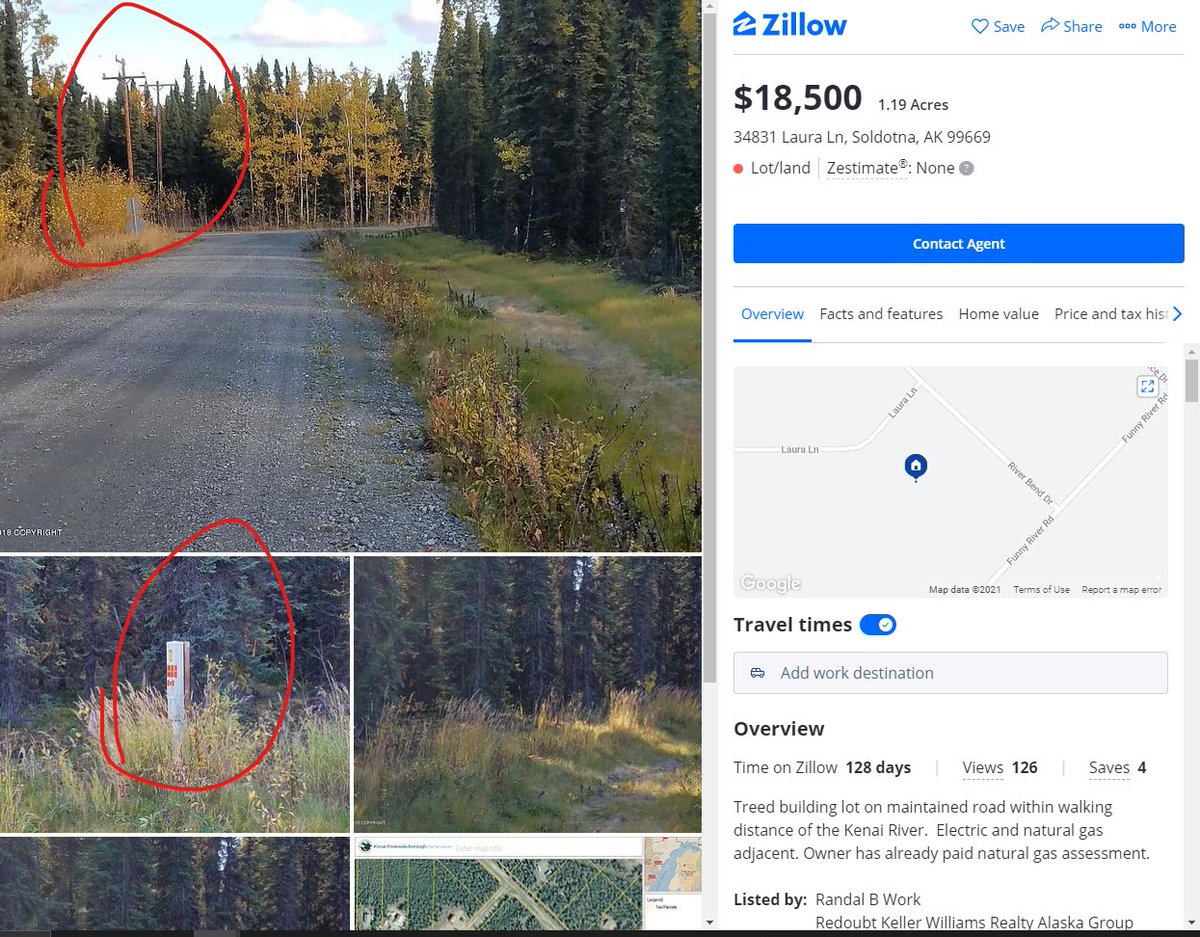
Note: visible power, power/fiber pedestal, utility corridor, nearby commercial enterprise(s), and utility pole shadows visible.
If I did thred on finding/acquiring decent raw land would that be something pepo are interested in
— Ovcharka (@ouroboros_outis) January 18, 2021
I think I know a bunch of weird tips/tricks for selection at this point that it might help u guys, lemme know
This is NOT going to be zillow "here is how to google school districts and find walmart" we are not concerned with this malarkey, we are homeschooling and planting victory gardens and having gigantic happy families.
With that said, for my frog and frog-adjacent bros and sisters:
CHOICE SITES:
Zillow is obvious one, but there are many good sites like Billy Land, Classic Country Land, Landwatch, etc. and many of these specialize in owner financing (more on that later.) Do NOT treat these as authoritative sources - trust plat maps and parcel viewers.
TARGET IDENTIFICATION AND EVALUATION:
Okay, everyone knows how to google "raw land in x state" but there are other resources out there, including state Departments of Natural Resources, foreclosure auctions, etc. Finding the land you like is the easy part. Let's do a case study.
I'm going to target using an "off-grid but not" algorithm. This is a good piece in my book - middle of nowhere but still trekkable to civilization.
Note: visible power, power/fiber pedestal, utility corridor, nearby commercial enterprise(s), and utility pole shadows visible.


You May Also Like









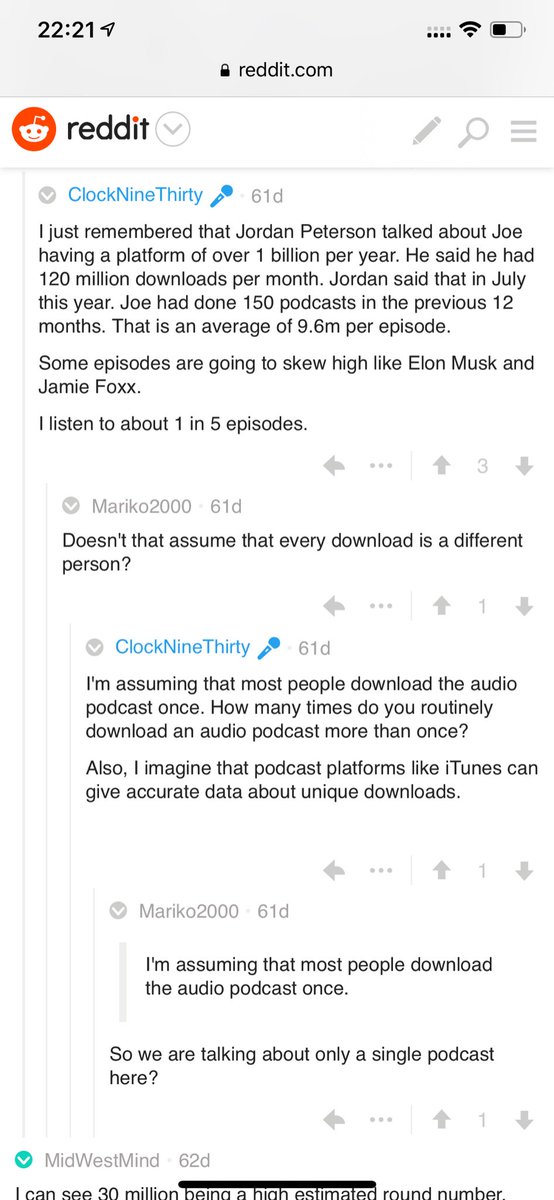
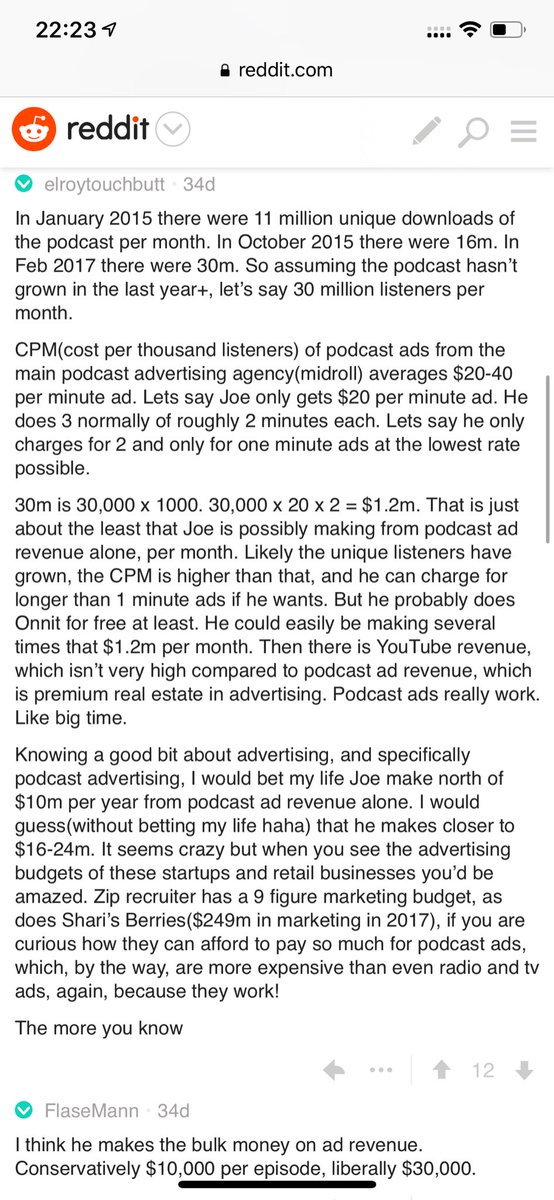
Joe Rogan's podcast is now is listened to 1.5+ billion times per year at around $50-100M/year revenue.
Independent and 100% owned by Joe, no networks, no middle men and a 100M+ people audience.
👏
https://t.co/RywAiBxA3s
Joe is the #1 / #2 podcast (depends per week) of all podcasts
120 million plays per month source https://t.co/k7L1LfDdcM
https://t.co/aGcYnVDpMu
Independent and 100% owned by Joe, no networks, no middle men and a 100M+ people audience.
👏
https://t.co/RywAiBxA3s
Joe is the #1 / #2 podcast (depends per week) of all podcasts
120 million plays per month source https://t.co/k7L1LfDdcM
https://t.co/aGcYnVDpMu