
Simple joys? You mean, like seeing friends? Actually learning in a classroom? Heck, like learning at all?
So I woke up today to learn that the @A2SchoolsSuper has called a snow day. After a four-day weekend. And with tomorrow an "asynchronous" day (i.e., no real school again).
Which might sound reasonable after a storm, except -- there IS no in-person school in Ann Arbor.
Simple joys? You mean, like seeing friends? Actually learning in a classroom? Heck, like learning at all?
They don't need those things right now. They need school. We need school.
But the schools remain closed. There is no date for reopening.
Does she have any idea how that sounds to parents who are desperate to get their kids back into a classroom?
More from Education


Our top 15 tweets
A #prodmgmt thread 👇
https://t.co/Yv854Sd3P3
https://t.co/sXaMH1bZ9m
https://t.co/5X7bOTsS7m
https://t.co/w1y6LTtPS2
A #prodmgmt thread 👇
https://t.co/Yv854Sd3P3
Sum up Product Management in 4 words or less. \U0001f609
— Product School (@productschool) April 10, 2020
https://t.co/sXaMH1bZ9m
\u201cWithout data, you\u2019re just another person with an opinion.\u201d
— Product School (@productschool) July 22, 2020
-W. Edwards Deming
https://t.co/5X7bOTsS7m
MVP (Minimum Viable Product) or MLP (Minimum Lovable Product)? \u2764\ufe0f
— Product School (@productschool) July 6, 2020
https://t.co/w1y6LTtPS2
UI/UX are not just add-ons for a product. They\u2019re critical elements that need care, research, and a Product Manager\u2019s full attention.
— Product School (@productschool) July 12, 2020


A thread about online teaching and learning (T&L).
@wv012 @Passengercis @thebandb @carelstolker @BieTanjade @C4Innovation @rianneletscher @PietVdBossche @wijmenga_cisca @Pduisenberg @QMProgram #highered #edtech #teaching @threadreader unroll (1)
Here is a university road map on how the strengths of conventional, face-to-face teaching and online T&L can be optimally used to address today’s lecture room challenges.
I am not an instructional designer, but I have been teaching online internationally for over 10 years (2)
In the last 2+ years, I taught hybrid & online undergraduate courses at the University of Maryland Global Campus, among the largest top-20 online colleges in the USA.
UMGC has received numerous awards for its innovations: https://t.co/jd7JkHIK8Q and https://t.co/IPKizZwclA (3)
15+ years ago UMGC was one of the founding members of QM “Quality Matters” a non-profit with 1,500+ members in 26 countries.
QM offers membership of a community of practice, numerous free resources, online training, and review/accreditation services https://t.co/ZoFVsgcBC7 (4)
It is obvious that universities will also be affected by the 4th industrial revolution, and things can not stay the same as they were after the invention of the printing press.
Until recently, a lecture room looked the same as 900 years ago incl. flirting and sleeping (5)

@wv012 @Passengercis @thebandb @carelstolker @BieTanjade @C4Innovation @rianneletscher @PietVdBossche @wijmenga_cisca @Pduisenberg @QMProgram #highered #edtech #teaching @threadreader unroll (1)
Here is a university road map on how the strengths of conventional, face-to-face teaching and online T&L can be optimally used to address today’s lecture room challenges.
I am not an instructional designer, but I have been teaching online internationally for over 10 years (2)
In the last 2+ years, I taught hybrid & online undergraduate courses at the University of Maryland Global Campus, among the largest top-20 online colleges in the USA.
UMGC has received numerous awards for its innovations: https://t.co/jd7JkHIK8Q and https://t.co/IPKizZwclA (3)
15+ years ago UMGC was one of the founding members of QM “Quality Matters” a non-profit with 1,500+ members in 26 countries.
QM offers membership of a community of practice, numerous free resources, online training, and review/accreditation services https://t.co/ZoFVsgcBC7 (4)
It is obvious that universities will also be affected by the 4th industrial revolution, and things can not stay the same as they were after the invention of the printing press.
Until recently, a lecture room looked the same as 900 years ago incl. flirting and sleeping (5)
You May Also Like





Speech Delay is most common in children nowadays
In ancient times, our grandparents used to follow typical natural way of caring the needs of a child. All they used were more of natural products than chemical based for the growth of child.

One of major step followed was to feed Gurbach Jadd/ Vasa Kommu/ Acorus Calamus for initiating good speech ability in a child. This stem was needed to babies on Tuesdays and Sundays in mother's milk.
Vasa is feed to baby after the 1st bath on 12th day in week. Weekly only thrice it is fed and named as :
Budhwar - Budhi Vasa
Mangalwar - Vaak Vasa
Ravi Vaar - Aayush Vasa
This stem is burnt and rubbed against the grinding stone in mother's milk or warm water to get a paste
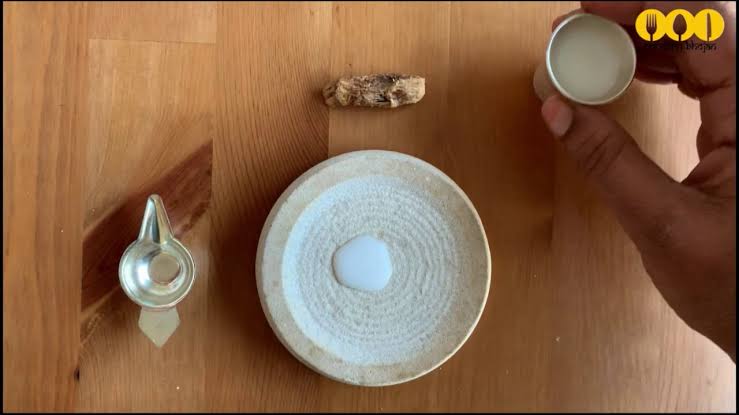
The procedure to make it is in the link
https://t.co/uo4sGp7mUm
It should not be given daily to the child. Other main benefits are
1. It clears the phlegm in child's throat caused due to continuous milk intake. It clears the tracts and breathing is effortless.
2. Digestion
For children who haven't got their speech and is delayed than usual should feed this vasa on these days in week atleast for 6months. Don't get carried away with this dialogue
"Some gain speech little late"
In ancient times, our grandparents used to follow typical natural way of caring the needs of a child. All they used were more of natural products than chemical based for the growth of child.
One of major step followed was to feed Gurbach Jadd/ Vasa Kommu/ Acorus Calamus for initiating good speech ability in a child. This stem was needed to babies on Tuesdays and Sundays in mother's milk.
Vasa is feed to baby after the 1st bath on 12th day in week. Weekly only thrice it is fed and named as :
Budhwar - Budhi Vasa
Mangalwar - Vaak Vasa
Ravi Vaar - Aayush Vasa
This stem is burnt and rubbed against the grinding stone in mother's milk or warm water to get a paste
The procedure to make it is in the link
https://t.co/uo4sGp7mUm
It should not be given daily to the child. Other main benefits are
1. It clears the phlegm in child's throat caused due to continuous milk intake. It clears the tracts and breathing is effortless.
2. Digestion
For children who haven't got their speech and is delayed than usual should feed this vasa on these days in week atleast for 6months. Don't get carried away with this dialogue
"Some gain speech little late"