
Sum up Product Management in 4 words or less. \U0001f609
— Product School (@productschool) April 10, 2020
Our top 15 tweets
A #prodmgmt thread 👇
\u201cWithout data, you\u2019re just another person with an opinion.\u201d
— Product School (@productschool) July 22, 2020
-W. Edwards Deming
MVP (Minimum Viable Product) or MLP (Minimum Lovable Product)? \u2764\ufe0f
— Product School (@productschool) July 6, 2020
UI/UX are not just add-ons for a product. They\u2019re critical elements that need care, research, and a Product Manager\u2019s full attention.
— Product School (@productschool) July 12, 2020
What makes a great #PM?
— Product School (@productschool) June 18, 2019
Creative
Discover the most innovative ideas to develop
Analytical
Measuring in order to validate your ideas and outcomes
Leader
Syncing and supporting teams, believing in your abilities, and celebrating failure and success#ProdMgmt
What are some top jobs in #tech that don't require coding?
— Product School (@productschool) September 11, 2020
1. Product Manager
2.
3.
What else?
What is the most underrated #productmanagement skill?
— Product School (@productschool) September 20, 2020
Opinions welcome! \U0001f442
\U0001f5e3\ufe0f Seasoned PMs and Product leaders!
— Product School (@productschool) May 16, 2020
What is some product management advice you'd tell yourself in your first 30 days as a PM?
Hey Product people! We want to get to know you!
— Product School (@productschool) January 9, 2021
\u2764\ufe0f if you're an aspiring PM
\U0001f501 if you're a Product Manager
\u2b07\ufe0f comment how long you've been working in #prodmgmt
UI/UX are not just add-ons for a product. They\u2019re critical elements that need care, research, and a Product Manager\u2019s full attention.
— Product School (@productschool) July 12, 2020
If you measure Customer Acquisition without also measuring Customer Retention, it sends the message that you only care about gaining new customers and not keeping them happy.
— Product School (@productschool) August 10, 2020
"A good Product manager understands customer needs, and thinks about experience, not just the product."
— Product School (@productschool) September 21, 2020
- @batmelon
What are the top 3 responsibilities of a PM?
— Product School (@productschool) July 26, 2019
1. Well-prioritized backlog of initiatives based on business goals
2. Clear understanding of user pain points so you can prioritize
3. Clearly communicating your vision so those responsible are not confused#ProdMgmt
Any #prodmgmt people on Clubhouse?
— Product School (@productschool) December 18, 2020
A Product Manager's attention is being pulled from all directions \U0001f92f
— Product School (@productschool) August 16, 2020
Just remember exactly who is at the center of decision-making.
\U0001f449 The customer.
More from Education


I was a recipient of KGSP for my Msc from 2013-2016
Korean Government Scholarship Program (KGSP) Application made easy
Application period- 1 February 2021- 31 March, 2021
MS- 3yrs (1 year Korean language + 2 years MS)
PhD- 4yrs (1 year Korean language + 3 years PhD)
How to navigate the https://t.co/6Ne99JDfyv page
1. Type https://t.co/ow51lWVKcQ in your browser and hit the enter button
2. Click on scholarships and select GKS notice as attached in the picture👇
3. Play with the notice dashboard to see various announcements from NIIED.
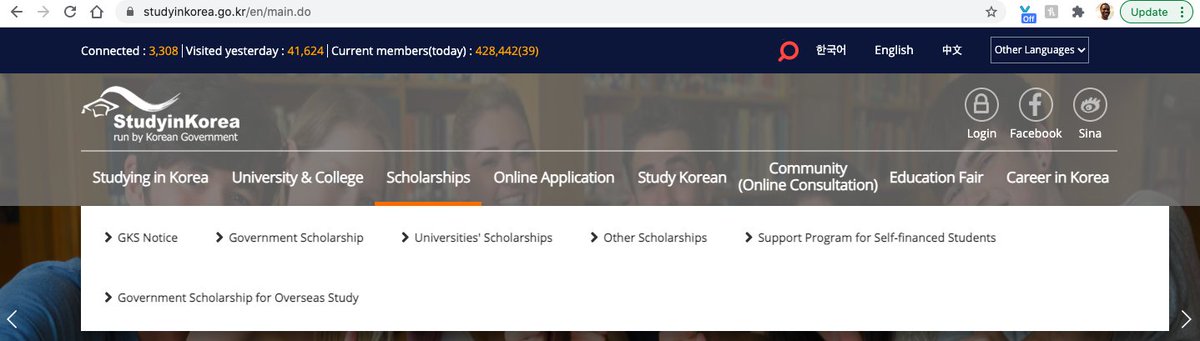
4. E.g in 2020, the Global Korea Scholarship for Graduate Degrees was announced on 11, February as indicated by no 205. You can click to download the application materials to get familiar with what is expected. I attached series of links in this thread to assist too.
Category- All fields
Benefits
1. Visa fee
2. Airfare: Actual cost (To and fro from your home country to Korea and upon completion to your home country)
3. Resettlement Allowance: KRW 200,000 (Given upon arrival in Korea)
4. Monthly stipend: Graduate (MS/PhD)-KRW 1000,000 (362,610.35 Nigerian Naira) per month ,Research Program including Postdoctoral fellow and visiting Professors - 1,500,000 KRW (542,824.78 Nigerian Naira) per month
Korean Government Scholarship Program (KGSP) Application made easy
Application period- 1 February 2021- 31 March, 2021
MS- 3yrs (1 year Korean language + 2 years MS)
PhD- 4yrs (1 year Korean language + 3 years PhD)
How to navigate the https://t.co/6Ne99JDfyv page
1. Type https://t.co/ow51lWVKcQ in your browser and hit the enter button
2. Click on scholarships and select GKS notice as attached in the picture👇
3. Play with the notice dashboard to see various announcements from NIIED.
4. E.g in 2020, the Global Korea Scholarship for Graduate Degrees was announced on 11, February as indicated by no 205. You can click to download the application materials to get familiar with what is expected. I attached series of links in this thread to assist too.
Category- All fields
Benefits
1. Visa fee
2. Airfare: Actual cost (To and fro from your home country to Korea and upon completion to your home country)
3. Resettlement Allowance: KRW 200,000 (Given upon arrival in Korea)
4. Monthly stipend: Graduate (MS/PhD)-KRW 1000,000 (362,610.35 Nigerian Naira) per month ,Research Program including Postdoctoral fellow and visiting Professors - 1,500,000 KRW (542,824.78 Nigerian Naira) per month



The outrage is not that she fit better. The outrage is that she stated very firmly on national television with no caveat, that there are no conditions not improved by exercise. Many people with viral sequelae have been saying for years that exercise has made them more disabled 1/
And the new draft NICE guidelines for ME/CFS which often has a viral onset specifically say that ME/CFS patients shouldn't do graded exercise. Clare is fully aware of this but still made a sweeping and very firm statement that all conditions are improved by exercise. This 2/
was an active dismissal of the lived experience of hundreds of thousands of patients with viral sequelae. Yes, exercise does help so many conditions. Yes, a very small number of people with an ME/CFS diagnosis are helped by exercise. But the vast majority of people with ME, a 3/
a quintessential post-viral condition, are made worse by exercise. Many have been left wheelchair dependent of bedbound by graded exercise therapy when they could walk before. To dismiss the lived experience of these patients with such a sweeping statement is unethical and 4/
unsafe. Clare has every right to her lived experience. But she can't, and you can't justifiably speak out on favour of listening to lived experience but cherry pick the lived experiences you are going to listen to. Why are the lived experiences of most people with ME dismissed?
Why is it such a source of collective outrage that a person with fatigue following a viral illness gets better?https://t.co/5lcwQBPLU5
— Trisha Greenhalgh \U0001f637 #CovidIsAirborne (@trishgreenhalgh) January 30, 2021
And the new draft NICE guidelines for ME/CFS which often has a viral onset specifically say that ME/CFS patients shouldn't do graded exercise. Clare is fully aware of this but still made a sweeping and very firm statement that all conditions are improved by exercise. This 2/
was an active dismissal of the lived experience of hundreds of thousands of patients with viral sequelae. Yes, exercise does help so many conditions. Yes, a very small number of people with an ME/CFS diagnosis are helped by exercise. But the vast majority of people with ME, a 3/
a quintessential post-viral condition, are made worse by exercise. Many have been left wheelchair dependent of bedbound by graded exercise therapy when they could walk before. To dismiss the lived experience of these patients with such a sweeping statement is unethical and 4/
unsafe. Clare has every right to her lived experience. But she can't, and you can't justifiably speak out on favour of listening to lived experience but cherry pick the lived experiences you are going to listen to. Why are the lived experiences of most people with ME dismissed?
You May Also Like








1/ Some initial thoughts on personal moats:
Like company moats, your personal moat should be a competitive advantage that is not only durable—it should also compound over time.
Characteristics of a personal moat below:
2/ Like a company moat, you want to build career capital while you sleep.
As Andrew Chen noted:
3/ You don’t want to build a competitive advantage that is fleeting or that will get commoditized
Things that might get commoditized over time (some longer than
4/ Before the arrival of recorded music, what used to be scarce was the actual music itself — required an in-person artist.
After recorded music, the music itself became abundant and what became scarce was curation, distribution, and self space.
5/ Similarly, in careers, what used to be (more) scarce were things like ideas, money, and exclusive relationships.
In the internet economy, what has become scarce are things like specific knowledge, rare & valuable skills, and great reputations.
Like company moats, your personal moat should be a competitive advantage that is not only durable—it should also compound over time.
Characteristics of a personal moat below:
I'm increasingly interested in the idea of "personal moats" in the context of careers.
— Erik Torenberg (@eriktorenberg) November 22, 2018
Moats should be:
- Hard to learn and hard to do (but perhaps easier for you)
- Skills that are rare and valuable
- Legible
- Compounding over time
- Unique to your own talents & interests https://t.co/bB3k1YcH5b
2/ Like a company moat, you want to build career capital while you sleep.
As Andrew Chen noted:
People talk about \u201cpassive income\u201d a lot but not about \u201cpassive social capital\u201d or \u201cpassive networking\u201d or \u201cpassive knowledge gaining\u201d but that\u2019s what you can architect if you have a thing and it grows over time without intensive constant effort to sustain it
— Andrew Chen (@andrewchen) November 22, 2018
3/ You don’t want to build a competitive advantage that is fleeting or that will get commoditized
Things that might get commoditized over time (some longer than
Things that look like moats but likely aren\u2019t or may fade:
— Erik Torenberg (@eriktorenberg) November 22, 2018
- Proprietary networks
- Being something other than one of the best at any tournament style-game
- Many "awards"
- Twitter followers or general reach without "respect"
- Anything that depends on information asymmetry https://t.co/abjxesVIh9
4/ Before the arrival of recorded music, what used to be scarce was the actual music itself — required an in-person artist.
After recorded music, the music itself became abundant and what became scarce was curation, distribution, and self space.
5/ Similarly, in careers, what used to be (more) scarce were things like ideas, money, and exclusive relationships.
In the internet economy, what has become scarce are things like specific knowledge, rare & valuable skills, and great reputations.