
https://t.co/vyVlfUN4wO
This thread is for parents of teenagers. I have something for you: the first chapter of @ronlieber’s THE PRICE YOU PAY FOR COLLEGE. Because ye gods, here’s what we and our kids are facing.
https://t.co/vyVlfUN4wO
More from Education

** Schools have been getting ready for this: a thread **
In many ways, I don't blame folks who tweet things like this. The media coverage of the schools situation in Covid-19 rarely talks about the quiet, day-in-day-out work that schools have been doing these past 9 months. 1/
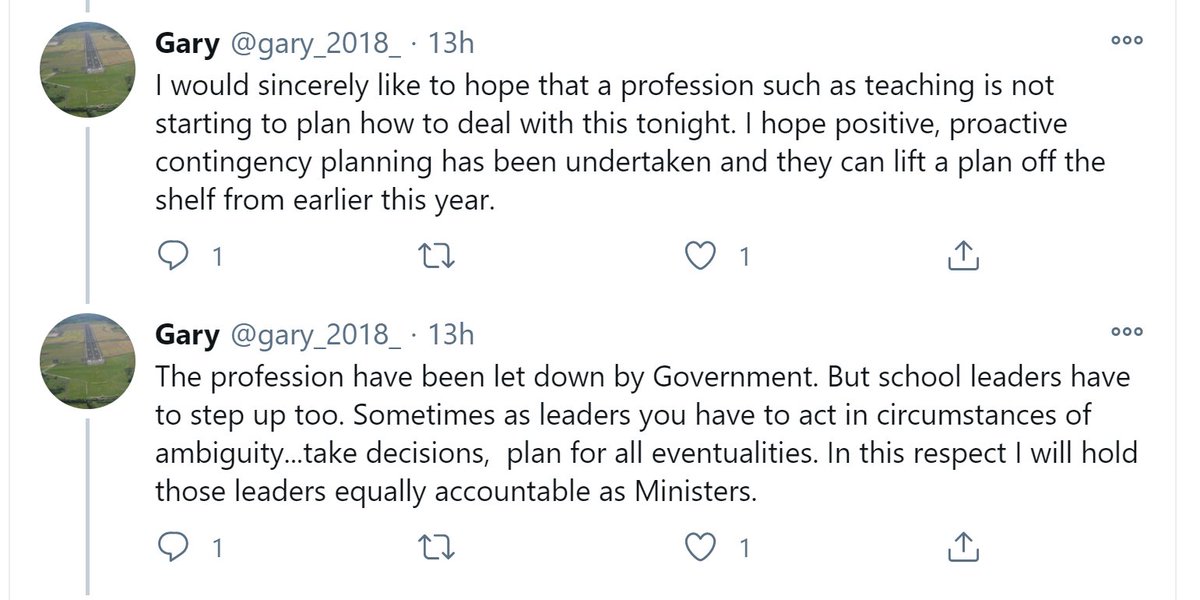
Instead, the coverage focused on the dramatic, last minute policy announcements by the government, or of dramatic stories of school closures, often accompanied by photos of socially distanced classrooms that those of us in schools this past term know are from a fantasy land. 2/

If that's all you see & hear, it's no wonder that you may not know what has actually been happening in schools to meet the challenges. So, if you'd like a glimpse behind the curtain, then read on. For this is something of what teachers & schools leaders have been up to. 3/
It started last March with trying to meet the challenges of lockdown, being thrown into the deep end, with only a few days' notice, to try to learn to teach remotely during the first lockdown. 4/
https://t.co/S39EWuap3b
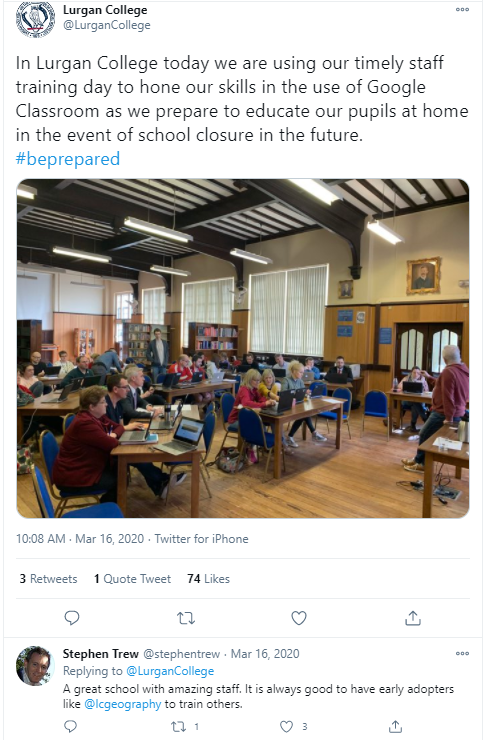
I wrote a policy document for our staff the weekend before our training as we anticipated what was to come, a document I shared freely & widely as the education community across the land started to reach out to one another for ideas and support. 5/
https://t.co/m1QsxlPaV4
In many ways, I don't blame folks who tweet things like this. The media coverage of the schools situation in Covid-19 rarely talks about the quiet, day-in-day-out work that schools have been doing these past 9 months. 1/
Instead, the coverage focused on the dramatic, last minute policy announcements by the government, or of dramatic stories of school closures, often accompanied by photos of socially distanced classrooms that those of us in schools this past term know are from a fantasy land. 2/
If that's all you see & hear, it's no wonder that you may not know what has actually been happening in schools to meet the challenges. So, if you'd like a glimpse behind the curtain, then read on. For this is something of what teachers & schools leaders have been up to. 3/
It started last March with trying to meet the challenges of lockdown, being thrown into the deep end, with only a few days' notice, to try to learn to teach remotely during the first lockdown. 4/
https://t.co/S39EWuap3b
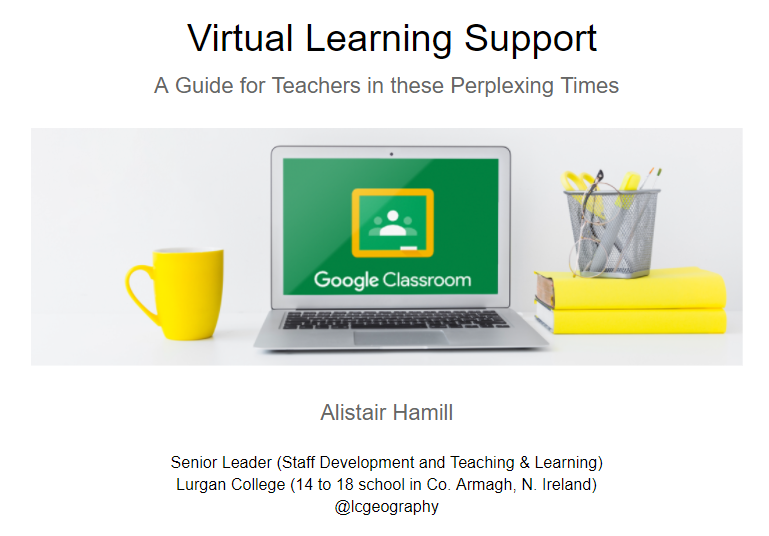
In Lurgan College today we are using our timely staff training day to hone our skills in the use of Google Classroom as we prepare to educate our pupils at home in the event of school closure in the future. #beprepared pic.twitter.com/E0LQkYqvBD
— Lurgan College (@LurganCollege) March 16, 2020
I wrote a policy document for our staff the weekend before our training as we anticipated what was to come, a document I shared freely & widely as the education community across the land started to reach out to one another for ideas and support. 5/
https://t.co/m1QsxlPaV4

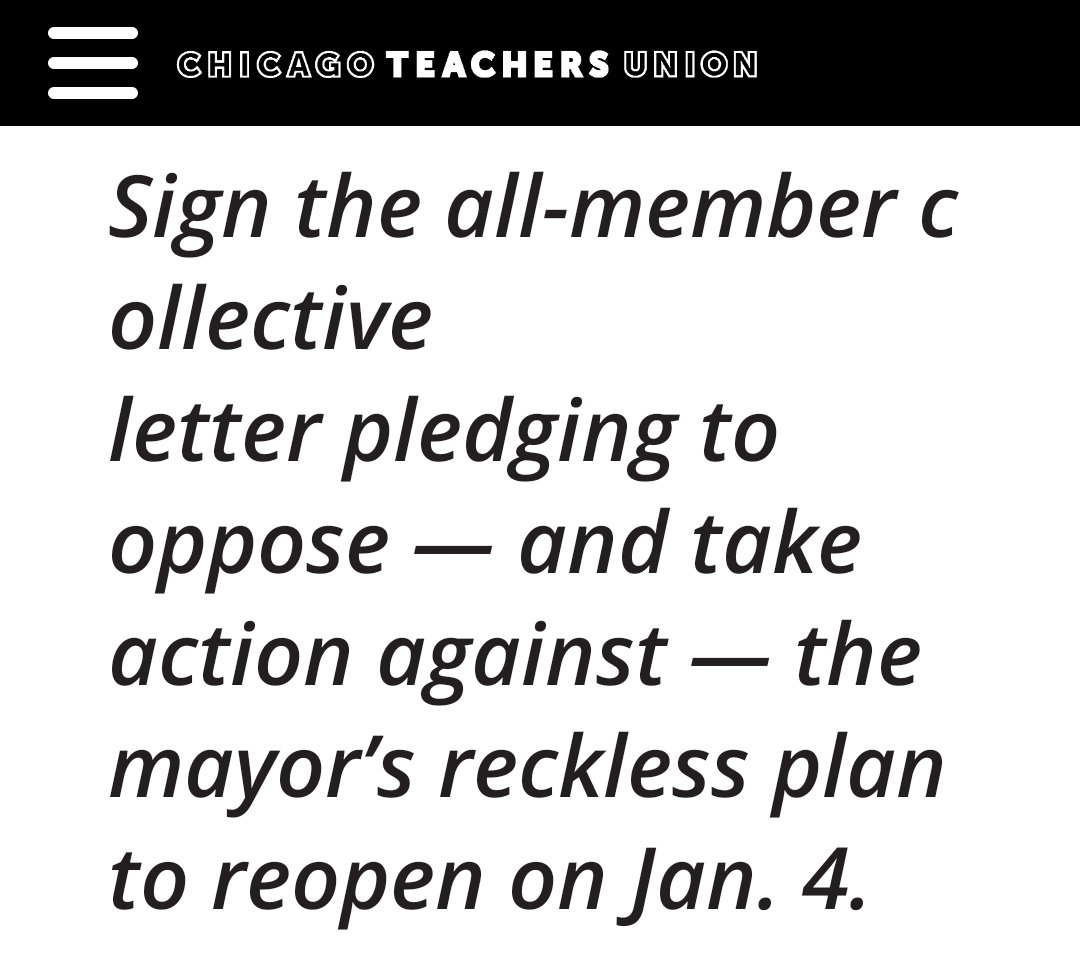
Chicago Public Schools are supposed to open for some special needs and pre-K students Monday
The Chicago Teachers Union is now threatening to refuse to return to work in person.
https://t.co/MgDgNe6REj
Meanwhile
https://t.co/FIij8J3r7z
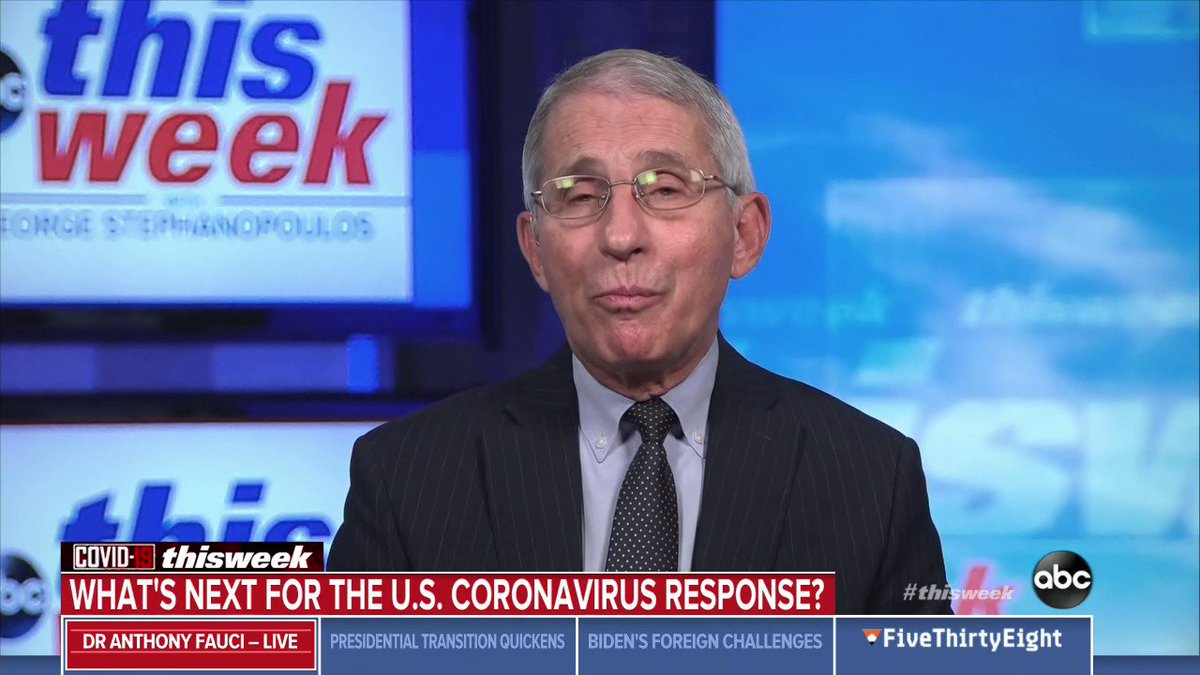
Dr. Fauci: "The default position should be to try as best as possible within reason to keep the children in school or to get them back to school [...] if you look at the data the spread among children and from children is not really big at
UNICEF: "Data from 191 countries shows no consistent link between reopening schools and increased rates of coronavirus
The Chicago Teachers Union is now threatening to refuse to return to work in person.
https://t.co/MgDgNe6REj
Meanwhile
https://t.co/FIij8J3r7z
Dr. Fauci: "The default position should be to try as best as possible within reason to keep the children in school or to get them back to school [...] if you look at the data the spread among children and from children is not really big at
UNICEF: "Data from 191 countries shows no consistent link between reopening schools and increased rates of coronavirus

Dear @Ofstednews
*Re: Teachers have passed the test the Government have failed*
My letter in response to @GavinWilliamson's request for parents to complain about online provision of learning during global pandemic. It might appeal to parents & #EduTwitter alike. THREAD⬇️
I would like to echo the recent recommendation of my MP, who I understand has education as one of their priorities.
They lead with religious and political faith, and I'd like you to lend from their methods of applying faith over fact, if you could.
You see, I have faith in schools communicating clearly, consistently and safely as the facts have demonstrated they can. Unlike the cabinet.
Schools have acknowledged the fear and confusion communities have suffered when this government has failed to deliver clear and consistent messages that lend to 'common sense'.
This, despite the fact their 'common sense' pleas for the contradicting that of their own dangerous behaviour.
*Re: Teachers have passed the test the Government have failed*
My letter in response to @GavinWilliamson's request for parents to complain about online provision of learning during global pandemic. It might appeal to parents & #EduTwitter alike. THREAD⬇️
I would like to echo the recent recommendation of my MP, who I understand has education as one of their priorities.
They lead with religious and political faith, and I'd like you to lend from their methods of applying faith over fact, if you could.
You see, I have faith in schools communicating clearly, consistently and safely as the facts have demonstrated they can. Unlike the cabinet.
Priti Patel announces even more deaths than I was expecting: "Three hundred thousand, thirty four, nine hundred and seventy four thousand"
— Parody Boris Johnson (@BorisJohnson_MP) April 11, 2020
That's almost twelvty ten squidillion.#COVID19 #pritipatel pic.twitter.com/Jf7a5E7BfI
Schools have acknowledged the fear and confusion communities have suffered when this government has failed to deliver clear and consistent messages that lend to 'common sense'.
This, despite the fact their 'common sense' pleas for the contradicting that of their own dangerous behaviour.

Normally I enjoy the high standards of journalism in @guardian . Not today as disappointed with misleading headline that suggest infections are spreading fastest in children. It'll worry parents/teachers & I doubt most readers will unpick the
The latest REACT1 report shows prevalence of infection in ALL age groups has fallen, including children aged 5-12 from 1.59% in Round 8 to 0.86% in Round 9a. The authors of REACT1 report also (wisely) didn't try to interpret the prevalence figures.
If this were a research trial you wouldn't place much weight on the age differences in % prevalence because of the wide confidence intervals, i.e. differences weren't statistically significant.
3/
I've previously tweeted on the challenges (& dangers) of interpreting surveillance data. One would need lots more contextual info to make sense of it & arrive at sound
Undoubtedly some will extrapolate from the prevalence of infection figures in children to other settings i.e. schools based on the headline. I'd advise caution as there is a real risk of over-interpretation through extrapolation of limited data. Association is not causation.
5/
The latest REACT1 report shows prevalence of infection in ALL age groups has fallen, including children aged 5-12 from 1.59% in Round 8 to 0.86% in Round 9a. The authors of REACT1 report also (wisely) didn't try to interpret the prevalence figures.
If this were a research trial you wouldn't place much weight on the age differences in % prevalence because of the wide confidence intervals, i.e. differences weren't statistically significant.
3/
I've previously tweeted on the challenges (& dangers) of interpreting surveillance data. One would need lots more contextual info to make sense of it & arrive at sound
Misinterpretation of surveillance data is a serious issue. Surveillance data needs to come with a warning label - Open to biases - interpret with caution! Some may not realize that surveillance often does not measure all infection, it's a proxy for actual disease incidence.
— Andrew Lee (@andrewleedr) February 14, 2021
1/
Undoubtedly some will extrapolate from the prevalence of infection figures in children to other settings i.e. schools based on the headline. I'd advise caution as there is a real risk of over-interpretation through extrapolation of limited data. Association is not causation.
5/

Last month I presented seven sentences in seven different languages, all written in a form of the Chinese-character script. The challenge was to identify the languages and, if possible, provide a
Here again are those seven sentences:
1) 他的剑从船上掉到河里去
2) 於世𡗉番𧡊哭唭𢆥尼歲㐌外四𨑮
3) 入良沙寢矣見昆腳烏伊四是良羅
4) 佢而家喺邊喥呀
5) 夜久毛多都伊豆毛夜幣賀岐都麻碁微爾夜幣賀岐都久流曾能夜幣賀岐袁
6) 其劍自舟中墜於水
7) 今天愛晚特語兔吃二魚佛午飯
Six of those seven sentences are historically attested. One is not: I invented #7. I’m going to dive into an exploration of that seventh sentence in today’s thread.
Sentence #7 is an English-language sentence written sinographically — that is, using graphs that originate in the Chinese script. I didn’t do this for fun (even though it is fun), or as a proposal for a new way to write
I did it as a thought experiment. Why? Because thinking about how the modern Chinese script might be adapted to write modern English can give us valuable insights into historical instances of script borrowing, like those that took place centuries ago in Japan, Korea, and Vietnam.
\U0001f17b\U0001f130\U0001f17d\U0001f176\U0001f184\U0001f130\U0001f176\U0001f174 \U0001f180\U0001f184\U0001f178\U0001f189
— zev handel (@ZevHandel) December 17, 2020
The following sentences are in seven different languages, all written in Chinese-character script (or a modification of it). Can you identify the languages?
Sentences are in thread.
(1/3)
Here again are those seven sentences:
1) 他的剑从船上掉到河里去
2) 於世𡗉番𧡊哭唭𢆥尼歲㐌外四𨑮
3) 入良沙寢矣見昆腳烏伊四是良羅
4) 佢而家喺邊喥呀
5) 夜久毛多都伊豆毛夜幣賀岐都麻碁微爾夜幣賀岐都久流曾能夜幣賀岐袁
6) 其劍自舟中墜於水
7) 今天愛晚特語兔吃二魚佛午飯
Six of those seven sentences are historically attested. One is not: I invented #7. I’m going to dive into an exploration of that seventh sentence in today’s thread.
Sentence #7 is an English-language sentence written sinographically — that is, using graphs that originate in the Chinese script. I didn’t do this for fun (even though it is fun), or as a proposal for a new way to write
7) \u4eca\u5929\u611b\u665a\u7279\u8a9e\u5154\u5403\u4e8c\u9b5a\u4f5b\u5348\u98ef \u2013 Modern English
— zev handel (@ZevHandel) December 21, 2020
Today I want you to each two fish for lunch.
That this sentence is a written form of English is undeniable, as the sentence is made up entirely of English words following the rules of English grammar. 23/
I did it as a thought experiment. Why? Because thinking about how the modern Chinese script might be adapted to write modern English can give us valuable insights into historical instances of script borrowing, like those that took place centuries ago in Japan, Korea, and Vietnam.
You May Also Like










So friends here is the thread on the recommended pathway for new entrants in the stock market.
Here I will share what I believe are essentials for anybody who is interested in stock markets and the resources to learn them, its from my experience and by no means exhaustive..
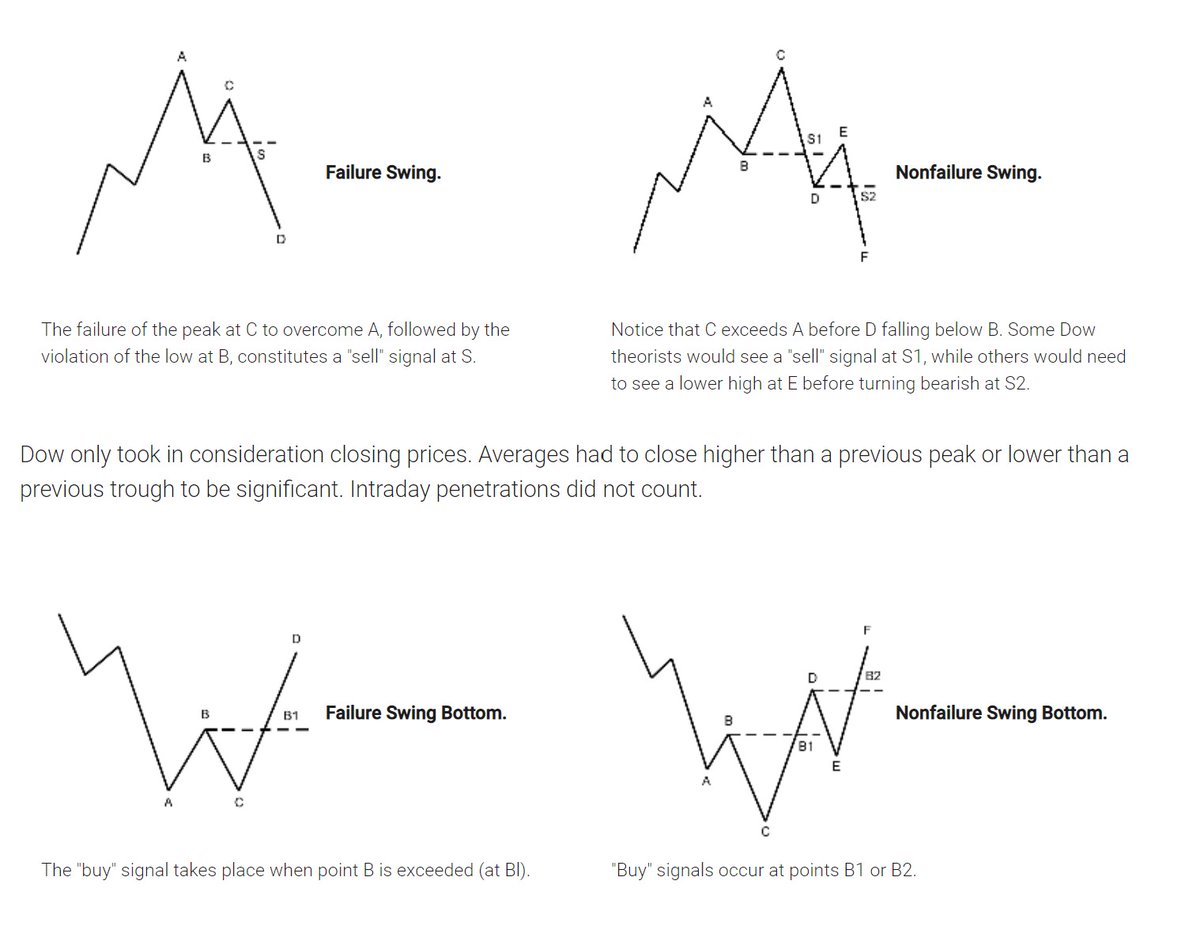
First the very basic : The Dow theory, Everybody must have basic understanding of it and must learn to observe High Highs, Higher Lows, Lower Highs and Lowers lows on charts and their
Even those who are more inclined towards fundamental side can also benefit from Dow theory, as it can hint start & end of Bull/Bear runs thereby indication entry and exits.
Next basic is Wyckoff's Theory. It tells how accumulation and distribution happens with regularity and how the market actually
Dow theory is old but
Here I will share what I believe are essentials for anybody who is interested in stock markets and the resources to learn them, its from my experience and by no means exhaustive..
First the very basic : The Dow theory, Everybody must have basic understanding of it and must learn to observe High Highs, Higher Lows, Lower Highs and Lowers lows on charts and their
Even those who are more inclined towards fundamental side can also benefit from Dow theory, as it can hint start & end of Bull/Bear runs thereby indication entry and exits.
Next basic is Wyckoff's Theory. It tells how accumulation and distribution happens with regularity and how the market actually
Dow theory is old but
Old is Gold....
— Professor (@DillikiBiili) January 23, 2020
this Bharti Airtel chart is a true copy of the Wyckoff Pattern propounded in 1931....... pic.twitter.com/tQ1PNebq7d