Schools don't teach us to:
• Think critically
• Nurture curiosity
• Save and prep taxes
• Sustain relationships
• Have difficult convos
• Navigate mental health
Yet they teach how to:
• Differentiate dinosaurs
• Memorize the periodic table
• Make paper snowflakes
Why is school curriculum so broken?
1. Awareness: Those in power don't realize how bad it is.
2. Priorities: It's not a pressing issue. Voters care about the cost of education—not enough about WHAT is taught.
3. What to do: Shout to the politicians and educators in power.
Onto the lessons I wish I was taught.
These are the ones on my mind lately. This list could be 1,000 items long. Add yours to the thread.
Here we go.
Many relationship troubles emerge from one root cause:
Assuming bad intent.
One of the highest ROI things we can teach our children:
Start by assuming good intent: Train your reflex to ask questions before making assumptions.
Always lead with curiosity—never critique.
I'm better at solving other people's problems than my own. For them, I'm hyper-rational.
So, now I pretend my problems are those of others. It works.
I project my circumstances onto a friend and act out being coldly rational to get them from A to Z.
The danger of pursuing many good projects is not having the time to pursue many great projects.
A rule of thumb: Move slowly when choosing what to focus on. But move very quickly once you've decided.
Move slow then fast.
A small gesture with a big impact:
Reserve 15 minutes per week to send appreciation emails to anyone you really enjoyed chatting with.
If you’re specific about why you appreciated the chat—instead of just saying "Great chatting!"—it resonates much deeper.
How my charismatic friends behave:
• Mirror talking speed
• Avoid gossip + negativity
• Know that a real smile includes the eyes
• Nail first impressions because they're so hard to reverse
• In convo, ask questions to help people think more deeply about what they're saying
How I make calls less boring: better small talk.
• Instead of What's new?, I ask "What can't you get off your mind lately?"
• How's work? → What's the most exciting thing you could be doing?
I ask questions that get people to focus on their enthusiasm. No one gets offended.
Most people don’t need more advice. They need mentors who pair advice with support and accountability:
• Find a boss who loves to mentor
• Join a cohort-based online class
• Find similar minds on Twitter and form a peer group
Mentorship + friendship turn advice into action.
If two people have the same job title and one of them refers to themselves as an expert, take your advice from the one who doesn’t claim that.
Genuine experts realize the complexity/nuance of their craft, and they don’t feel comfortable claiming to be authorities.
The most accomplished people I know share three traits:
1. Bias toward taking action. No lazy deferring.
2. Always looking to prove themselves wrong.
3. Regularly reassess their priorities without any fear of changing them.
Key: They balance progress with indulging curiosity.
Judge your days by how much you invested in your future self.
Judge your years by how much you cashed in on that investment.
In school, you become smart by being teachable.
Being teachable = accepting when you’re wrong.
As adults, we suddenly forget we're still students. We must continue to seek discussion with people who'll tell us when we’re wrong.
Your teachers are now the strangers around you.
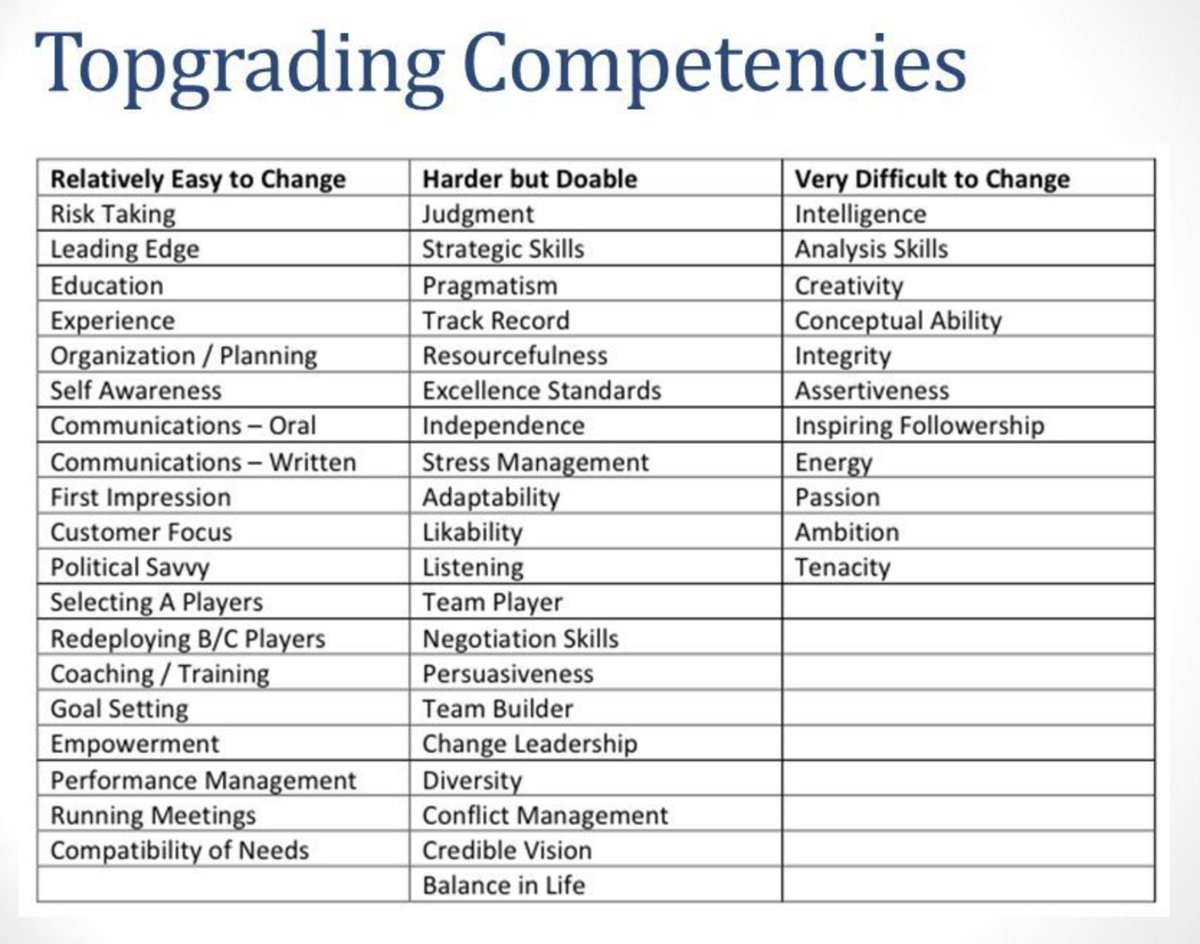
This chart estimates how hard it is to change people.
On the left are qualities they say can likely be improved with training.
On the right are red flags.
(I disagree with the ranking of "self-awareness.")
School isn't about education.
School is a glorified babysitting service for people who aren't yet self-sufficient.
Society critically needs this—but to an extent.
It's very dangerous when your babysitter squashes your curiosity, passion, and drive for nearly everything.
If you want more content on critical thinking and writing, give me a follow. I post threads 2x/week like this.
See past threads over here:
@julian



![Peter McCormack [Jan/3\u279e\u20bf \U0001f511\u220e]](https://pbs.twimg.com/profile_images/1524287442307723265/_59ITDbJ_normal.jpg)