Altcoin:
Any coin that's not #Bitcoin
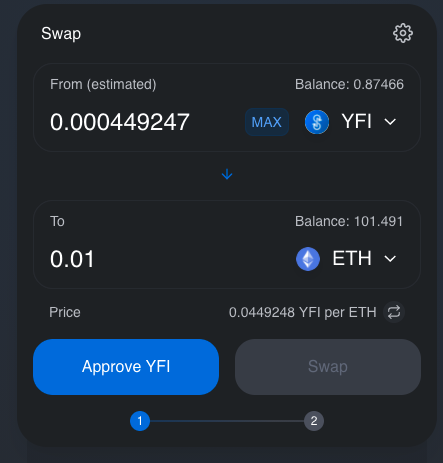
Ether (#ETH) is the second most popular coin overall and the most well-known Altcoin.
Ether is the native cryptocurrency on the Ethereum blockchain.
There are thousands of other altcoins, but for now, this is the one to know.
Bitcoin: (#BTC)
The first decentralized digital currency.
Launched in 2009 by an unknown person or organization known only as "Satoshi Nakamoto."
It is the most famous, and most valuable cryptocurrency.
Blockchain:
The core tech behind Bitcoin and most other cryptocurrencies.
An open, distributed, general ledger where transactions are organized into blocks which are then connected using cryptography.
Coin:
A store of digital value that lives on a blockchain.
Some blockchains, such as Bitcoin, use the same name for both the network and the coin.
Stable coins are another type of cryptocurrency which are backed by fiat currency (e.g the US dollar) or commodities such as Gold.
Cryptocurrency:
A currency that is digital & decentralized.
Crypto removes the need for a trusted authority or "middle-man" to certify the validity of a transaction.
Can be used to buy & sell goods or as a long-term store of value.
Decentralization:
The transfer of authority from a centralized organization (e.g. banks or governments) to a distributed public network.
Blockchains are considered to be decentralized due to the fact data is stored across multiple locations in a peer-to-peer network.
Decentralized Applications: (DApps)
Ethereum is currently the main network supporting DApps.
Put simply, DApps are applications designed to run on a blockchain and carry out tasks without the need for intermediaries.
Decentralized Autonomous Organization: (DAO)
An organization, built on a blockchain, working without oversight from a central government or authority.
Operated by users (aka shareholders) with a transparent set of rules encoded as a computer program.
DeFi: (Decentralized Finance)
The term used to describe financial activities conducted without the involvement of an intermediary.
The need for banks, governments or financial institutions to validate transactions is removed.
Distributed Ledger:
A database that uses independent computers (referred to as nodes) to record, share, and synchronize transactions.
The data is spread across multiple entities, locations, or institutions.
Unlike in a centralized database, there is no central administrator.
Exchange:
Coinbase, Binance, and Gemini are a few examples of centralized crypto exchanges.
Places where users can "exchnge" one type of cryptocurrency for another.
Need to buy, sell, or trade your Crypto?
An exchange is the place to be.
Ethereum:
A public, open-source, blockchain network & decentralized software platform.
Designed to allow developers to create & run new applications with "smart contract" functionality. (see below)
It also has an associated currency called "Ether."
Gas:
Just as your car requires fuel to run, so does the Ethereum network.
Each transaction uses computational resources in order to execute.
Gas, refers to the unit fee required to succesfully execute a transaction on Ethereum.
Keys: (Public & Private)
•Public – Your wallet's address. (i.e. your bank account #)
Can be shared with individuals or instituitons to send or withdraw money.
•Private – (i.e. your bank password)
Allows direct access to your crypto.
Should be kept secure & never shared.
Mining:
The process by which network nodes (computers) validate blocks or transactions and add them to a blockchain.
In order for a block to be verified, a "miner" must use a computer to solve a cryptographic problem.
Once solved, the block is considered "mined" or verified.
NFT:
Non-Fungible Token.
Fungibility refers to an object's ability to be exchanged for another of equal value.
NFT's are a type of token that are considered to be unique digital assets that have no equal token.
Digital artwork is currently the most popular form of NFT.
Smart Contract:
Similar to traditional contracts, "smart" contracts contain a set of agreements or actions between parties.
The key difference is that smart contracts contain automated actions, written in code, that are only executed once agreed upon conditions are met.
Wallet: (Hot & Cold)
A storage location for your digital assets.
•Hot: Stored online (software based) usually offered through an exchange.
•Cold: The generation and storage of private keys is done in an offline environment.
Thanks for reading!
The world of cryptocurrency is constantly evolving.
New terms, techniques, & technologies are being added daily.
I hope you found this useful and learned something new, I know I did in writing it.
For more on the future of crypto & Web 3.0 stay tuned...
As for me...
If you found this helpful, why not share?
•Retweet the first tweet and help others find this thread
•Join 30,000+ of my friends & follow me:
@blakeaburge •Thank you for reading!
https://t.co/YokOrX2SzE