

Hinduism is a minority religion in Punjab.
During the Khalistan movement, the minority Hindus and Jains were subjected to several attacks. Hindu and Jain temples were frequently vandalized and desecrated. This thread documents a few instances.
Thread
According to the regional Hindu tradition recorded in the "Survey of Amritsar", Amritsar got its name from Amrit immersed by Lava and Kusha in a pond.

It was used to house the Murtis of Vishnu and Durga which were thrown out from the Parikrama of Harmandir Sahib in 1905.
Because of its presence in Amritsar, it became a frequent target of radicals during the Khalistan movement.


Coins of ancient Yaudheyas dating back to 100 BC have been found at this ancient temple.
On November 21 1983, two bombs were thrown on this temple. A damaged section was later rebuilt by funds collected from devotees

On May 5, 1984 Jain temple in Amritsar was looted and desecrated.

On February 28 of the same year, another Jain temple was looted.

They bombed Hindu fairs like Shivaratri & Ramnavami where Hindus gathered in large numbers to ensure maximum Hindu kiIIings.
Shivala temple of Amritsar was bombed on Shivaratri


More from Bharadwaj


FAKE quote!
Such a verse is NOT FOUND in any authentic Ravidas Bani.
Nowhere in his poems does Sant Ravidas say "I proclaim all Vedas as worthless".
This is a new scam in the market. Appropriation of Hindu history and Hindu saints by anti Hindus to boost their own legacy.
What Sant Ravidas actually said (when he was asked to convert to Islam by Lodhi):
"The religion of the Vedas is the greatest. It is the treasure trove of matchless knowledge.Why then will I abandon the Vedic Dharmic and read the untrue Quran?"
From Ravidas Ramayana(16th cent):

False quotes denigrating Hinduism are circulated in the name of Sant Ravidas as he was a great Hindu Sant from Dalit background.
This represents a challenge to people who want to spin the caste narrative of opposition of Dalits to Hinduism. They want to break this connection
Such a verse is NOT FOUND in any authentic Ravidas Bani.
Nowhere in his poems does Sant Ravidas say "I proclaim all Vedas as worthless".
This is a new scam in the market. Appropriation of Hindu history and Hindu saints by anti Hindus to boost their own legacy.
I, Ravidas, proclaim all Vedas as worthless...
— Dilip Mandal (@Profdilipmandal) February 27, 2021
Best wishes to all on #HappyRavidasJayanti pic.twitter.com/muJq2k6ox5
What Sant Ravidas actually said (when he was asked to convert to Islam by Lodhi):
"The religion of the Vedas is the greatest. It is the treasure trove of matchless knowledge.Why then will I abandon the Vedic Dharmic and read the untrue Quran?"
From Ravidas Ramayana(16th cent):
False quotes denigrating Hinduism are circulated in the name of Sant Ravidas as he was a great Hindu Sant from Dalit background.
This represents a challenge to people who want to spin the caste narrative of opposition of Dalits to Hinduism. They want to break this connection
This is THEFT!
Indians had Algebra BEFORE Mμslim prophet & religion was even born.
Here is Bakhshali Manuscript dating back to 3rd century CE. It is an Algebraic treatise. Have you anything like this from the Arabian desert? No, you simply plagiarized Algebra from Indians! https://t.co/cWXRNYMgDt

The Bakhshali manuscript, which has been carbon dated to 3rd century CE, is an ancient Hindu treatise on Arithmetic and Algebra.
The Algebraic problems deal with simultaneous equations, quadratic equations, arithmetic
geometric progressions & quadratic indeterminate equations.

Bakhshali isn't earliest Indian Algebraic treatise. Early Algebra is found in Shulba Sutras dating back to at least 800 BC. Traditional Algebra reached its pinnacle in the works of Aryabhata & Bhaskara.
What makes Bakhshali special is it offers mathematical proof to its theories

It is surprising to see that even after the ancient Indian algebraic treatise has been carbon dated to 3rd century CE by Oxford, they persist with "oh we invented Algebra. It is Halal".
A brief examination of the origins of "Halal Algebra" follows
https://t.co/eFIZ98FDrI

The earliest work of "Arabic Algebra" is the "Al-Kitāb Al-Jabr wal-muqābala" by Al Khwarizmi. The term "Algebra" comes from this book ("Al Jabr").
Before writing his treatise, Al Khwarizmi visited India. His book is a plagiarism from Indian Mathematics and an obvious one at that
Indians had Algebra BEFORE Mμslim prophet & religion was even born.
Here is Bakhshali Manuscript dating back to 3rd century CE. It is an Algebraic treatise. Have you anything like this from the Arabian desert? No, you simply plagiarized Algebra from Indians! https://t.co/cWXRNYMgDt
Muslims gave the world Algebra, so here's a "halal" way to say Merry Christmas to our Christian friends :)#MerryChristmas2020 pic.twitter.com/aLXEw2K2I1
— Qasim Rashid, Esq. (@QasimRashid) December 25, 2020
The Bakhshali manuscript, which has been carbon dated to 3rd century CE, is an ancient Hindu treatise on Arithmetic and Algebra.
The Algebraic problems deal with simultaneous equations, quadratic equations, arithmetic
geometric progressions & quadratic indeterminate equations.
Bakhshali isn't earliest Indian Algebraic treatise. Early Algebra is found in Shulba Sutras dating back to at least 800 BC. Traditional Algebra reached its pinnacle in the works of Aryabhata & Bhaskara.
What makes Bakhshali special is it offers mathematical proof to its theories
It is surprising to see that even after the ancient Indian algebraic treatise has been carbon dated to 3rd century CE by Oxford, they persist with "oh we invented Algebra. It is Halal".
A brief examination of the origins of "Halal Algebra" follows
https://t.co/eFIZ98FDrI
The earliest work of "Arabic Algebra" is the "Al-Kitāb Al-Jabr wal-muqābala" by Al Khwarizmi. The term "Algebra" comes from this book ("Al Jabr").
Before writing his treatise, Al Khwarizmi visited India. His book is a plagiarism from Indian Mathematics and an obvious one at that
Nehru was officially classified as "Class A Prisoner".
He had newspapers, books, servants & coolies. He was allowed to walk out & meet others.
He was also allowed Switzerland trips "while technically imprisoned".
Savarkar was locked up in Kalapani & beaten up for 10 years
It was only once in his life that Nehru was treated just like any ordinary prisoner.
This was in Nabha Jail for 12 days.
Within 12 days, Nehru's father begged British viceroy.
He wrote an apology & assured that his son Nehru will never enter Nabha.
12 Days v/s 10 Years!
Nehru's jail in Ahmedabad had a badminton court specially built for Nehru and other top Congress leaders.
On his insistence, a library was made accessible to him during prison terms . That is how he could write books while "imprisoned".
A fitness instructor also attended to him
Nehru's jail terms were essential political stunts in building up his image as a great freedom fighter.
However, they seemed more like exotic getaways than real prisons
The 12 day imprisonment of Nehru in Nabha jail was harsh.
When Motilal came to know that his Nehru was locked up in a real jail, he rushed to meet Nehru but was forbidden by the administrator of Nabha.
Then, British viceroy came to the rescue of Nehrus and overruled this order

He had newspapers, books, servants & coolies. He was allowed to walk out & meet others.
He was also allowed Switzerland trips "while technically imprisoned".
Savarkar was locked up in Kalapani & beaten up for 10 years
Jawaharlal Nehru, India\u2019s first prime minister, spent nine years in British jails. Savarkar famously wrote letters appealing to British rulers and was questioned in Gandhi murder conspiracy. Just saying.
— Saba Naqvi (@_sabanaqvi) August 28, 2021
It was only once in his life that Nehru was treated just like any ordinary prisoner.
This was in Nabha Jail for 12 days.
Within 12 days, Nehru's father begged British viceroy.
He wrote an apology & assured that his son Nehru will never enter Nabha.
12 Days v/s 10 Years!
Nehru's jail in Ahmedabad had a badminton court specially built for Nehru and other top Congress leaders.
On his insistence, a library was made accessible to him during prison terms . That is how he could write books while "imprisoned".
A fitness instructor also attended to him
Nehru's jail terms were essential political stunts in building up his image as a great freedom fighter.
However, they seemed more like exotic getaways than real prisons
The 12 day imprisonment of Nehru in Nabha jail was harsh.
When Motilal came to know that his Nehru was locked up in a real jail, he rushed to meet Nehru but was forbidden by the administrator of Nabha.
Then, British viceroy came to the rescue of Nehrus and overruled this order
A thread on the voting pattern in border districts adjoining Bangladesh.
These districts have experienced a significant demographic influx due to illegal Mμslim immigration from Bangladesh and high M growth rate.
Due to this illegal Mμslim immigration, Hindus have been fleeing
Bhagabangola seat is a part of Murshidabad district bordering Bangladesh.
It once had 55% Hindus & 44% Mμslims (1872 census).
Migration from Bdesh changed demographics to Mμslim majority (66% in 2011).
No Hindu won since 1971.
Today they elect a man responsible for 2007 riots

Idris Ali was arrested in 2007 Park Circus Kolkata riots. He incited riots and targeted Hindu localities when Taslima Nasreen came to Kolkata
Today he wins this seat.
Ironically, no Hindu even contested. Even BJP fielded a Mμslim ex CPM candidate
https://t.co/I3Fv1uxKwh

This is same district that witnessed the brutal murders of the RSS worker and his family.
The case was hurriedly declared an unrelated property feud by the ruling state administration.
The same ruling state party which withdrew riot charges against Idris Ali & gave him a ticket

Raninagar is another seat in the Murshidabad district.
No Hindu candidate ever won in Raninagar.
No Hindu candidate even contested the seat in this election.
Even after BJP fielded a Mμslim candidate, it could hardly get 10% of the votes.
Abdul Soumik Hossain of Trinamool won

These districts have experienced a significant demographic influx due to illegal Mμslim immigration from Bangladesh and high M growth rate.
Due to this illegal Mμslim immigration, Hindus have been fleeing
Bhagabangola seat is a part of Murshidabad district bordering Bangladesh.
It once had 55% Hindus & 44% Mμslims (1872 census).
Migration from Bdesh changed demographics to Mμslim majority (66% in 2011).
No Hindu won since 1971.
Today they elect a man responsible for 2007 riots
Idris Ali was arrested in 2007 Park Circus Kolkata riots. He incited riots and targeted Hindu localities when Taslima Nasreen came to Kolkata
Today he wins this seat.
Ironically, no Hindu even contested. Even BJP fielded a Mμslim ex CPM candidate
https://t.co/I3Fv1uxKwh
This is same district that witnessed the brutal murders of the RSS worker and his family.
The case was hurriedly declared an unrelated property feud by the ruling state administration.
The same ruling state party which withdrew riot charges against Idris Ali & gave him a ticket
Raninagar is another seat in the Murshidabad district.
No Hindu candidate ever won in Raninagar.
No Hindu candidate even contested the seat in this election.
Even after BJP fielded a Mμslim candidate, it could hardly get 10% of the votes.
Abdul Soumik Hossain of Trinamool won
More from Religion

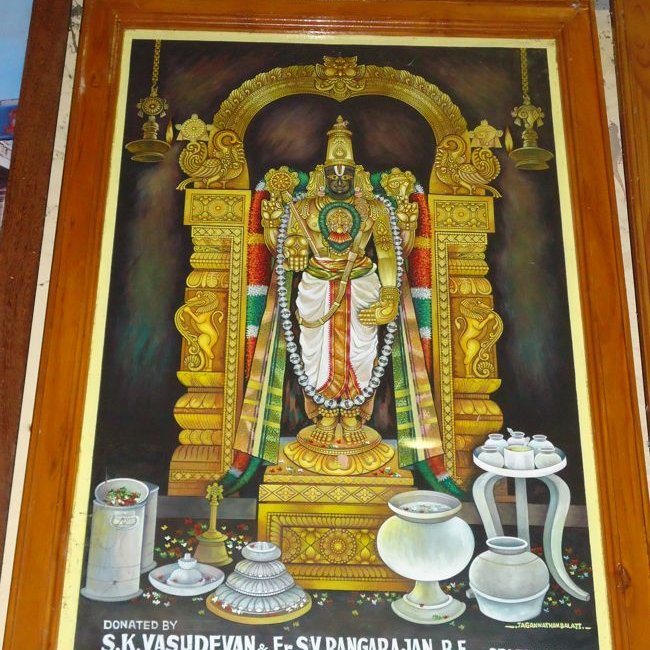

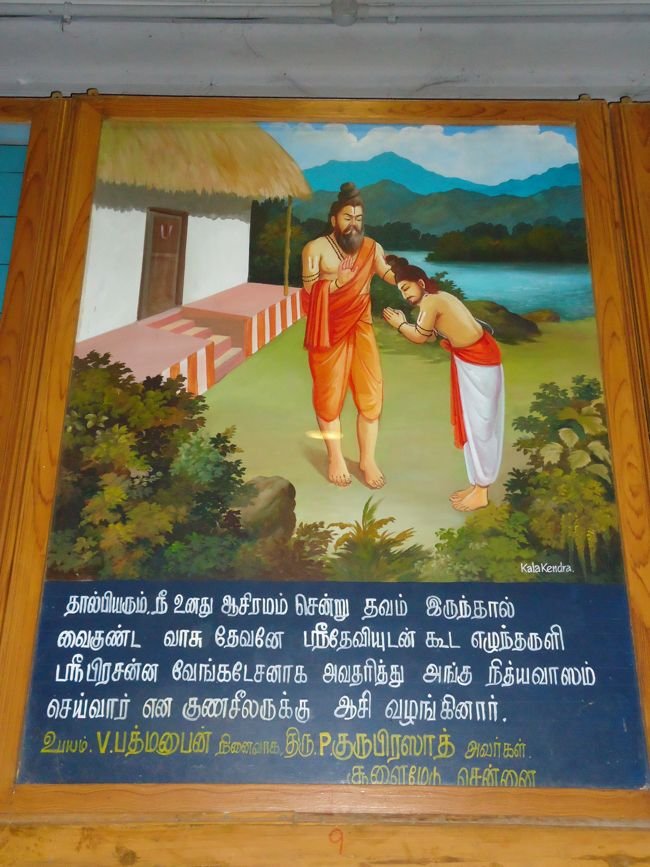

🌿𝑻𝒉𝒆 𝒔𝒕𝒐𝒓𝒚 𝒐𝒇 𝒂 𝑺𝒕𝒂𝒓 : 𝑫𝒉𝒓𝒖𝒗𝒂 & 𝑽𝒊𝒔𝒉𝒏𝒖
Once upon a time there was a Raja named Uttānapāda born of Svayambhuva Manu,1st man on earth.He had 2 beautiful wives - Suniti & Suruchi & two sons were born of them Dhruva & Uttama respectively.
#talesofkrishna https://t.co/E85MTPkF9W
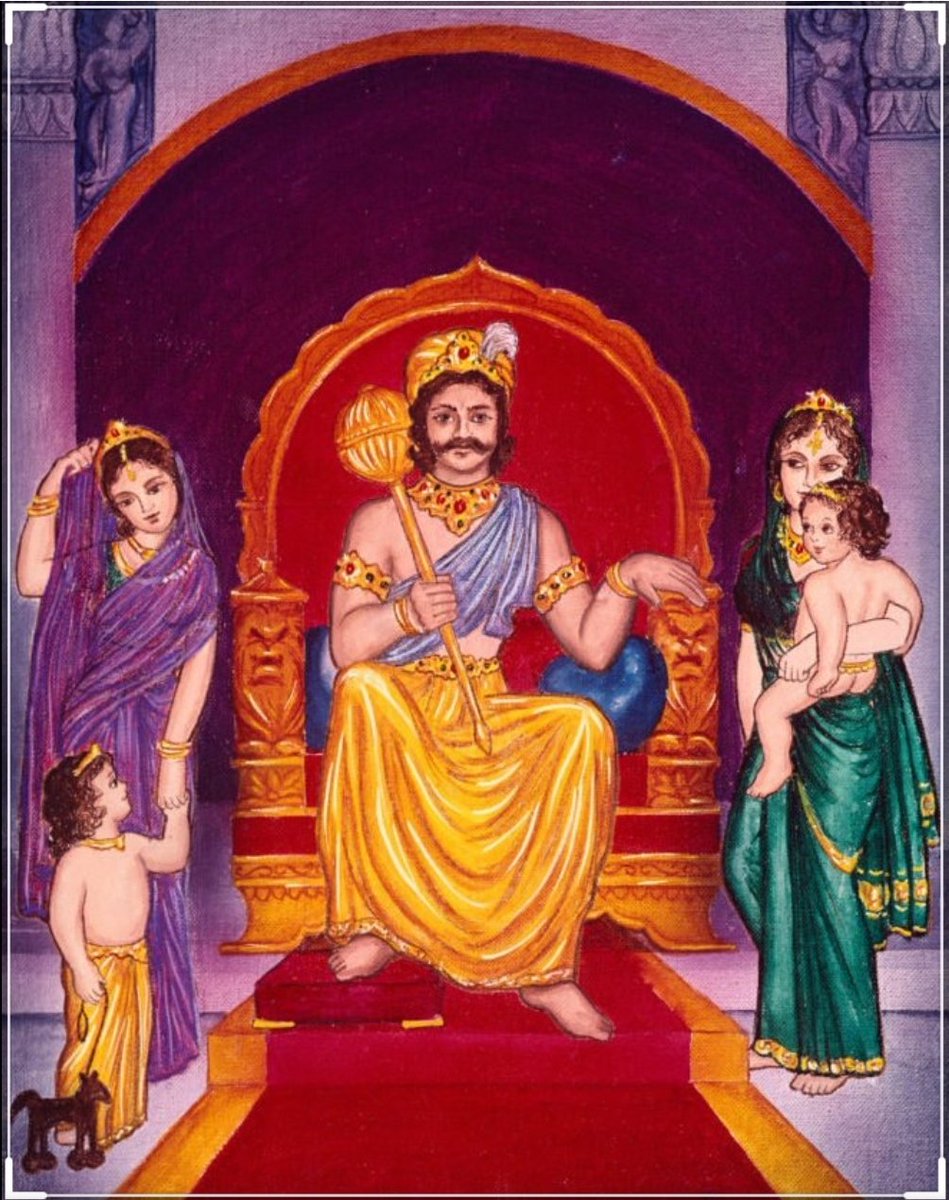
Now Suniti was the daughter of a tribal chief while Suruchi was the daughter of a rich king. Hence Suruchi was always favored the most by Raja while Suniti was ignored. But while Suniti was gentle & kind hearted by nature Suruchi was venomous inside.
#KrishnaLeela
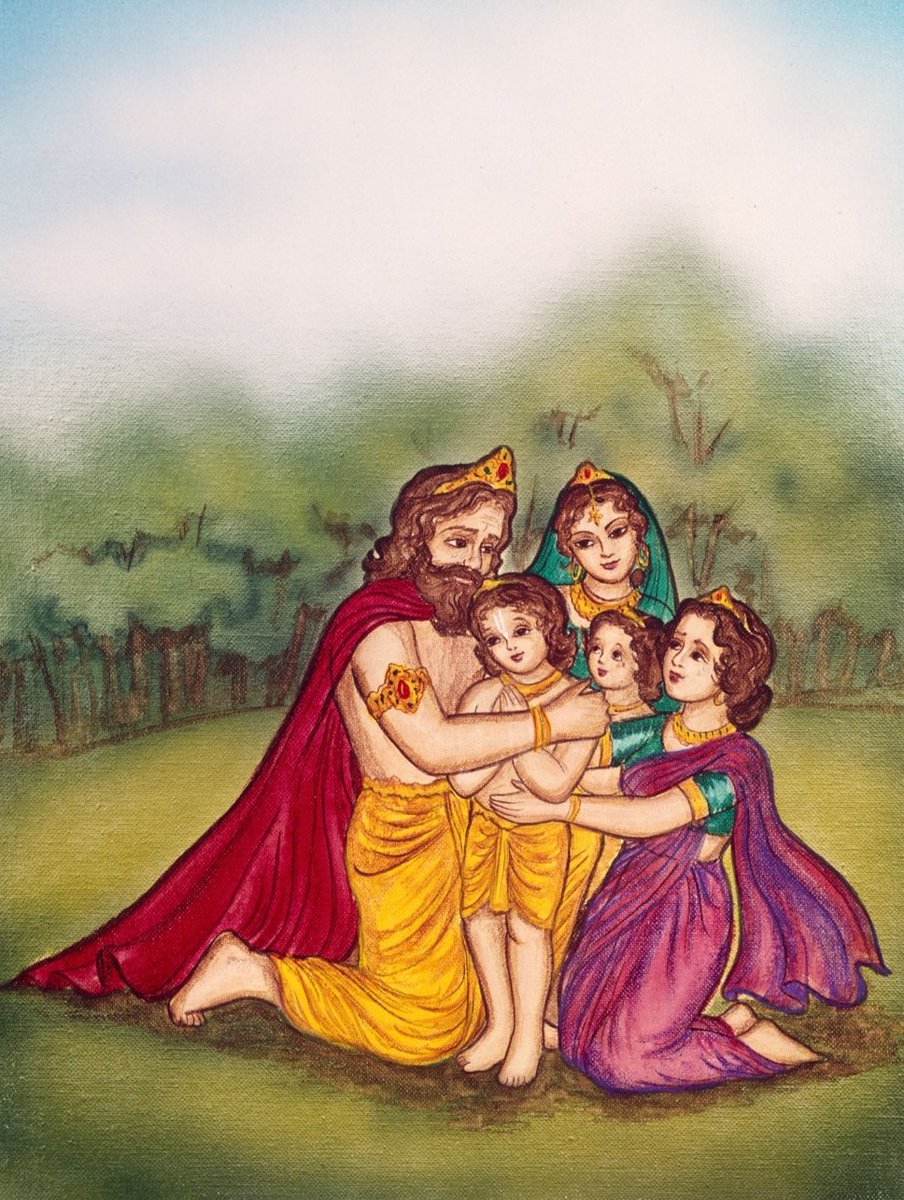
The story is of a time when ideally the eldest son of the king becomes the heir to the throne. Hence the sinhasan of the Raja belonged to Dhruva.This is why Suruchi who was the 2nd wife nourished poison in her heart for Dhruva as she knew her son will never get the throne.
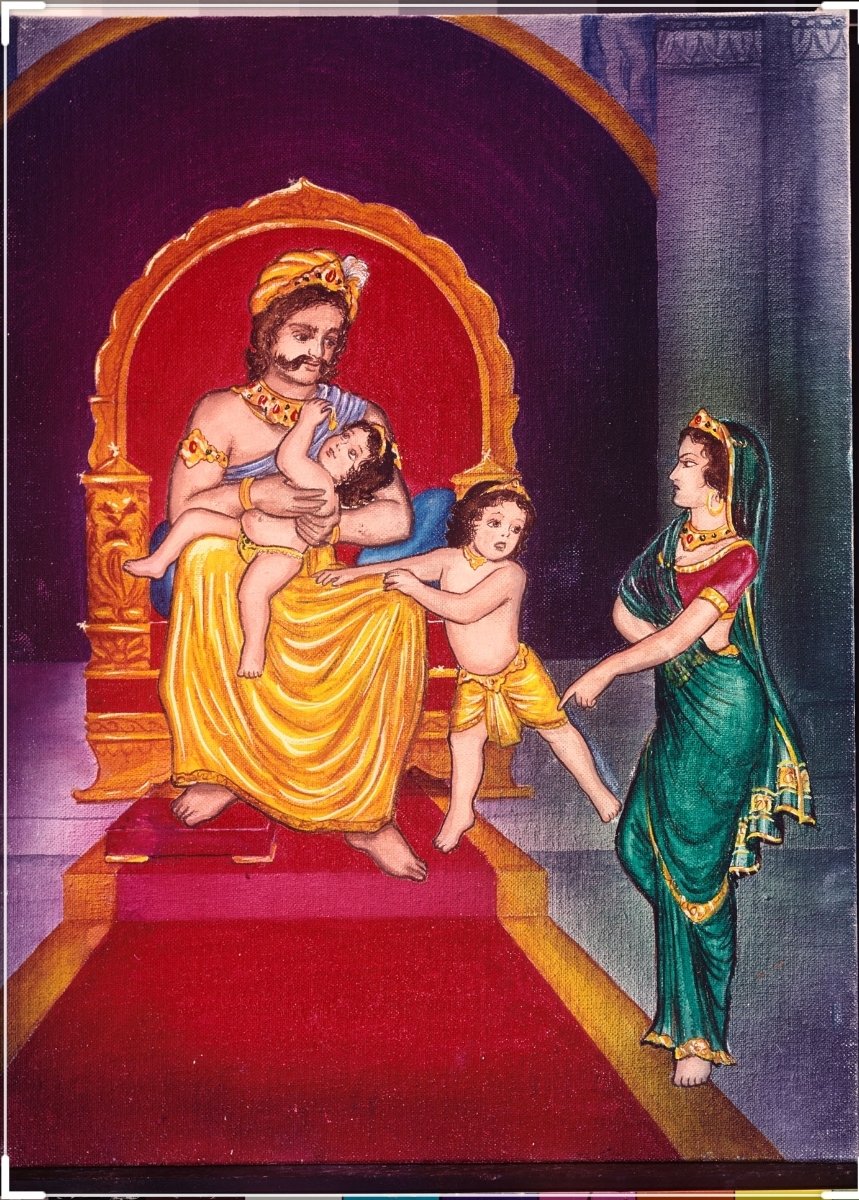
One day when Dhruva was just 5 years old he went on to sit on his father's lap. Suruchi, the jealous queen, got enraged and shoved him away from Raja as she never wanted Raja to shower Dhruva with his fatherly affection.
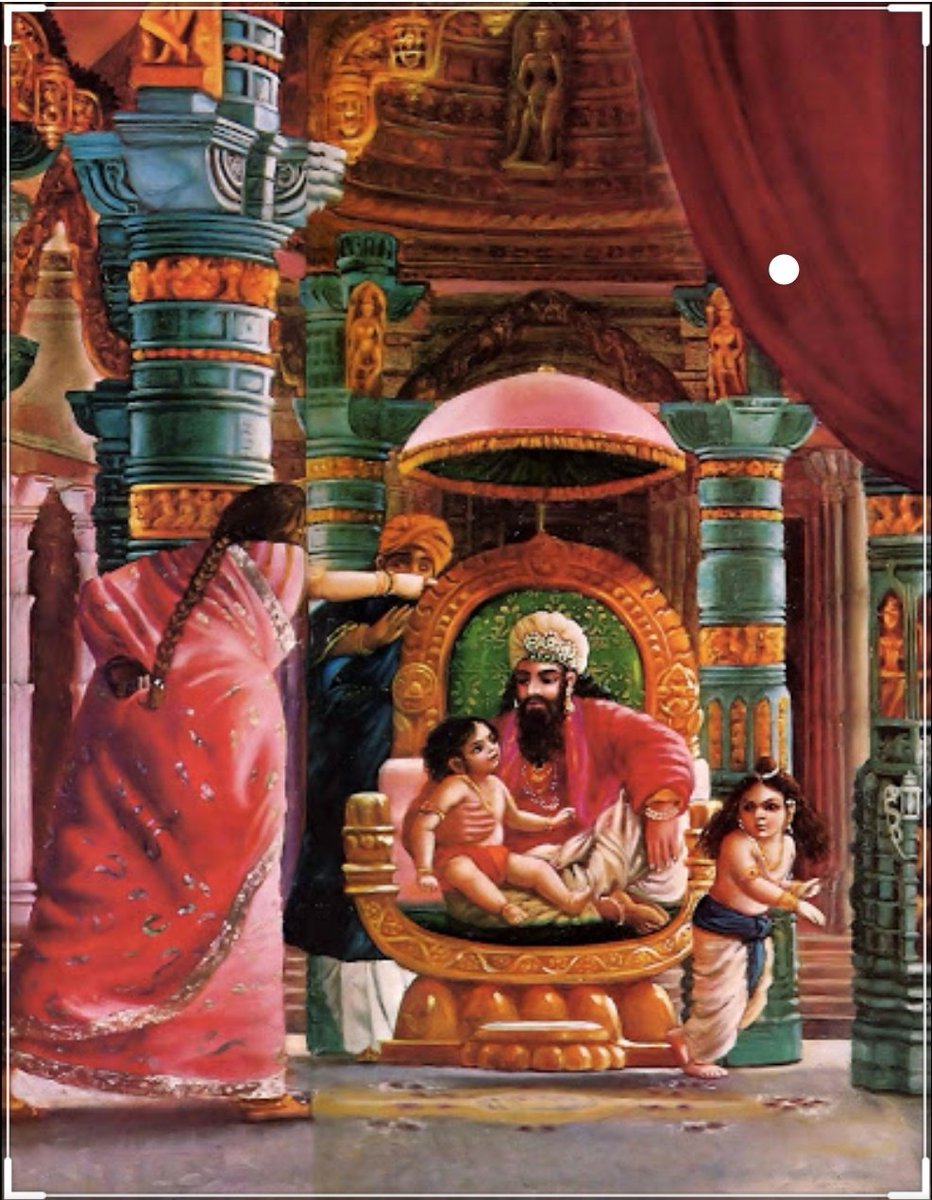
Dhruva protested questioning his step mother "why can't i sit on my own father's lap?" A furious Suruchi berated him saying "only God can allow him that privilege. Go ask him"
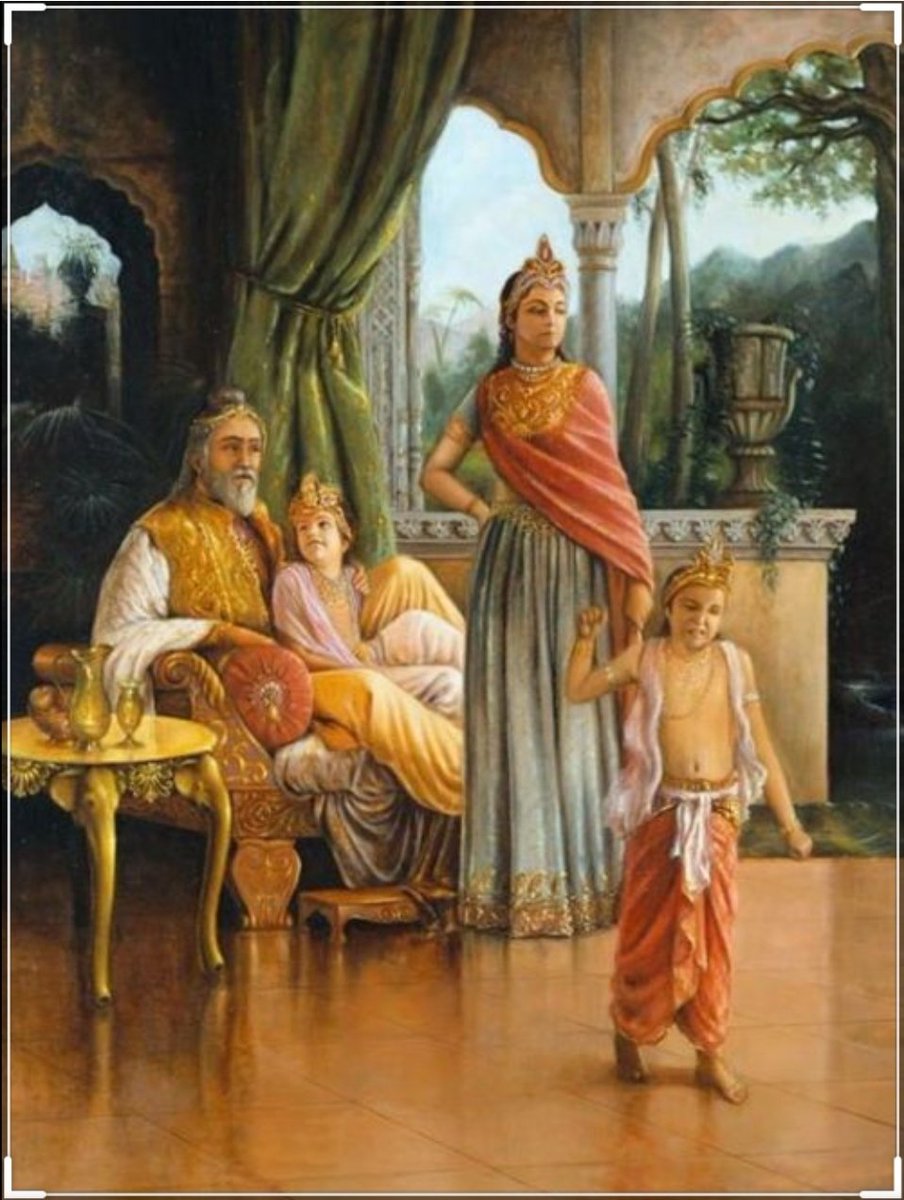
Once upon a time there was a Raja named Uttānapāda born of Svayambhuva Manu,1st man on earth.He had 2 beautiful wives - Suniti & Suruchi & two sons were born of them Dhruva & Uttama respectively.
#talesofkrishna https://t.co/E85MTPkF9W
Prabhu says i reside in the heart of my bhakt.
— Right Singh (@rightwingchora) December 21, 2020
Guess the event. pic.twitter.com/yFUmbfe5KL
Now Suniti was the daughter of a tribal chief while Suruchi was the daughter of a rich king. Hence Suruchi was always favored the most by Raja while Suniti was ignored. But while Suniti was gentle & kind hearted by nature Suruchi was venomous inside.
#KrishnaLeela
The story is of a time when ideally the eldest son of the king becomes the heir to the throne. Hence the sinhasan of the Raja belonged to Dhruva.This is why Suruchi who was the 2nd wife nourished poison in her heart for Dhruva as she knew her son will never get the throne.
One day when Dhruva was just 5 years old he went on to sit on his father's lap. Suruchi, the jealous queen, got enraged and shoved him away from Raja as she never wanted Raja to shower Dhruva with his fatherly affection.
Dhruva protested questioning his step mother "why can't i sit on my own father's lap?" A furious Suruchi berated him saying "only God can allow him that privilege. Go ask him"


As the Fall of man was a consequence of the pursuit of our own good, this quest intrinsically contains the possibility of our return to The Good. The route back to The Good was only revealed by The Way [Jn. 14:6], so we might say that Christ incarnates to complete the Circle.

Each thing is moved by, implicitly converted or turned back to, its own good by its cause of procession - which is principally God.
"Via est nobis tendendi in Deum." - St. Thomas Aquinas, which is to say that:
Christ, who as a man, is the way of our tending (back) into God.

Ezekiel 10:6 | When the LORD commanded the man in linen, “Take fire from among the wheels, from among the cherubim,” the man went in and stood beside a wheel.
"So I saw the glorious wheel move." - Dante, Paradiso 10.145

As Scripture and Dante see God's providence in circles, so did Boethius and Platonists more
Aquinas with, "Eadem est via qua descenditur et ascenditur." [SCG 4.1.3], brings back Heraclitus to the medievals, "The way up and the way down is the same." [Diels, B60]
The way up and the way down are the same.
Each thing is moved by, implicitly converted or turned back to, its own good by its cause of procession - which is principally God.
"Via est nobis tendendi in Deum." - St. Thomas Aquinas, which is to say that:
Christ, who as a man, is the way of our tending (back) into God.
Ezekiel 10:6 | When the LORD commanded the man in linen, “Take fire from among the wheels, from among the cherubim,” the man went in and stood beside a wheel.
"So I saw the glorious wheel move." - Dante, Paradiso 10.145
As Scripture and Dante see God's providence in circles, so did Boethius and Platonists more
Imagine a set of concentric circles. The inmost one comes closest to the simplicity of the centre, while forming itself a kind of centre around which revolve those which are set outside it. The circle furthest out rotates through a wider orbit.
— \u300e\U0001d622\U0001d633\U0001d633\U0001d636\U0001d634\u300f (@arrus_kacchi) December 26, 2020
Aquinas with, "Eadem est via qua descenditur et ascenditur." [SCG 4.1.3], brings back Heraclitus to the medievals, "The way up and the way down is the same." [Diels, B60]
The way up and the way down are the same.

You May Also Like


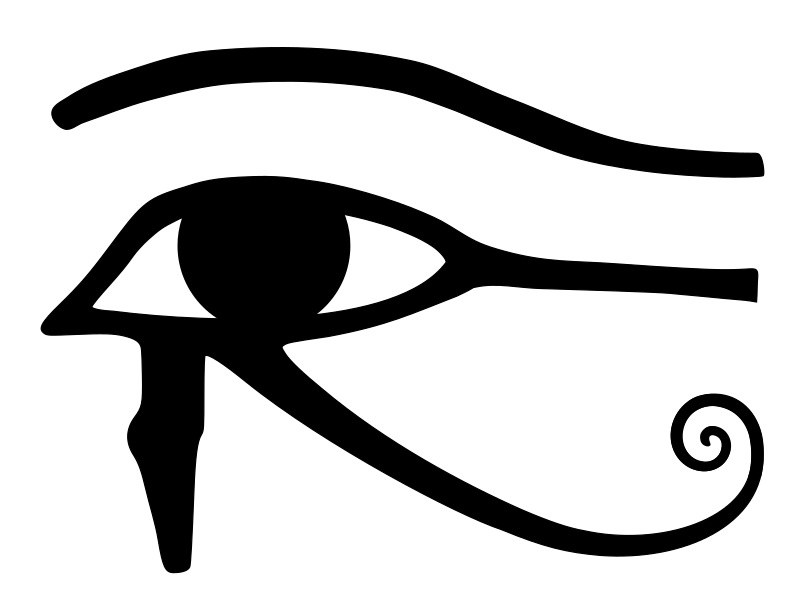
The Eye of Horus. 1/*
I believe that @ripple_crippler and @looP_rM311_7211 are the same person. I know, nobody believes that. 2/*
Today I want to prove that Mr Pool smile faces mean XRP and price increase. In Ripple_Crippler, previous to Mr Pool existence, smile faces were frequent. They were very similar to the ones Mr Pool posts. The eyes also were usually a couple of "x", in fact, XRP logo. 3/*

The smile XRP-eyed face also appears related to the Moon. XRP going to the Moon. 4/*

And smile XRP-eyed faces also appear related to Egypt. In particular, to the Eye of Horus. https://t.co/i4rRzuQ0gZ 5/*

I believe that @ripple_crippler and @looP_rM311_7211 are the same person. I know, nobody believes that. 2/*
Today I want to prove that Mr Pool smile faces mean XRP and price increase. In Ripple_Crippler, previous to Mr Pool existence, smile faces were frequent. They were very similar to the ones Mr Pool posts. The eyes also were usually a couple of "x", in fact, XRP logo. 3/*
The smile XRP-eyed face also appears related to the Moon. XRP going to the Moon. 4/*
And smile XRP-eyed faces also appear related to Egypt. In particular, to the Eye of Horus. https://t.co/i4rRzuQ0gZ 5/*


