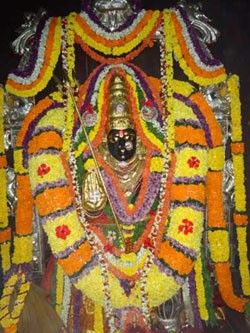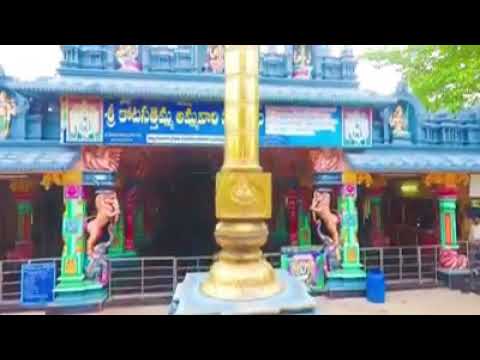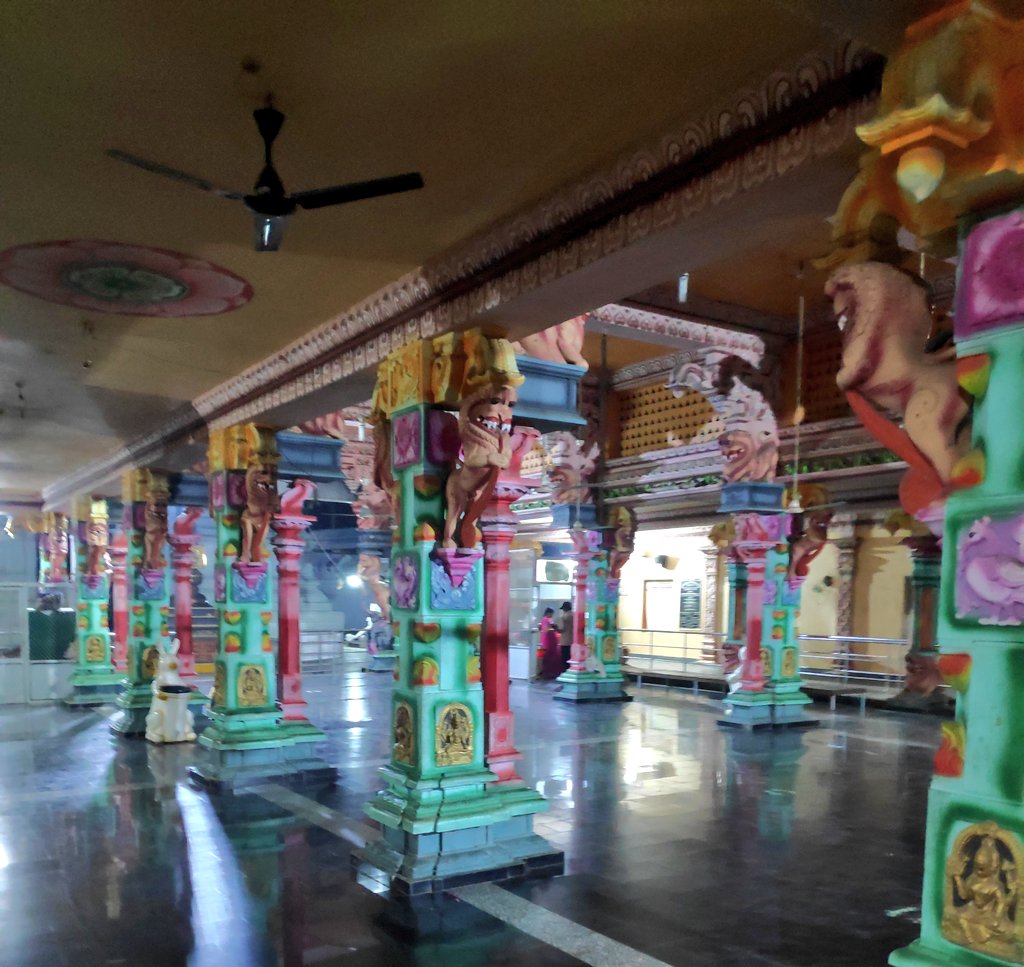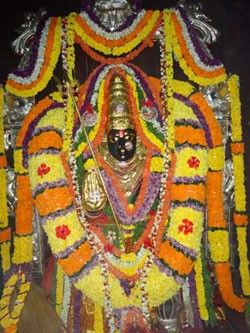
Ever heard of a temple where the statue of the Goddess was found in a field in 1936 after spending almost a millenia under the soil?And is worshipped as the Tri-Sakthi-Swaroopini?
No?
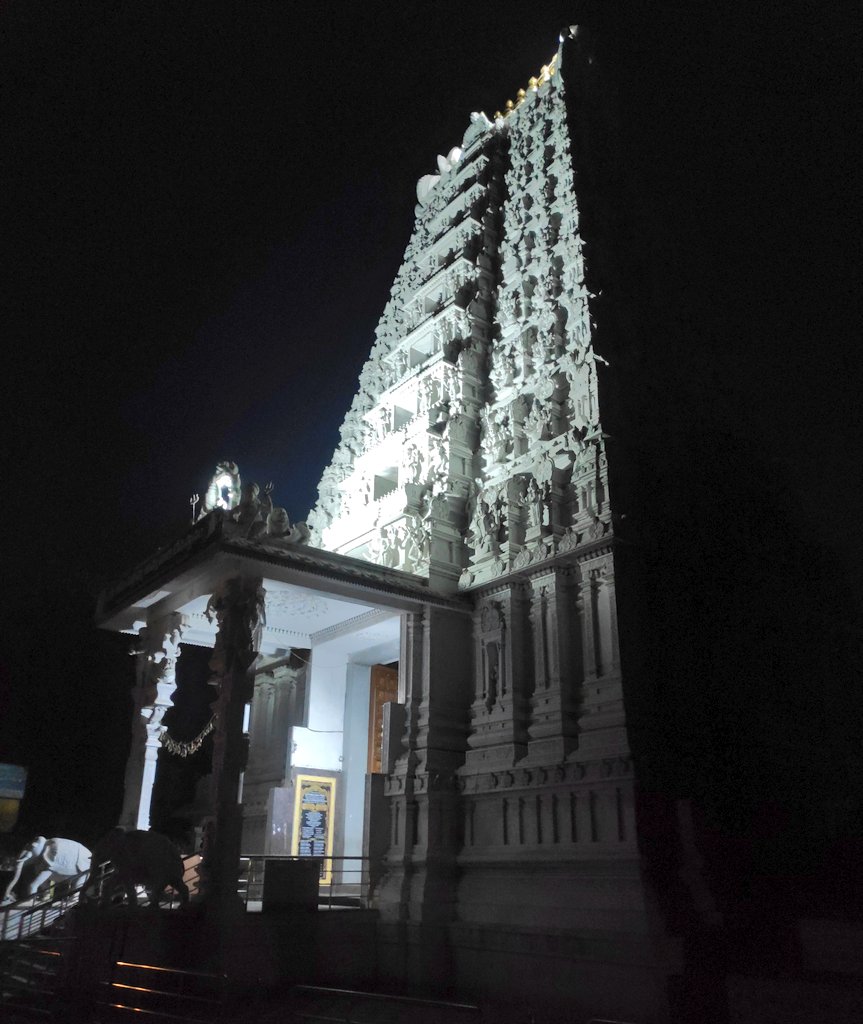
I shall narrate the story of Nidadavole Kota Satthema temple in West Godavari district, Andhra
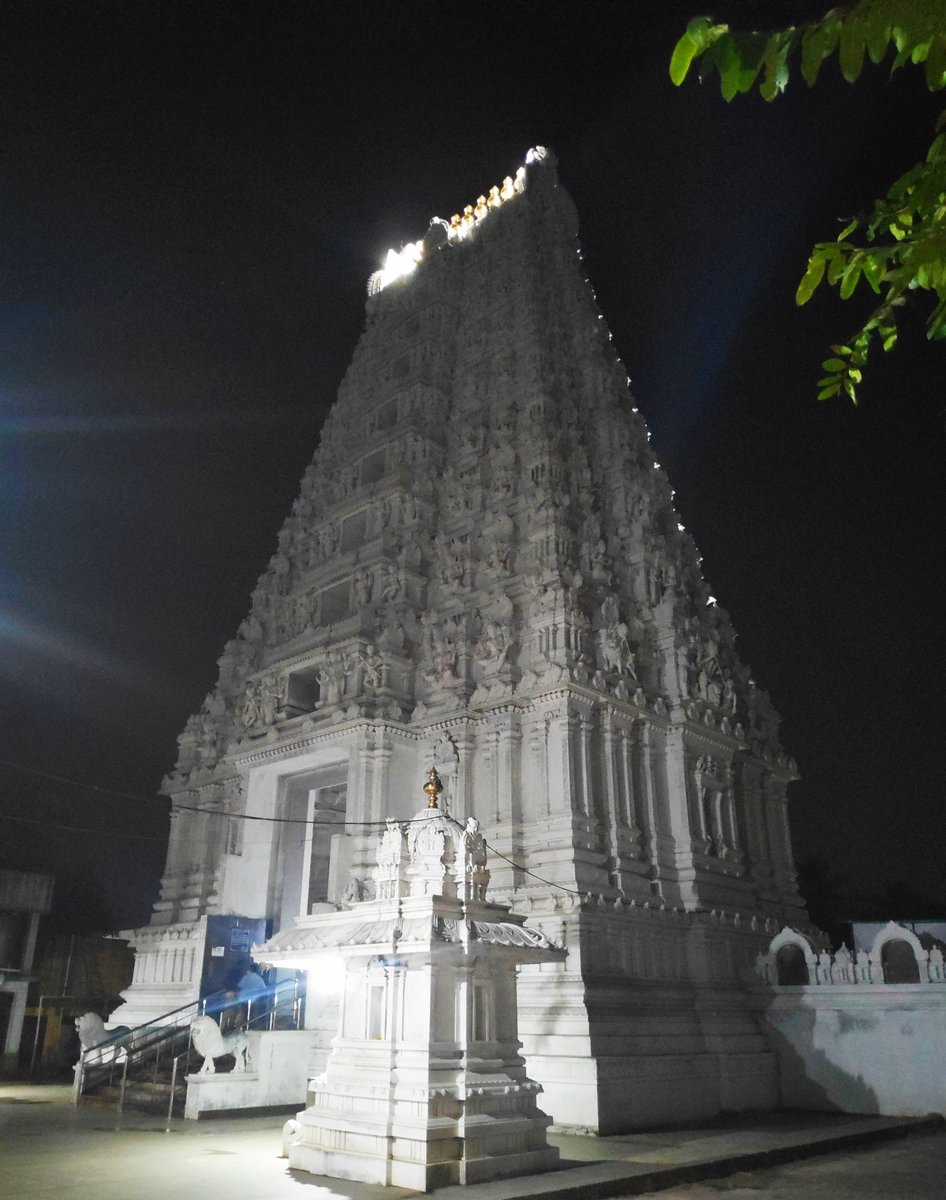
And the idol was buried within the earth, hidden from all the eyes for several centuries
(This picture gives the correct dimensions of the statue)
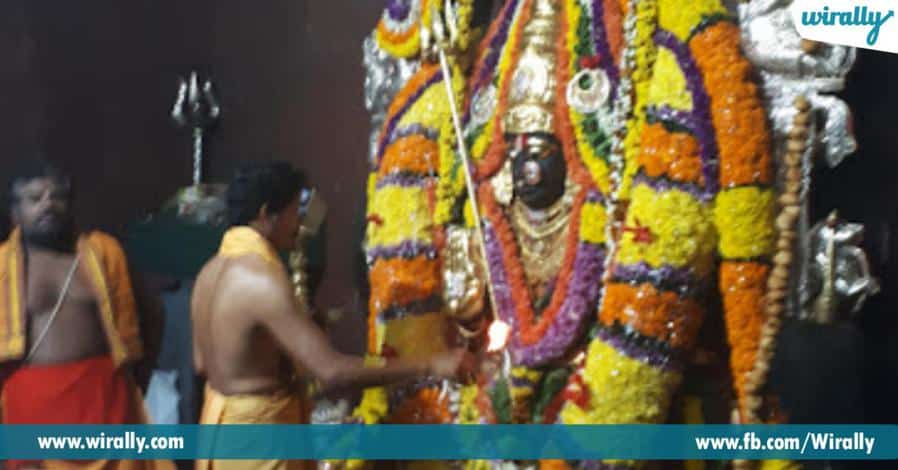
As a result, she is worshipped as a triple incarnation of Maha Kali, Maha Lakshmi and Maha Gayatri in this temple.
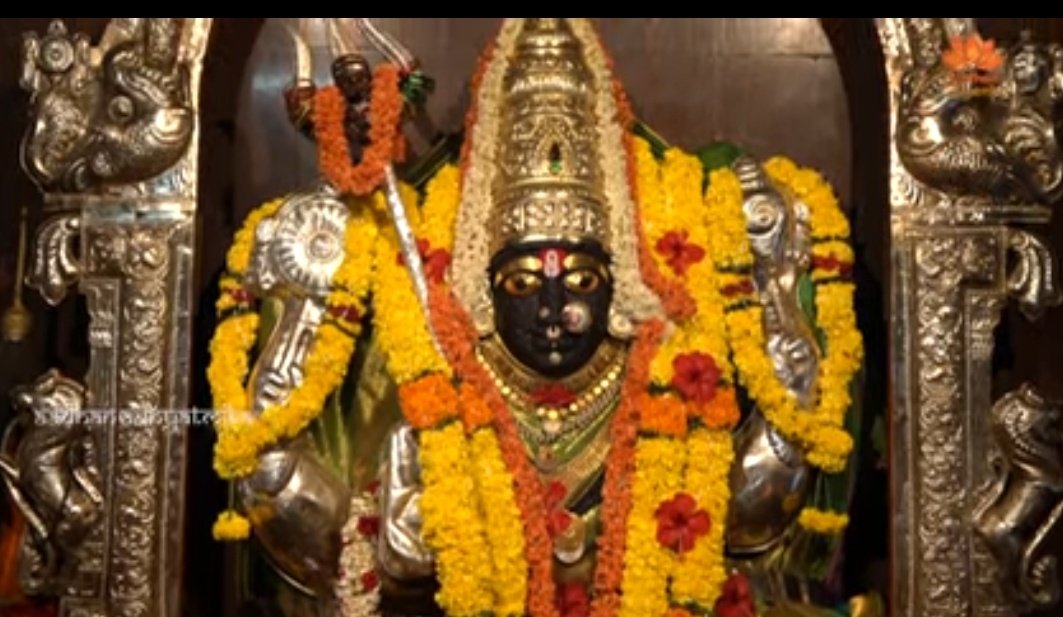
The town of Nidadavole has a sizeable Muslim population, and perhaps this is an example of local cultural sentiments permeating across religious barriers.

More from Religion
I want to talk about the key textual elements you might find in an Islamic manuscript. I'll focus on this manuscript, roughly 18th century, of an Arabic history of the rulers of Egypt called Nuzhat al-nāẓirīn, by Marʻī al-Karmī (d. 1623/4).
Budeiry Library (Jerusalem) MS 593 -jm
These texts have many elements designed to help the reader understand what they're saying, and choices by the scribe who copied the manuscript often help as well. Let's see what's here. -jm
First, almost every Islamic text begins with the invocation "in the name of God, the compassionate, the merciful." The wording is never changed, and it's always in Arabic, no matter what language the text is, although you might add phrases like "and we ask God for help." -jm
Christians were able to do more experimentation with their invocations, as you can see from the examples here. https://t.co/wEPWRitCWA -jm
After the invocation (basmalah), you might have what this text has, which is an introduction of the author in the form "the poor slave of God [so-and-so] said..." often followed by a quick prayer for the author. -jm
Budeiry Library (Jerusalem) MS 593 -jm
These texts have many elements designed to help the reader understand what they're saying, and choices by the scribe who copied the manuscript often help as well. Let's see what's here. -jm
First, almost every Islamic text begins with the invocation "in the name of God, the compassionate, the merciful." The wording is never changed, and it's always in Arabic, no matter what language the text is, although you might add phrases like "and we ask God for help." -jm
Christians were able to do more experimentation with their invocations, as you can see from the examples here. https://t.co/wEPWRitCWA -jm
These little prayers are fun pic.twitter.com/hJYk2M01bO
— Josh Mugler (@J_mugs) February 16, 2019
After the invocation (basmalah), you might have what this text has, which is an introduction of the author in the form "the poor slave of God [so-and-so] said..." often followed by a quick prayer for the author. -jm
1. A)Yes , monotheism does mean there is one God & all other gods are false.
But your statement that it also mean " that God is my God " is misleading . It depends on the doctrine of that monotheistic religion .
From Islamic monotheism , Allah never said that he is Creator of Arabs . He is Creator if all in creation . So from a doctrinal pov your statement doens't hold up .
B ) how did u write Advaita = hindu philosophy ? Do u want me to mention difference between Advaita and dvaita ?
" There is no concept of shirk in Hinduism " . This is a red hearing , No One claimed Hinduism also has concept of shirk .
2. Tribal God ? In Islamic doctrine . No where it says Allah is Only God of Quraish tribe .
It was always " ilahi n Naas " , not to mention islamic was always about one's belief & not race/ethnicity , So it was never tribalistic in its Nature
& If someone's doctrine is to be Questioned for being tribalistic , It's Hinduism . It's a ethnico religion . Originated on the banks of Indus river , With special mentions to " Aryans " in 4 vedas.
Even after 4000 yrs , 95% of it's followers live in India .
But your statement that it also mean " that God is my God " is misleading . It depends on the doctrine of that monotheistic religion .
\u201cMonotheism\u201d does not mean \u201cGod is one.\u201d It means \u201cthere is one God, that god is MY god, all others are FALSE gods.\u201d
— Sankrant Sanu \u0938\u093e\u0928\u0941 \u0938\u0902\u0915\u094d\u0930\u093e\u0928\u094d\u0924 \u0a38\u0a70\u0a15\u0a4d\u0a30\u0a3e\u0a02\u0a24 \u0a38\u0a3e\u0a28\u0a41 (@sankrant) January 27, 2021
There is no concept of \u201cfalse gods\u201d in Advaita or Hindu philosophy, no concept of \u201cshirk.\u201d
Monotheism is an imperialist ideology of intolerance and erasure. https://t.co/WsDX6pzK5R
From Islamic monotheism , Allah never said that he is Creator of Arabs . He is Creator if all in creation . So from a doctrinal pov your statement doens't hold up .
B ) how did u write Advaita = hindu philosophy ? Do u want me to mention difference between Advaita and dvaita ?
" There is no concept of shirk in Hinduism " . This is a red hearing , No One claimed Hinduism also has concept of shirk .
2. Tribal God ? In Islamic doctrine . No where it says Allah is Only God of Quraish tribe .
It was always " ilahi n Naas " , not to mention islamic was always about one's belief & not race/ethnicity , So it was never tribalistic in its Nature
Most Hindus don\u2019t understand this (Sikhs do even less).
— Sankrant Sanu \u0938\u093e\u0928\u0941 \u0938\u0902\u0915\u094d\u0930\u093e\u0928\u094d\u0924 \u0a38\u0a70\u0a15\u0a4d\u0a30\u0a3e\u0a02\u0a24 \u0a38\u0a3e\u0a28\u0a41 (@sankrant) January 27, 2021
Neither Sanatan nor Sikhi is \u201cmonotheistic.\u201d Monotheism is an ideology of supremacy, the elevation of a petty tribal god to the pretense of the Universal. It is ignorant tribalism universalized.https://t.co/yZkdxr7emP https://t.co/JDhOHnmGIT
& If someone's doctrine is to be Questioned for being tribalistic , It's Hinduism . It's a ethnico religion . Originated on the banks of Indus river , With special mentions to " Aryans " in 4 vedas.
Even after 4000 yrs , 95% of it's followers live in India .