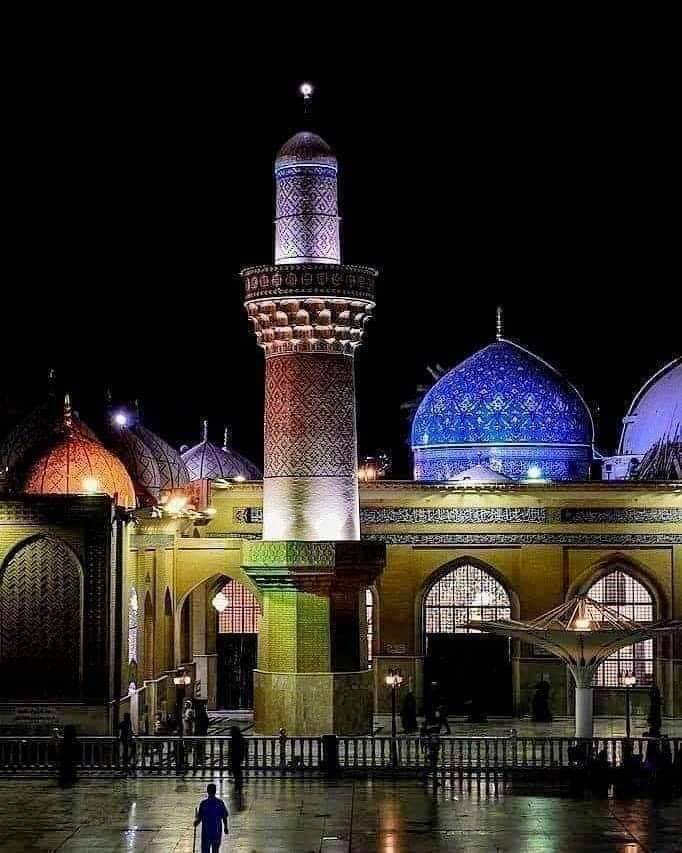
It's a very good question, and a complicated one. For starters, the Islamic manuscript tradition is vast both in terms of timespan and geography. As Dr. Shamsy points out in his latest book, the Arabic manuscript tradition is the most vast of any language in the world.
"In the end there can only be one..."
More from Religion



I had written this thread in refutation to your false claims which you had made from your previous account and you had even quoted it from your old account and now you are lying that you didn't know about this thread?
Are you trying to say the Verse of Quran i had mentioned
in the thread is false? If that's your claim then say it clearly that all the verses of Quran and hadiths are false which talks about equality and your propaganda is the ultimate truth and hidden secret of Islam.
a) If you are trying to say that just being born in a Quraysh tribe
makes one superior than others then let me remind you that the first oppressors of the Prophet pbuh were Quraysh, the first battle of Muslims happened with Quraysh, the guy who was cursed by Allah in Quran was a Quraysh (ever read Quran?). And if you want to show that being from
the lineage of Prophets makes you superior than others then let me remind you that the son of Prophet Adam will be in hell (as informed to us by the narrations), the son of Prophet Noah will be in hell, the wife of Prophet Noah will be in hell, the wife of Prophet Lut will be in
hell. And if you are trying to say that only Quraysh had the right to rule and not others then let me remind you from history that the Messenger of Allah pbuh appointed leaders Abdullah bin Ruwaha, Zaid bin Haritha, and Usama bin Zaid, and all of them were not from Quraish.
Are you trying to say the Verse of Quran i had mentioned
I didn't know about this thread earlier but now that I have seen it, i wish to bring out the Paradox of Equality of Comb in to picture.
— Kungfu Pasmanda 2.0 (@AnisShafiullah) January 16, 2021
a) Bukhari Hadith on Quresh's exclusive right to Caliphate
b) A comb that's has equal teeth but... https://t.co/E1GuxFSUGy pic.twitter.com/7VtbVkgoeh
in the thread is false? If that's your claim then say it clearly that all the verses of Quran and hadiths are false which talks about equality and your propaganda is the ultimate truth and hidden secret of Islam.
a) If you are trying to say that just being born in a Quraysh tribe
makes one superior than others then let me remind you that the first oppressors of the Prophet pbuh were Quraysh, the first battle of Muslims happened with Quraysh, the guy who was cursed by Allah in Quran was a Quraysh (ever read Quran?). And if you want to show that being from
the lineage of Prophets makes you superior than others then let me remind you that the son of Prophet Adam will be in hell (as informed to us by the narrations), the son of Prophet Noah will be in hell, the wife of Prophet Noah will be in hell, the wife of Prophet Lut will be in
hell. And if you are trying to say that only Quraysh had the right to rule and not others then let me remind you from history that the Messenger of Allah pbuh appointed leaders Abdullah bin Ruwaha, Zaid bin Haritha, and Usama bin Zaid, and all of them were not from Quraish.

You May Also Like


First thread of the year because I have time during MCO. As requested, a thread on the gods and spirits of Malay folk religion. Some are indigenous, some are of Indian origin, some have Islamic
Before I begin, it might be worth explaining the Malay conception of the spirit world. At its deepest level, Malay religious belief is animist. All living beings and even certain objects are said to have a soul. Natural phenomena are either controlled by or personified as spirits
Although these beings had to be respected, not all of them were powerful enough to be considered gods. Offerings would be made to the spirits that had greater influence on human life. Spells and incantations would invoke their
Two known examples of such elemental spirits that had god-like status are Raja Angin (king of the wind) and Mambang Tali Arus (spirit of river currents). There were undoubtedly many more which have been lost to time
Contact with ancient India brought the influence of Hinduism and Buddhism to SEA. What we now call Hinduism similarly developed in India out of native animism and the more formal Vedic tradition. This can be seen in the multitude of sacred animals and location-specific Hindu gods
i wonder if you can make a thread bout witchcraft in malaysia.. or list of our own local gods/deites..
— r a y a \U0001f319 (@lcvelylilith) February 20, 2020
Before I begin, it might be worth explaining the Malay conception of the spirit world. At its deepest level, Malay religious belief is animist. All living beings and even certain objects are said to have a soul. Natural phenomena are either controlled by or personified as spirits
Although these beings had to be respected, not all of them were powerful enough to be considered gods. Offerings would be made to the spirits that had greater influence on human life. Spells and incantations would invoke their
Animist ceremonies of a religious or magical nature were normally held for the purpose of divination or making a request. This would either be done at a keramat or at a shrine similar to the Thai spirit houses or Chinese roadside shrines pic.twitter.com/I1hliyi0x3
— \u2745\u1710\u170b\u1713\u170e (@uglyluhan) June 16, 2019
Two known examples of such elemental spirits that had god-like status are Raja Angin (king of the wind) and Mambang Tali Arus (spirit of river currents). There were undoubtedly many more which have been lost to time
Contact with ancient India brought the influence of Hinduism and Buddhism to SEA. What we now call Hinduism similarly developed in India out of native animism and the more formal Vedic tradition. This can be seen in the multitude of sacred animals and location-specific Hindu gods