Thread:
People mistake situations:

The Purva karma/ Pitru karma/ Desha karma puts you in a certain situation in life: that’s your chart’s reflection (grahas etc)
Your reaction to it in sadhana form is your Agami karma (partly) dependant on your FREE WILL.

Let’s take example 1 on Purva Karma:
The Purva karma/ Pitru karma/ Desha karma puts you in a certain situation in life: that’s your chart’s reflection (grahas etc)
You are in a boat (with passengers) and that boat springs a leak, sinks!
Purva Karma brought you into the water.
Now:
You have a choice:
1: Either you decide it was your Prarabdha and decide to drown or start calling for help
OR
2: You thought about this scenario few years back and learnt swimming and floating and techniques to calm yourself.
Your Agami karma: Swim/Float/Stay alive
Similarly, you are in a desolate place and suddenly for no fault of yours, without doing anything wrong, you got attacked or harassed: That’s ur Purva Karma.
You can:
1. Stay there be harassed. (God will help or not)
OR
2. You run/ think your way out/ pay your way out Agami karma
That’s the mistake people make:
They think that YOU are at fault or you are to BLAME just for being there:
BUT that’s wrong: it could be your Pitru karma being released/ karma of the land/ etc.
👇🏻
YOUR REACTION/ Action is the Agami karma, that’s all you have control over.
Now: Why do I say:

“Your reaction to it in sadhana form is your Agami karma (PARTLY) dependant on your FREE WILL.”
Why “PARTLY”?
That’s because the womb in which you were born dictates what your thinking was as it controls your environment for first 10 years which = ur THINKING
That’s where sadhana /Samskaras work:
If you apply those well, then you use your Free Will to do something which will hopefully partly free you from whatever circumstance u are in:
👇🏻
It need not be necessary to lift the rock, slightly moving it will allow ur foot to come free.

More from Saraswati Films

More from Astro

You May Also Like

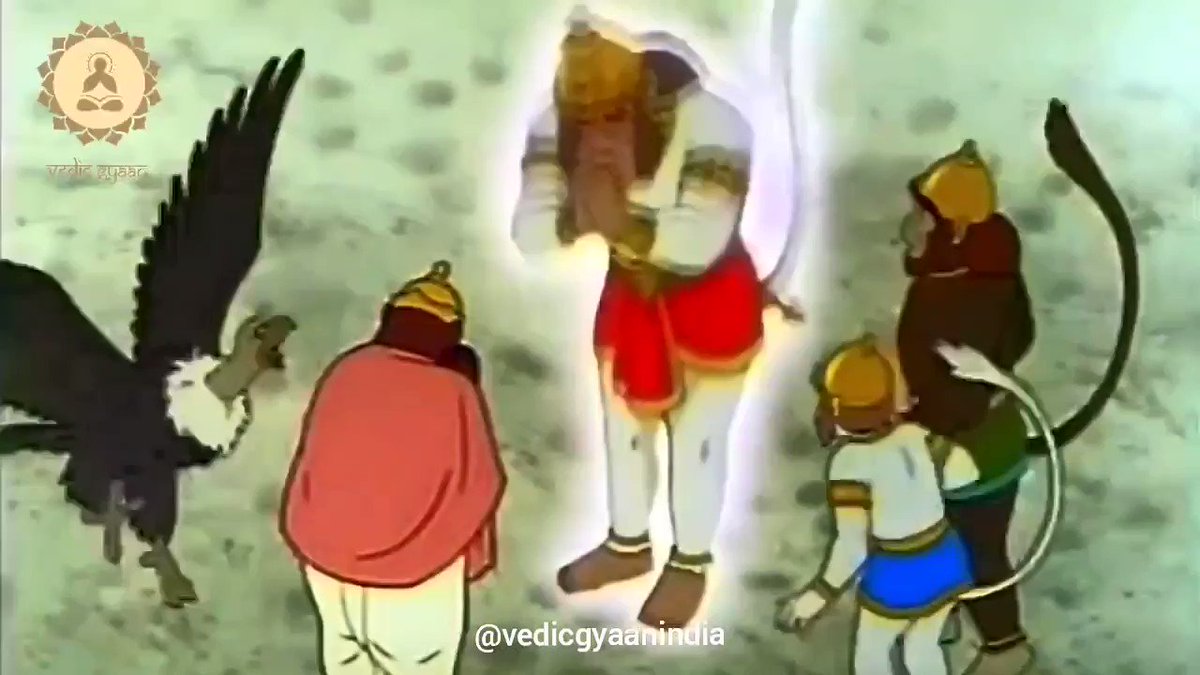
The chorus of this song uses the shlokas taken from Sundarkand of Ramayana.

It is a series of Sanskrit shlokas recited by Jambavant to Hanuman to remind Him of his true potential.

1. धीवर प्रसार शौर्य भरा: The brave persevering one, your bravery is taking you forward.


2. उतसारा स्थिरा घम्भीरा: The one who is leaping higher and higher, who is firm and stable and seriously determined.

3. ुग्रामा असामा शौर्या भावा: He is strong, and without an equal in the ability/mentality to fight

4. रौद्रमा नवा भीतिर्मा: His anger will cause new fears in his foes.

5.विजिटरीपुरु धीरधारा, कलोथरा शिखरा कठोरा: This is a complex expression seen only in Indic language poetry. The poet is stating that Shivudu is experiencing the intensity of climbing a tough peak, and likening

it to the feeling in a hard battle, when you see your enemy defeated, and blood flowing like a rivulet. This is classical Veera rasa.

6.कुलकु थारथिलीथा गम्भीरा, जाया विराट वीरा: His rough body itself is like a sharp weapon (because he is determined to win). Hail this complete

hero of the world.

7.विलयगागनथाला भिकारा, गरज्जद्धरा गारा: The hero is destructive in the air/sky as well (because he can leap at an enemy from a great height). He can defeat the enemy (simply) with his fearsome roar of war.