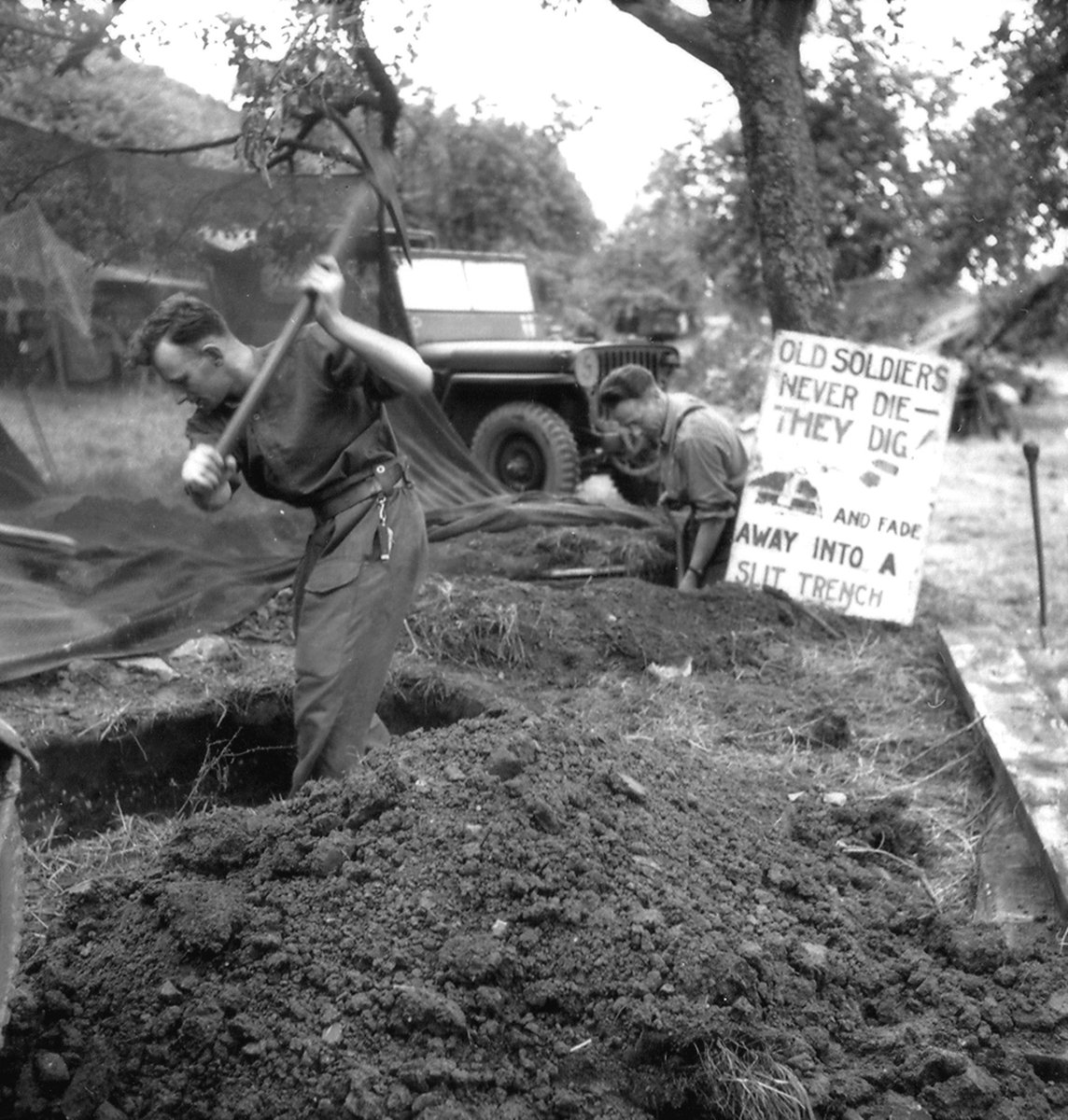
So you're a platoon commander in Normandy, you've got your three infantry sections, and you need to quickly confer with your company commander. You're wireless op is ready with his WS No. 38.
Easy right?
Well... read on. /1
#WW2 #SWW #History
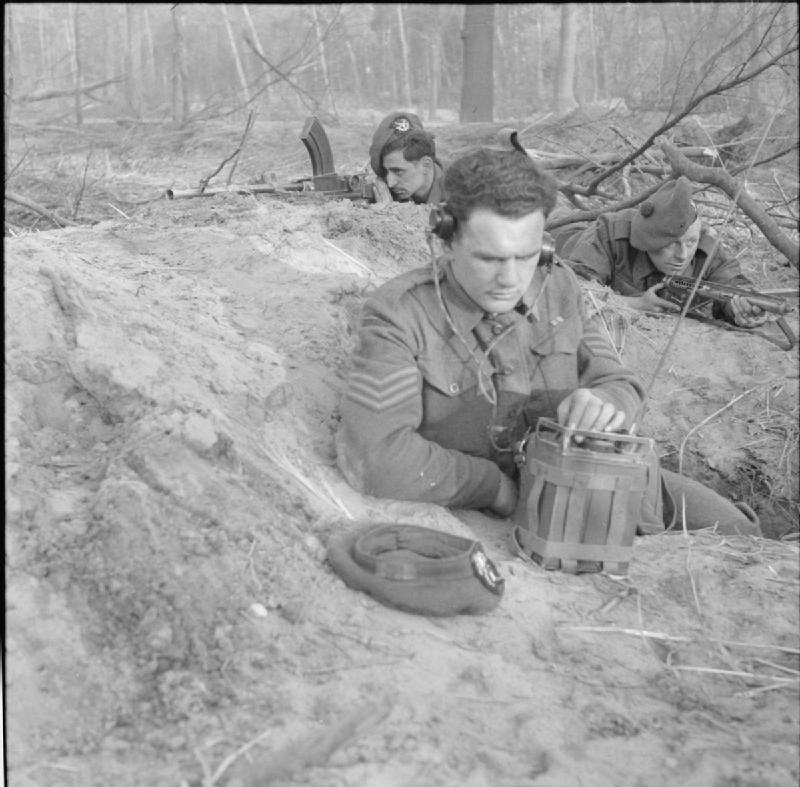
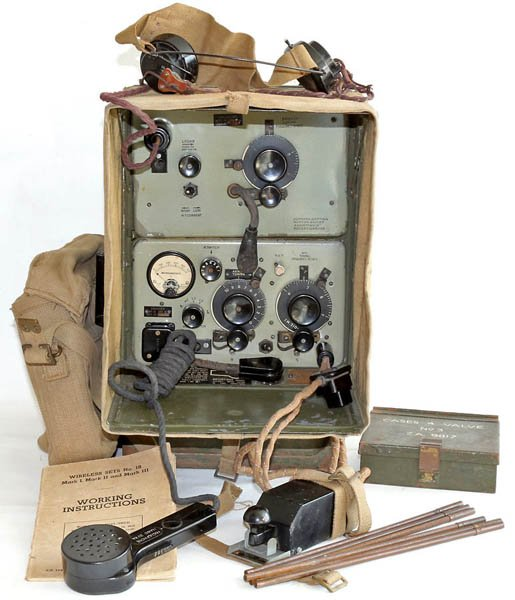
The WS No. 38 set was a compact wireless set (hence WS) assigned at the platoon level, allowing communication to headquarters, who used the bulkier and more powerful as WS No. 18.
A dedicated wireless operator controlled the set at platoon HQ, speaking via the throat mic. /2
WS No. 38 was usually controlled by Wireless Op's throat mic. Mounted on the chest with a nifty webbing cradle.
Aerial: three piece 12' aerial or 4' 'battle' aerial
Power: 0.2 Watts
Frequency: 7.4 - 9 MHz
Weight: 6kg
Battery: 20 - 35 hrs
Range:
You've probably noticed the set was under powered for the intended role, 0.2 Watts didn't really cut it.
The design also came under heavy criticism for unreliability as the key junction box and six point lead connector was known for a troubling propensity to break. /4
These were not pieces of kit used lightly, as you'd have to dodge, duck, dip, dive and... dodge, on a regular basis.
If the junction box broke, it rendered a serviceable set completely and utterly useless. /5
Extended use was tricky as batteries offered between 20 and 35 hours life, which required careful monitoring as optimal recharging was rarely viable in the field.
Something that was somewhat taken for granted during earlier exercises. /6
Range was another challenge, the best set up utilised the 12' F type aerial to broadcast about a mile, probably less, maybe more on a good day.
The problem was this also provided the enemy with a rather large target to direct fire at... denoting platoon headquarters. /7
Long before 1944 the risk posed by such aerials were highlighted in myriad complaints, dating back to Dieppe in 1942.
Operational research investigated but found no eye witness accounts of this *ahem* and felt it anecdotal information at best. /8
I mean, this was a very specific complaint and somewhat discarded.
But it's the sort of the inverse blindside that assumed the enemy could discern stretcher bearer's arm bands at range.
In short, observers could quite clearly discern 38 set aerials in action. /9
So a 4' rod of the F type aerial saw use as a 'battle' aerial in many units, which helped the operator remain more indistinct but sliced range down to about half mile...
Whether it did much is debatable as experiments found 38 set operators were clearly visible at 250 yards./10
The WS No. 38 set's low power and propensity to use shorter aerials saw it often become a burden to users.
Skip zones were a real challenge, as were trees, and woods, and tanks - and it was used to talk to tanks but couldn't as... for another day.
You could shout further. /11
The biggest problem was a serious shortage of trained wireless operators as this kit was finicky, nuanced, temperamental in addition to being rather vulnerable.
If the wireless op became a casualty, which lets face it he has a big target painted on him, it was a big problem. /12
The subaltern could operate the set, but then can't properly dedicate the time to commanding and leading his platoon.
He also makes himself an even larger target. Any replacement was unlikely to be as good as the original w/op. /13
So you quickly suffered diminishing returns with good wireless ops being highly prized technical specialists who were bloody hard to replace in action.
This led to the 38 set earning a very patchy record in action, and not being particularly popular for good reason. /14
Ultimately it fulfilled a important comms role but was too much of a hangar queen for tough infantry work, requiring careful maint, diligent charging, and delicate handling.
Characteristically erratic and constantly exposing the valuable operator to extreme danger. /thread