THREAD Thoughts on Software I don’t post on individual names I own professionally unless they are > $100bn in market cap. This means I rarely post about individual software names so I thought I’d post about software as a whole.
I’ve been on the buyside for ~3yrs. Prior to that I was on the SS covering Internet. I did other things before this. It is my belief that in general, few software investor will ever know their names/space as well as an internet investor does.

1) Estimates were way too low (at least for the good companies; see example with OKTA CY20 Rev estimates)


“I would like to showcase three ways in which Atlas is making us a better company.
1) We are able to increase our pace of innovation with new products, features and capabilities.
3) Enables us to expand the different ways you go to market, increasing our ability to pursue a larger variety of customers around the world.”
“There’s really been three great eras of software.
- Gen 1 SaasS – CRM, NOW. Seat based pricing.
Really what the original generation of SaaS companies did was capitalized on a better delivery model and a better economic model.
Gen 2 took the ideas of a better delivery and economic model, and then added a better adoption model.
The initial land price is much lower. They took time to compound. You actually got in the earlier days of these companies' evolution, you got slower revenue growth.
- Gen 3 SaaS. Stripe, Twilio, other APIs.
Not GUI based, API based, consumption based models. Targeting Developers.

One reason to be bullish on all the “little” software companies is the hyperscalers which at ~$75+bn today are still growing ~40% y/y. AWS today is ~$50bn in revenue growing nearly 30% (and it was HURT by COVID, but its backlog grew 64% in Q3).

- NOW founded in 2003, IPOed in 2012 (~$100mn in revenue) at ~$2bn valuation. Fast forward to today, NOW is a $100bn company (44% annualized return vs. SP500 14.5% and XLK 20.5%)
- CRM founded in 1999, IPOed in 2004 (at <$100mn in revenue) at ~$1bn valuation. Fast forward to today, CRM is a $230bn company (28% annualized return vs. SP500 9.4% and XLK 14%)
Let me flip that around. I think paying ONLY 10X sales is silly for companies that grow fast, even if they aren’t profitable.
As 2020 draws to a close, an observation: When paying 10, 20, 30 times revenues for an established, publicly traded company, you should be thinking, \u201cI\u2019m going to make a modest return as the fundamentals grow into the valuation,\u201d OR, \u201cI\u2019m going to spectacularly blow myself up.\u201d
— Christopher Bloomstran (@ChrisBloomstran) December 27, 2020
I’d much rather own best in breed than the 3rd or 4th player with a cheaper mult. With a very scalable product and valuation dependent on getting big and eventual profits, the 3rd/4th player doesn’t look that cheap if it never makes money.
- CRM with S&M at 40% of revs vs. R&D 14% (a ~3:1 ratio) is not as appealing to me.

Some people really care about Billings (Billings>revs). I don’t really care and try to look at it holistically. Billings, like Cashflow metrics are Lumpy.

Software often gets criticized for high SBC and inflated adj earnings. Some quick thoughts on why it matters and why it doesn’t.
For more mature companies that can’t kick the SBC drug (WDAY), it matters. 2-4% dilution on a stock that is returning ~15% matters.
More from Trading


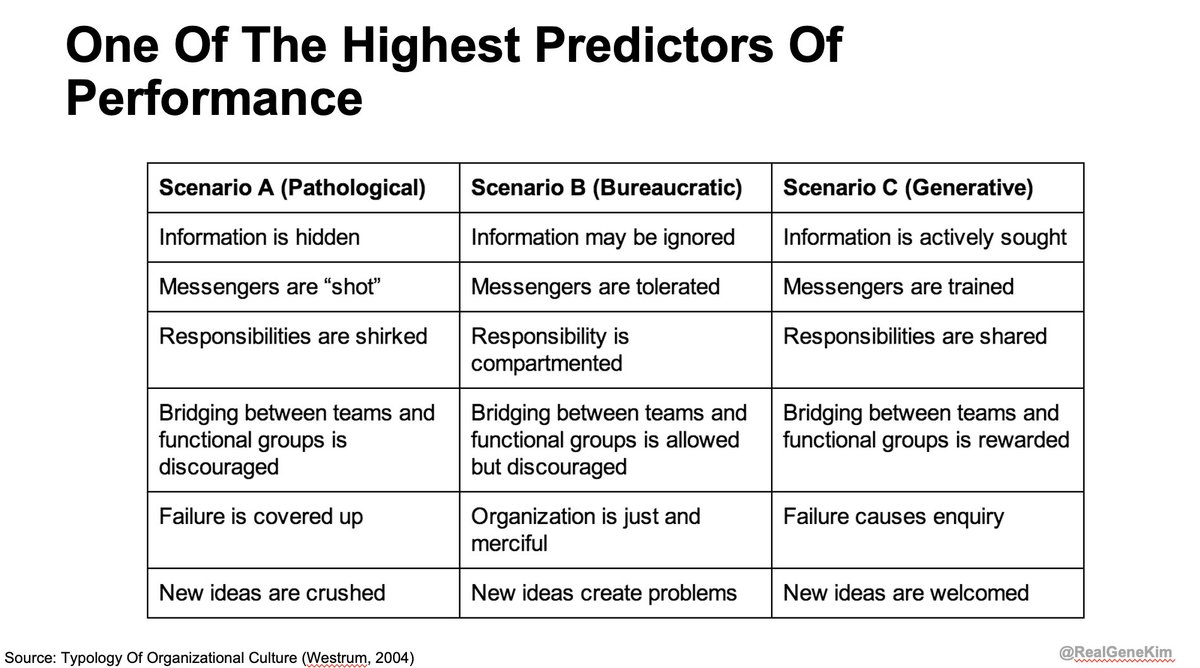
Many of you have seen the famous Westrum Organizational Typology model, so prominently featured in State of DevOps Research, Accelerate, DevOps Handbook, etc.
This model was created Dr. Ron Westrum, a widely-cited sociologist who studied the impact of culture on safety
Thanks to Dr. @nicolefv, I was able to interview him for an upcoming episode of the Idealcast! 🤯
It was a very heady experience, and while preparing to interview him, I was startled to discover how much work he's done in healthcare, aviation, spaceflight, but also innovation.
I've read 4+ of his papers, so I thought I was familiar with his work. (Here's one paper: https://t.co/7X00O67VgS)
I was startled to learn he has also studied in depth what enables innovation. He wrote a wonderful book "Sidewinder: Creative Missile Development at China Lake"
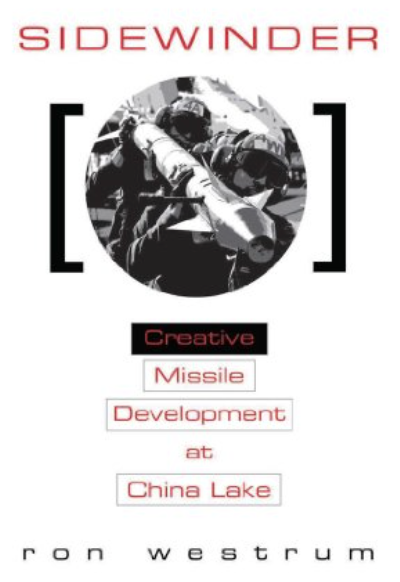
Dr. Westrum writes about China Lake Research Labs: "its design and structure had one purpose: to foster technical creativity. It did; China Lake operated far outside the normal envelope... Sidewinder & others were "impossible" accomplishments,
I love this book because it describes traits of organizations that routinely create and maintain greatness: US space program (Mercury, Gemini, Apollo), US Naval Reactors, Toyota, Team of Teams, Tesla, the tech giants (Amazon, Google, Netflix, Google)
This model was created Dr. Ron Westrum, a widely-cited sociologist who studied the impact of culture on safety
Thanks to Dr. @nicolefv, I was able to interview him for an upcoming episode of the Idealcast! 🤯
It was a very heady experience, and while preparing to interview him, I was startled to discover how much work he's done in healthcare, aviation, spaceflight, but also innovation.
I've read 4+ of his papers, so I thought I was familiar with his work. (Here's one paper: https://t.co/7X00O67VgS)
I was startled to learn he has also studied in depth what enables innovation. He wrote a wonderful book "Sidewinder: Creative Missile Development at China Lake"
Dr. Westrum writes about China Lake Research Labs: "its design and structure had one purpose: to foster technical creativity. It did; China Lake operated far outside the normal envelope... Sidewinder & others were "impossible" accomplishments,
I love this book because it describes traits of organizations that routinely create and maintain greatness: US space program (Mercury, Gemini, Apollo), US Naval Reactors, Toyota, Team of Teams, Tesla, the tech giants (Amazon, Google, Netflix, Google)



Want to master Option Selling for free?
Here are the best resources.
A thread 🧵👇
Collaborated with @niki_poojary
1. Best book of knowledge for a beginner?
Zerodha Varsity from @Nithin0dha's team is the best book for a newcomer to read and increase his basic knowledge about options, especially for the Indian markets.
Link:
2. Best Youtube channel on Options Trading?
The @tastytrade financial network. It's a foreign channel that focuses mostly on selling options.
They teach all strategies for free with their backtests.
Big on Straddle/Strangles selling.
Links:
3. Top Indian YouTube Channel for Options?
Power of Stocks - Subhasish Pani
What you'll learn:
1. How to form a trading plan.
2. How to scale an account with risk-reward in option selling.
3. Technical analysis logics you can use daily.
15
4. What are the preconditions to start option Selling:
You should know technical Analysis basics like:
- Support/Resistance
- Chart Patterns
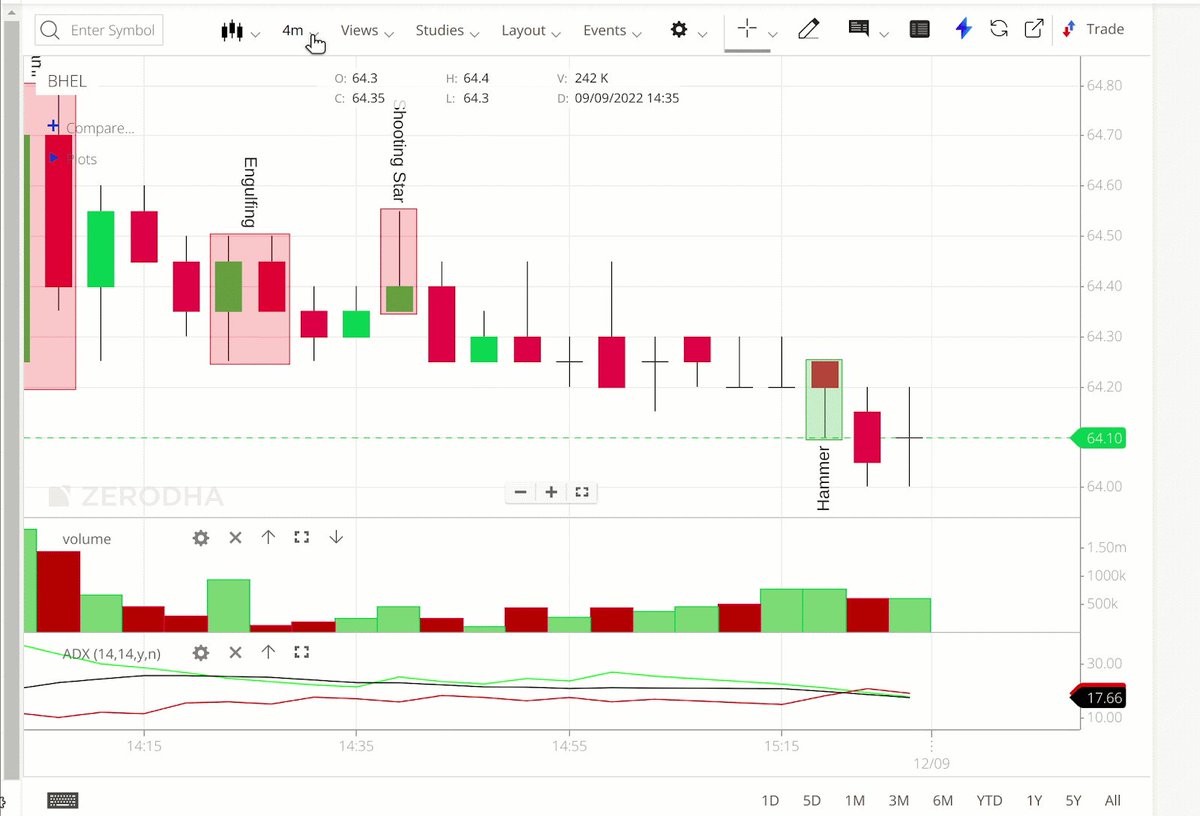
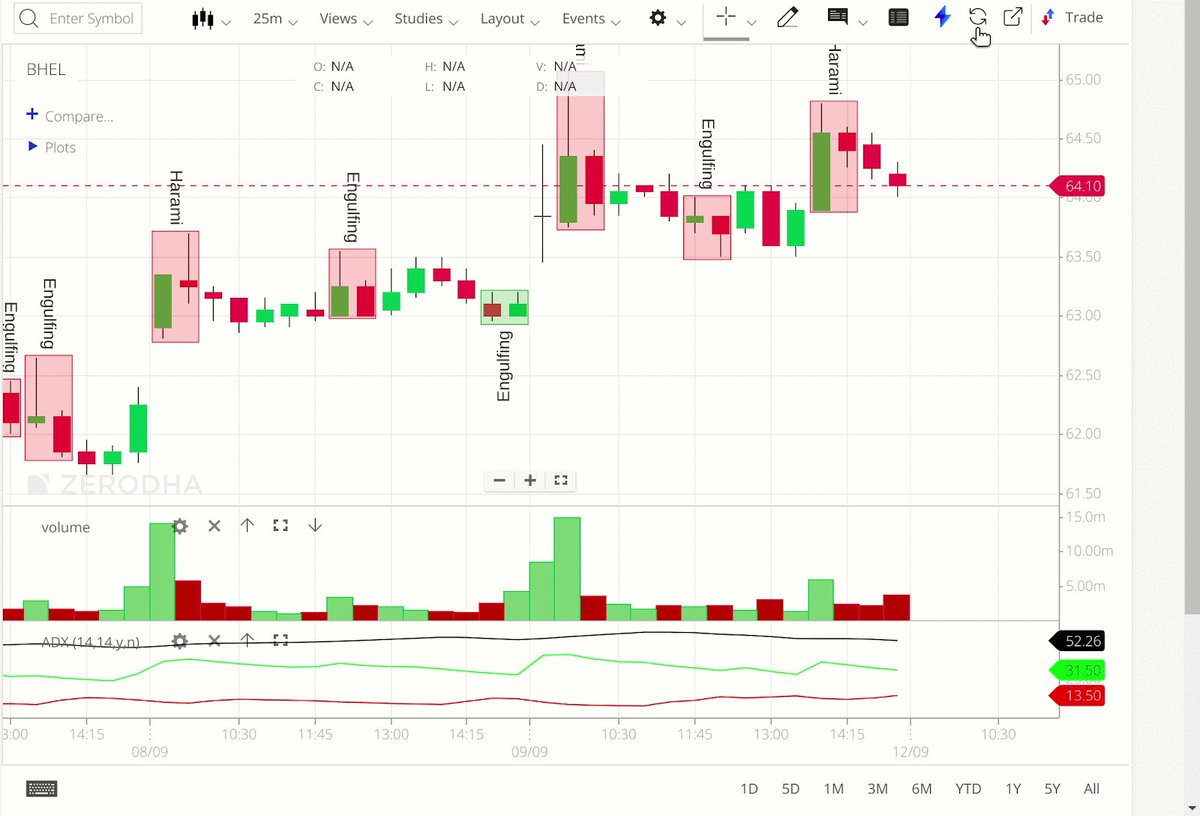
- Candle Patterns
- Dow Theory (HH, LL)
This will help you start taking high-probability trades.
Here are the best resources.
A thread 🧵👇
Collaborated with @niki_poojary
1. Best book of knowledge for a beginner?
Zerodha Varsity from @Nithin0dha's team is the best book for a newcomer to read and increase his basic knowledge about options, especially for the Indian markets.
Link:
2. Best Youtube channel on Options Trading?
The @tastytrade financial network. It's a foreign channel that focuses mostly on selling options.
They teach all strategies for free with their backtests.
Big on Straddle/Strangles selling.
Links:
3. Top Indian YouTube Channel for Options?
Power of Stocks - Subhasish Pani
What you'll learn:
1. How to form a trading plan.
2. How to scale an account with risk-reward in option selling.
3. Technical analysis logics you can use daily.
15
15 Learnings from Power of Stocks: \U0001f9f5
— Aditya Todmal (@AdityaTodmal) January 23, 2022
Collaborated with @niki_poojary
4. What are the preconditions to start option Selling:
You should know technical Analysis basics like:
- Support/Resistance
- Chart Patterns
- Candle Patterns
- Dow Theory (HH, LL)
This will help you start taking high-probability trades.