The History of Remote Work

A look back before we zoom too far into the future...🚀

#FutureOfWork #WorkforceFuturist

Thread (1/10)
https://t.co/4SxOJDx8HG

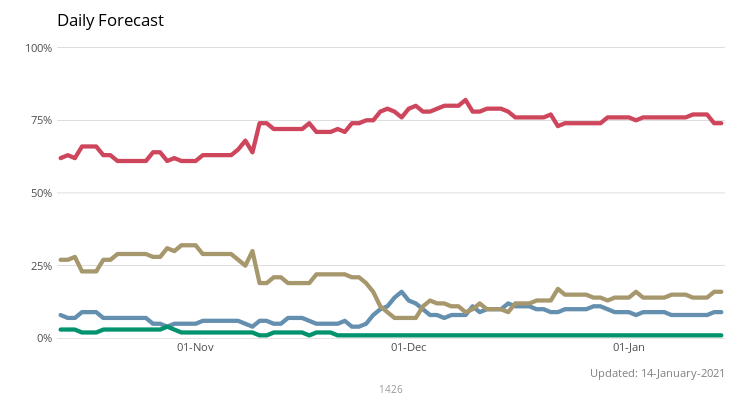
What % of working adults in the UK will 'work from home exclusively' in July 2021?

About 75% of this group of #superforecasters say more than 10% but less than 20% (the red line in the graph below)

@superforecaster

Thread (2/10)
https://t.co/3fhFR1lXFy
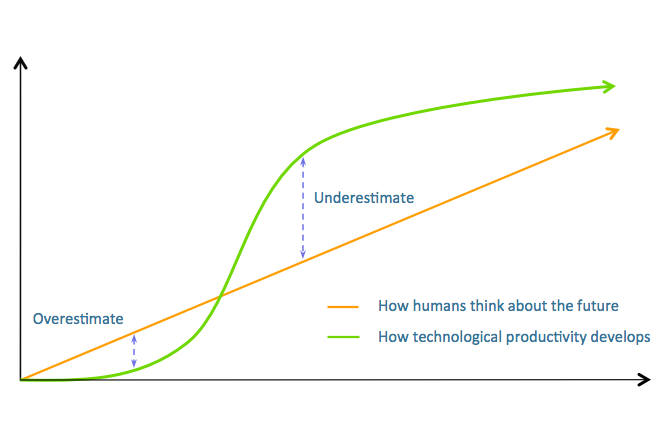
“We tend to overestimate the effect of the technology in the short run and underestimate for the long run”
Roy Amara

Our predictions tend to be made through foggy Zoom goggles and constrained by the Gregorian calendar.

Thread (3/10)
Remote Work Isn’t New

In Britain from the 1600s to the mid-19th century work did not take place in factories but in people’s houses.

Workers made dresses, shoes, and matchboxes in their kitchens or bedrooms.

Thread (4/10)
https://t.co/1A52zT4kiP
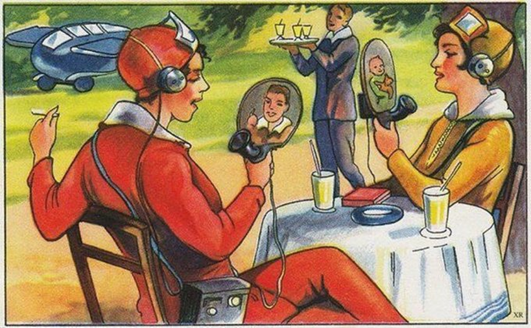
Some predictions from people in 1921 who were asked

“what will happen in 2021?”

📺 streaming entertainment into our homes
🚗 electricity powers our wheels
📚 books will read to us

Thread (5/10)
https://t.co/JYY5fXcBTT
No Meetings, No Deadlines, No Full-Time Employees

From the history of remote work, to a future of work scenario for some.

from @shl at @gumroad

No Sweat...

Thread (6/10)
https://t.co/KicHWzHGaj
The Blockchain Workforce is coming

From a blockchain version of Upwork

to freelancer platforms paying #crypto @LaborXNews

Thread (7/10)
https://t.co/szlj5tJJ3Z
How do we manage our workforce?

From improving innovation in virtual teams using network analysis to better sales productivity.

Best People Analytics Resources of 2020 from @david_green_uk

Thread (8/10)
https://t.co/gx546FSHwO
'Scribe Spotlight' in this newsletter is on @Vitolae

Recommended reading for Workforce Futurists

"The future of work, with a feminist perspective"

Thread (9/10)
https://t.co/ScbCIXV5Vg
Please subscribe, share and contribute to the

Workforce Futurist Newsletter

for regular essays, update articles (like this)

on #Orgdev, technology, #HR, #HRTech, demographics and more…

Thread (10/10)
https://t.co/774xNODMBz
@thereaderapp my dear, loyal and reliable friend, please unroll Many thanks!
@threadreaderapp how could I mistake you for someone else! please unroll Merci!

More from Tech

A common misunderstanding about Agile and “Big Design Up Front”:

There’s nothing in the Agile Manifesto or Principles that states you should never have any idea what you’re trying to build.

You’re allowed to think about a desired outcome from the beginning.

It’s not Big Design Up Front if you do in-depth research to understand the user’s problem.

It’s not BDUF if you spend detailed time learning who needs this thing and why they need it.

It’s not BDUF if you help every team member know what success looks like.

Agile is about reducing risk.

It’s not Agile if you increase risk by starting your sprints with complete ignorance.

It’s not Agile if you don’t research.

Don’t make the mistake of shutting down critical understanding by labeling it Bg Design Up Front.

It would be a mistake to assume this research should only be done by designers and researchers.

Product management and developers also need to be out with the team, conducting the research.

Shared Understanding is the key objective


Big Design Up Front is a thing to avoid.

Defining all the functionality before coding is BDUF.

Drawing every screen and every pixel is BDUF.

Promising functionality (or delivery dates) to customers before development starts is BDUF.

These things shouldn’t happen in Agile.

You May Also Like

I’m torn on how to approach the idea of luck. I’m the first to admit that I am one of the luckiest people on the planet. To be born into a prosperous American family in 1960 with smart parents is to start life on third base. The odds against my very existence are astronomical.


I’ve always felt that the luckiest people I know had a talent for recognizing circumstances, not of their own making, that were conducive to a favorable outcome and their ability to quickly take advantage of them.

In other words, dumb luck was just that, it required no awareness on the person’s part, whereas “smart” luck involved awareness followed by action before the circumstances changed.

So, was I “lucky” to be born when I was—nothing I had any control over—and that I came of age just as huge databases and computers were advancing to the point where I could use those tools to write “What Works on Wall Street?” Absolutely.

Was I lucky to start my stock market investments near the peak of interest rates which allowed me to spend the majority of my adult life in a falling rate environment? Yup.