Guru as Trinity - #Thread
This sloka is taught to all of us in early childhood. This is very popular sloka. This sloka can be recited in front of any Guru. The widely prevalent meaning of this sloka is to
worship Guru as the form of Trinity & hence Parabrahma.
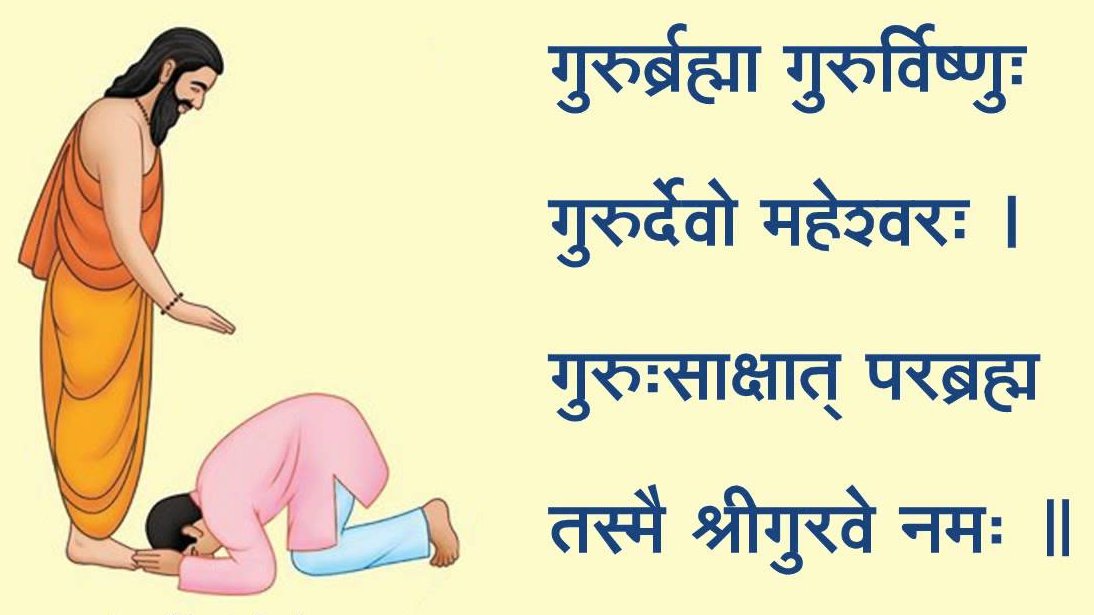
sustains like Vishnu & finally leads to merger with the Supreme like Shiva. Though parents give birth to the body, Guru gives Dīkṣā Janma i.e. new life ..
Thus, He is Brahma
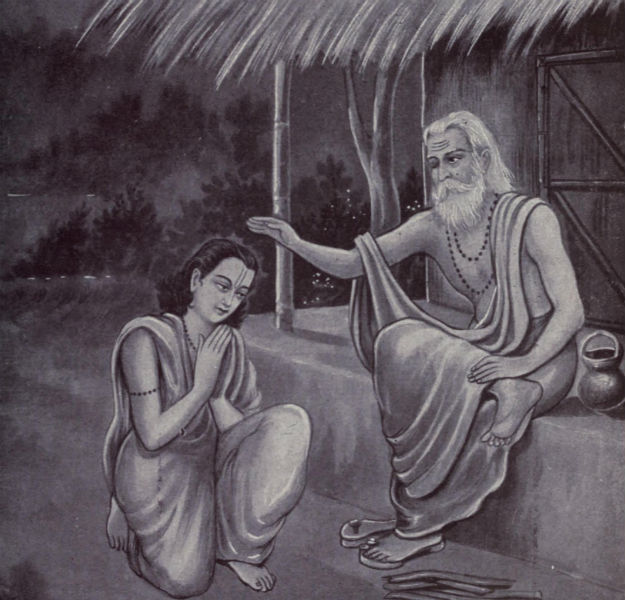
sustains this knowledge in the disciple, protects in this mundane life and preserves disciple’s spiritual practices.
Hence, He is Vishnu.
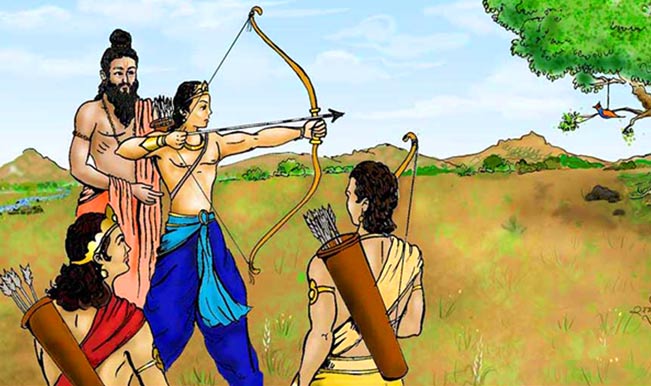
knowledge about Brahman finally merging the soul in divine.
So, He is Shiva/Maheswara.
Thus, Guru is the embodiment of Brahma, Vishnu
and Maheswara.
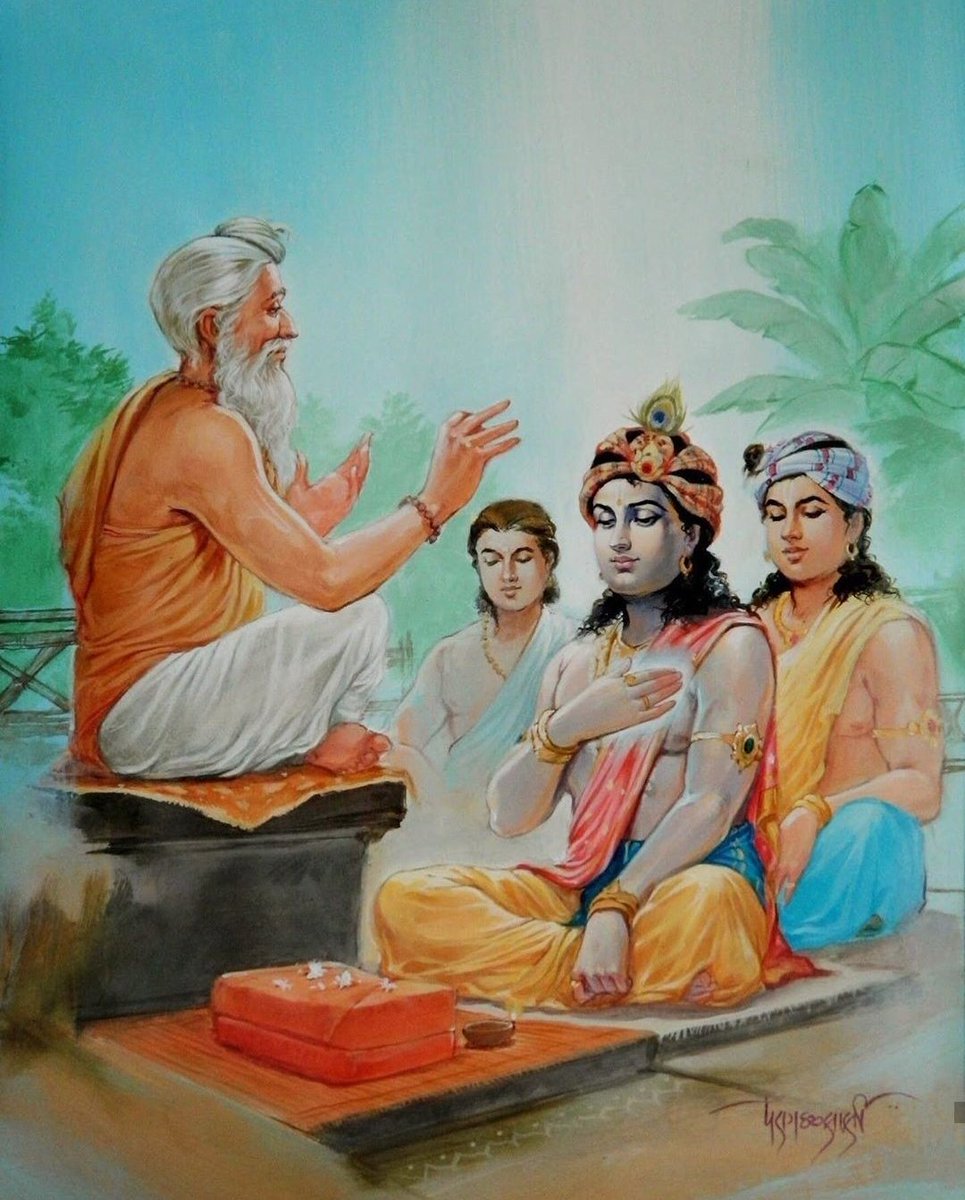
If this sloka is recited with utmost devotion and complete concentration, one shall certainly obtain everything here and hereafter.
-- @SriSamavedam
More from Brahmasri Samavedam Shanmukha Sarma



More from Religion


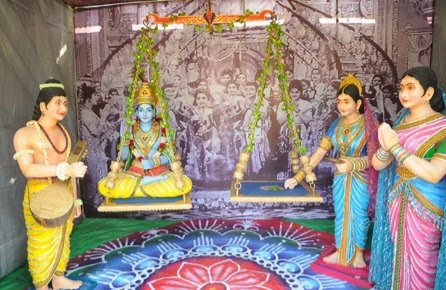



#BookExcerpts #Venkateshwara #Balaji
I will write a 3 part thread series with some interesting points from this book.
Part-1 : History of Tirumala & Venkateshwara Swamy
Part-2: Rituals & Prasada Procedure
Part-3: Historical records
Part-1 thread below
1/
Venkatachala Hill
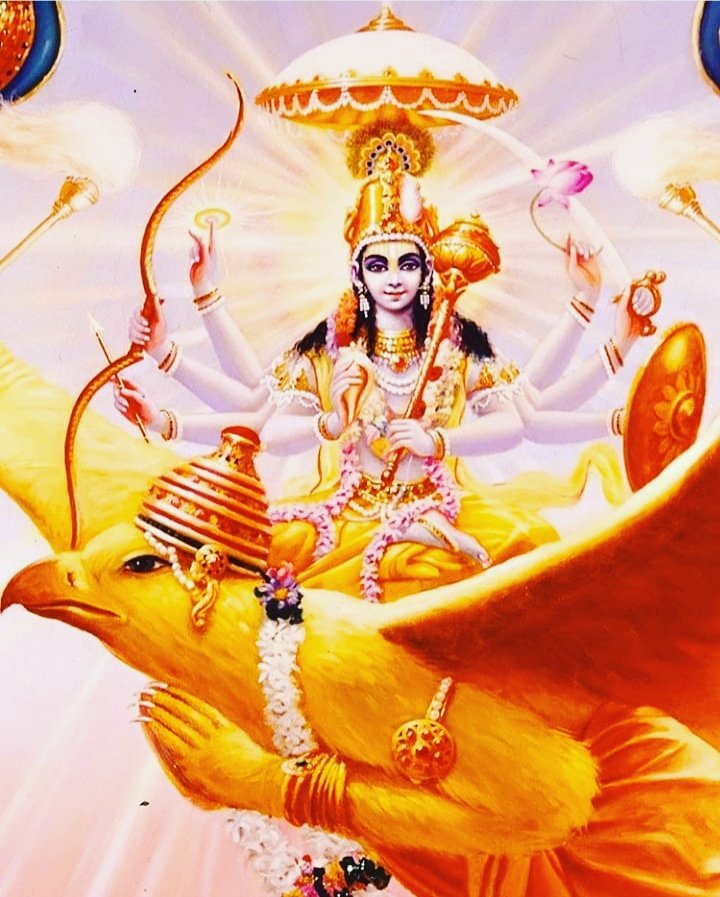
Maha Vishnu wished for the mountain Krida / Krida Parvatham / Kridhachalam from Vaikunta to be brought to the earth for his avataram.
This was brought to earth by Garuda and Ananta & placed it on banks of river Swarna Mukhi
2/
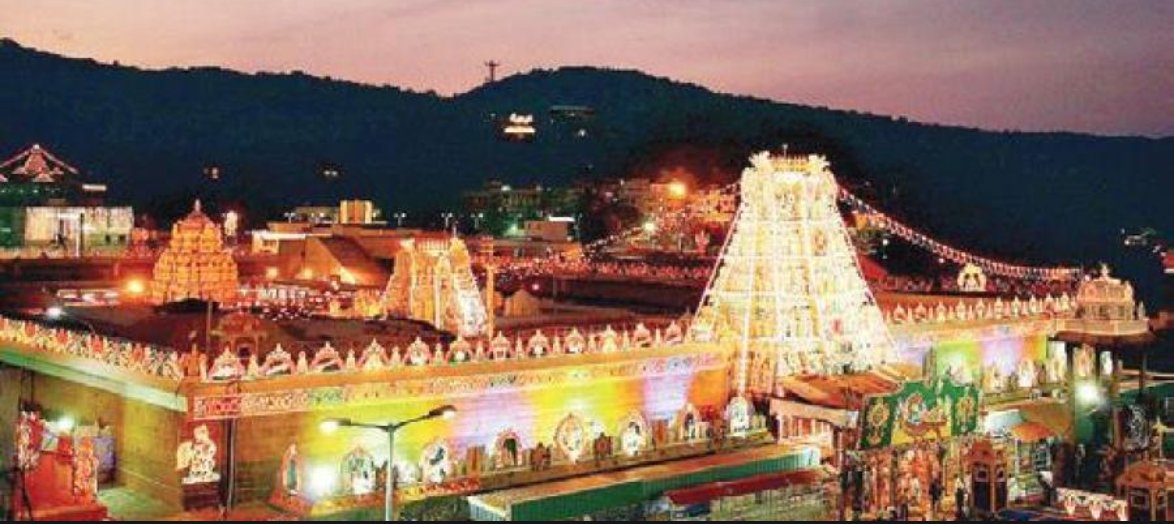
This is where current Tirumala temple is located. The fact that this was transported from Vaikunta is apparently a scientifically proven fact.
The scientific dating of the sedimentary rocks have confirmed the date to be around 120 million years ago..
3/
This timeline coincides with Swayambhu Manu manvanthara of the Sweta Varaha Kalpa which is the time when Swamy descended on earth in the form of Venkateshwara Swamy.
From a survey of flora and fauna, they have found rare species of plants & animals like golden gecko..
4/
that are exclusive to this hill range only and not found anywhere else in the world.
Tirumala hills are a range of 7 hills
1. Seshachala
2. Vedachala
3. Garudachala
4. Anjanachala
5. Vrishabhachala
6. Narayanachala
7. Venkatachala --> Where temple is present
5/
I will write a 3 part thread series with some interesting points from this book.
Part-1 : History of Tirumala & Venkateshwara Swamy
Part-2: Rituals & Prasada Procedure
Part-3: Historical records
Part-1 thread below
1/
#Books
— GunduHuduga| \u0c97\u0cc1\u0c82\u0ca1\u0cc1 \u0cb9\u0cc1\u0ca1\u0cc1\u0c97|\U0001f549 (@GunduHuDuGa) January 14, 2021
Thanks to Niranjan Raman again for this wonderful recommendation
Tirumala - Sacred Foods of God pic.twitter.com/dwiZDPI7W0
Venkatachala Hill
Maha Vishnu wished for the mountain Krida / Krida Parvatham / Kridhachalam from Vaikunta to be brought to the earth for his avataram.
This was brought to earth by Garuda and Ananta & placed it on banks of river Swarna Mukhi
2/
This is where current Tirumala temple is located. The fact that this was transported from Vaikunta is apparently a scientifically proven fact.
The scientific dating of the sedimentary rocks have confirmed the date to be around 120 million years ago..
3/
This timeline coincides with Swayambhu Manu manvanthara of the Sweta Varaha Kalpa which is the time when Swamy descended on earth in the form of Venkateshwara Swamy.
From a survey of flora and fauna, they have found rare species of plants & animals like golden gecko..
4/
that are exclusive to this hill range only and not found anywhere else in the world.
Tirumala hills are a range of 7 hills
1. Seshachala
2. Vedachala
3. Garudachala
4. Anjanachala
5. Vrishabhachala
6. Narayanachala
7. Venkatachala --> Where temple is present
5/
You May Also Like


Keep dwelling on this:
Further Examination of the Motif near PRRA Reveals Close Structural Similarity to the SEB Superantigen as well as Sequence Similarities to Neurotoxins and a Viral SAg.
The insertion PRRA together with 7 sequentially preceding residues & succeeding R685 (conserved in β-CoVs) form a motif, Y674QTQTNSPRRAR685, homologous to those of neurotoxins from Ophiophagus (cobra) and Bungarus genera, as well as neurotoxin-like regions from three RABV strains
(20) (Fig. 2D). We further noticed that the same segment bears close similarity to the HIV-1 glycoprotein gp120 SAg motif F164 to V174.
https://t.co/EwwJOSa8RK
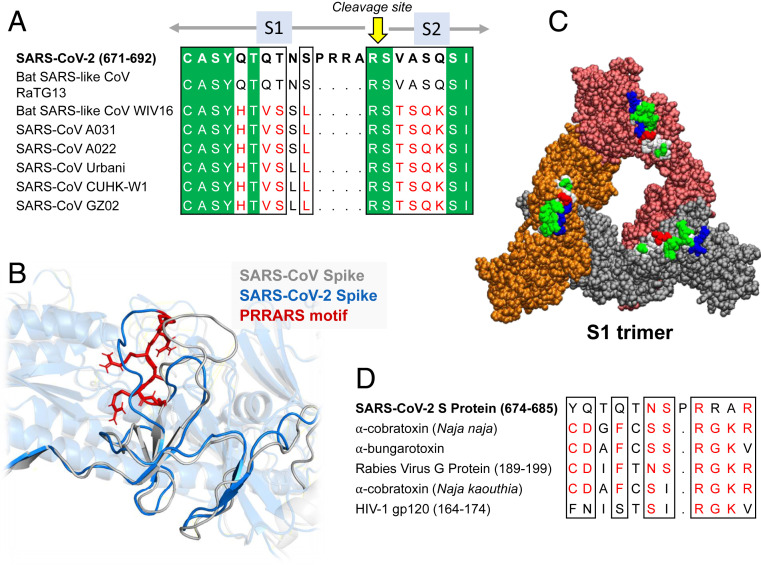
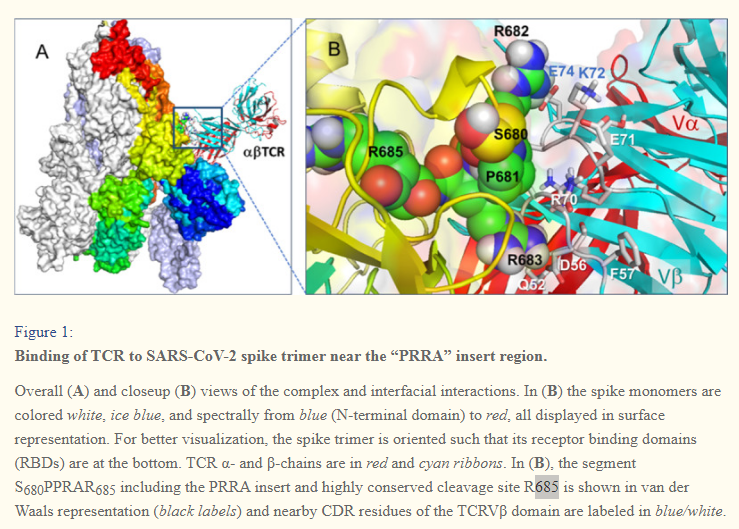
In (B), the segment S680PPRAR685 including the PRRA insert and highly conserved cleavage site *R685* is shown in van der Waals representation (black labels) and nearby CDR residues of the TCRVβ domain are labeled in blue/white
https://t.co/BsY8BAIzDa
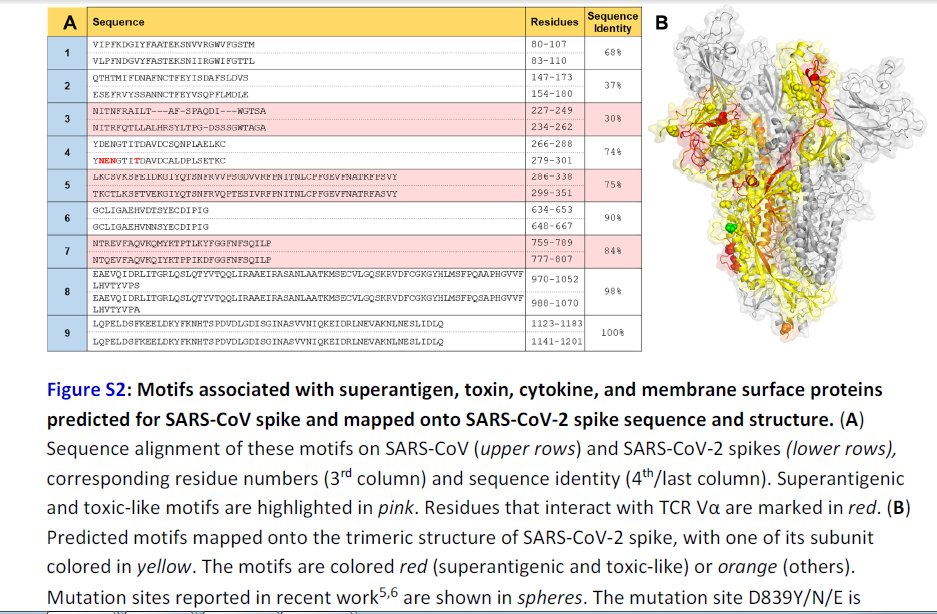
Sequence Identity %
https://t.co/BsY8BAIzDa
Y674 - QTQTNSPRRA - R685
Similar to neurotoxins from Ophiophagus (cobra) & Bungarus genera & neurotoxin-like regions from three RABV strains
T678 - NSPRRA- R685
Superantigenic core, consistently aligned against bacterial or viral SAgs
Further Examination of the Motif near PRRA Reveals Close Structural Similarity to the SEB Superantigen as well as Sequence Similarities to Neurotoxins and a Viral SAg.
The insertion PRRA together with 7 sequentially preceding residues & succeeding R685 (conserved in β-CoVs) form a motif, Y674QTQTNSPRRAR685, homologous to those of neurotoxins from Ophiophagus (cobra) and Bungarus genera, as well as neurotoxin-like regions from three RABV strains
(20) (Fig. 2D). We further noticed that the same segment bears close similarity to the HIV-1 glycoprotein gp120 SAg motif F164 to V174.
https://t.co/EwwJOSa8RK
In (B), the segment S680PPRAR685 including the PRRA insert and highly conserved cleavage site *R685* is shown in van der Waals representation (black labels) and nearby CDR residues of the TCRVβ domain are labeled in blue/white
https://t.co/BsY8BAIzDa
Sequence Identity %
https://t.co/BsY8BAIzDa
Y674 - QTQTNSPRRA - R685
Similar to neurotoxins from Ophiophagus (cobra) & Bungarus genera & neurotoxin-like regions from three RABV strains
T678 - NSPRRA- R685
Superantigenic core, consistently aligned against bacterial or viral SAgs