
Excellent thread by Rabbi Reuvane about the level (or lack thereof) of Jewish literacy amongst Progressive American Jews. It speaks directly to a conversation I was having yesterday with a congregant in his 20s. He recently started attending Chabad shiurim, and loves them. 1/10
Our community - American Jewish parents, schools, synagogues, & org\u2019s - have failed. We & our children are virtually all illiterate. I mean that literally. Most of us don\u2019t understand Hebrew or any Jewish language. We lack basic familiarity w/ our history & the Jewish bookshelf.
— Rabbi Reuvane (@RabbiReuvane) December 16, 2020
More from Religion

I want to talk about the key textual elements you might find in an Islamic manuscript. I'll focus on this manuscript, roughly 18th century, of an Arabic history of the rulers of Egypt called Nuzhat al-nāẓirīn, by Marʻī al-Karmī (d. 1623/4).
Budeiry Library (Jerusalem) MS 593 -jm
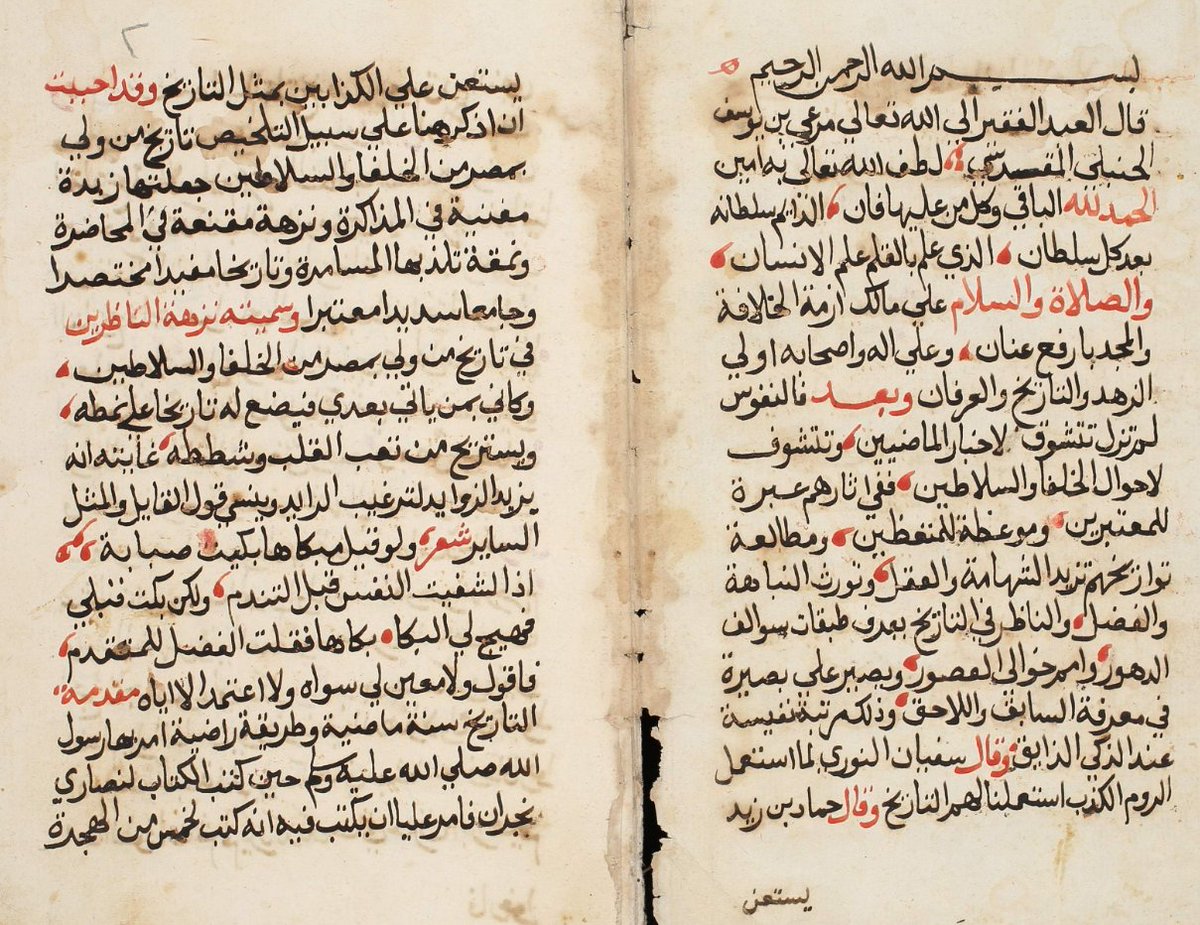
These texts have many elements designed to help the reader understand what they're saying, and choices by the scribe who copied the manuscript often help as well. Let's see what's here. -jm
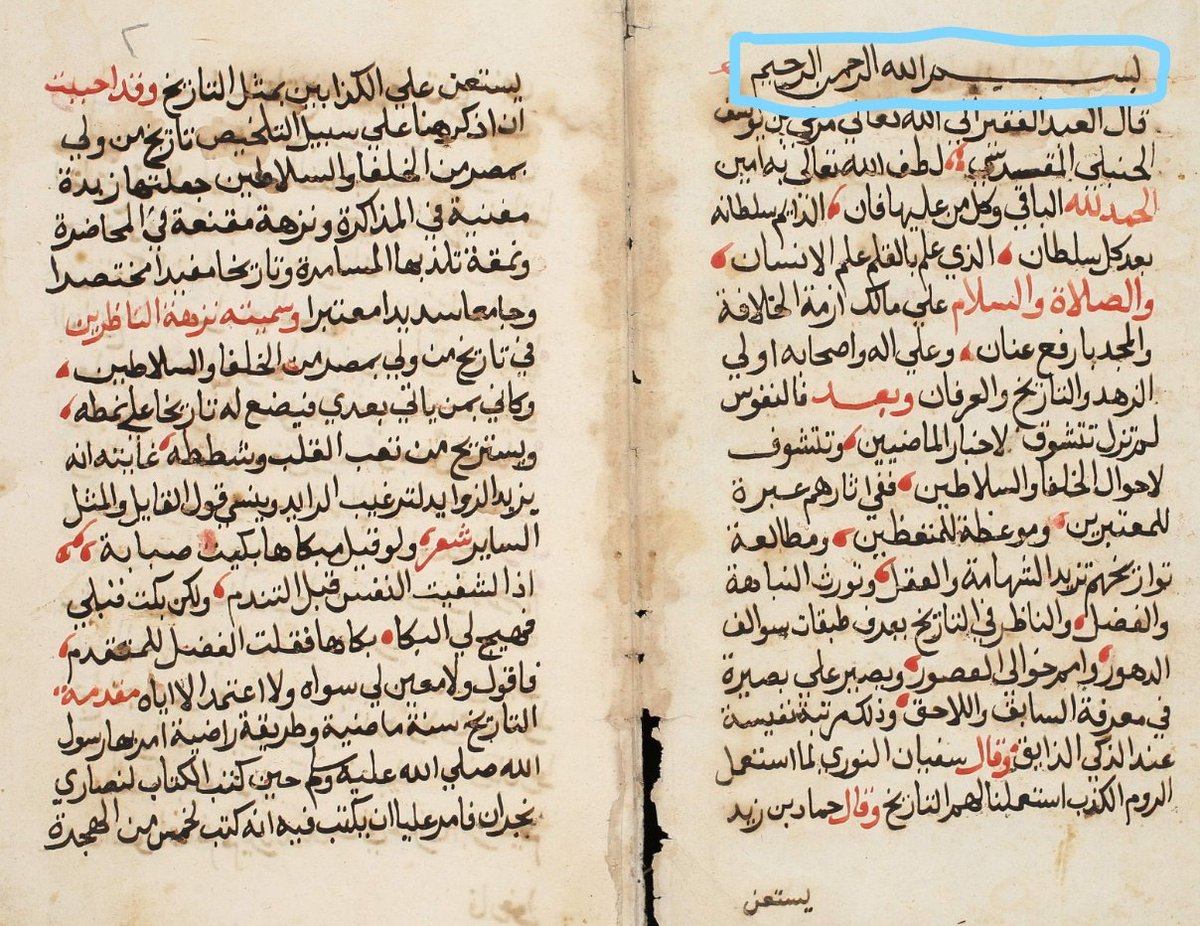
First, almost every Islamic text begins with the invocation "in the name of God, the compassionate, the merciful." The wording is never changed, and it's always in Arabic, no matter what language the text is, although you might add phrases like "and we ask God for help." -jm
Christians were able to do more experimentation with their invocations, as you can see from the examples here. https://t.co/wEPWRitCWA -jm
After the invocation (basmalah), you might have what this text has, which is an introduction of the author in the form "the poor slave of God [so-and-so] said..." often followed by a quick prayer for the author. -jm
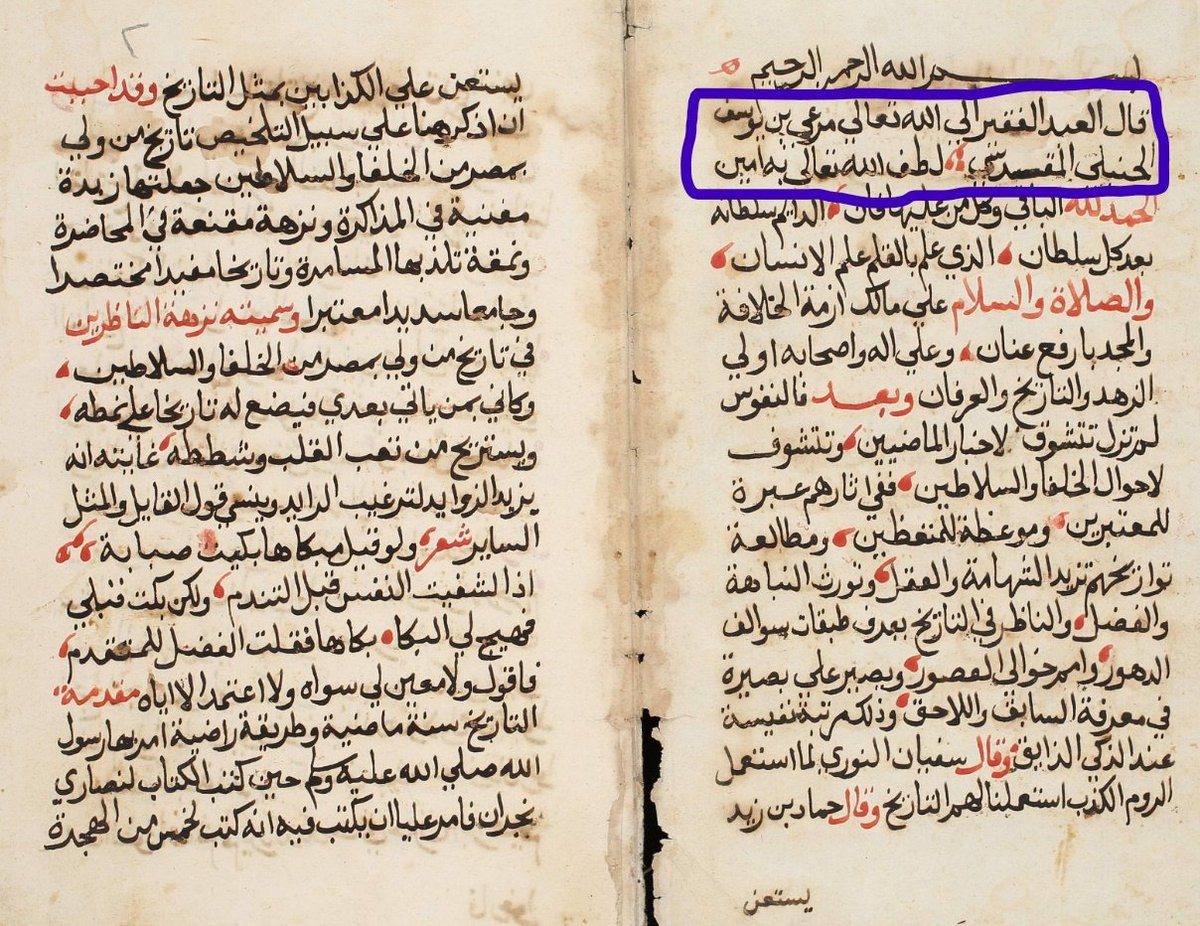
Budeiry Library (Jerusalem) MS 593 -jm
These texts have many elements designed to help the reader understand what they're saying, and choices by the scribe who copied the manuscript often help as well. Let's see what's here. -jm
First, almost every Islamic text begins with the invocation "in the name of God, the compassionate, the merciful." The wording is never changed, and it's always in Arabic, no matter what language the text is, although you might add phrases like "and we ask God for help." -jm
Christians were able to do more experimentation with their invocations, as you can see from the examples here. https://t.co/wEPWRitCWA -jm
These little prayers are fun pic.twitter.com/hJYk2M01bO
— Josh Mugler (@J_mugs) February 16, 2019
After the invocation (basmalah), you might have what this text has, which is an introduction of the author in the form "the poor slave of God [so-and-so] said..." often followed by a quick prayer for the author. -jm


MDZS is laden with buddhist references. As a South Asian person, and history buff, it is so interesting to see how Buddhism, which originated from India, migrated, flourished & changed in the context of China. Here's some research (🙏🏼 @starkjeon for CN insight + citations)
1. LWJ’s sword Bichen ‘is likely an abbreviation for the term 躲避红尘 (duǒ bì hóng chén), which can be translated as such: 躲避: shunning or hiding away from 红尘 (worldly affairs; which is a buddhist teaching.) (https://t.co/zF65W3roJe) (abbrev. TWX)
2. Sandu (三 毒), Jiang Cheng’s sword, refers to the three poisons (triviṣa) in Buddhism; desire (kāma-taṇhā), delusion (bhava-taṇhā) and hatred (vibhava-taṇhā).
These 3 poisons represent the roots of craving (tanha) and are the cause of Dukkha (suffering, pain) and thus result in rebirth.
Interesting that MXTX used this name for one of the characters who suffers, arguably, the worst of these three emotions.
3. The Qian kun purse “乾坤袋 (qián kūn dài) – can be called “Heaven and Earth” Pouch. In Buddhism, Maitreya (मैत्रेय) owns this to store items. It was believed that there was a mythical space inside the bag that could absorb the world.” (TWX)
1. LWJ’s sword Bichen ‘is likely an abbreviation for the term 躲避红尘 (duǒ bì hóng chén), which can be translated as such: 躲避: shunning or hiding away from 红尘 (worldly affairs; which is a buddhist teaching.) (https://t.co/zF65W3roJe) (abbrev. TWX)
2. Sandu (三 毒), Jiang Cheng’s sword, refers to the three poisons (triviṣa) in Buddhism; desire (kāma-taṇhā), delusion (bhava-taṇhā) and hatred (vibhava-taṇhā).
These 3 poisons represent the roots of craving (tanha) and are the cause of Dukkha (suffering, pain) and thus result in rebirth.
Interesting that MXTX used this name for one of the characters who suffers, arguably, the worst of these three emotions.
3. The Qian kun purse “乾坤袋 (qián kūn dài) – can be called “Heaven and Earth” Pouch. In Buddhism, Maitreya (मैत्रेय) owns this to store items. It was believed that there was a mythical space inside the bag that could absorb the world.” (TWX)


