
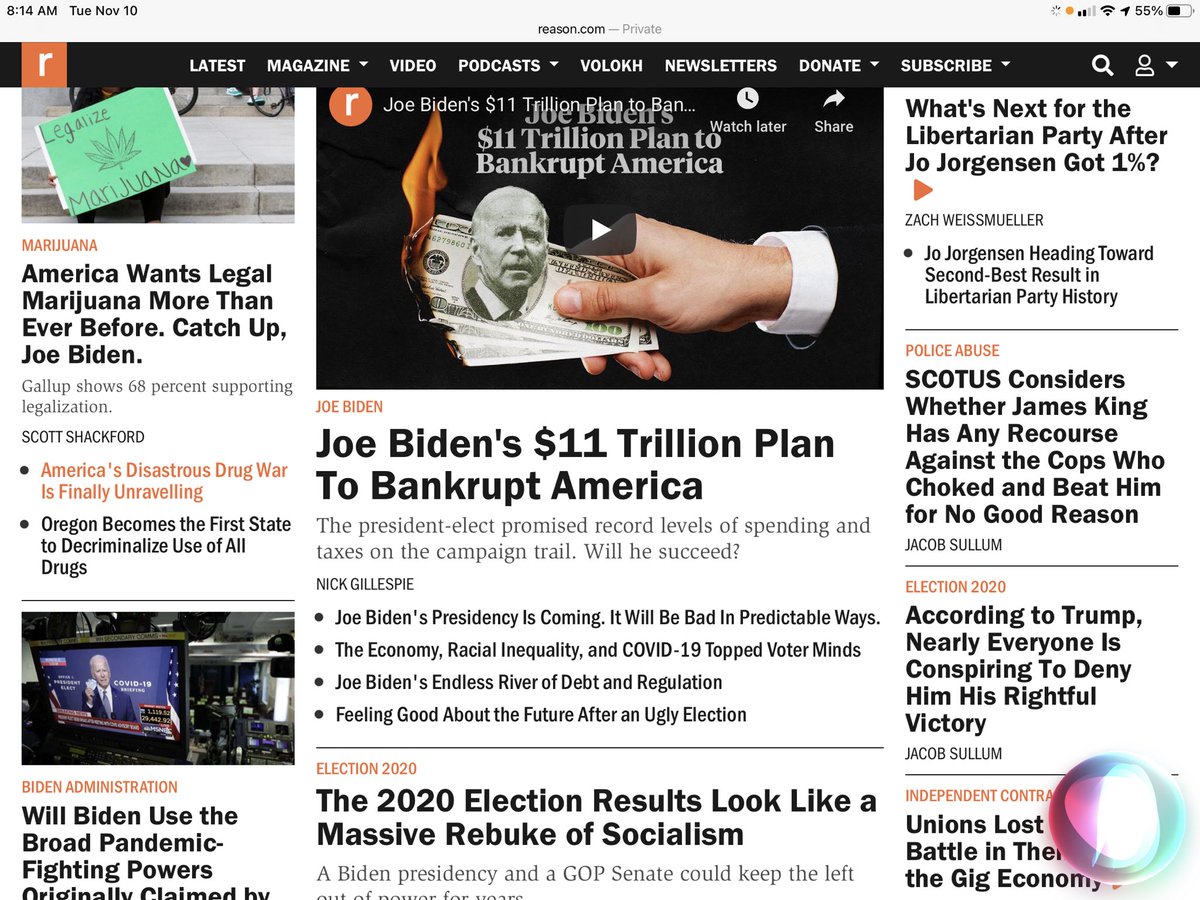
So shortly after the 2016 election, I pointed out how odd it was that the Reason homepage was dominated by stories either mocking and ridiculing the left for being fearful of what was to come, or articles about how Trump might actually be good for libertarians.
1. You know I love you, @reason, but I'm not getting your homepage right now. Lots of mocking the left, lecturing people who are scared...
— Radley Balko (@radleybalko) November 15, 2016
A big part of this is that many libertarians still see the left as a bigger threat than the right. I’m baffled by this given...
Part of it is also probably stems from the fact...
More from Politics


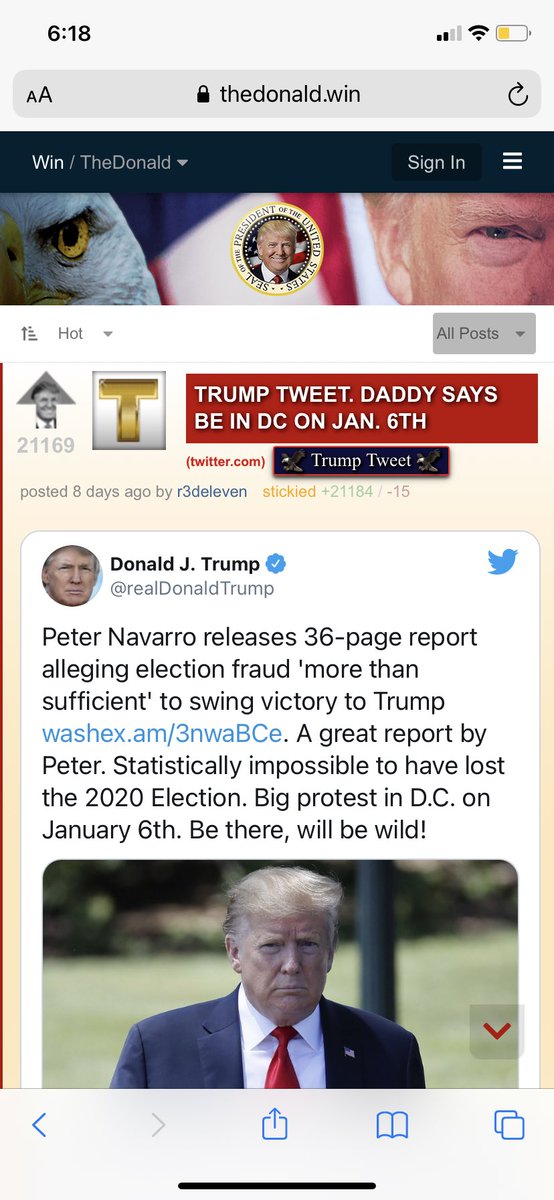




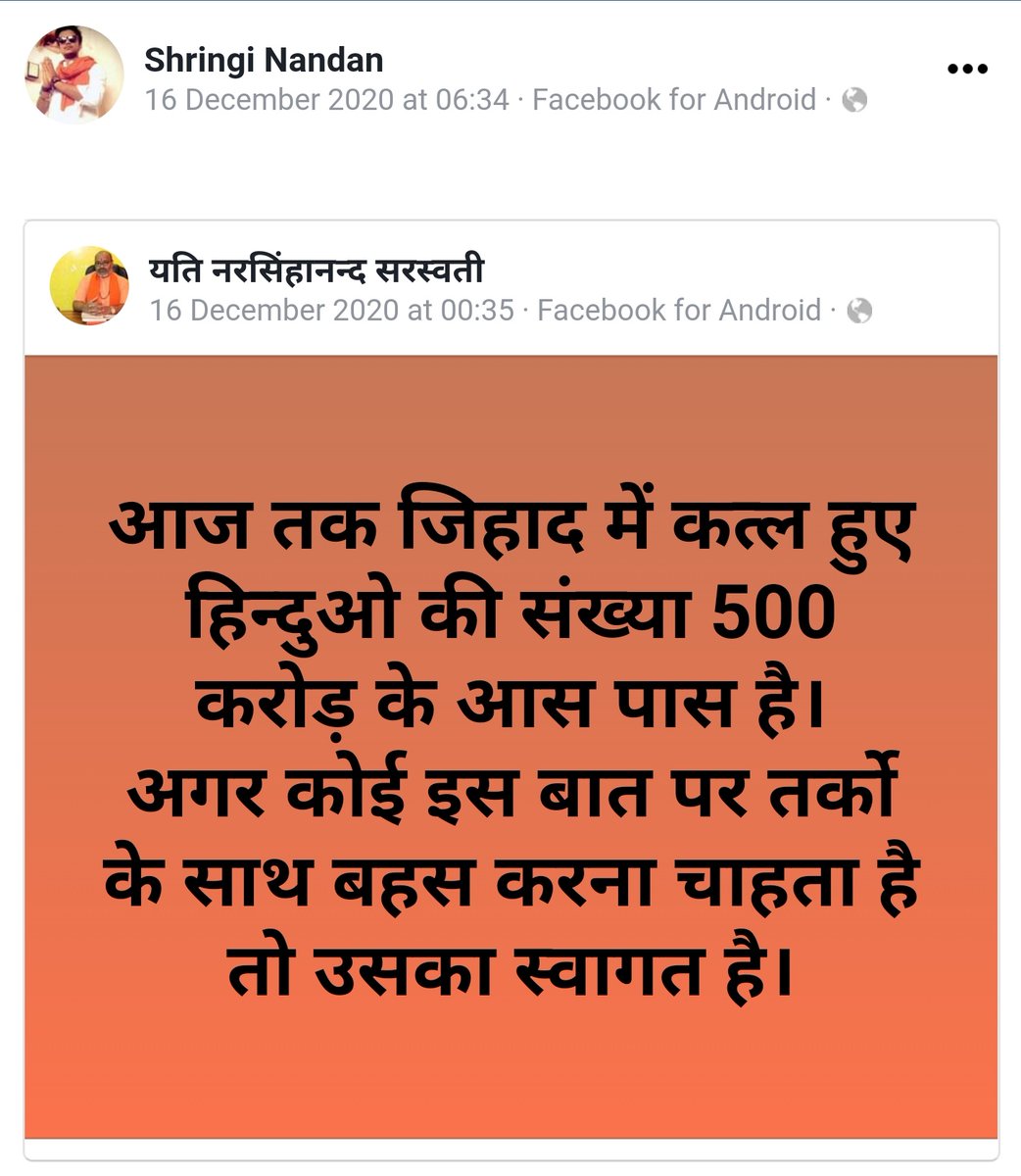


This is partly what makes it impossible to have a constructive conversation nowadays. The stubborn refusal to accept that opposition to Trumpism and GOP nationalism is about more than simply holding different beliefs about things in and of itself. 👇
It's fine for people to hold different beliefs. But that doesn't mean all beliefs deserve equal treatment or tolerance and it doesn't mean intolerance of some beliefs makes a person intolerant of every belief which they don't share.
So if I said I don't think Trumpism deserves to be tolerated because it's just a fresh 21st century coat of cheap paint on a failed, dangerous 20th century ideology (fascism) that doesn't mean I'm intolerant of all beliefs with which I disagree. You'd think this would be obvious.
Another important facet. People who support fascist movements tend to give what they think are valid reasons for supporting them. That doesn't mean anyone is obliged to tolerate fascism or accept their proffered excuse.
Say you joined a neighborhood group that sets up community gardens and does roadside beautification projects. All good, right? Say one day you're having a meeting and you notice the President and exec board of this group are saying some bizarre things about certain neighbors.
No, but you can\u2019t keep labeling half of the country Nazis just because their beliefs are different than yours. Trump has fucked this whole country up in a matter of a few years. No one can even have a constructive conversation without someone getting triggered
— Joshua Savoy (@JoshuaSavoy2) February 11, 2021
It's fine for people to hold different beliefs. But that doesn't mean all beliefs deserve equal treatment or tolerance and it doesn't mean intolerance of some beliefs makes a person intolerant of every belief which they don't share.
So if I said I don't think Trumpism deserves to be tolerated because it's just a fresh 21st century coat of cheap paint on a failed, dangerous 20th century ideology (fascism) that doesn't mean I'm intolerant of all beliefs with which I disagree. You'd think this would be obvious.
Another important facet. People who support fascist movements tend to give what they think are valid reasons for supporting them. That doesn't mean anyone is obliged to tolerate fascism or accept their proffered excuse.
Just because some of the politicians act that way doesn\u2019t mean the whole party are Nazis. Some Republicans just vote that way because of abortion. You can\u2019t keep calling all of them Nazis and expect them to just start listening to your points.
— Joshua Savoy (@JoshuaSavoy2) February 11, 2021
Say you joined a neighborhood group that sets up community gardens and does roadside beautification projects. All good, right? Say one day you're having a meeting and you notice the President and exec board of this group are saying some bizarre things about certain neighbors.
You May Also Like

1/ Some initial thoughts on personal moats:
Like company moats, your personal moat should be a competitive advantage that is not only durable—it should also compound over time.
Characteristics of a personal moat below:
2/ Like a company moat, you want to build career capital while you sleep.
As Andrew Chen noted:
3/ You don’t want to build a competitive advantage that is fleeting or that will get commoditized
Things that might get commoditized over time (some longer than
4/ Before the arrival of recorded music, what used to be scarce was the actual music itself — required an in-person artist.
After recorded music, the music itself became abundant and what became scarce was curation, distribution, and self space.
5/ Similarly, in careers, what used to be (more) scarce were things like ideas, money, and exclusive relationships.
In the internet economy, what has become scarce are things like specific knowledge, rare & valuable skills, and great reputations.
Like company moats, your personal moat should be a competitive advantage that is not only durable—it should also compound over time.
Characteristics of a personal moat below:
I'm increasingly interested in the idea of "personal moats" in the context of careers.
— Erik Torenberg (@eriktorenberg) November 22, 2018
Moats should be:
- Hard to learn and hard to do (but perhaps easier for you)
- Skills that are rare and valuable
- Legible
- Compounding over time
- Unique to your own talents & interests https://t.co/bB3k1YcH5b
2/ Like a company moat, you want to build career capital while you sleep.
As Andrew Chen noted:
People talk about \u201cpassive income\u201d a lot but not about \u201cpassive social capital\u201d or \u201cpassive networking\u201d or \u201cpassive knowledge gaining\u201d but that\u2019s what you can architect if you have a thing and it grows over time without intensive constant effort to sustain it
— Andrew Chen (@andrewchen) November 22, 2018
3/ You don’t want to build a competitive advantage that is fleeting or that will get commoditized
Things that might get commoditized over time (some longer than
Things that look like moats but likely aren\u2019t or may fade:
— Erik Torenberg (@eriktorenberg) November 22, 2018
- Proprietary networks
- Being something other than one of the best at any tournament style-game
- Many "awards"
- Twitter followers or general reach without "respect"
- Anything that depends on information asymmetry https://t.co/abjxesVIh9
4/ Before the arrival of recorded music, what used to be scarce was the actual music itself — required an in-person artist.
After recorded music, the music itself became abundant and what became scarce was curation, distribution, and self space.
5/ Similarly, in careers, what used to be (more) scarce were things like ideas, money, and exclusive relationships.
In the internet economy, what has become scarce are things like specific knowledge, rare & valuable skills, and great reputations.


1/Politics thread time.
To me, the most important aspect of the 2018 midterms wasn't even about partisan control, but about democracy and voting rights. That's the real battle.
2/The good news: It's now an issue that everyone's talking about, and that everyone cares about.
3/More good news: Florida's proposition to give felons voting rights won. But it didn't just win - it won with substantial support from Republican voters.
That suggests there is still SOME grassroots support for democracy that transcends
4/Yet more good news: Michigan made it easier to vote. Again, by plebiscite, showing broad support for voting rights as an
5/OK, now the bad news.
We seem to have accepted electoral dysfunction in Florida as a permanent thing. The 2000 election has never really
To me, the most important aspect of the 2018 midterms wasn't even about partisan control, but about democracy and voting rights. That's the real battle.
2/The good news: It's now an issue that everyone's talking about, and that everyone cares about.
3/More good news: Florida's proposition to give felons voting rights won. But it didn't just win - it won with substantial support from Republican voters.
That suggests there is still SOME grassroots support for democracy that transcends
4/Yet more good news: Michigan made it easier to vote. Again, by plebiscite, showing broad support for voting rights as an
5/OK, now the bad news.
We seem to have accepted electoral dysfunction in Florida as a permanent thing. The 2000 election has never really
Bad ballot design led to a lot of undervotes for Bill Nelson in Broward Co., possibly even enough to cost him his Senate seat. They do appear to be real undervotes, though, instead of tabulation errors. He doesn't really seem to have a path to victory. https://t.co/utUhY2KTaR
— Nate Silver (@NateSilver538) November 16, 2018


