

We will likely never be able to establish with certainty the identity of the two Black men painted by Rembrandt. There are no documents found, linking the painting to individuals. But we can make a reasoned guess. #BlackHistoryMonth #day20 #rembrandt #identification

painting, then we can assume that the two men
were in the studio in Jodenbreestraat to be portrayed in or before 1656.

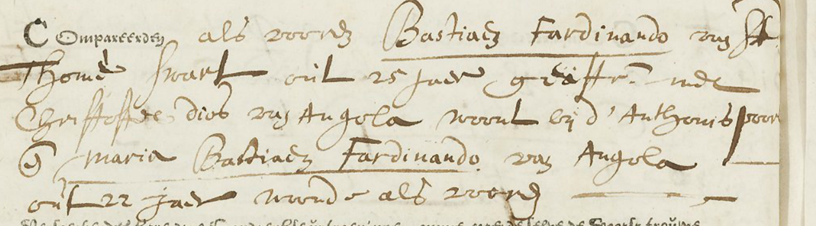

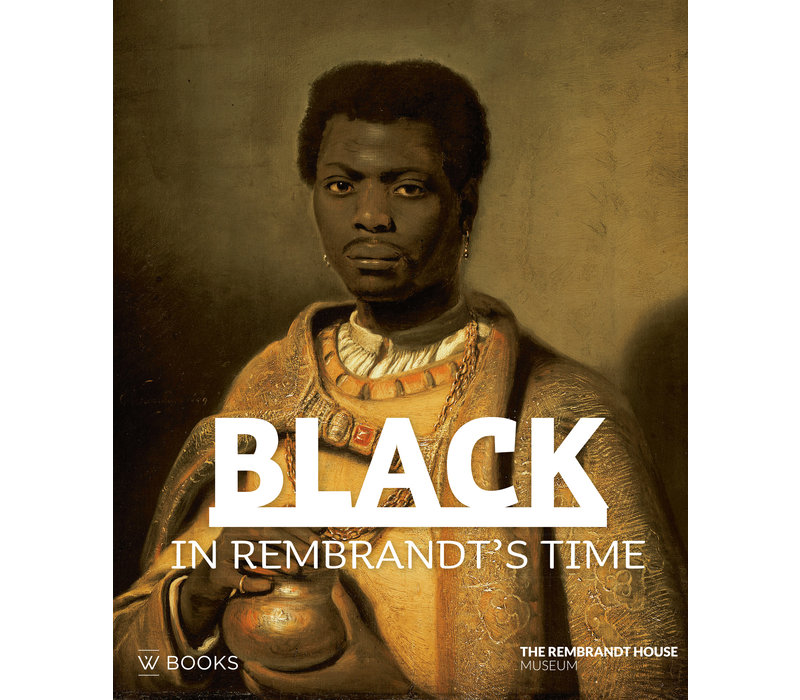
Today my article \u2018Al de swarten die hier ter stede comen\u2019 - about an Afro-Atlantic community in seventeenth century Amsterdam - was published #openaccess in @_tseg. The article is in Dutch, so I\u2019ll do a short introduction in #thread here. https://t.co/ABrNrHTT5C #twitterhistorian pic.twitter.com/CVTEWCFEiW
— Mark Ponte (@voetnoot) March 12, 2019
Mixed marriages have been part of European cultures for centuries. In 1593 Bastiaen Pieters from the kingdom of Manicongo in Africa maried the widow Trijn Pieters from Amsterdam. #migrantcity #blackamsterdam https://t.co/khqV0rgOmo pic.twitter.com/b9tlHIjdp2
— Mark Ponte (@voetnoot) December 24, 2019
'A afro-brasileira Juliana em Amsterd\xe3', I'm happy that the important story of Juliana and the Black community in 17th century Amsterdam is now available in Portuguese. #historiasdanovaholanda https://t.co/RjHq5YPni9 https://t.co/L8TEJAP0mO
— Mark Ponte (@voetnoot) December 17, 2020
During #BlackHistoryMonth everyday a tweet about Amsterdam's Black History. Read some stories on my blog: https://t.co/aqrp5BY22v pic.twitter.com/sWVx8WGeZa
— Mark Ponte (@voetnoot) February 2, 2021
More from History














You May Also Like








1/OK, data mystery time.
This New York Times feature shows China with a Gini Index of less than 30, which would make it more equal than Canada, France, or the Netherlands. https://t.co/g3Sv6DZTDE
That's weird. Income inequality in China is legendary.
Let's check this number.
2/The New York Times cites the World Bank's recent report, "Fair Progress? Economic Mobility across Generations Around the World".
The report is available here:
3/The World Bank report has a graph in which it appears to show the same value for China's Gini - under 0.3.
The graph cites the World Development Indicators as its source for the income inequality data.
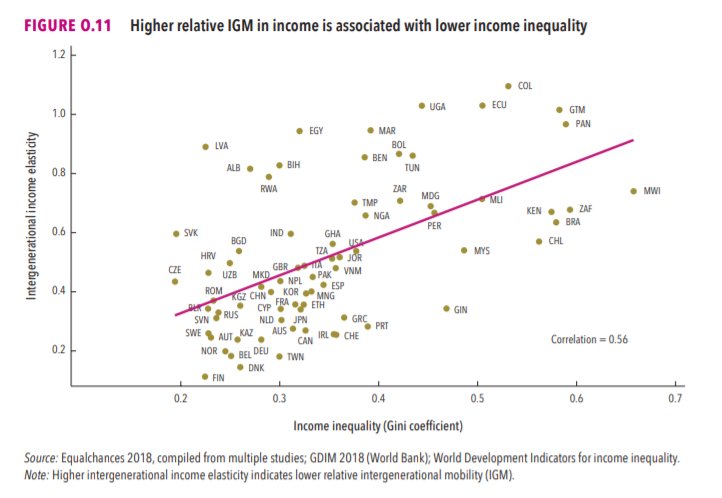
4/The World Development Indicators are available at the World Bank's website.
Here's the Gini index: https://t.co/MvylQzpX6A
It looks as if the latest estimate for China's Gini is 42.2.
That estimate is from 2012.
5/A Gini of 42.2 would put China in the same neighborhood as the U.S., whose Gini was estimated at 41 in 2013.
I can't find the <30 number anywhere. The only other estimate in the tables for China is from 2008, when it was estimated at 42.8.
This New York Times feature shows China with a Gini Index of less than 30, which would make it more equal than Canada, France, or the Netherlands. https://t.co/g3Sv6DZTDE
That's weird. Income inequality in China is legendary.
Let's check this number.
2/The New York Times cites the World Bank's recent report, "Fair Progress? Economic Mobility across Generations Around the World".
The report is available here:
3/The World Bank report has a graph in which it appears to show the same value for China's Gini - under 0.3.
The graph cites the World Development Indicators as its source for the income inequality data.
4/The World Development Indicators are available at the World Bank's website.
Here's the Gini index: https://t.co/MvylQzpX6A
It looks as if the latest estimate for China's Gini is 42.2.
That estimate is from 2012.
5/A Gini of 42.2 would put China in the same neighborhood as the U.S., whose Gini was estimated at 41 in 2013.
I can't find the <30 number anywhere. The only other estimate in the tables for China is from 2008, when it was estimated at 42.8.