Creation of Medical Register & Registered Medical Practitioners where traditional medicine doctors including Ayurveda were not registered literally killed Ayurveda practices+
Thread on #AyurvedicSurgeons
I have been quiet on this issue because I have read history of medicine in India & written about it in my published articles. You can check them out on my blog
Ayurveda got stoned by the British during the period they ruled India. Let us agree that+
Creation of Medical Register & Registered Medical Practitioners where traditional medicine doctors including Ayurveda were not registered literally killed Ayurveda practices+
Did you know that Apothecaries & Doctors of Allopathic medicine were the first brown sahibs??
The labourers estates of South India were converted to churchi using their influence
I am happy that Traditional medicine is getting its due now. However it should not become Ayurveda vs Allopathy like it is depicted now +
Do you know that Operation theatres have undergone sea change just in past 20 years. Even the air inside changed every few minutes
It starts with design of operation theatres which cause less pain, mental agony & infection to the patient undergoing surgery.
Then comes Anesthesia.
Today it is huge speciality with lot of responsibility & various sub specialities like Cardiac, Neuro, Obstetric etc.
Surgery is not about operation. At best it is 10% of it.
It is not Model T car to be put on assembly line.
I will never want anything less for any patient of mine or for any person.
As a hospital administrator I will not allow a rookie surgeon who has just passed his MS to operate on patients
I do not know if Central Council for Indian Medicine (CCIM) has understood this complexities fully
Can we allow a patient to get substandard treatment by a doctor who is not trained & evaluated just because he is poor ??
I am sorry that the British & successive Govts did not allow Ayurvedic medicine/surgery to develop
I am not saying this because I practice allopathy but because I am a hospital administrator. Today my concerns are different & wholesome.
More from Health


Some thoughts on this: Firstly, it might be personal preference, but I am not keen on this kind of campaign as I feel like it trivialises cancer. Sometimes the serious message gets lost because people are sharing pics of cats or whatever and the important context is gone.
More importantly, the statistic being used in the campaign is misleading. It says 57% of women put off cervical screening if they can't get waxed. But on further investigation, that's not accurate.
The page here goes on to say "57% of women who regularly have their pubic hair professionally removed would put off attending their cervical screening appointment if they hadn’t been able to visit a beauty salon."
So the 57% represents a concern not across the whole population of women, but only those who regularly get waxed. So how big of an issue is this across the whole population? And what else is stopping people getting smears?
I think campaigns for cancer screening are really tricky because there is so much nuance that often doesn't fit into a catchy headline or hashtag. It's certainly not easy and is part of a bigger conversation.
It\u2019s #CervicalCancerPreventionWeek \U0001f499
— myGP (@myGPapp) January 18, 2021
Here\u2019s how you can help to raise awareness:
\U0001f431 Share an image of the cat that best reflects your undercarriage/flower/bits (technical term vulva!) current look.
#\u20e3Use the Hashtag #myCat.
\U0001f46dTell and tag your friends to let them know. pic.twitter.com/8aHf96ynjT
More importantly, the statistic being used in the campaign is misleading. It says 57% of women put off cervical screening if they can't get waxed. But on further investigation, that's not accurate.
The page here goes on to say "57% of women who regularly have their pubic hair professionally removed would put off attending their cervical screening appointment if they hadn’t been able to visit a beauty salon."
So the 57% represents a concern not across the whole population of women, but only those who regularly get waxed. So how big of an issue is this across the whole population? And what else is stopping people getting smears?
I think campaigns for cancer screening are really tricky because there is so much nuance that often doesn't fit into a catchy headline or hashtag. It's certainly not easy and is part of a bigger conversation.
You May Also Like









1/OK, data mystery time.
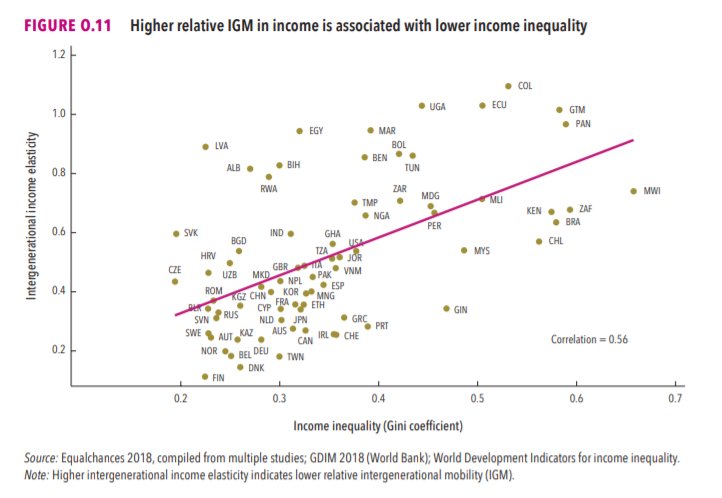
This New York Times feature shows China with a Gini Index of less than 30, which would make it more equal than Canada, France, or the Netherlands. https://t.co/g3Sv6DZTDE
That's weird. Income inequality in China is legendary.
Let's check this number.
2/The New York Times cites the World Bank's recent report, "Fair Progress? Economic Mobility across Generations Around the World".
The report is available here:
3/The World Bank report has a graph in which it appears to show the same value for China's Gini - under 0.3.
The graph cites the World Development Indicators as its source for the income inequality data.
4/The World Development Indicators are available at the World Bank's website.
Here's the Gini index: https://t.co/MvylQzpX6A
It looks as if the latest estimate for China's Gini is 42.2.
That estimate is from 2012.
5/A Gini of 42.2 would put China in the same neighborhood as the U.S., whose Gini was estimated at 41 in 2013.
I can't find the <30 number anywhere. The only other estimate in the tables for China is from 2008, when it was estimated at 42.8.
This New York Times feature shows China with a Gini Index of less than 30, which would make it more equal than Canada, France, or the Netherlands. https://t.co/g3Sv6DZTDE
That's weird. Income inequality in China is legendary.
Let's check this number.
2/The New York Times cites the World Bank's recent report, "Fair Progress? Economic Mobility across Generations Around the World".
The report is available here:
3/The World Bank report has a graph in which it appears to show the same value for China's Gini - under 0.3.
The graph cites the World Development Indicators as its source for the income inequality data.
4/The World Development Indicators are available at the World Bank's website.
Here's the Gini index: https://t.co/MvylQzpX6A
It looks as if the latest estimate for China's Gini is 42.2.
That estimate is from 2012.
5/A Gini of 42.2 would put China in the same neighborhood as the U.S., whose Gini was estimated at 41 in 2013.
I can't find the <30 number anywhere. The only other estimate in the tables for China is from 2008, when it was estimated at 42.8.