"Public health" isn't just about vaccinations, clinics and urgent care: it's a holistic discipline that encompasses all the contributors to health outcomes, which include things like housing, employment, transportation, pollution and more.

1/

A new working paper from @nberpubs estimates the number of US covid deaths that could have been prevented with a coherent, effective eviction moratorium and a ban on utility cutoffs: 164,000.

https://t.co/pfAeN7TRo0

2/

The paper, written by a multidisciplinary group of Duke researchers from medicine and economics, found that housing precarity (a risk of losing your home) drove risky behavior that increased the spread of the disease and the resulting deaths.

3/
For example, it forced people to double-up on lodgings, making social distancing impossible, to say nothing of self-isolating after an exposure. It also drove people to tolerate high-risk workplace conditions, including illegal conditions.

4/
The authors used regression techniques to control for confounding variables, and used like-for-like counties with different utility and eviction policies to estimate the effect that these had on infection rates.

5/
"Public health" is a notion that challenges the very foundation of neoliberal ideology, which says that all outcomes are the results of your individual choices - that your right to swing your arm ends at the tip of my nose.

6/
Public health says that our decisions about treating covid (and other health issues) affect all of us - that the system matters more than individual choices.

7/
Public health says that we're all in the same swimming pool. Neoliberal choice theory says that if some of us want to piss in the pool, we can just create a "pissing" and a "no pissing" end.

8/
And that the answer to the yellowing of both ends is to make the pool longer, and that the market opportunity is to charge people who want to swim in the no pissing end to use the toilets and fine them if they can't afford the charge.

9/
Because here's the kicker: although covid mostly kills poor, racialized and otherwise marginalized people, it doesn't do so exclusively. Even people who can afford high quality care and thus recover face unknown, long-term health consequences.

10/
Keeping rentiers' income streams intact by allowing evictions made us ALL sicker, put us ALL at risk. Even the landlords.

Treating system problems as a matter of personal choice is like telling people to recycle harder to avert the climate emergency.

11/
The parochial gains to the minute class of landlords came at the expense of mass-scale, social costs - human lives, human misery, widespread infection, and traumas and waste that will drag us down for decades to come.

12/
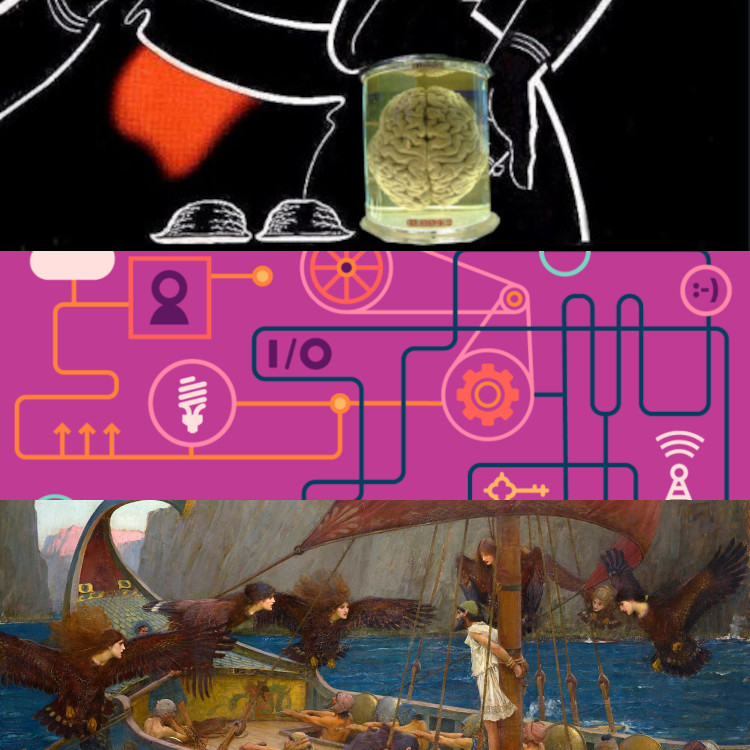
Image: Luis Prado (modified)
https://t.co/4necfqJQ3x

CC BY
https://t.co/WK3VwLNIio

eof/

More from Cory Doctorow #BLM

More from Health

You May Also Like

I just finished Eric Adler's The Battle of the Classics, and wanted to say something about Joel Christiansen's review linked below. I am not sure what motivates the review (I speculate a bit below), but it gives a very misleading impression of the book. 1/x


The meat of the criticism is that the history Adler gives is insufficiently critical. Adler describes a few figures who had a great influence on how the modern US university was formed. It's certainly critical: it focuses on the social Darwinism of these figures. 2/x

Other insinuations and suggestions in the review seem wildly off the mark, distorted, or inappropriate-- for example, that the book is clickbaity (it is scholarly) or conservative (hardly) or connected to the events at the Capitol (give me a break). 3/x

The core question: in what sense is classics inherently racist? Classics is old. On Adler's account, it begins in ancient Rome and is revived in the Renaissance. Slavery (Christiansen's primary concern) is also very old. Let's say classics is an education for slaveowners. 4/x

It's worth remembering that literacy itself is elite throughout most of this history. Literacy is, then, also the education of slaveowners. We can honor oral and musical traditions without denying that literacy is, generally, good. 5/x
🌺श्री गरुड़ पुराण - संक्षिप्त वर्णन🌺

हिन्दु धर्म के 18 पुराणों में से एक गरुड़ पुराण का हिन्दु धर्म में बड़ा महत्व है। गरुड़ पुराण में मृत्यु के बाद सद्गती की व्याख्या मिलती है। इस पुराण के अधिष्ठातृ देव भगवान विष्णु हैं, इसलिए ये वैष्णव पुराण है।


गरुड़ पुराण के अनुसार हमारे कर्मों का फल हमें हमारे जीवन-काल में तो मिलता ही है परंतु मृत्यु के बाद भी अच्छे बुरे कार्यों का उनके अनुसार फल मिलता है। इस कारण इस पुराण में निहित ज्ञान को प्राप्त करने के लिए घर के किसी सदस्य की मृत्यु के बाद का समय निर्धारित किया गया है...

..ताकि उस समय हम जीवन-मरण से जुड़े सभी सत्य जान सकें और मृत्यु के कारण बिछडने वाले सदस्य का दुख कम हो सके।
गरुड़ पुराण में विष्णु की भक्ति व अवतारों का विस्तार से उसी प्रकार वर्णन मिलता है जिस प्रकार भगवत पुराण में।आरम्भ में मनु से सृष्टि की उत्पत्ति,ध्रुव चरित्र की कथा मिलती है।


तदुपरांत सुर्य व चंद्र ग्रहों के मंत्र, शिव-पार्वती मंत्र,इन्द्र सम्बंधित मंत्र,सरस्वती मंत्र और नौ शक्तियों के बारे में विस्तार से बताया गया है।
इस पुराण में उन्नीस हज़ार श्लोक बताए जाते हैं और इसे दो भागों में कहा जाता है।
प्रथम भाग में विष्णुभक्ति और पूजा विधियों का उल्लेख है।

मृत्यु के उपरांत गरुड़ पुराण के श्रवण का प्रावधान है ।
पुराण के द्वितीय भाग में 'प्रेतकल्प' का विस्तार से वर्णन और नरकों में जीव के पड़ने का वृत्तांत मिलता है। मरने के बाद मनुष्य की क्या गति होती है, उसका किस प्रकार की योनियों में जन्म होता है, प्रेत योनि से मुक्ति के उपाय...
🌿𝑻𝒉𝒆 𝒔𝒕𝒐𝒓𝒚 𝒐𝒇 𝒂 𝑺𝒕𝒂𝒓 : 𝑫𝒉𝒓𝒖𝒗𝒂 & 𝑽𝒊𝒔𝒉𝒏𝒖

Once upon a time there was a Raja named Uttānapāda born of Svayambhuva Manu,1st man on earth.He had 2 beautiful wives - Suniti & Suruchi & two sons were born of them Dhruva & Uttama respectively.
#talesofkrishna https://t.co/E85MTPkF9W


Now Suniti was the daughter of a tribal chief while Suruchi was the daughter of a rich king. Hence Suruchi was always favored the most by Raja while Suniti was ignored. But while Suniti was gentle & kind hearted by nature Suruchi was venomous inside.
#KrishnaLeela


The story is of a time when ideally the eldest son of the king becomes the heir to the throne. Hence the sinhasan of the Raja belonged to Dhruva.This is why Suruchi who was the 2nd wife nourished poison in her heart for Dhruva as she knew her son will never get the throne.


One day when Dhruva was just 5 years old he went on to sit on his father's lap. Suruchi, the jealous queen, got enraged and shoved him away from Raja as she never wanted Raja to shower Dhruva with his fatherly affection.


Dhruva protested questioning his step mother "why can't i sit on my own father's lap?" A furious Suruchi berated him saying "only God can allow him that privilege. Go ask him"