Now, what is unusual about the photo?
You don’t have even the beginning of a facility for critical thought, do you? Can you read images in a thinking mode, i.e. through a critical semiotic lens?
Let’s begin (it won’t take long, I promise; this is quite straightforward).
Now, what is unusual about the photo?
What are the semiotics of blindfolding, Becca?
That’s right; being deprived of one’s sight by something that can be put on - and taken off.
No; it is made of deep pink satin roses.
What might deep pink satin roses symbolise? What are the associations?
What does that tell us in this instance?
Let’s take a short break for reflection and/or discussion of that suggestion. It’s rather important, don’t you think?
The two words - ‘material’ and ‘girls’ are coloured differently.
‘Material’ is yellow, and stands out from all other elements on the page. Think about yellow in nature and the human world. What does yellow communicate?
Yellow is the colour of "hey - right here; pay attention!"
Let's go back to the meaning of the word that is yellow, which we can now deduce as important to the interpretation of this book cover.
a) is likely to be written in an engaging and approachable manner, and
b) draws our attention to the tensions between the materiality of being female (sex) and the cultural baggage attached to 'being a girl' (what we might summarise as gender).
If we bother to read it, that is.
I will.
The girl in the picture can only see it, and form her own relation to what it symbolises, if she takes it off. She can't see what blinds her, until she looks at it clearly.
That's your take-home message.
More from For later read


You May Also Like



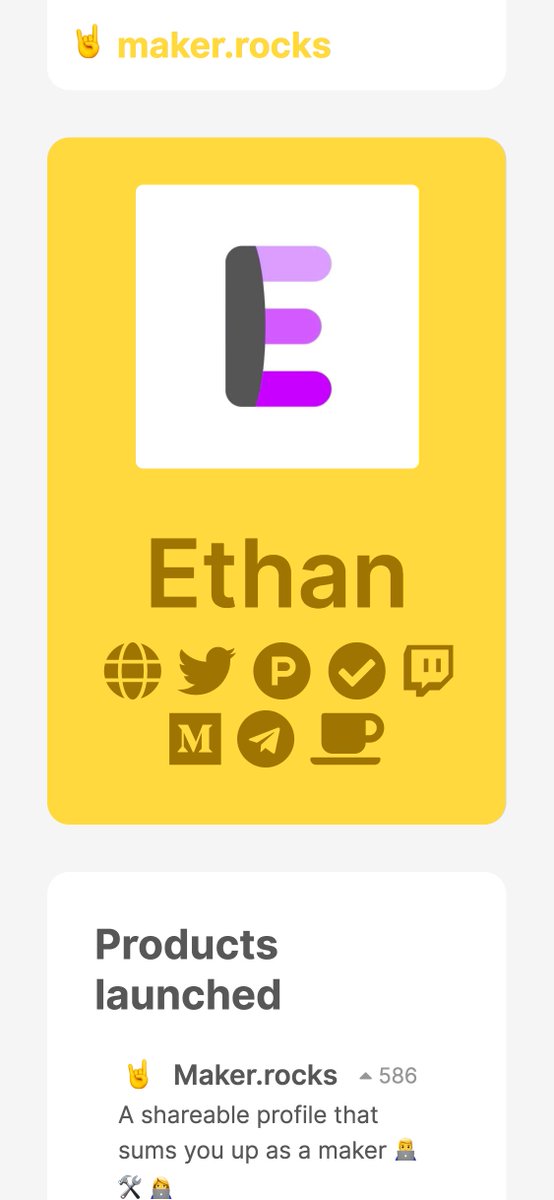
First update to https://t.co/lDdqjtKTZL since the challenge ended – Medium links!! Go add your Medium profile now 👀📝 (thanks @diannamallen for the suggestion 😁)

Just added Telegram links to https://t.co/lDdqjtKTZL too! Now you can provide a nice easy way for people to message you :)

Less than 1 hour since I started adding stuff to https://t.co/lDdqjtKTZL again, and profile pages are now responsive!!! 🥳 Check it out -> https://t.co/fVkEL4fu0L
Accounts page is now also responsive!! 📱✨
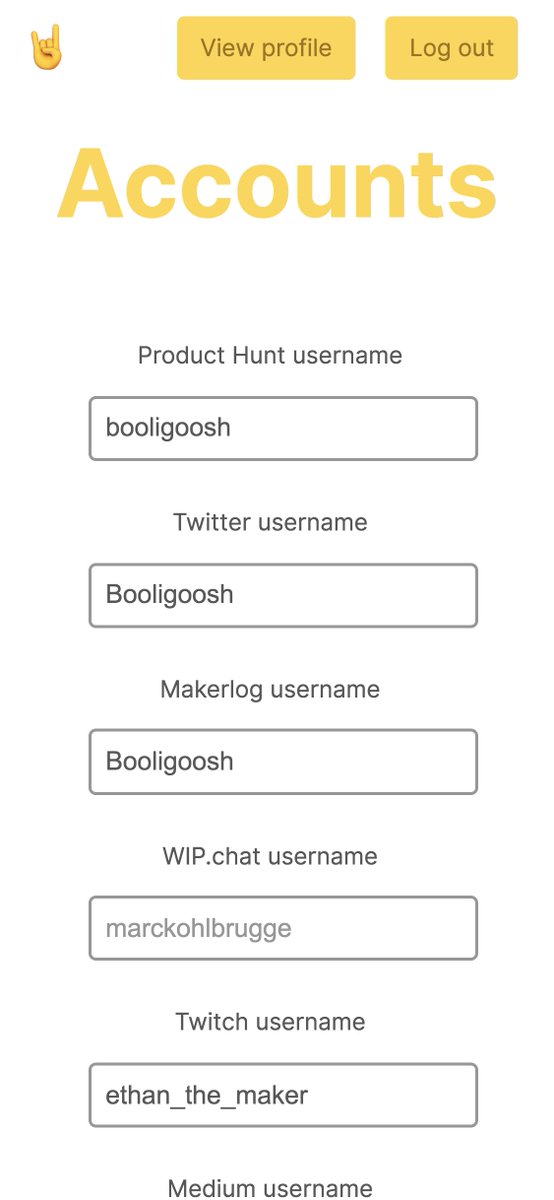
💪 I managed to make the whole site responsive in about an hour. On my roadmap I had it down as 4-5 hours!!! 🤘🤠🤘
Just added Telegram links to https://t.co/lDdqjtKTZL too! Now you can provide a nice easy way for people to message you :)
Less than 1 hour since I started adding stuff to https://t.co/lDdqjtKTZL again, and profile pages are now responsive!!! 🥳 Check it out -> https://t.co/fVkEL4fu0L
Accounts page is now also responsive!! 📱✨
💪 I managed to make the whole site responsive in about an hour. On my roadmap I had it down as 4-5 hours!!! 🤘🤠🤘