We’re in a new year and we have also entered a new phase of this pandemic. So I thought I’d start off the new year with a quick catch-up thread on the UK variant B.1.1.7 and where we are at in this pandemic.
Good news first: There still is no evidence that the variant causes more severe disease or that it can reinfect people more easily or circumvent vaccine-induced immunity. Still, we need to stay vigilant.
"While rapid growth of the variant was first observed in the South East, similar growth patterns are observed later in London, East of England, and now more generally across England.”
https://t.co/QcyT8CmEb3
https://t.co/HMTNQLXa7R
86 cases of B.1.1.7 identified in Denmark since November (11% of all cases sequenced in the period). Last 4 weeks we have sequenced 1500-2000 genomes pr. week broadly representing DK. The percentage of B.1.1.7 has been 0.2, 0.5, 0.9, and 2.3 (week 52). https://t.co/NtZklQOVPs
— Mads Albertsen (@MadsAlbertsen85) January 2, 2021
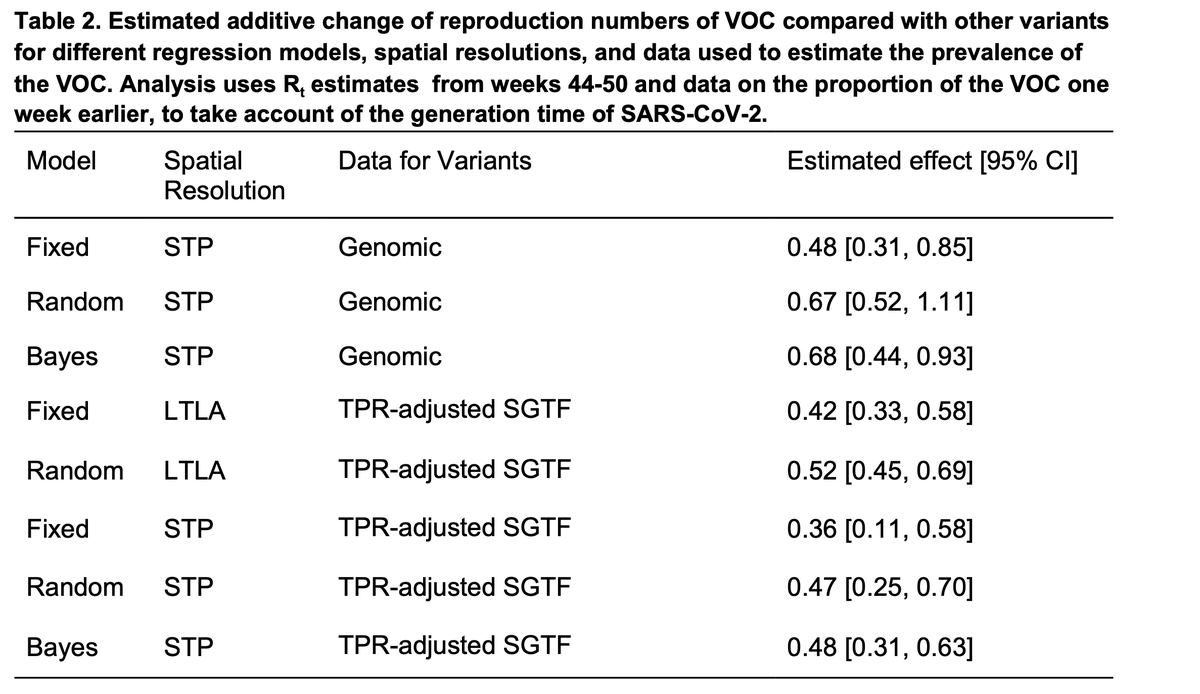
I don’t think it has really sunk in, how serious this is.
Many countries have managed to reduce infections to low numbers by layering a lot of public health interventions on top of each other: teleworking, physical distancing, masks, no large gatherings, some kinds of shutdown etc.
Or, if you think of it in terms of the Swiss cheese model, we can afford fewer, smaller holes in the cheese.
https://t.co/FhC5Tw7qwq
A new version with colour & division inspiration from @uq_news and strict mouse design oversight by @kat_arden (ver3.0).
— \u026a\u1d00\u0274 \u1d0d. \u1d0d\u1d00\u1d04\u1d0b\u1d00\u028f, \u1d18\u029c\u1d05 \U0001f9a0\U0001f927\U0001f9ec\U0001f97c\U0001f99f\U0001f9fb (@MackayIM) October 24, 2020
It reorganises slices into personal & shared responsibilities (think of this in terms of all the slices rather than any single layer being most important) pic.twitter.com/nNwLWZTWOL
More from For later read








#IDTwitter #IDFellows
Introducing our new series: “IDFN top 10 articles every fellow should read”🔖
#1: SAB management
by @mmcclean1 @LeMiguelChavez
Reviewers @KaBourgi, @IgeGeorgeMD, @Courtcita, @MDdreamchaser
We know is subjective & expect feedback/future improvements 👇
1. Clinical management of Staphylococcus aureus bacteremia: a review.
https://t.co/9tBCtp9mlP
👉 A must read written by Holland et al. where they review the evidence of the management of SAB.
2. Impact of Infectious Disease Consultation on Quality of Care, Mortality, and Length of Stay in Staphylococcus aureus Bacteremia: Results From a Large Multicenter Cohort Study.
https://t.co/XujO68pCuH
👉ID consult associated with reduced inpatient mortality.
3. Predicting Risk of Endocarditis Using a Clinical Tool (PREDICT): Scoring System to Guide Use of Echocardiography in the Management of Staphylococcus aureus Bacteremia
https://t.co/otcA1pxjAw
👉Predictive risk factors for infective endocarditis, and thus the need for TEE.
4. The Cefazolin Inoculum Effect Is Associated With Increased Mortality in Methicillin-Susceptible Staphylococcus aureus Bacteremia.
https://t.co/CQZiryVWZz
👉Presence of cefazolin inoculum effect in the infecting isolate was associated with an increase 30-day mortality.
Introducing our new series: “IDFN top 10 articles every fellow should read”🔖
#1: SAB management
by @mmcclean1 @LeMiguelChavez
Reviewers @KaBourgi, @IgeGeorgeMD, @Courtcita, @MDdreamchaser
We know is subjective & expect feedback/future improvements 👇
1. Clinical management of Staphylococcus aureus bacteremia: a review.
https://t.co/9tBCtp9mlP
👉 A must read written by Holland et al. where they review the evidence of the management of SAB.
2. Impact of Infectious Disease Consultation on Quality of Care, Mortality, and Length of Stay in Staphylococcus aureus Bacteremia: Results From a Large Multicenter Cohort Study.
https://t.co/XujO68pCuH
👉ID consult associated with reduced inpatient mortality.
3. Predicting Risk of Endocarditis Using a Clinical Tool (PREDICT): Scoring System to Guide Use of Echocardiography in the Management of Staphylococcus aureus Bacteremia
https://t.co/otcA1pxjAw
👉Predictive risk factors for infective endocarditis, and thus the need for TEE.
4. The Cefazolin Inoculum Effect Is Associated With Increased Mortality in Methicillin-Susceptible Staphylococcus aureus Bacteremia.
https://t.co/CQZiryVWZz
👉Presence of cefazolin inoculum effect in the infecting isolate was associated with an increase 30-day mortality.