1/ Thread: "A Silicon Valley Ponzi Scheme"
Thanks to @chamath for laying this out in Social Capital's 2018 annual letter.
I've always appreciated his outspokenness.
This is creating a big bill that will soon come due...
But it's not who you think (that does), and the dynamics we’ve entered is in many ways creating a dangerous, high stakes Ponzi scheme.
Someone has to pay for the outrageous costs of this style of growth. Will it be VCs?
Likely not.
Eg: VCs habitually invest in one another’s companies during later rounds, bidding up rounds to valuations that allow for generous markups on their funds' performance.
if you’re a VC with a $200 million dollar fund, you’re able to draw $4million each year in fees.
Most funds never return enough profit for managers to see a dime of carried interest.
If u can show marked up paper returns & then parlay those returns into a newer, larger fund—say $500 million—you now have a fresh $10 million a year to use as you see fit.
There’s some deep misalignment here...
Partly why American healthcare is so expensive is bcos insurers, who play a key middleman role in setting prices for medical care, have a 2-sided biz model:
High costs allow them to charge higher premiums, allowing them to pull steadily more and more money out of patients’ and payers’ pockets.
In the end, both, patients and payers are the ones who end up as bag holders footing the bill.
The same thing is happening in today’s venture world.
Just as insurers’ biz model translates to higher costs of patient care,
So if its not VCs, who ends up holding the bag?
It’s still not who you’d expect.
In some cases, high prices may even work to their advantage.
Unlike the other pass-the-buck schemes
The real bill ends up getting shuffled outta sight to 2 other groups.
The 1st as u may guess are early stage funds’ limited partners, particularly future limited partners investing into the next fund.
Marking up Fund IV to raise money for more mgmt fees out of Fund V is so effective bcos fundraising can happen much faster than the long & difficult job of building businesses & creating real enterprise value
The second group of people left holding the bag is far more tragic: the employees at startups.
Although originally helpful as a way to incentivize and reward employees for working hard for an uncertain outcome,
Overall, you can understand how this arrangement endures:
Those companies then go spend the money on more user growth, often in zero-sum competition w/ one another.
What is the antidote here? Its 2-fold.
The 2nd is to break away from the MLM scheme that the VC-LP-user growth game has become.
It’s time to wait patiently, as the air is slowly let out of this bizarre Ponzi balloon created by the venture capital industry.
More from Tech






You May Also Like








Tip from the Monkey
Pangolins, September 2019 and PLA are the key to this mystery
Stay Tuned!

1. Yang
2. A jacobin capuchin dangling a flagellin pangolin on a javelin while playing a mandolin and strangling a mannequin on a paladin's palanquin, said Saladin
More to come tomorrow!

3. Yigang Tong
https://t.co/CYtqYorhzH
Archived: https://t.co/ncz5ruwE2W
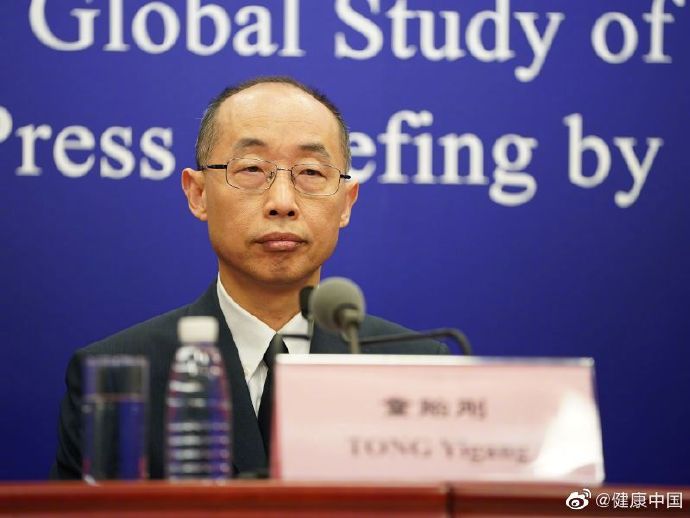
4. YT Interview
Some bats & pangolins carry viruses related with SARS-CoV-2, found in SE Asia and in Yunnan, & the pangolins carrying SARS-CoV-2 related viruses were smuggled from SE Asia, so there is a possibility that SARS-CoV-2 were coming from
Pangolins, September 2019 and PLA are the key to this mystery
Stay Tuned!
1. Yang
Meet Yang Ruifu, CCP's biological weapons expert https://t.co/JjB9TLEO95 via @Gnews202064
— Billy Bostickson \U0001f3f4\U0001f441&\U0001f441 \U0001f193 (@BillyBostickson) October 11, 2020
Interesting expose of China's top bioweapons expert who oversaw fake pangolin research
Paper 1: https://t.co/TrXESKLYmJ
Paper 2:https://t.co/9LSJTNCn3l
Pangolinhttps://t.co/2FUAzWyOcv pic.twitter.com/I2QMXgnkBJ
2. A jacobin capuchin dangling a flagellin pangolin on a javelin while playing a mandolin and strangling a mannequin on a paladin's palanquin, said Saladin
More to come tomorrow!
3. Yigang Tong
https://t.co/CYtqYorhzH
Archived: https://t.co/ncz5ruwE2W
4. YT Interview
Some bats & pangolins carry viruses related with SARS-CoV-2, found in SE Asia and in Yunnan, & the pangolins carrying SARS-CoV-2 related viruses were smuggled from SE Asia, so there is a possibility that SARS-CoV-2 were coming from