
But I wanna share a thing on why I hardly consult.
Through all this I was able to learn how my guides communicate and the pattern with which they work.
So when we say be patient, it's real guys. It's not to shove you off, you really need to get comfortable with waiting certain things out. And it's important to know that inside patience, there are things for you
More from For later read



Part of what is going on here is that large sectors of evangelicalism are poorly equipped to help people deal with basic struggles, let alone the ubiquitous pornography addictions that most of their men have been enslaved to for years.
On the one hand, there's a high standard of holiness. On the other hand, there's a model of growth that is basically "Try Harder to Mean it More." Identify the relevant scriptural truth & believe it with all of your sincerity so that you may access the Holy Spirit's help to obey.
Helping sincere believers believe and obey the Bible facts is pretty much all the Holy Spirit does these days, other than convict us of our sins in light of the Bible facts.
If you know you are sincere and hate your sin and believe the right Bible facts as hard as you can but continue to be enslaved to your pornography addiction, what else left for you to do? Just Really, Just Really, Just Really Trust God and Give it to Him?
To suggest that there are other strategies available sounds to those formed in this model of growth like one is also suggesting that the Bible is insufficient, but it also suggests something just as threatening- that there are aspects of reality that are not immediately apparent.
There\u2019s this crazy horseshoe where where having a strong emphasis on human sinfulness just turns into a power washer that blasts all harm and wrong-doing down to the same level of things people (re: men) inevitably do given half a chance. https://t.co/BLOWzpf1RA
— Laura Robinson (@LauraRbnsn) February 13, 2021
On the one hand, there's a high standard of holiness. On the other hand, there's a model of growth that is basically "Try Harder to Mean it More." Identify the relevant scriptural truth & believe it with all of your sincerity so that you may access the Holy Spirit's help to obey.
Helping sincere believers believe and obey the Bible facts is pretty much all the Holy Spirit does these days, other than convict us of our sins in light of the Bible facts.
If you know you are sincere and hate your sin and believe the right Bible facts as hard as you can but continue to be enslaved to your pornography addiction, what else left for you to do? Just Really, Just Really, Just Really Trust God and Give it to Him?
To suggest that there are other strategies available sounds to those formed in this model of growth like one is also suggesting that the Bible is insufficient, but it also suggests something just as threatening- that there are aspects of reality that are not immediately apparent.

This response to my tweet is a common objection to targeted advertising.
@KevinCoates correct me if I'm wrong, but basic point seems to be that banning targeted ads will lower platform profits, but will mostly be beneficial for consumers.
Some counterpoints 👇
1) This assumes that consumers prefer contextual ads to targeted ones.
This does not seem self-evident to me
Research also finds that firms choose between ad. targeting vs. obtrusiveness 👇
If true, the right question is not whether consumers prefer contextual ads to targeted ones. But whether they prefer *more* contextual ads vs *fewer* targeted
2) True, many inframarginal platforms might simply shift to contextual ads.
But some might already be almost indifferent between direct & indirect monetization.
Hard to imagine that *none* of them will respond to reduced ad revenue with actual fees.
3) Policy debate seems to be moving from:
"Consumers are insufficiently informed to decide how they share their data."
To
"No one in their right mind would agree to highly targeted ads (e.g., those that mix data from multiple sources)."
IMO the latter statement is incorrect.
@KevinCoates correct me if I'm wrong, but basic point seems to be that banning targeted ads will lower platform profits, but will mostly be beneficial for consumers.
Some counterpoints 👇
That targeted ads allow for "free" products for consumers is a common talking point and we're going to see more of it in the coming months.: https://t.co/Xty3My3f0u (1/14)
— Kevin Coates (@KevinCoates) February 16, 2021
1) This assumes that consumers prefer contextual ads to targeted ones.
This does not seem self-evident to me
Great post by @Sherman1890 got me thinking about the future of targeted ads.
— Dirk Auer (@AuerDirk) February 12, 2021
More and more tools (privacy labels, ad blockers, GDPR) enable consumers to opt-out from targeted ads - can limit the data platforms receive or block ads altogether.
The end of targeted ads? \U0001f9f5\U0001f447 https://t.co/MA6A3BrUWq
Research also finds that firms choose between ad. targeting vs. obtrusiveness 👇
If true, the right question is not whether consumers prefer contextual ads to targeted ones. But whether they prefer *more* contextual ads vs *fewer* targeted
2) True, many inframarginal platforms might simply shift to contextual ads.
But some might already be almost indifferent between direct & indirect monetization.
Hard to imagine that *none* of them will respond to reduced ad revenue with actual fees.
3) Policy debate seems to be moving from:
"Consumers are insufficiently informed to decide how they share their data."
To
"No one in their right mind would agree to highly targeted ads (e.g., those that mix data from multiple sources)."
IMO the latter statement is incorrect.
You May Also Like





#sculpture #story -
Chandesha-Anugraha Murti - One of the Sculpture in Brihadeshwara Temple at Gangaikonda Cholapuram - built by Raja Rajendra Chola I
This Sculpture depicts Bhagwan Shiva along with Devi Paravathi blessing Chandeshwara - one of the 63 Nayanmars.
#Thread

Chandeshwara/Chandikeshwara is regarded as custodian of Shiva Temple's wealth&most of Shiva temples in South India has separate sannathi for him.
His bhakti for Bhagwan Shiva elevated him as one of foremost among Nayanmars.
He gave importance to Shiva Pooja&protection of cows.
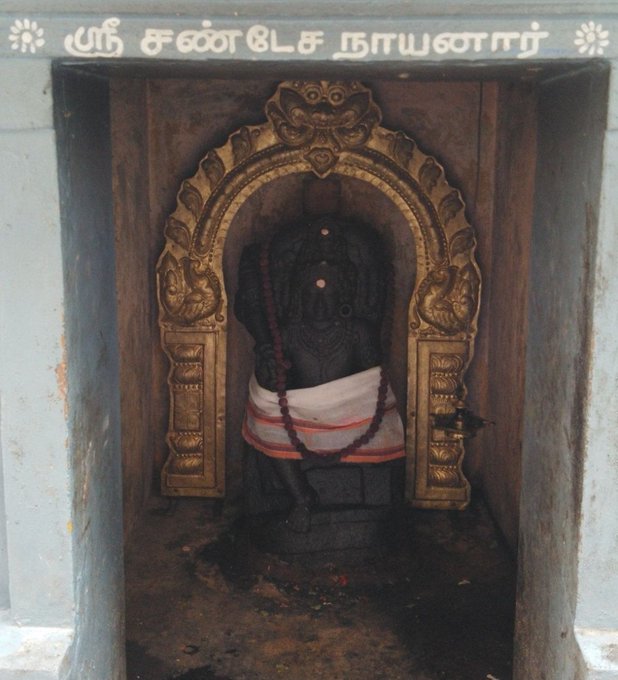
There are series of paintings, illustrating the #story of Chandikeshwar in the premises of
Sri Sathiyagireeswarar #Temple at Seinganur,near Kumbakonam,TN
Chandikeshwara's birth name
is Vichara sarman.He was born in the village of Senganur on the banks of River Manni.

His Parent names were Yajnathatan and Pavithrai.
Vichara Sarman was a gifted child and he learnt Vedas and Agamas at a very young age.
He was very devout and would always think about Bhagwan Shiva.
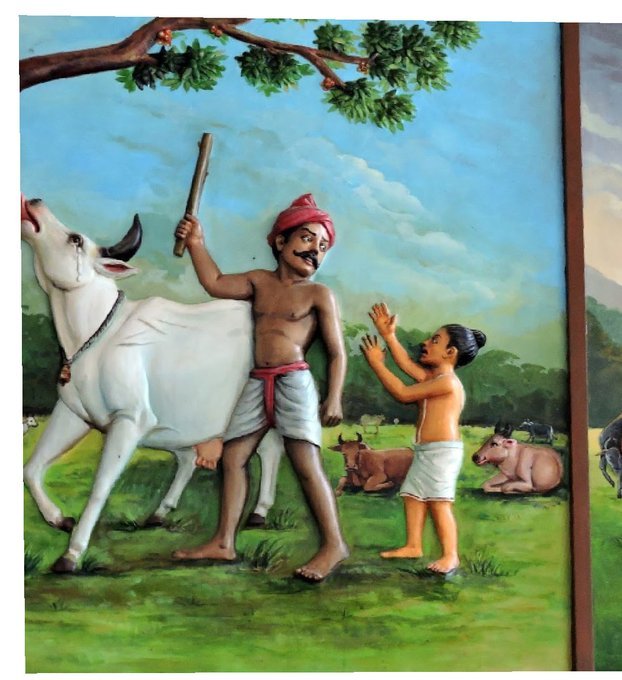
One day he saw a cowherd man brutally assaulting a cow,Vichara Sarman could not tolerate this. He spoke to cowherd: ‘Do you not know that the cow is worshipful & divine? All gods & Devas reside in https://t.co/ElLcI5ppsK it is our duty to protect cows &we should not to harm them.
Chandesha-Anugraha Murti - One of the Sculpture in Brihadeshwara Temple at Gangaikonda Cholapuram - built by Raja Rajendra Chola I
This Sculpture depicts Bhagwan Shiva along with Devi Paravathi blessing Chandeshwara - one of the 63 Nayanmars.
#Thread
Chandeshwara/Chandikeshwara is regarded as custodian of Shiva Temple's wealth&most of Shiva temples in South India has separate sannathi for him.
His bhakti for Bhagwan Shiva elevated him as one of foremost among Nayanmars.
He gave importance to Shiva Pooja&protection of cows.
There are series of paintings, illustrating the #story of Chandikeshwar in the premises of
Sri Sathiyagireeswarar #Temple at Seinganur,near Kumbakonam,TN
Chandikeshwara's birth name
is Vichara sarman.He was born in the village of Senganur on the banks of River Manni.
His Parent names were Yajnathatan and Pavithrai.
Vichara Sarman was a gifted child and he learnt Vedas and Agamas at a very young age.
He was very devout and would always think about Bhagwan Shiva.
One day he saw a cowherd man brutally assaulting a cow,Vichara Sarman could not tolerate this. He spoke to cowherd: ‘Do you not know that the cow is worshipful & divine? All gods & Devas reside in https://t.co/ElLcI5ppsK it is our duty to protect cows &we should not to harm them.


