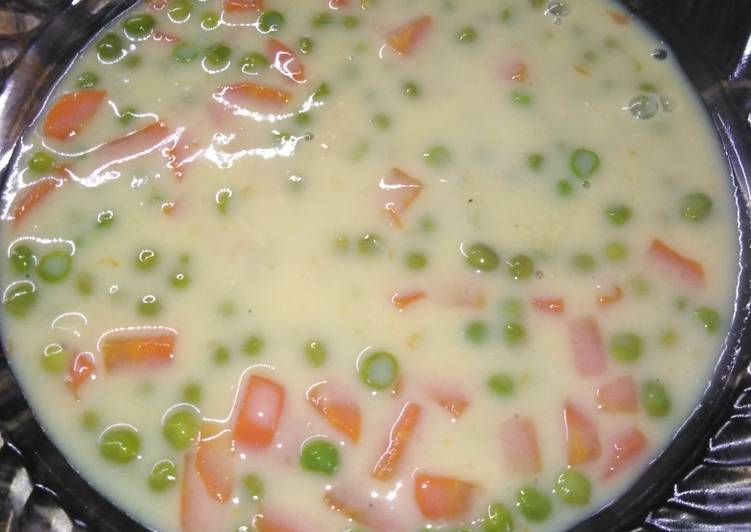
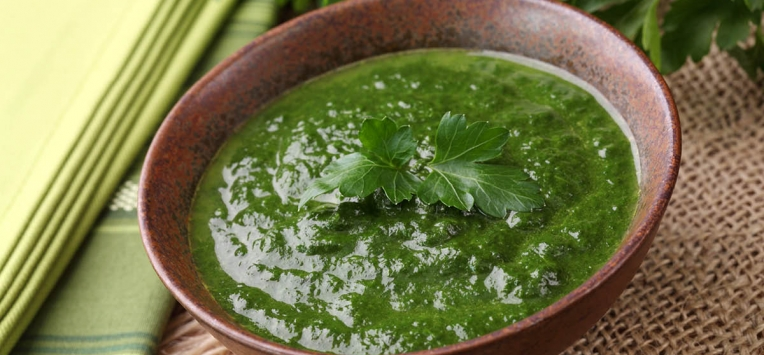
The word itself looks as simple as the dish: "főz" is "to cook" and "-elék" is a suffix roughly meaning "the result of", so "the result of cooking".
Thanks for nothing.
The official definition is "any kind of boiled or parboiled vegetable"; closer, but still a load of bollocks.
So here's mine: "főzelék is made of vegetables and it has a thick sauce".
What kind of vegetables?
Practically any: potato, cabbage, bean, pea, chickpea, spinach, squash, carrot, but usually only one veg at a time.
There is a mixed abomination called "finomfőzelék" but we don't talk about it.
Most of us have been scarred for life by school dinners featuring the pallid little harbingers of death suspended in a beige gel of doom.
In all honesty though, főzelék in general doesn't look very appetising: it has its roots in that old peasant staple of gruel and it has a serious image problem as a result.
Which is why, even in Hungary, you won't see many on restaurant menus, except in specialist outlets.
But in the privacy of their own homes people do enjoy it, like bigots say gays should their gay things.
It's also cheap and simple to make: put vegetable in pot, add water and seasoning, boil, thicken, done.
Ahahah, but what about the thickening? (athketh the thnake)
That's where the real cultural divide lies. You didn't expect a Hungarian topic that doesn't lead to one, did you?
The traditional way is "rántás": heat fat in a pan, mix in flour and brown it to your favourite shade, then dilute it with the water the vegetable is cooking in.
There's also "habarás" (a mixture of sour cream and flour), "hintés" (just chuck some flour in) and as many other ways as you can think of delivering flour into water.
Then there are the "alternative" ways: blend it a bit like a soup or blend potatoes and mix that in, and so on.
Needless to say the war of The One True Way of Thickening Főzelék rages on with no end in sight, despite the fact that obviously not all methods work with all vegetables.
But that's the only contentious issue about főzelék, right?
RIGHT?
Let's talk "feltét".
Literally meaning "that which is put on top", it is an admission that however healthy and tasty your főzelék is, even with the fat in the rántás it's fairly carb-heavy.
So you put something on top of it. Eggs, meatballs ("fasírt"), sauteed onions, anything.
And this is another good way of making enemies through the medium of food: everyone accepts not every feltét goes with every főzelék, but there is bitter disagreement on the exact details.
One bad move and you're toast.
Of course I exaggerated a lot in this thread, none of this should hold you back from trying it, especially because it's one of few of our dishes that can be naturally vegetarian or vegan.
Whatever the road that leads up to it, come winter or summer, főzelék is love.