
https://t.co/Tw7gldA8jl
Given @GavinWilliamson failure to apologise this week for 'last-minute' decisions on schools policy during the pandemic, we thought it might be useful to put to together one handy thread of every U-turn from the @educationgovuk since April last
https://t.co/Tw7gldA8jl
https://t.co/zvpY6CCQOW
https://t.co/rD7s2ZMhyX
https://t.co/CBwliVehWQ
https://t.co/DQ3GtaYsXX
https://t.co/aNTvMbXTam
https://t.co/8GzMUC7C15
https://t.co/AISq2HbrOA
https://t.co/zt5PKT06Xr
https://t.co/F0msj2r7HL
https://t.co/YOPeRqFzPj
https://t.co/z5AGSjhn1c
https://t.co/NrFTWrHeVC
https://t.co/66wpriA4Pk
https://t.co/u2pRzhiWFb
https://t.co/yeYDz0KRcy
https://t.co/boQDtUPyFW
https://t.co/Rx6lzCntc1
https://t.co/aczChktDlk
https://t.co/xvmncmls6A
https://t.co/zLEc4W4rxo
https://t.co/o3IclFkKM5
https://t.co/ouUBAPNbre
https://t.co/eFr7kh4R1x
https://t.co/JyiTdhIwB0
https://t.co/Em0zr2YAwQ
https://t.co/0SpQIU6VDk
https://t.co/XzIXPcECt9
https://t.co/NUlUrdsoW4
https://t.co/MSFPT6fRyK
https://t.co/Olf8zu8iER
https://t.co/g7XuEVmc56
https://t.co/dEuGY5GNBn
https://t.co/EyfGf6uAIm
https://t.co/lxD303eZOE
More from Education

An appallingly tardy response to such an important element of reading - apologies. The growing recognition of fluency as the crucial developmental area for primary education is certainly encouraging helping us move away from the obsession with reading comprehension tests.
It is, as you suggest, a nuanced pedagogy with the tripartite algorithm of rate, accuracy and prosody at times conflating the landscape and often leading to an educational shrug of the shoulders, a convenient abdication of responsibility and a return to comprehension 'skills'.
Taking each element separately (but not hierarchically) may be helpful but always remembering that for fluency they occur simultaneously (not dissimilar to sentence structure, text structure and rhetoric in fluent writing).
Rate, or words-read-per-minute, is the easiest. Faster reading speeds are EVIDENCE of fluency development but attempting to 'teach' children(or anyone) to read faster is fallacious (Carver, 1985) and will result in processing deficit which in young readers will be catastrophic.
Reading rate is dependent upon eye-movements and cognitive processing development along with orthographic development (more on this later).
Sorry - a bit of a brain dump post - but I'd appreciate any responses and/or directions towards any applicable research.@Suchmo83 @Mr_AlmondED @TimRasinski1 @ReadingShanahan @mrspennyslater @TheReadingApe @PieCorbett @ReadingRockets @teach_well
— Mr Leyshon (@RyonWLeyshon) February 4, 2021
It is, as you suggest, a nuanced pedagogy with the tripartite algorithm of rate, accuracy and prosody at times conflating the landscape and often leading to an educational shrug of the shoulders, a convenient abdication of responsibility and a return to comprehension 'skills'.
Taking each element separately (but not hierarchically) may be helpful but always remembering that for fluency they occur simultaneously (not dissimilar to sentence structure, text structure and rhetoric in fluent writing).
Rate, or words-read-per-minute, is the easiest. Faster reading speeds are EVIDENCE of fluency development but attempting to 'teach' children(or anyone) to read faster is fallacious (Carver, 1985) and will result in processing deficit which in young readers will be catastrophic.
Reading rate is dependent upon eye-movements and cognitive processing development along with orthographic development (more on this later).


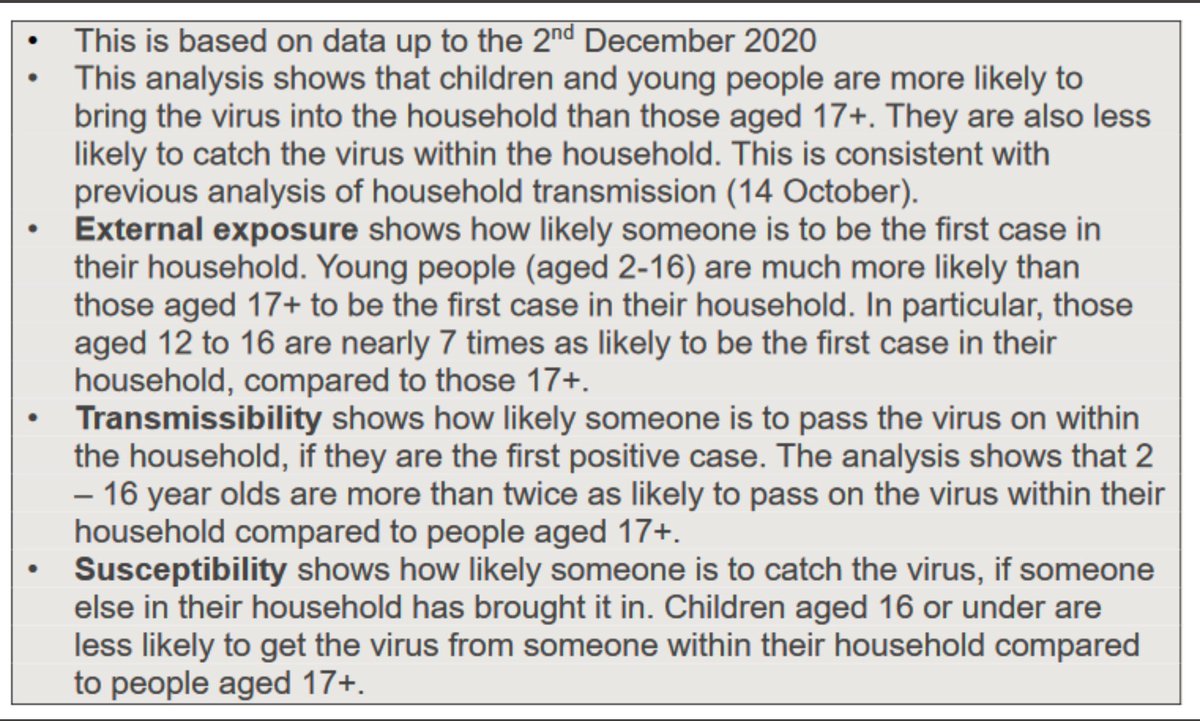

Our preprint on the impact of reopening schools on reproduction number in England is now available online: https://t.co/CpfUGzAJ2S. With @Jarvis_Stats @amyg225 @kerrylmwong @KevinvZandvoort @sbfnk + John Edmunds. NOT YET PEER REVIEWED. 1/

We used contact survey data collected by CoMix (https://t.co/ezbCIOgRa1) to quantify differences in contact patterns during November (Schools open) and January (Schools closed) 'Lockdown periods'. NOT YET PEER REVIEWED 2/
We combined this analysis with estimates of susceptibility and infectiousness of children relative to adults from literature. We also inferred relative susceptibility by fitting R estimates from CoMix to EpiForecasts estimates(https://t.co/6lUM2wK0bn). NOT YET PEER REVIEWED 3/

We estimated that reopening all schools would increase R by between 20% to 90% whereas reopening primary or secondary schools alone would increase R by 10% to 40%, depending on the infectiousness/susceptibility profile we used. NOT YET PEER REVIEWED 4/

Assuming a current R of 0.8 (in line with Govt. estimates: https://t.co/ZZhCe79zC4). Reopening all schools would increase R to between 1.0 and 1.5 and reopening either primary or secondary schools would increase R to between 0.9 and 1.2. NOT YET PEER REVIEWED 5/

We used contact survey data collected by CoMix (https://t.co/ezbCIOgRa1) to quantify differences in contact patterns during November (Schools open) and January (Schools closed) 'Lockdown periods'. NOT YET PEER REVIEWED 2/
We combined this analysis with estimates of susceptibility and infectiousness of children relative to adults from literature. We also inferred relative susceptibility by fitting R estimates from CoMix to EpiForecasts estimates(https://t.co/6lUM2wK0bn). NOT YET PEER REVIEWED 3/
We estimated that reopening all schools would increase R by between 20% to 90% whereas reopening primary or secondary schools alone would increase R by 10% to 40%, depending on the infectiousness/susceptibility profile we used. NOT YET PEER REVIEWED 4/
Assuming a current R of 0.8 (in line with Govt. estimates: https://t.co/ZZhCe79zC4). Reopening all schools would increase R to between 1.0 and 1.5 and reopening either primary or secondary schools would increase R to between 0.9 and 1.2. NOT YET PEER REVIEWED 5/

It appears to be a combination of some of these factors, along with others not mentioned here. Ibn Khaldun’s analysis appears to be a good foundation to go off. [Thread]
Ibn Khaldun makes an important distinction between what he calls العُمران الحضري and العمران البدوي, which, for convenience’s sake, I’ll translate as urban civilisation and rural/Bedouin lifestyle.
He notes that the rural world is largely nomadic, and, as such, Bedouins build character traits that assist the survivalist lifestyle — e.g. the fact that they have to kill snakes that might pop up at any time during their travels helps them build courage and bravery.
The lack of stability and a proper settlement means they don’t really have the luxury of sitting down to let their minds wonder around. They thus build a preservation mindset, which manifests itself through emphasis on memorisation and transmission.
Inhabitants of urban world, on the other hand, are largely settled and established. This means they face less attacks from snakes, lions or danger of human attack from other tribes. Thus, they don’t build the courage and bravery of the Bedouins.
I am yet to find a fully convincing account of what caused the emergence of the two contrasting schools of Ahl Al-\u1e24ad\u012bth in the \u1e24ij\u0101z and Ahl Al-Ra'\u012b in Al-K\u016bfa.
— Amir Aboguddah \u0623\u0645\u064a\u0631 \u0623\u0628\u0648\u063a\u062f\u0629 (@Amir_Aboguddah) January 20, 2021
My issue with the accounts are as follows:
Ibn Khaldun makes an important distinction between what he calls العُمران الحضري and العمران البدوي, which, for convenience’s sake, I’ll translate as urban civilisation and rural/Bedouin lifestyle.
He notes that the rural world is largely nomadic, and, as such, Bedouins build character traits that assist the survivalist lifestyle — e.g. the fact that they have to kill snakes that might pop up at any time during their travels helps them build courage and bravery.
The lack of stability and a proper settlement means they don’t really have the luxury of sitting down to let their minds wonder around. They thus build a preservation mindset, which manifests itself through emphasis on memorisation and transmission.
Inhabitants of urban world, on the other hand, are largely settled and established. This means they face less attacks from snakes, lions or danger of human attack from other tribes. Thus, they don’t build the courage and bravery of the Bedouins.
You May Also Like





"I really want to break into Product Management"
make products.
"If only someone would tell me how I can get a startup to notice me."
Make Products.
"I guess it's impossible and I'll never break into the industry."
MAKE PRODUCTS.
Courtesy of @edbrisson's wonderful thread on breaking into comics – https://t.co/TgNblNSCBj – here is why the same applies to Product Management, too.
There is no better way of learning the craft of product, or proving your potential to employers, than just doing it.
You do not need anybody's permission. We don't have diplomas, nor doctorates. We can barely agree on a single standard of what a Product Manager is supposed to do.
But – there is at least one blindingly obvious industry consensus – a Product Manager makes Products.
And they don't need to be kept at the exact right temperature, given endless resource, or carefully protected in order to do this.
They find their own way.
make products.
"If only someone would tell me how I can get a startup to notice me."
Make Products.
"I guess it's impossible and I'll never break into the industry."
MAKE PRODUCTS.
Courtesy of @edbrisson's wonderful thread on breaking into comics – https://t.co/TgNblNSCBj – here is why the same applies to Product Management, too.
"I really want to break into comics"
— Ed Brisson (@edbrisson) December 4, 2018
make comics.
"If only someone would tell me how I can get an editor to notice me."
Make Comics.
"I guess it's impossible and I'll never break into the industry."
MAKE COMICS.
There is no better way of learning the craft of product, or proving your potential to employers, than just doing it.
You do not need anybody's permission. We don't have diplomas, nor doctorates. We can barely agree on a single standard of what a Product Manager is supposed to do.
But – there is at least one blindingly obvious industry consensus – a Product Manager makes Products.
And they don't need to be kept at the exact right temperature, given endless resource, or carefully protected in order to do this.
They find their own way.

Tip from the Monkey
Pangolins, September 2019 and PLA are the key to this mystery
Stay Tuned!
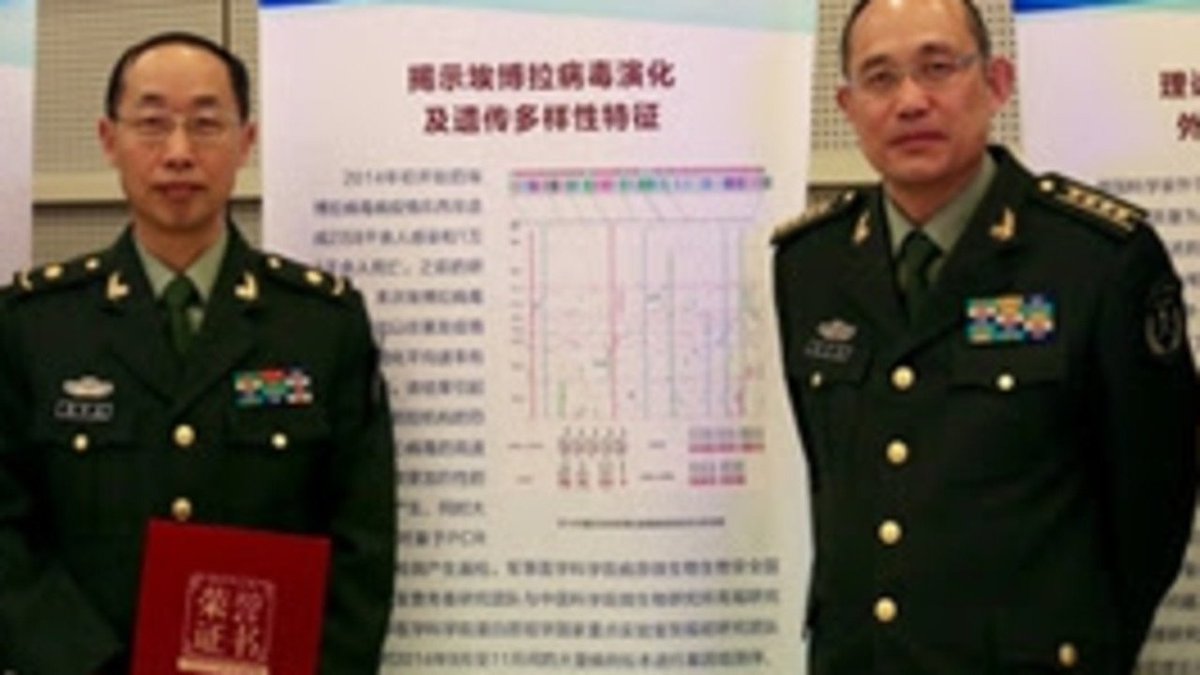
1. Yang
2. A jacobin capuchin dangling a flagellin pangolin on a javelin while playing a mandolin and strangling a mannequin on a paladin's palanquin, said Saladin
More to come tomorrow!
3. Yigang Tong
https://t.co/CYtqYorhzH
Archived: https://t.co/ncz5ruwE2W
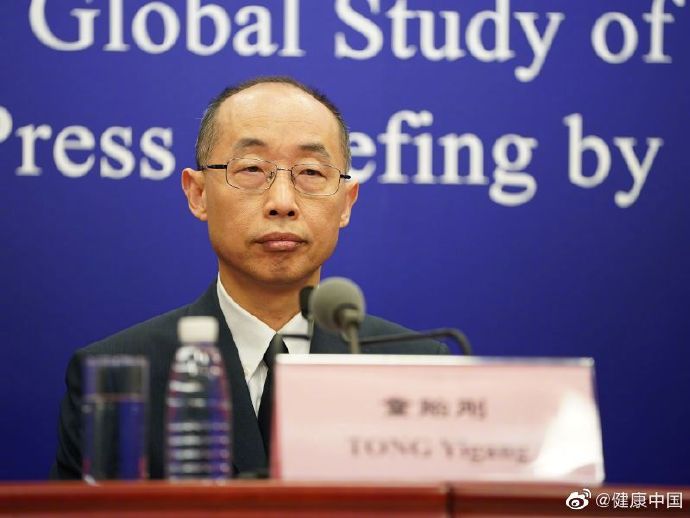
4. YT Interview
Some bats & pangolins carry viruses related with SARS-CoV-2, found in SE Asia and in Yunnan, & the pangolins carrying SARS-CoV-2 related viruses were smuggled from SE Asia, so there is a possibility that SARS-CoV-2 were coming from
Pangolins, September 2019 and PLA are the key to this mystery
Stay Tuned!
1. Yang
Meet Yang Ruifu, CCP's biological weapons expert https://t.co/JjB9TLEO95 via @Gnews202064
— Billy Bostickson \U0001f3f4\U0001f441&\U0001f441 \U0001f193 (@BillyBostickson) October 11, 2020
Interesting expose of China's top bioweapons expert who oversaw fake pangolin research
Paper 1: https://t.co/TrXESKLYmJ
Paper 2:https://t.co/9LSJTNCn3l
Pangolinhttps://t.co/2FUAzWyOcv pic.twitter.com/I2QMXgnkBJ
2. A jacobin capuchin dangling a flagellin pangolin on a javelin while playing a mandolin and strangling a mannequin on a paladin's palanquin, said Saladin
More to come tomorrow!
3. Yigang Tong
https://t.co/CYtqYorhzH
Archived: https://t.co/ncz5ruwE2W
4. YT Interview
Some bats & pangolins carry viruses related with SARS-CoV-2, found in SE Asia and in Yunnan, & the pangolins carrying SARS-CoV-2 related viruses were smuggled from SE Asia, so there is a possibility that SARS-CoV-2 were coming from

I just finished Eric Adler's The Battle of the Classics, and wanted to say something about Joel Christiansen's review linked below. I am not sure what motivates the review (I speculate a bit below), but it gives a very misleading impression of the book. 1/x
The meat of the criticism is that the history Adler gives is insufficiently critical. Adler describes a few figures who had a great influence on how the modern US university was formed. It's certainly critical: it focuses on the social Darwinism of these figures. 2/x
Other insinuations and suggestions in the review seem wildly off the mark, distorted, or inappropriate-- for example, that the book is clickbaity (it is scholarly) or conservative (hardly) or connected to the events at the Capitol (give me a break). 3/x
The core question: in what sense is classics inherently racist? Classics is old. On Adler's account, it begins in ancient Rome and is revived in the Renaissance. Slavery (Christiansen's primary concern) is also very old. Let's say classics is an education for slaveowners. 4/x
It's worth remembering that literacy itself is elite throughout most of this history. Literacy is, then, also the education of slaveowners. We can honor oral and musical traditions without denying that literacy is, generally, good. 5/x
As someone\u2019s who\u2019s read the book, this review strikes me as tremendously unfair. It mostly faults Adler for not writing the book the reviewer wishes he had! https://t.co/pqpt5Ziivj
— Teresa M. Bejan (@tmbejan) January 12, 2021
The meat of the criticism is that the history Adler gives is insufficiently critical. Adler describes a few figures who had a great influence on how the modern US university was formed. It's certainly critical: it focuses on the social Darwinism of these figures. 2/x
Other insinuations and suggestions in the review seem wildly off the mark, distorted, or inappropriate-- for example, that the book is clickbaity (it is scholarly) or conservative (hardly) or connected to the events at the Capitol (give me a break). 3/x
The core question: in what sense is classics inherently racist? Classics is old. On Adler's account, it begins in ancient Rome and is revived in the Renaissance. Slavery (Christiansen's primary concern) is also very old. Let's say classics is an education for slaveowners. 4/x
It's worth remembering that literacy itself is elite throughout most of this history. Literacy is, then, also the education of slaveowners. We can honor oral and musical traditions without denying that literacy is, generally, good. 5/x