
"Trauma-informed Pedagogy and How is Your Heart?": https://t.co/dPAqeV9B3w
reminding you that, while we didn't cover "how do i work through a coup" in the faculty development workshop (FWIW my answer is "don't", seek breath and togetherness instead), we DO have the gift of trauma-informed pedagogy. here are a few links for the coming days/weeks/months:
"Trauma-informed Pedagogy and How is Your Heart?": https://t.co/dPAqeV9B3w
"Hope can be a passive gesture: “let’s hope it all turns out OK.” But hope can also be active, as a resistive act of defiance, self-empowerment & enduring resilience even in the face of uncertainty."
https://t.co/dsDsBteIaS
https://t.co/Sllyc5meRf
https://t.co/NeaDRH1aKo
Breathe with your students. It is so powerful.
Make time to listen:
https://t.co/aMs0tKWCNF
More from Education


Last month I presented seven sentences in seven different languages, all written in a form of the Chinese-character script. The challenge was to identify the languages and, if possible, provide a
Here again are those seven sentences:
1) 他的剑从船上掉到河里去
2) 於世𡗉番𧡊哭唭𢆥尼歲㐌外四𨑮
3) 入良沙寢矣見昆腳烏伊四是良羅
4) 佢而家喺邊喥呀
5) 夜久毛多都伊豆毛夜幣賀岐都麻碁微爾夜幣賀岐都久流曾能夜幣賀岐袁
6) 其劍自舟中墜於水
7) 今天愛晚特語兔吃二魚佛午飯
Six of those seven sentences are historically attested. One is not: I invented #7. I’m going to dive into an exploration of that seventh sentence in today’s thread.
Sentence #7 is an English-language sentence written sinographically — that is, using graphs that originate in the Chinese script. I didn’t do this for fun (even though it is fun), or as a proposal for a new way to write
I did it as a thought experiment. Why? Because thinking about how the modern Chinese script might be adapted to write modern English can give us valuable insights into historical instances of script borrowing, like those that took place centuries ago in Japan, Korea, and Vietnam.
\U0001f17b\U0001f130\U0001f17d\U0001f176\U0001f184\U0001f130\U0001f176\U0001f174 \U0001f180\U0001f184\U0001f178\U0001f189
— zev handel (@ZevHandel) December 17, 2020
The following sentences are in seven different languages, all written in Chinese-character script (or a modification of it). Can you identify the languages?
Sentences are in thread.
(1/3)
Here again are those seven sentences:
1) 他的剑从船上掉到河里去
2) 於世𡗉番𧡊哭唭𢆥尼歲㐌外四𨑮
3) 入良沙寢矣見昆腳烏伊四是良羅
4) 佢而家喺邊喥呀
5) 夜久毛多都伊豆毛夜幣賀岐都麻碁微爾夜幣賀岐都久流曾能夜幣賀岐袁
6) 其劍自舟中墜於水
7) 今天愛晚特語兔吃二魚佛午飯
Six of those seven sentences are historically attested. One is not: I invented #7. I’m going to dive into an exploration of that seventh sentence in today’s thread.
Sentence #7 is an English-language sentence written sinographically — that is, using graphs that originate in the Chinese script. I didn’t do this for fun (even though it is fun), or as a proposal for a new way to write
7) \u4eca\u5929\u611b\u665a\u7279\u8a9e\u5154\u5403\u4e8c\u9b5a\u4f5b\u5348\u98ef \u2013 Modern English
— zev handel (@ZevHandel) December 21, 2020
Today I want you to each two fish for lunch.
That this sentence is a written form of English is undeniable, as the sentence is made up entirely of English words following the rules of English grammar. 23/
I did it as a thought experiment. Why? Because thinking about how the modern Chinese script might be adapted to write modern English can give us valuable insights into historical instances of script borrowing, like those that took place centuries ago in Japan, Korea, and Vietnam.

OK I am going to be tackling this as surveillance/open source intel gathering exercise, because that is my background. I blew away 3 years of my life doing site acquisition/reconnaissance for a certain industry that shall remain unnamed and believe there is significant carryover.
This is NOT going to be zillow "here is how to google school districts and find walmart" we are not concerned with this malarkey, we are homeschooling and planting victory gardens and having gigantic happy families.
With that said, for my frog and frog-adjacent bros and sisters:
CHOICE SITES:
Zillow is obvious one, but there are many good sites like Billy Land, Classic Country Land, Landwatch, etc. and many of these specialize in owner financing (more on that later.) Do NOT treat these as authoritative sources - trust plat maps and parcel viewers.
TARGET IDENTIFICATION AND EVALUATION:
Okay, everyone knows how to google "raw land in x state" but there are other resources out there, including state Departments of Natural Resources, foreclosure auctions, etc. Finding the land you like is the easy part. Let's do a case study.
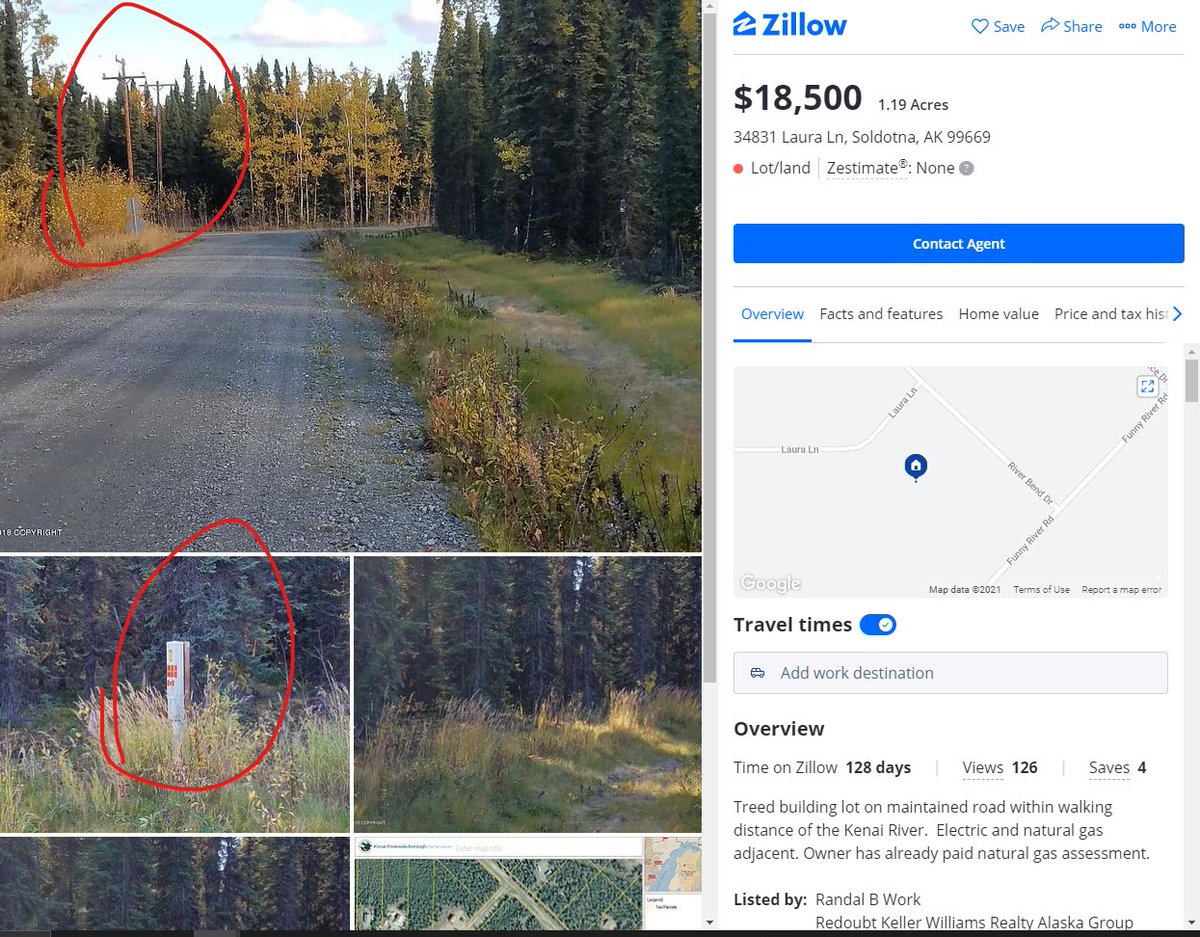
I'm going to target using an "off-grid but not" algorithm. This is a good piece in my book - middle of nowhere but still trekkable to civilization.
Note: visible power, power/fiber pedestal, utility corridor, nearby commercial enterprise(s), and utility pole shadows visible.
If I did thred on finding/acquiring decent raw land would that be something pepo are interested in
— Ovcharka (@ouroboros_outis) January 18, 2021
I think I know a bunch of weird tips/tricks for selection at this point that it might help u guys, lemme know
This is NOT going to be zillow "here is how to google school districts and find walmart" we are not concerned with this malarkey, we are homeschooling and planting victory gardens and having gigantic happy families.
With that said, for my frog and frog-adjacent bros and sisters:
CHOICE SITES:
Zillow is obvious one, but there are many good sites like Billy Land, Classic Country Land, Landwatch, etc. and many of these specialize in owner financing (more on that later.) Do NOT treat these as authoritative sources - trust plat maps and parcel viewers.
TARGET IDENTIFICATION AND EVALUATION:
Okay, everyone knows how to google "raw land in x state" but there are other resources out there, including state Departments of Natural Resources, foreclosure auctions, etc. Finding the land you like is the easy part. Let's do a case study.
I'm going to target using an "off-grid but not" algorithm. This is a good piece in my book - middle of nowhere but still trekkable to civilization.
Note: visible power, power/fiber pedestal, utility corridor, nearby commercial enterprise(s), and utility pole shadows visible.


You May Also Like

The first area to focus on is diversity. This has become a dogma in the tech world, and despite the fact that tech is one of the most meritocratic industries in the world, there are constant efforts to promote diversity at the expense of fairness, merit and competency. Examples:
USC's Interactive Media & Games Division cancels all-star panel that included top-tier game developers who were invited to share their experiences with students. Why? Because there were no women on the
ElectronConf is a conf which chooses presenters based on blind auditions; the identity, gender, and race of the speaker is not known to the selection team. The results of that merit-based approach was an all-male panel. So they cancelled the conference.
Apple's head of diversity (a black woman) got in trouble for promoting a vision of diversity that is at odds with contemporary progressive dogma. (She left the company shortly after this
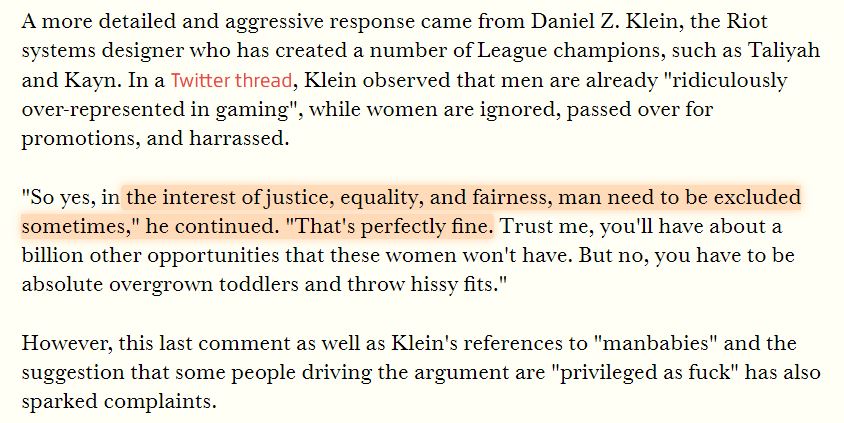
Also in the name of diversity, there is unabashed discrimination against men (especially white men) in tech, in both hiring policies and in other arenas. One such example is this, a developer workshop that specifically excluded men: https://t.co/N0SkH4hR35
USC's Interactive Media & Games Division cancels all-star panel that included top-tier game developers who were invited to share their experiences with students. Why? Because there were no women on the
ElectronConf is a conf which chooses presenters based on blind auditions; the identity, gender, and race of the speaker is not known to the selection team. The results of that merit-based approach was an all-male panel. So they cancelled the conference.
Apple's head of diversity (a black woman) got in trouble for promoting a vision of diversity that is at odds with contemporary progressive dogma. (She left the company shortly after this
Also in the name of diversity, there is unabashed discrimination against men (especially white men) in tech, in both hiring policies and in other arenas. One such example is this, a developer workshop that specifically excluded men: https://t.co/N0SkH4hR35

The UN just voted to condemn Israel 9 times, and the rest of the world 0.
View the resolutions and voting results here:
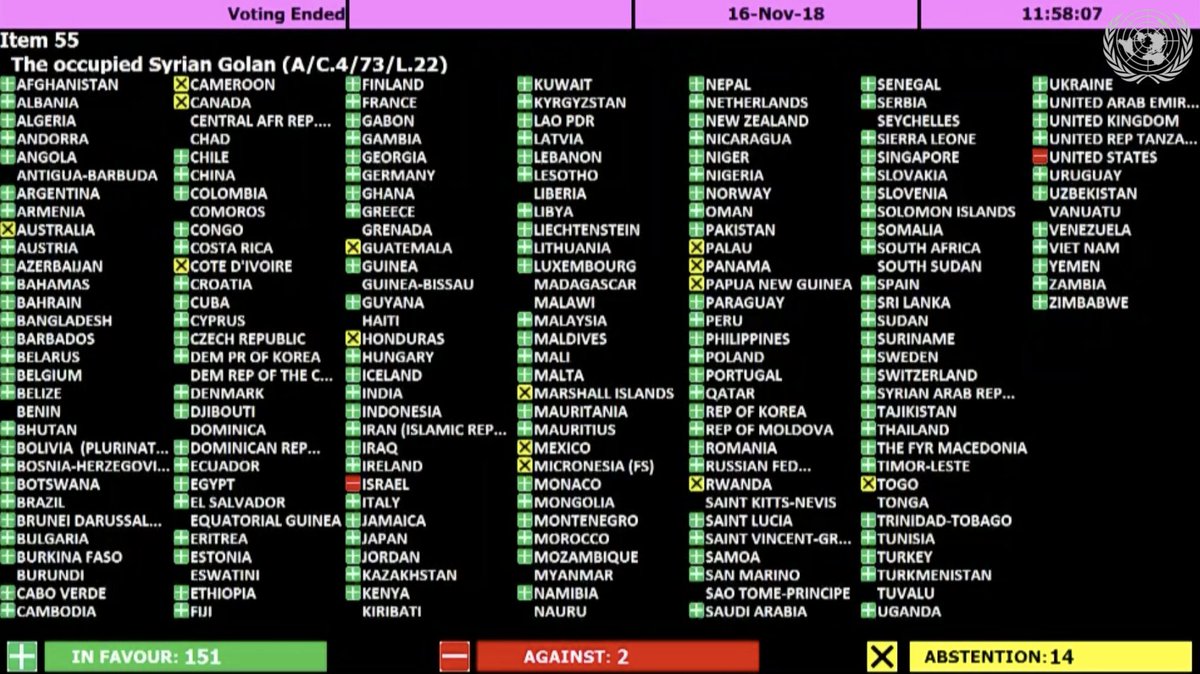
The resolution titled "The occupied Syrian Golan," which condemns Israel for "repressive measures" against Syrian citizens in the Golan Heights, was adopted by a vote of 151 - 2 - 14.
Israel and the U.S. voted 'No' https://t.co/HoO7oz0dwr
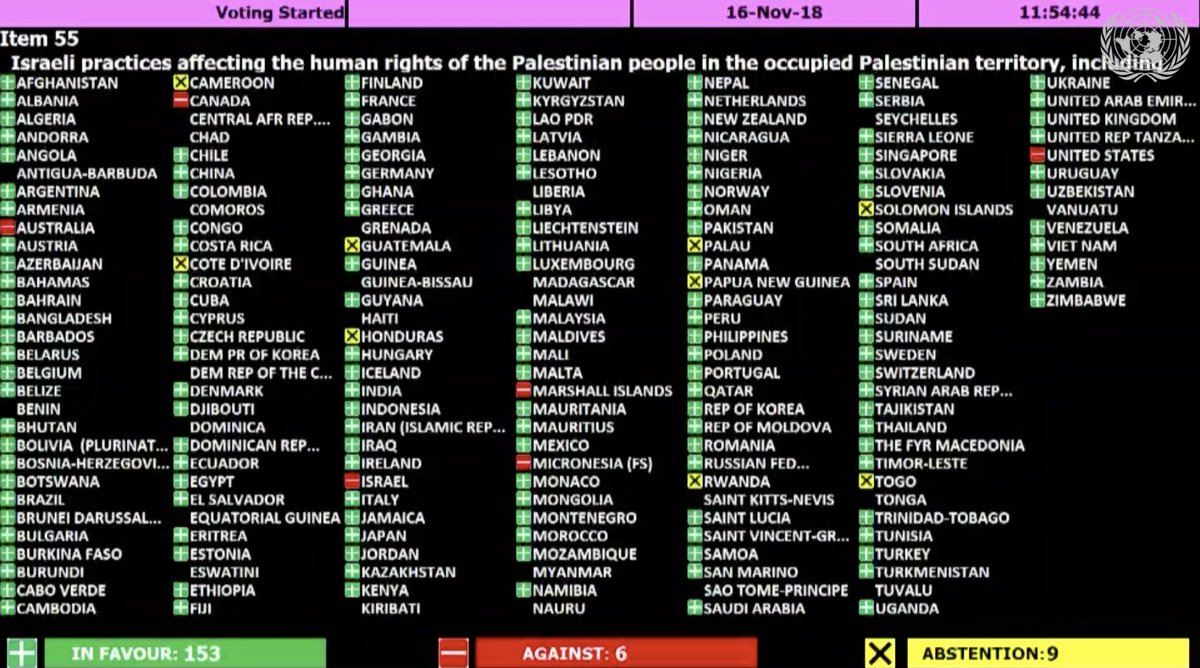
The resolution titled "Israeli practices affecting the human rights of the Palestinian people..." was adopted by a vote of 153 - 6 - 9.
Australia, Canada, Israel, Marshall Islands, Micronesia, and the U.S. voted 'No' https://t.co/1Ntpi7Vqab
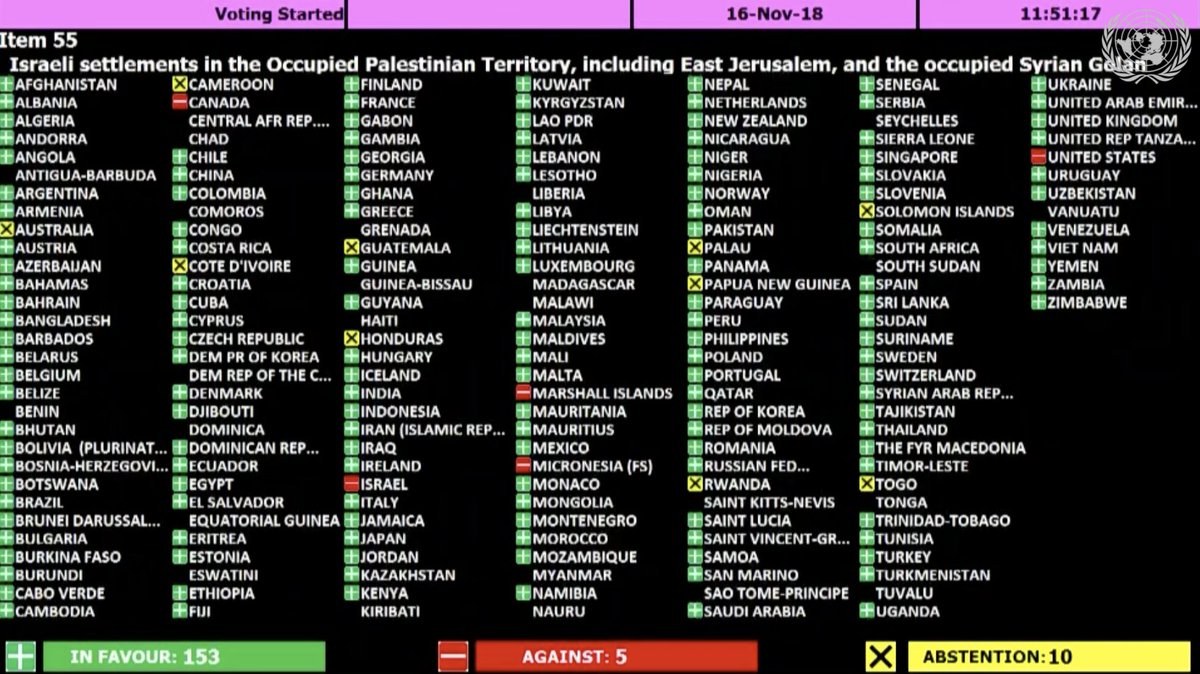
The resolution titled "Israeli settlements in the Occupied Palestinian Territory, including East Jerusalem, and the occupied Syrian Golan" was adopted by a vote of 153 – 5 – 10.
Canada, Israel, Marshall Islands, Micronesia, and the U.S. voted 'No'
https://t.co/REumYgyRuF
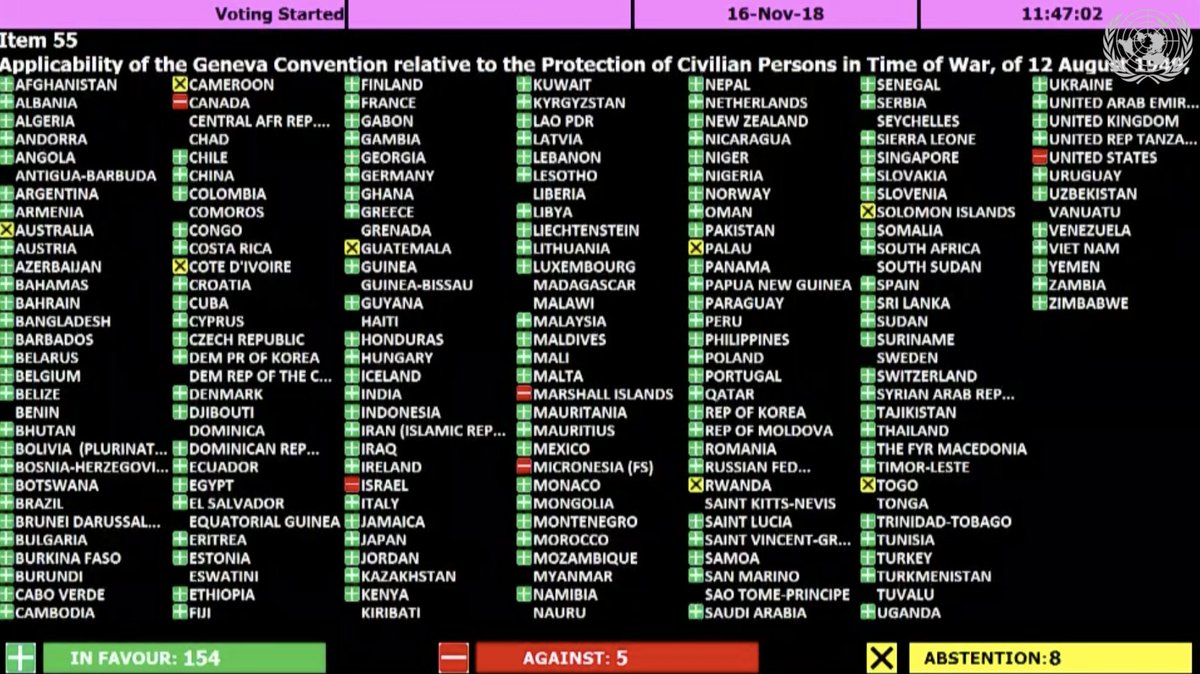
The resolution titled "Applicability of the Geneva Convention... to the
Occupied Palestinian Territory..." was adopted by a vote of 154 - 5 - 8.
Canada, Israel, Marshall Islands, Micronesia, and the U.S. voted 'No'
https://t.co/xDAeS9K1kW
View the resolutions and voting results here:
The resolution titled "The occupied Syrian Golan," which condemns Israel for "repressive measures" against Syrian citizens in the Golan Heights, was adopted by a vote of 151 - 2 - 14.
Israel and the U.S. voted 'No' https://t.co/HoO7oz0dwr
The resolution titled "Israeli practices affecting the human rights of the Palestinian people..." was adopted by a vote of 153 - 6 - 9.
Australia, Canada, Israel, Marshall Islands, Micronesia, and the U.S. voted 'No' https://t.co/1Ntpi7Vqab
The resolution titled "Israeli settlements in the Occupied Palestinian Territory, including East Jerusalem, and the occupied Syrian Golan" was adopted by a vote of 153 – 5 – 10.
Canada, Israel, Marshall Islands, Micronesia, and the U.S. voted 'No'
https://t.co/REumYgyRuF
The resolution titled "Applicability of the Geneva Convention... to the
Occupied Palestinian Territory..." was adopted by a vote of 154 - 5 - 8.
Canada, Israel, Marshall Islands, Micronesia, and the U.S. voted 'No'
https://t.co/xDAeS9K1kW


A brief analysis and comparison of the CSS for Twitter's PWA vs Twitter's legacy desktop website. The difference is dramatic and I'll touch on some reasons why.
Legacy site *downloads* ~630 KB CSS per theme and writing direction.
6,769 rules
9,252 selectors
16.7k declarations
3,370 unique declarations
44 media queries
36 unique colors
50 unique background colors
46 unique font sizes
39 unique z-indices
https://t.co/qyl4Bt1i5x

PWA *incrementally generates* ~30 KB CSS that handles all themes and writing directions.
735 rules
740 selectors
757 declarations
730 unique declarations
0 media queries
11 unique colors
32 unique background colors
15 unique font sizes
7 unique z-indices
https://t.co/w7oNG5KUkJ

The legacy site's CSS is what happens when hundreds of people directly write CSS over many years. Specificity wars, redundancy, a house of cards that can't be fixed. The result is extremely inefficient and error-prone styling that punishes users and developers.
The PWA's CSS is generated on-demand by a JS framework that manages styles and outputs "atomic CSS". The framework can enforce strict constraints and perform optimisations, which is why the CSS is so much smaller and safer. Style conflicts and unbounded CSS growth are avoided.
Legacy site *downloads* ~630 KB CSS per theme and writing direction.
6,769 rules
9,252 selectors
16.7k declarations
3,370 unique declarations
44 media queries
36 unique colors
50 unique background colors
46 unique font sizes
39 unique z-indices
https://t.co/qyl4Bt1i5x
PWA *incrementally generates* ~30 KB CSS that handles all themes and writing directions.
735 rules
740 selectors
757 declarations
730 unique declarations
0 media queries
11 unique colors
32 unique background colors
15 unique font sizes
7 unique z-indices
https://t.co/w7oNG5KUkJ
The legacy site's CSS is what happens when hundreds of people directly write CSS over many years. Specificity wars, redundancy, a house of cards that can't be fixed. The result is extremely inefficient and error-prone styling that punishes users and developers.
The PWA's CSS is generated on-demand by a JS framework that manages styles and outputs "atomic CSS". The framework can enforce strict constraints and perform optimisations, which is why the CSS is so much smaller and safer. Style conflicts and unbounded CSS growth are avoided.