For reference, multinationals (almost entirely US-based) typically use the “Green Jersey” tax evasion tactic, utilising Ireland and Jersey/Cayman, etc to avoid paying taxes in the US.

These tax avoidance techniques result in effective tax rates of ~0-2.5% https://t.co/R433UuKInX

MNCs have been a bright spot in a faltering domestic economy during Covid lockdowns. They’ve provided a much-needed, reliable source of inflows as other streams have dried up.

However, we’re not 12 years old, so let’s have a deeper dive, as this is not showing the full picture.
Leo and his ilk will try to lightswitch-brain you into thinking that raising taxes on MNCs will drive them away. You should be grateful!

In reality, largest threat is from US and EU tax reform. Take Biden’s tax reform proposals, which targets US MNC offshoring/“GILTI” profits
GILTI, or Global Intangible Low-Taxed Income utilities “Base Erosion” or “BEPS” to lower the taxable profit in the United States by shifting ownership of US IP into Irish tax jurisdictions.

I would wager targeting these techniques is popular on both sides of the isle in America.
This represents a significant geo-political and economic risk for Ireland. At any moment, any change, whether intentional or accidental can change the incentive structures for US MNCs, resulting in these companies pulling billions of IP from Ireland over night.
As of 2018, we will get an “exit tax” from these companies if they leave, but when US MNCs account for 80% of Corporate Taxes, this is a silver lining at best (Balancing an already out-of-whack budget will be a tall task)

Which coincidentally, FG also views as a good thing. https://t.co/jvi5hSGEd1
Which is the second major strategic risk for the Irish economy. Take a look at these stats, are they a “good thing”? Or are they an over-reliance on a single source for growth and jobs?

80% of corporate taxes, 50% of income taxes, 1/4 of private sector employment.
You might say: “Well, just because they move their IP back to America doesn’t mean they’ll take their jobs with them! Stop the doom and gloom!”

Maybe, except that portion is also hugely subsidised via the tax system. Not only their expenditures, but foreign employees (SARP) too
Apple can hire me as a Software Engineer for €100K, but they can write off 42% of my salary on their US taxes. All those fancy tech offices, big salaries, and asset purchases are being fuelled by the tax pull.

The moment those tax advantages go away, so do those offices/jobs
So let’s play this out: 3000 miles away, The US makes a few alterations to its tax code.

Then US MNCs start to shift their IP back to the US, which eliminates the cost advantages to having Irish offices/employees. Apple/MFST have 100k employees, one office of 3k is nothing
You now have a corporate tax revenue crisis (shown above) and an unemployment crisis, enhanced by the recent decisions made with regard to the EU budget and other spending.
Make no mistake, the over reliance on US MNCs is one of the biggest risks to the Irish economy, which the political class has known for years and have done nothing

We’ve spent 30 years developing the most sophisticated tax avoidance system on Earth, and ignored the domestic econ
In short: FF, FG, and traditional economic thinking over the last few decades have destroyed the “real” economy of this country.

Distracted by paper wealth and fancy homes built by foreign property investors, we’ve actually tied a weight around our necks on a sinking ship
The solution? Create domestic Irish businesses. Owned, built, and operated by workers we produce and train. Building real wealth, real value-add economic activities, not working in a customer support office for Apple, or a Cloud Computing help desk for Microsoft’s Azure.

More from Economy

$600/wk Unemployment Insurance cannot deliver the benefits of a $600/wk Job Guarantee. From the outset, I should say JG is not a replacement for UI, no matter what you may have heard. I’ll get to this later, but read this long 🧶 w/ that in mind.


Automatic stabilization: Both $600/wk UI and JG will provide counter cyclical spending. But UI will be weaker. Counter-cyclical stabilization is not just about the absence of income. It is also about the transmission and structure of economy

Firms don't like to hire the unemployed. Mass and long-term unemployment make the problem worse. JG would recover labor markets much faster than a UI of the same amount, both b/c of the higher direct, induced & tertiary employment effects & b/c of private firm hiring preferences.

JG stabilizes spending patterns better. Uncertain job prospects may mean more cautious spending from the unemployed compared to those w/ guaranteed jobs.
UI is temporary, which makes matters worse. Even if it were permanent, it still won't resolve the problem of job scarcity.

Nations who once achieved tight full employment through active labor market policies demonstrate that unemployment does NOT fluctuate the same way it does w/o them. Direct employment, ELR type policies diminish drastically/even eliminate these amplitudes (eg postwar Japan/Sweden)
On Jan 6, 2021, the always stellar Mr @deepakshenoy tweeted, this:

https://t.co/fa3GX9VnW0

Innocuous 1 sentence, but its a full economic theory at play.
Let me break it down for you. (1/n)


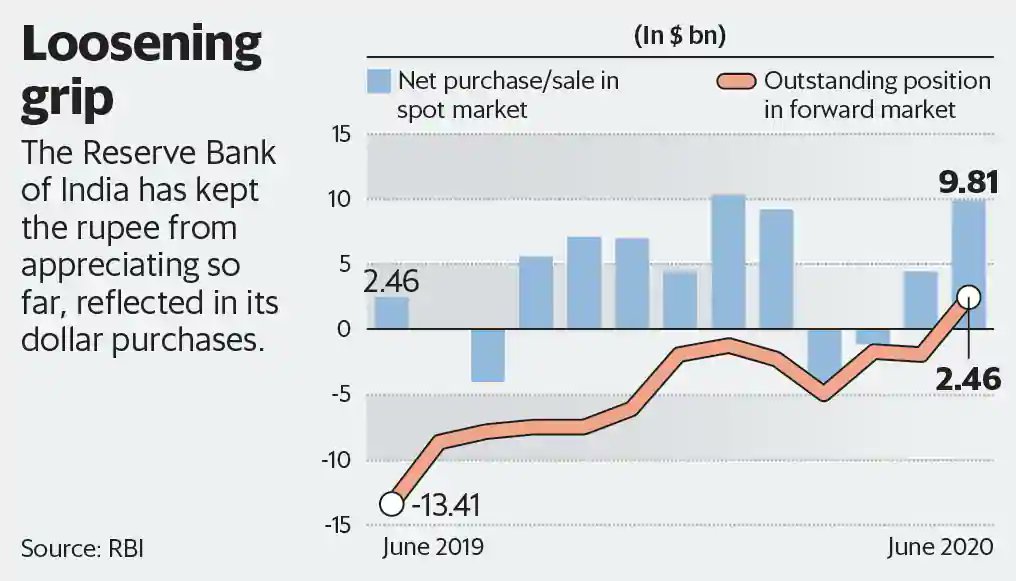
On September 30, 2020, I wrote an article for @CFASocietyIndia where I explained that RBI is all set to lose its ability to set interest rates if it continues to fiddle with the exchange rate (2/n)

What do I mean, "fiddle with the exchange rate"?

In essence, if RBI opts and continues to manage exchange rate, then that is "fiddling with the exchange rate"

RBI has done that in the past and has restarted it in 2020 - very explicitly. (3/n)

First in March 2020, it opened a Dollar/INR swap of $2B with far leg to be unwound in September 2020.

Implying INR will be bought from the open markets in order to prevent INR from falling vis a vis USD (4/n)

The Second aspect is now, that dollar inflow is happening, and the forex reserves swelled -> implying the rupee is appreciating, RBI again intervened from September, by selling INR in spot markets. (5/n)
https://t.co/9kpWP7ovyM
Let's discuss how little you actually understand about economics and energy.

The first thing to understand is that energy is not globally fungible. Electricity decays as it leaves its point of origin; it’s expensive to transport. There is a huge excess (hydro) in many areas.


In other words, it can also be variable. It's estimated that in Sichuan there is twice as much electricity produced as is needed during the rainy season. Indeed, there is seasonality to how Bitcoin mining works. You can see here:

Bitcoin EXPORTS energy in this scenario. Fun fact, most industrial nations would steer this excess capacity towards refining aluminum by melting bauxite ore, which is very energy intensive.

You wouldn't argue that we are producing *too much* electricity from renewables, right?

"But what about the carbon footprint! ITS HUGE!"

Many previous estimates have quite faulty methods and don't take into account the actual energy sources. Is it fair to put a GHG equivalent on hydro or solar power? That would seem a bit disingenuous, no?

Well that's exactly what some have done.

You May Also Like