#AirPollution, measured by annual PM2.5--particles finer than a human hair--reduced in bigger cities such as Delhi & Varanasi but increased in smaller cities such as Fatehabad & Moradabad, finds a @CSEINDIA analysis of 26 cities. Follow the thread for insights:
https://t.co/41X3nJDzYu
https://t.co/N76NPWdYVI.
https://t.co/amkdCLrIFW
More from Climate change

The UK government's climate advisory body is launching its next carbon budget: basically, outlining what the UK can emit between 2033 and 2037. It's a big deal - launch video starting right now.
Watch along:
Will tweet along snippets. Pretty relevant to...............everything, really. #UKCarbonBudget
"Instead of being just a budget, it's a pathway we have to tread to reach net zero in 2050" @lorddeben
Just like quite a few other modelling exercises, CCC use a spectrum between behaviour change and between technological change. #UKCarbonBudget.
Both = best (just like @AEMO_Media's Step Change scenario in their ISP)
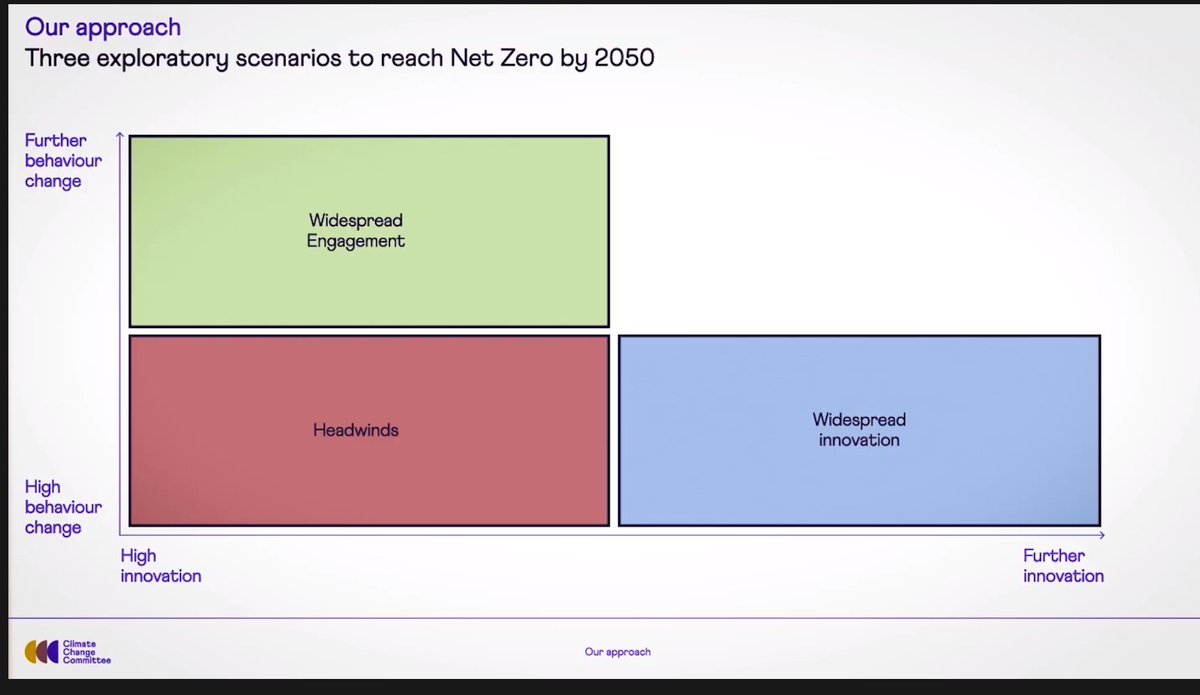
'Balanced' is what they use for their recs. "We're doing 60% of the emissions reductions in the first 15 years, and then 40% in the next".
The slinky kitty curve....good to see. No evidence of delaying action to Dec 29 2049, here. #UKCarbonBudget
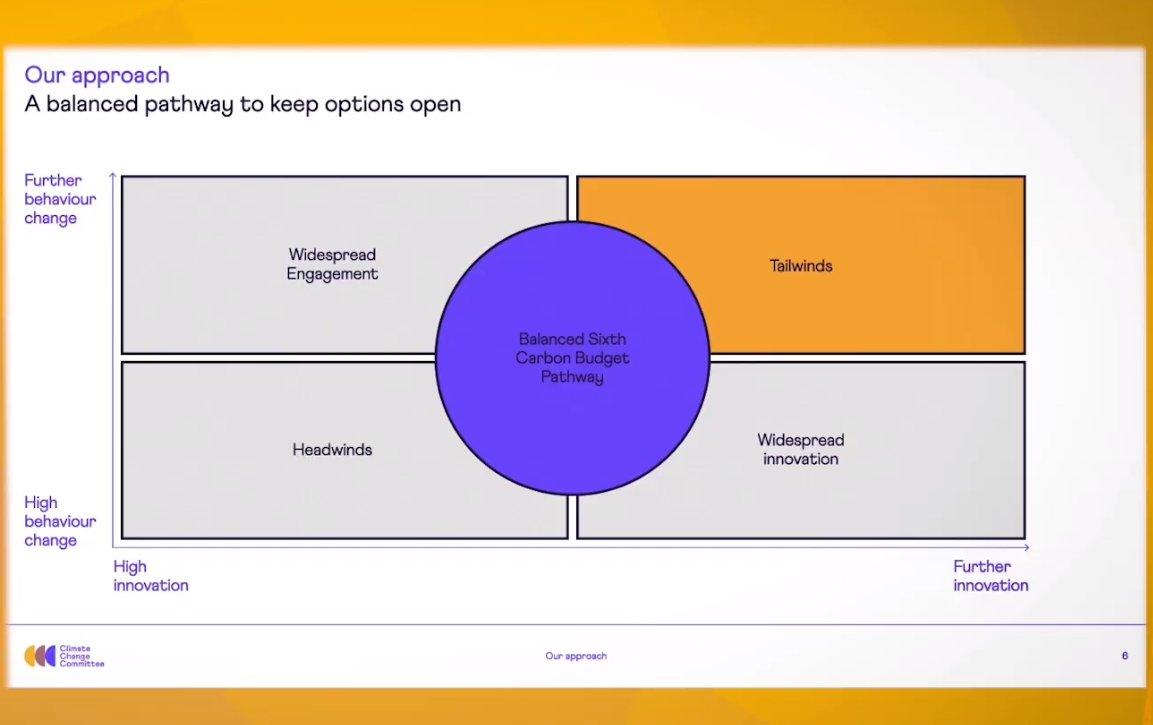
"By front loading, we're minimising the UK's contribution to cumulative emissions" - really important point. A slow path to net zero - more climate harm than a fast one. #UKCarbonBudget
Watch along:
Just 15 mins until the launch event for our new advice to Government on the Sixth Carbon Budget. If you haven\u2019t registered, you can watch live on YouTube from 10am. Link: https://t.co/PjlcIDSYEC #UKCarbonBudget pic.twitter.com/1zOTfmxDVp
— Climate Change Committee (@theCCCuk) December 9, 2020
Will tweet along snippets. Pretty relevant to...............everything, really. #UKCarbonBudget
"Instead of being just a budget, it's a pathway we have to tread to reach net zero in 2050" @lorddeben
Just like quite a few other modelling exercises, CCC use a spectrum between behaviour change and between technological change. #UKCarbonBudget.
Both = best (just like @AEMO_Media's Step Change scenario in their ISP)
'Balanced' is what they use for their recs. "We're doing 60% of the emissions reductions in the first 15 years, and then 40% in the next".
The slinky kitty curve....good to see. No evidence of delaying action to Dec 29 2049, here. #UKCarbonBudget
"By front loading, we're minimising the UK's contribution to cumulative emissions" - really important point. A slow path to net zero - more climate harm than a fast one. #UKCarbonBudget


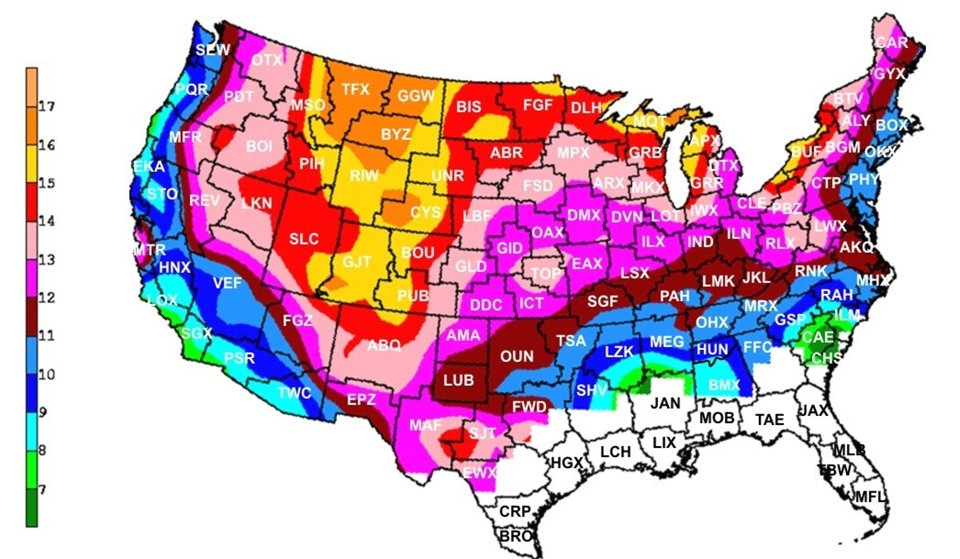

1/ In reflecting on my work this year I have just realized that everything I published concerned climate change: here is a roundup of my 2020 writing on #climate #justice, climate #reparations, climate #debt, climate #displacement, climate #mobilities & #disaster #recovery
2/ My most recent online piece is on #Arctic #Mobilities, #climate #displacement and #Indigenous rights, originating from a great workshop @PennLaw_CERL
3/ Last month I also wrote about #climate #displacement and the case for #climate #reparations and #open #borders for those fleeing climate disasters
4/ Which originally appeared here
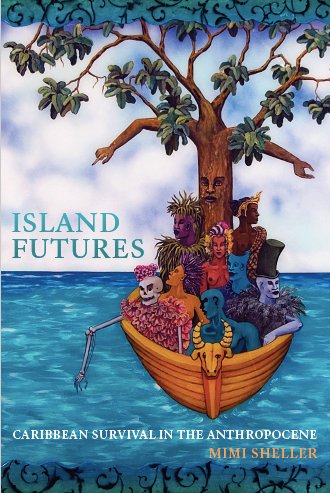
5/ Both of these came out of thinking about Caribbean #climate #colonialism and #climate #debt in my book Island Futures: Caribbean Survival in the Anthropocene @DukePress YOU CAN STILL GET IT for 50% off with the code E20SHELL https://t.co/i5DIaNAgsg
2/ My most recent online piece is on #Arctic #Mobilities, #climate #displacement and #Indigenous rights, originating from a great workshop @PennLaw_CERL
3/ Last month I also wrote about #climate #displacement and the case for #climate #reparations and #open #borders for those fleeing climate disasters
4/ Which originally appeared here
5/ Both of these came out of thinking about Caribbean #climate #colonialism and #climate #debt in my book Island Futures: Caribbean Survival in the Anthropocene @DukePress YOU CAN STILL GET IT for 50% off with the code E20SHELL https://t.co/i5DIaNAgsg