Thread on snow ratios. The snow ratio, or snow-to-liquid ratio states how many inches of snow, when melted, yields one inch of liquid water. Ratios are usually around 10:1 or 12:1, but can vary from as little as 6:1 or as high as 30:1, or sometimes more. 1/
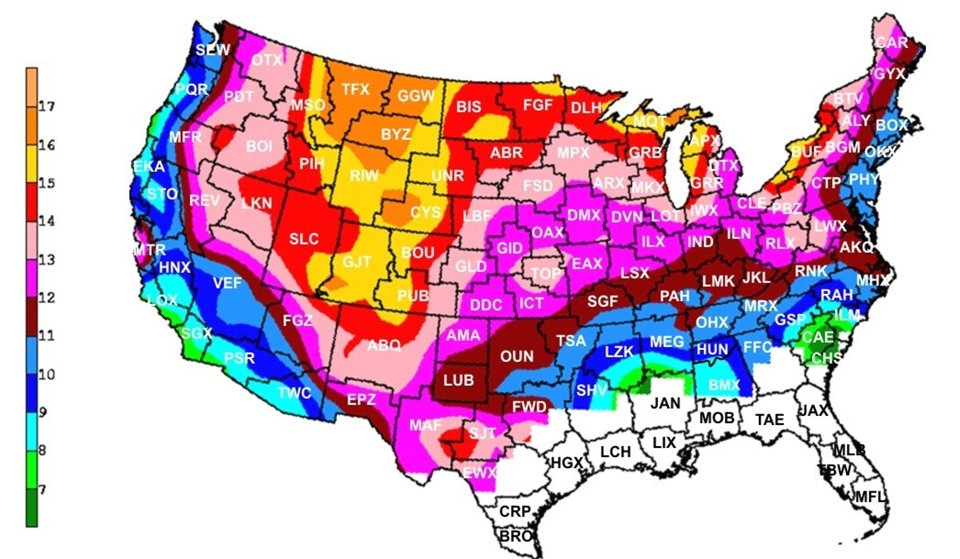
There's a common misunderstanding that the colder the surface temp is, the higher the snow ratio will be (fluffier snow). This is incorrect. As long is the surface temp is not close to freezing, it really doesn't matter all that much. 2/
As the surface temp gets close to or exceeds freezing, more snow is lost to melting, yielding lower ratios and heavy, wet snow. The same reasoning also applies to temps above the ground; if they exceed freezing, sleet or rain can mix with the snow, dramatically lowering ratios 3/
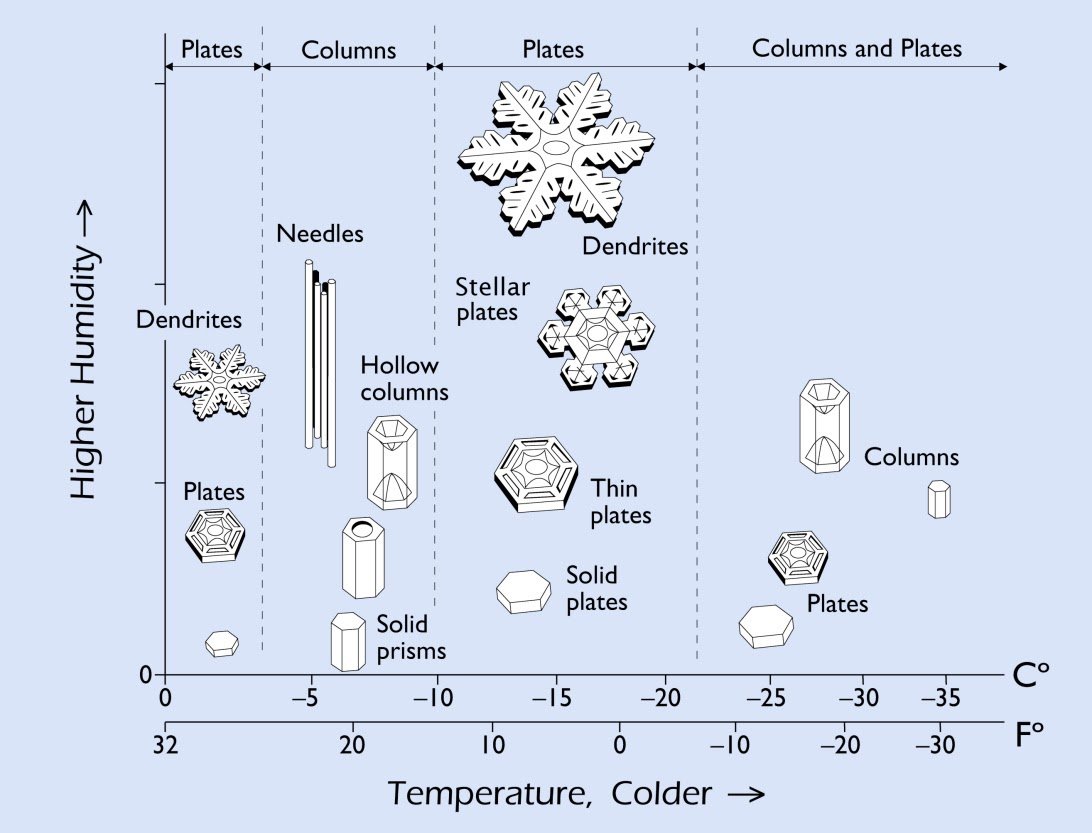
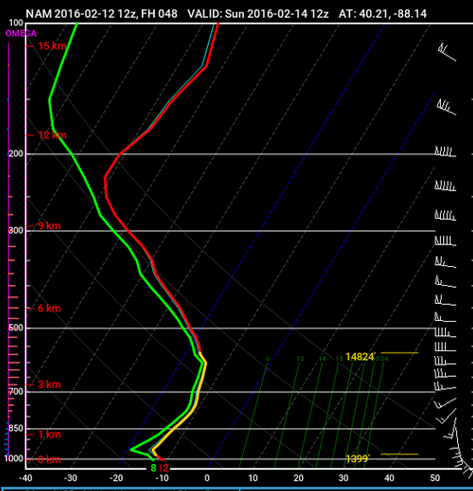
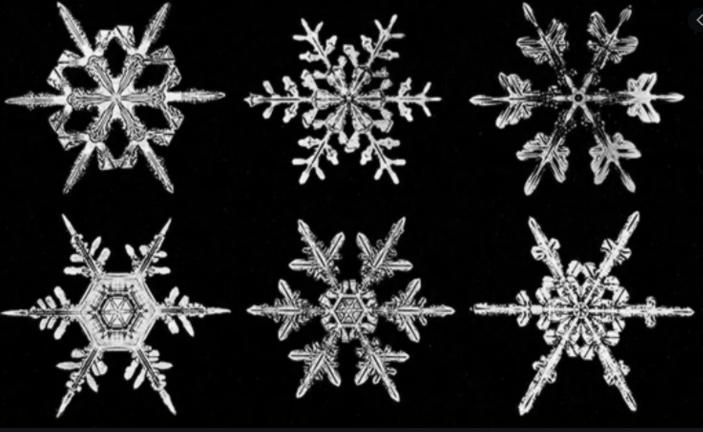
Much more important is the dendritic growth zone (DGZ), the layer of the atmosphere with temperatures between -12 and -18C. In this layer, snowflakes grow as dendrites, which can easily clump together into aggregates, which contain a lot of air, increasing the ratio 4/
At warmer or colder temps, the flakes grow as plates, columns, or needles, which don't clump together as well and contain less air, lowering the ratio. To make this even more complicated, there's also a dependence on atmospheric humidity. 5/
Ratios are maximized for
1) Large upward motion in the DGZ, which depends on the forcing for ascent and the stability of the DGZ and
2) A deep DGZ
6/
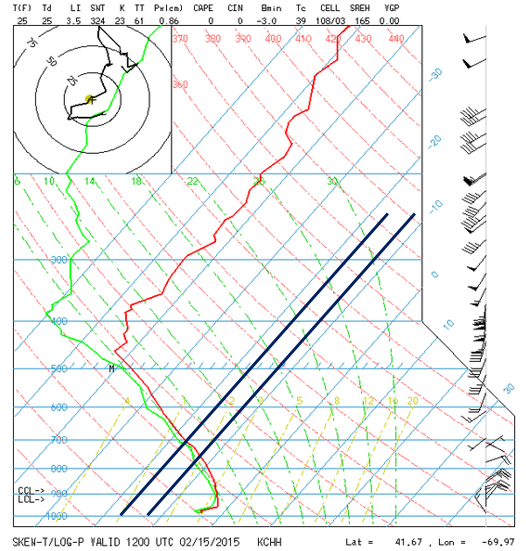
These two factors often oppose each other, however, because a deep DGZ means that this layer is very stable and requires more forcing to get the same amount of ascent. If the DGZ is shallower, it is less stable, and less forcing is required to produce ascent. 7/
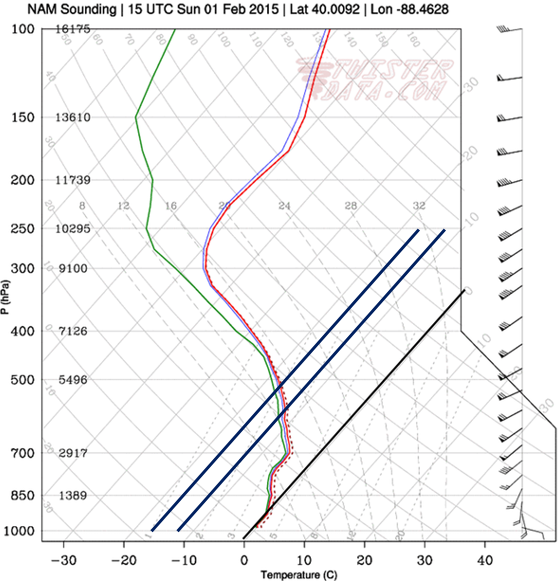
One scenario that leads to high ratios is a shallow DGZ characterized by steep lapse rates in the presence of strong forcing for ascent. There are often steep lapse rates throughout the troposphere too. This is often the case in thundersnow scenarios 8/
A second scenario that leads to high ratios is a deep DGZ (meaning that it is very stable), with steeper lapse rates and ascent above it. In this case, the snowflakes grow as dendrites and aggregate on the way down. 9/
Snowflakes fall at an average of 1 m/s, meaning that if the DGZ is 3 km deep, these flakes experience almost an hour of dendritic growth on the way down. 10/
An example leading to low ratios is modest lapse rates in the DGZ (the in-between scenario), and surface temperatures near freezing 11/
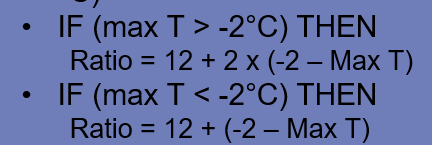
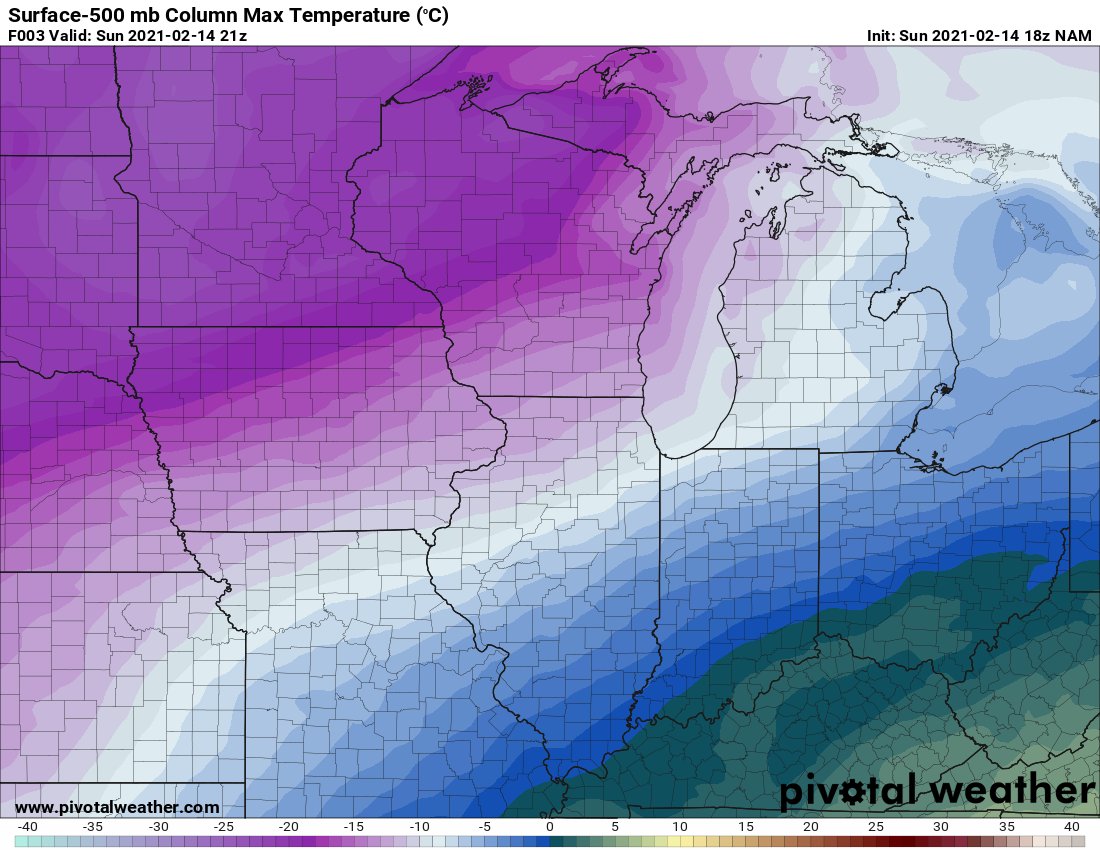
The Kuchera ratio method attempts to account for melting or mixing when the temp is near freezing, but only accounts for column-max T and doesn't consider the DGZ at all. Here's the equation and graph, courtesy of @burgwx.12/
Thus, on maps, the patterns of column-max temp and Kuchera ratio always follow identical patterns 13/
Although Kuchera is certainly an improvement on a static 10:1 ratio, my experience is that the Kuchera ratio is too high in marginal snowfall regimes when melting/mixing is important, and also in very cold regimes (column-max T < -20C) because the DGZ doesn't even exist! 14/
Observed snow ratios and an empirical fit illustrate this nicely /fin

More from Climate change

@smarzeli @ianrowley677 @chimera414 @BrknMan @ancistroneura @sueytonius @swcrisis @eloarefab @BailFund_Brawl @IngersolRobert @OscarsWild1 @RuleByLogic @KCTaz @Kenneth72712993 @alshalloway @ClimatePatriot @joetheatheistp @insane_voice @TheDisproof @Ceist8 @BradPKeyes @Fauntleroy1934 @DawnTJ90 @Jamz129 @JsharkJill @Tangomitteckel @joedieseldodge @BadgersNo @fknsavages27 @SimonPearson961 @JoeTheAtheist @CMorrisonEsq @maya_phd @CymaticWave @Schtickery @ClimateDepot @stevenmosher @Willard1951 @Tokyo_Tom @jc_Craze @DanCady @PolAnimalAus @ZombiePiano @SimonMaxfield8 @CrangusShish @Gladfly1 @AtomsksSanakan @leonardjcohen @FrankWi74044551 [1/14] It is very sad that @NatGeo is now publishing such disinformation. The article is lies.

The Earth is greening, thanks to elevated CO2 -- especially in arid

@ianrowley677 @chimera414 @BrknMan @ancistroneura @sueytonius @swcrisis @eloarefab @BailFund_Brawl @IngersolRobert @OscarsWild1 @RuleByLogic @KCTaz @Kenneth72712993 @alshalloway @ClimatePatriot @joetheatheistp @insane_voice @TheDisproof @Ceist8 @BradPKeyes @Fauntleroy1934 @DawnTJ90 @Jamz129 @JsharkJill @Tangomitteckel @joedieseldodge @BadgersNo @fknsavages27 @SimonPearson961 @JoeTheAtheist @CMorrisonEsq @maya_phd @CymaticWave @Schtickery @ClimateDepot @stevenmosher @Willard1951 @Tokyo_Tom @jc_Craze @DanCady @PolAnimalAus @ZombiePiano @SimonMaxfield8 @CrangusShish @Gladfly1 @AtomsksSanakan @leonardjcohen @FrankWi74044551 @NatGeo [2/14] NASA measures it, from

@ianrowley677 @chimera414 @BrknMan @ancistroneura @sueytonius @swcrisis @eloarefab @BailFund_Brawl @IngersolRobert @OscarsWild1 @RuleByLogic @KCTaz @Kenneth72712993 @alshalloway @ClimatePatriot @joetheatheistp @insane_voice @TheDisproof @Ceist8 @BradPKeyes @Fauntleroy1934 @DawnTJ90 @Jamz129 @JsharkJill @Tangomitteckel @joedieseldodge @BadgersNo @fknsavages27 @SimonPearson961 @JoeTheAtheist @CMorrisonEsq @maya_phd @CymaticWave @Schtickery @ClimateDepot @stevenmosher @Willard1951 @Tokyo_Tom @jc_Craze @DanCady @PolAnimalAus @ZombiePiano @SimonMaxfield8 @CrangusShish @Gladfly1 @AtomsksSanakan @leonardjcohen @FrankWi74044551 [3/14] @NatGeo used to be better. In 2009 they reported, "Vast swaths of North Africa are getting noticeably lusher due to warming temperatures, new satellite images show, suggesting a possible boon for people living in the driest part of the

@ianrowley677 @chimera414 @BrknMan @ancistroneura @sueytonius @swcrisis @eloarefab @BailFund_Brawl @IngersolRobert @OscarsWild1 @RuleByLogic @KCTaz @Kenneth72712993 @alshalloway @ClimatePatriot @joetheatheistp @insane_voice @TheDisproof @Ceist8 @BradPKeyes @Fauntleroy1934 @DawnTJ90 @Jamz129 @JsharkJill @Tangomitteckel @joedieseldodge @BadgersNo @fknsavages27 @SimonPearson961 @JoeTheAtheist @CMorrisonEsq @maya_phd @CymaticWave @Schtickery @ClimateDepot @stevenmosher @Willard1951 @Tokyo_Tom @jc_Craze @DanCady @PolAnimalAus @ZombiePiano @SimonMaxfield8 @CrangusShish @Gladfly1 @AtomsksSanakan @leonardjcohen @FrankWi74044551 [4/14] @NewScientist reported the "remarkable environmental turnaround," including a “quite spectacular regeneration of vegetation,” and "a 70 per cent increase in yields of local cereals such as sorghum and millet in one province in recent

@ianrowley677 @chimera414 @BrknMan @ancistroneura @sueytonius @swcrisis @eloarefab @BailFund_Brawl @IngersolRobert @OscarsWild1 @RuleByLogic @KCTaz @Kenneth72712993 @alshalloway @ClimatePatriot @joetheatheistp @insane_voice @TheDisproof @Ceist8 @BradPKeyes @Fauntleroy1934 @DawnTJ90 @Jamz129 @JsharkJill @Tangomitteckel @joedieseldodge @BadgersNo @fknsavages27 @SimonPearson961 @JoeTheAtheist @CMorrisonEsq @maya_phd @CymaticWave @Schtickery @ClimateDepot @stevenmosher @Willard1951 @Tokyo_Tom @jc_Craze @DanCady @PolAnimalAus @ZombiePiano @SimonMaxfield8 @CrangusShish @Gladfly1 @AtomsksSanakan @leonardjcohen @FrankWi74044551 @newscientist [5/14] Note that sorghum & millet are C4 plants. It was once thought that, unlike C3 plants, C4 plants would benefit little from rising CO2 levels. But C4 crops are favored for their drought-hardiness, &eCO2 is especially beneficial under dry
I don't have time to make this detailed, but here's a little thread about the world's first major politically-charged blackout that was blamed on renewables, in South Australia, in 2016............

On September 28, 2016, an unprecedented tropical storm progressed rapidly across South Australia. Truly - this thing was unusual. The sky folded in on itself. It tore towns to bits.


Australia's @climatecouncil pointed out that the storm was so unusual at least partly due to the influence of climate change, and that this is due to get worse.

https://t.co/76ekkfJpR8


I'm going to use brief snippets from my book to fill this out! The storm's primary impact on the grid was the destruction of several major transmission lines. When I say destruction - I mean they snapped like twigs.


Here's what happened in the following seconds:

- A voltage spike from the line falls
- Wind turbines automatically shut off due to software settings that trigger shutdown during a spike
- The interconnector to Vic tried to compensate, failed and died
- All of SA blacked out

You May Also Like

So the cryptocurrency industry has basically two products, one which is relatively benign and doesn't have product market fit, and one which is malignant and does. The industry has a weird superposition of understanding this fact and (strategically?) not understanding it.


The benign product is sovereign programmable money, which is historically a niche interest of folks with a relatively clustered set of beliefs about the state, the literary merit of Snow Crash, and the utility of gold to the modern economy.

This product has narrow appeal and, accordingly, is worth about as much as everything else on a 486 sitting in someone's basement is worth.

The other product is investment scams, which have approximately the best product market fit of anything produced by humans. In no age, in no country, in no city, at no level of sophistication do people consistently say "Actually I would prefer not to get money for nothing."

This product needs the exchanges like they need oxygen, because the value of it is directly tied to having payment rails to move real currency into the ecosystem and some jurisdictional and regulatory legerdemain to stay one step ahead of the banhammer.
शमशान में जब महर्षि दधीचि के मांसपिंड का दाह संस्कार हो रहा था तो उनकी पत्नी अपने पति का वियोग सहन नहीं कर पायी और पास में ही स्थित विशाल पीपल वृक्ष के कोटर में अपने तीन वर्ष के बालक को रख के स्वयं चिता पे बैठ कर सती हो गयी ।इस प्रकार ऋषी दधीचि और उनकी पत्नी की मुक्ति हो गयी।


परन्तु पीपल के कोटर में रखा बालक भूख प्यास से तड़पने लगा। जब कुछ नहीं मिला तो वो कोटर में पड़े पीपल के गोदों (फल) को खाकर बड़ा होने लगा। कालान्तर में पीपल के फलों और पत्तों को खाकर बालक का जीवन किसी प्रकार सुरक्षित रहा।

एक दिन देवर्षि नारद वहां से गुजर रहे थे ।नारद ने पीपल के कोटर में बालक को देख कर उसका परिचय मांगा -
नारद बोले - बालक तुम कौन हो?
बालक - यही तो मैं भी जानना चहता हूँ ।
नारद - तुम्हारे जनक कौन हैं?
बालक - यही तो मैं भी जानना चाहता हूँ ।

तब नारद ने आँखें बन्द कर ध्यान लगाया ।


तत्पश्चात आश्चर्यचकित हो कर बालक को बताया कि 'हे बालक! तुम महान दानी महर्षि दधीचि के पुत्र हो । तुम्हारे पिता की अस्थियों का वज्रास्त्र बनाकर ही देवताओं ने असुरों पर विजय पायी थी।तुम्हारे पिता की मृत्यु मात्र 31 वर्ष की वय में ही हो गयी थी'।

बालक - मेरे पिता की अकाल मृत्यु का क्या कारण था?
नारद - तुम्हारे पिता पर शनिदेव की महादशा थी।
बालक - मेरे उपर आयी विपत्ति का कारण क्या था?
नारद - शनिदेव की महादशा।
इतना बताकर देवर्षि नारद ने पीपल के पत्तों और गोदों को खाकर बड़े हुए उस बालक का नाम पिप्पलाद रखा और उसे दीक्षित किया।