
There are a lot of Brexiters in the media this week making points about sovereignty, and about how the EU has not come to terms with the UK's independence.
I have some questions, which it might well be fruitful to ask them. 1/9
One of the root causes of the Govt's Brexit difficulties is that it has overpromised.
— Phil Syrpis (@syrpis) December 7, 2020
We can, it is said, reclaim our sovereignty, with the freedom to make our own rules, and, at the same time, retain many of the advantages of EU membership. 1/14
More from Brexit

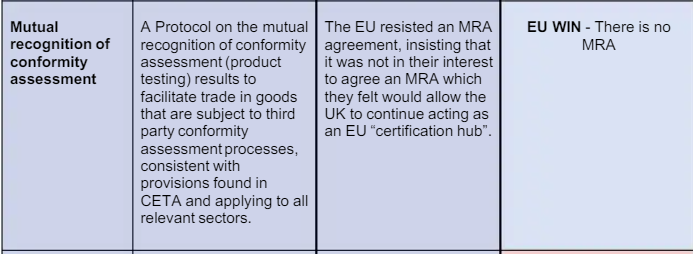


So. The hunt is on in Whitehall for #brexit dividends...to show some clear value in the freedoms given by Brexit.
As we report today one area being looked at is workers' rights...but it is politically difficult territory.
No cabinet decisions have been taken, but per sources, three potential areas been identified in Business Dept...
- the 48 Hour Week
- holiday pay/overtime calculations
- new EU rules on reporting hours worked...
All potentially possible post #brexit /2
The government says it has no intention of “lowering” workers’ rights....and notes that UK has actually gold-plated many EU regulations...BUT (think of government saying it won't "lower" animal welfare standards)...the devil will all be in the detail, if and when it comes /3
So the government likes to talk about ensuring workers’ rights are protected but ALSO making sure businesses has freedoms and flexibility to grow...so one man's reduction in rights is another freedom to get richer/work harder/be more prosperous. It depends how you sell it. /4
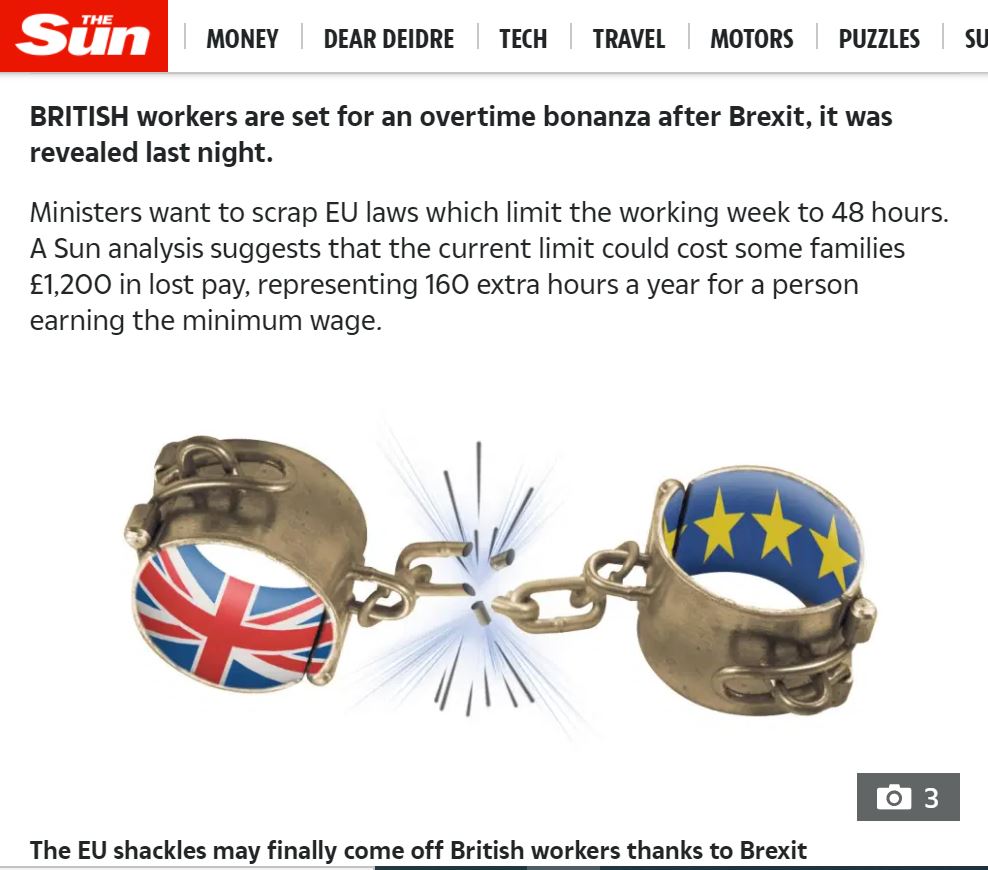
So take this 2017 story from The Sun on the cash bonanza that will be rained down on hardworking families by Brexiteers' (long standing) desire to scrap the 48-hour week. Overtime booooom..../5
https://t.co/QLqQ7rCzkv
As we report today one area being looked at is workers' rights...but it is politically difficult territory.
No cabinet decisions have been taken, but per sources, three potential areas been identified in Business Dept...
- the 48 Hour Week
- holiday pay/overtime calculations
- new EU rules on reporting hours worked...
All potentially possible post #brexit /2
The government says it has no intention of “lowering” workers’ rights....and notes that UK has actually gold-plated many EU regulations...BUT (think of government saying it won't "lower" animal welfare standards)...the devil will all be in the detail, if and when it comes /3
So the government likes to talk about ensuring workers’ rights are protected but ALSO making sure businesses has freedoms and flexibility to grow...so one man's reduction in rights is another freedom to get richer/work harder/be more prosperous. It depends how you sell it. /4
So take this 2017 story from The Sun on the cash bonanza that will be rained down on hardworking families by Brexiteers' (long standing) desire to scrap the 48-hour week. Overtime booooom..../5
https://t.co/QLqQ7rCzkv
You May Also Like






These 10 threads will teach you more than reading 100 books
Five billionaires share their top lessons on startups, life and entrepreneurship (1/10)
10 competitive advantages that will trump talent (2/10)
Some harsh truths you probably don’t want to hear (3/10)
10 significant lies you’re told about the world (4/10)
Five billionaires share their top lessons on startups, life and entrepreneurship (1/10)
I interviewed 5 billionaires this week
— GREG ISENBERG (@gregisenberg) January 23, 2021
I asked them to share their lessons learned on startups, life and entrepreneurship:
Here's what they told me:
10 competitive advantages that will trump talent (2/10)
To outperform, you need serious competitive advantages.
— Sahil Bloom (@SahilBloom) March 20, 2021
But contrary to what you have been told, most of them don't require talent.
10 competitive advantages that you can start developing today:
Some harsh truths you probably don’t want to hear (3/10)
I\u2019ve gotten a lot of bad advice in my career and I see even more of it here on Twitter.
— Nick Huber (@sweatystartup) January 3, 2021
Time for a stiff drink and some truth you probably dont want to hear.
\U0001f447\U0001f447
10 significant lies you’re told about the world (4/10)
THREAD: 10 significant lies you're told about the world.
— Julian Shapiro (@Julian) January 9, 2021
On startups, writing, and your career:


