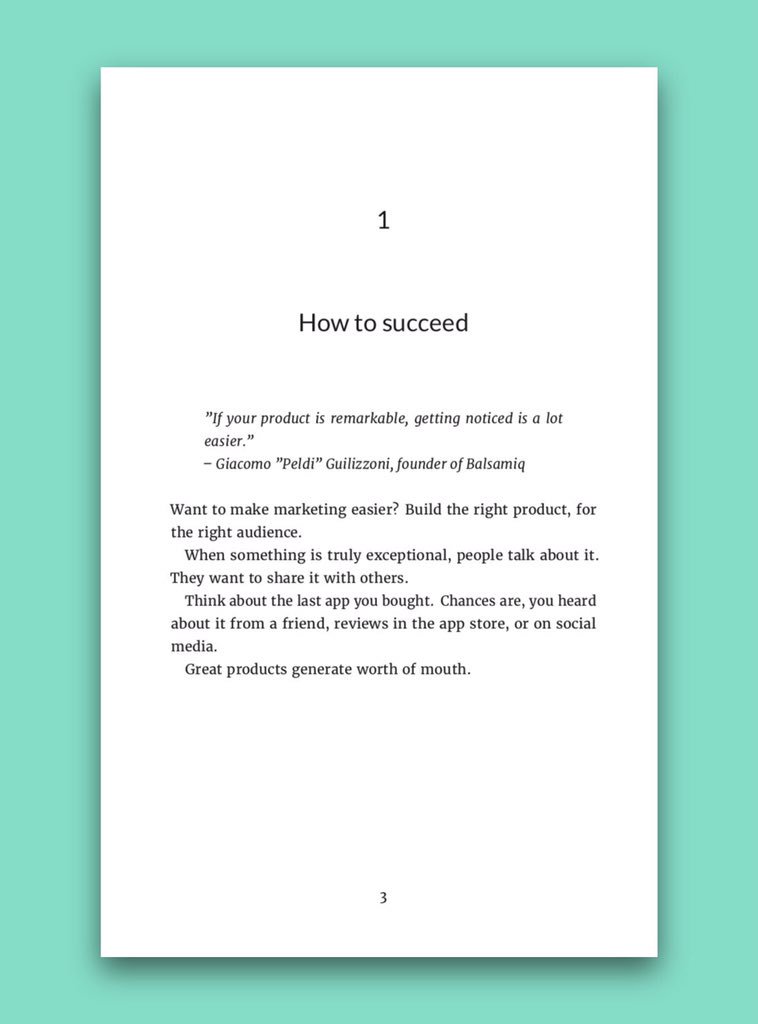
2. Make 'No' your default. Whether it's new work projects or social gatherings, saying 'Yes' to non-priorities ruins your priorities. In the words of Mark Manson, if it's not a 'fuck yes,' it's a no.
Life hacks I know at 30 I wish I knew at 20:
2. Make 'No' your default. Whether it's new work projects or social gatherings, saying 'Yes' to non-priorities ruins your priorities. In the words of Mark Manson, if it's not a 'fuck yes,' it's a no.
4. You don't have to finish the book or movie if it sucks.
6. Success comes down to a simple choice: 1. Decide exactly what you want. 2. Determine the price you have to pay. 3. Choose if you're willing to pay it.
10. Score your day (like a movie) with music. Music is a powerful mood enhancer. Almost everything is more enjoyable with music. My go-to: Hans Zimmer.
12. Follow Japan's 80% Rule: "Eat until you're only 80% full." Nobody has time for a food coma
13. Normalize midday naps. You get two days of energy in one
16. Spotlight Effect (Bias): We think people are paying far more attention to us than they are. Harsh truth: Your freedom begins the day you realize nobody is thinking about you.
21. Master the "gift of goodbye." You don't owe loyalty to a friend, partner, or employer who belittles you. Successful & happy people simply say goodbye.
More from Ben Meer


The best morning routine?
Starts the night before.
9 evening habits that make all the difference:
1. Write down tomorrow's 3:3:3 plan
• 3 hours on your most important project
• 3 shorter tasks
• 3 maintenance activities
Defining a "productive day" is crucial.
Or else you'll never be at peace (even with excellent output).
Learn more
2. End the workday with a shutdown ritual
Create a short shutdown ritual (hat-tip to Cal Newport). Close your laptop, plug in the charger, spend 2 minutes tidying your desk. Then say, "shutdown."
Separating your life and work is key.
3. Journal 1 beautiful life moment
Delicious tacos, presentation you crushed, a moment of inner peace. Write it down.
Gratitude programs a mindset of abundance.
4. Lay out clothes
Get exercise clothes ready for tomorrow. Upon waking up, jump rope for 2 mins. It will activate your mind + body.
Starts the night before.
9 evening habits that make all the difference:
1. Write down tomorrow's 3:3:3 plan
• 3 hours on your most important project
• 3 shorter tasks
• 3 maintenance activities
Defining a "productive day" is crucial.
Or else you'll never be at peace (even with excellent output).
Learn more
How to be 5x more productive.
— Ben Meer (@SystemSunday) August 1, 2022
A best-selling author\u2019s 3-3-3 Method:
2. End the workday with a shutdown ritual
Create a short shutdown ritual (hat-tip to Cal Newport). Close your laptop, plug in the charger, spend 2 minutes tidying your desk. Then say, "shutdown."
Separating your life and work is key.
3. Journal 1 beautiful life moment
Delicious tacos, presentation you crushed, a moment of inner peace. Write it down.
Gratitude programs a mindset of abundance.
4. Lay out clothes
Get exercise clothes ready for tomorrow. Upon waking up, jump rope for 2 mins. It will activate your mind + body.
10 free websites so useful they should come pre-bookmarked on every browser:
1. Quillbot
A free paraphrasing website (popular among students).
• Input text and hit Rephrase
• Get AI-inspiration on how to rewrite
• Scan text for plagiarism (built-in feature)
• Credit sources
https://t.co/JBf4rpT9zF

2. 12ft Ladder
Want to read an article, but there’s a paywall?
Simply insert the URL into 12ft Ladder.
All sites have a non-paywall version they send to Google for SEO.
12ft finds the cached, un-paywalled version of the page.
Now you’re in.
https://t.co/E5vBxDGils

3. Untools
Benefit from a collection of thinking tools and frameworks.
Categories include:
• Systems thinking
• Decision making
• Problem solving
• Communication
https://t.co/vMgngVKMow

4. UnrollMe
Is your inbox overflowing with email subscriptions?
Use UnrollMe to bulk unsubscribe (it's free).
Another cool feature? “Roll-up” subscriptions into a single email.
You’ll be *many* steps closer to inbox zero.
https://t.co/uukYkPgbRv

1. Quillbot
A free paraphrasing website (popular among students).
• Input text and hit Rephrase
• Get AI-inspiration on how to rewrite
• Scan text for plagiarism (built-in feature)
• Credit sources
https://t.co/JBf4rpT9zF
2. 12ft Ladder
Want to read an article, but there’s a paywall?
Simply insert the URL into 12ft Ladder.
All sites have a non-paywall version they send to Google for SEO.
12ft finds the cached, un-paywalled version of the page.
Now you’re in.
https://t.co/E5vBxDGils
3. Untools
Benefit from a collection of thinking tools and frameworks.
Categories include:
• Systems thinking
• Decision making
• Problem solving
• Communication
https://t.co/vMgngVKMow
4. UnrollMe
Is your inbox overflowing with email subscriptions?
Use UnrollMe to bulk unsubscribe (it's free).
Another cool feature? “Roll-up” subscriptions into a single email.
You’ll be *many* steps closer to inbox zero.
https://t.co/uukYkPgbRv


More from All



You May Also Like

1/ Some initial thoughts on personal moats:
Like company moats, your personal moat should be a competitive advantage that is not only durable—it should also compound over time.
Characteristics of a personal moat below:
2/ Like a company moat, you want to build career capital while you sleep.
As Andrew Chen noted:
3/ You don’t want to build a competitive advantage that is fleeting or that will get commoditized
Things that might get commoditized over time (some longer than
4/ Before the arrival of recorded music, what used to be scarce was the actual music itself — required an in-person artist.
After recorded music, the music itself became abundant and what became scarce was curation, distribution, and self space.
5/ Similarly, in careers, what used to be (more) scarce were things like ideas, money, and exclusive relationships.
In the internet economy, what has become scarce are things like specific knowledge, rare & valuable skills, and great reputations.
Like company moats, your personal moat should be a competitive advantage that is not only durable—it should also compound over time.
Characteristics of a personal moat below:
I'm increasingly interested in the idea of "personal moats" in the context of careers.
— Erik Torenberg (@eriktorenberg) November 22, 2018
Moats should be:
- Hard to learn and hard to do (but perhaps easier for you)
- Skills that are rare and valuable
- Legible
- Compounding over time
- Unique to your own talents & interests https://t.co/bB3k1YcH5b
2/ Like a company moat, you want to build career capital while you sleep.
As Andrew Chen noted:
People talk about \u201cpassive income\u201d a lot but not about \u201cpassive social capital\u201d or \u201cpassive networking\u201d or \u201cpassive knowledge gaining\u201d but that\u2019s what you can architect if you have a thing and it grows over time without intensive constant effort to sustain it
— Andrew Chen (@andrewchen) November 22, 2018
3/ You don’t want to build a competitive advantage that is fleeting or that will get commoditized
Things that might get commoditized over time (some longer than
Things that look like moats but likely aren\u2019t or may fade:
— Erik Torenberg (@eriktorenberg) November 22, 2018
- Proprietary networks
- Being something other than one of the best at any tournament style-game
- Many "awards"
- Twitter followers or general reach without "respect"
- Anything that depends on information asymmetry https://t.co/abjxesVIh9
4/ Before the arrival of recorded music, what used to be scarce was the actual music itself — required an in-person artist.
After recorded music, the music itself became abundant and what became scarce was curation, distribution, and self space.
5/ Similarly, in careers, what used to be (more) scarce were things like ideas, money, and exclusive relationships.
In the internet economy, what has become scarce are things like specific knowledge, rare & valuable skills, and great reputations.