Expecting equally sharp rally after some consolidation.
#WelspunIndia https://t.co/9b99KkCPu9
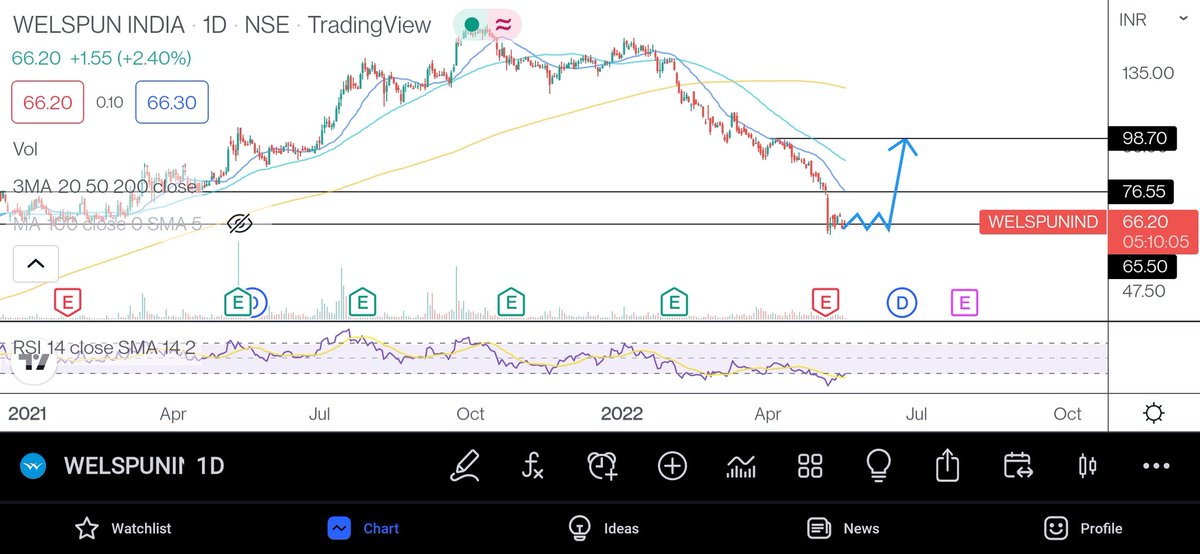
Expecting the recovery in Welspun India towards the marked zone for medium term time frame. #WelspunIndia pic.twitter.com/gkmtHDV9tF
— Aakash Gangwar (@akashgngwr823) May 13, 2022
More from Aakash Gangwar
#CNXIT
Almost there. Be prepared to see 33k again in Nifty IT. Only for swing trades, no investment here. #CNXIT https://t.co/RMAsQweoFY pic.twitter.com/BmKD7g6Q8i
— Aakash Gangwar (@akashgngwr823) May 25, 2022
1. Long term channel top.
2. Curvature shift of 20 and 50 WMA along with price hitting 20 WMA frequently.
3. Overall weakness in IT sector.
4. For reference, study reliance top in August 2020, study Nasdaq Weekly chart and the top made in Nov 2021.
#tataelxi https://t.co/RmJa5LrdAP
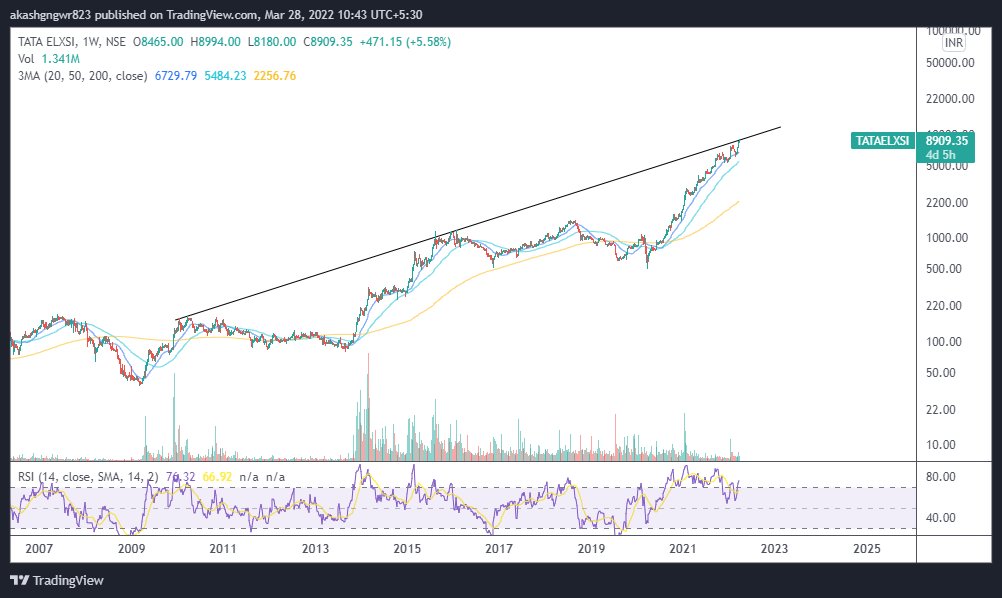
I have traded the current fav Tata Elxi from 2200 to 4500. No regret on missing out rest of the move because I am not an investor. Now there are many technical red flags. I might be trolled but 10.5k looks max target while 5k or 3-4 years of sideways looks inevitable.#tataelxi
— Aakash Gangwar (@akashgngwr823) March 26, 2022
#nifty50 https://t.co/64ZktWHQev
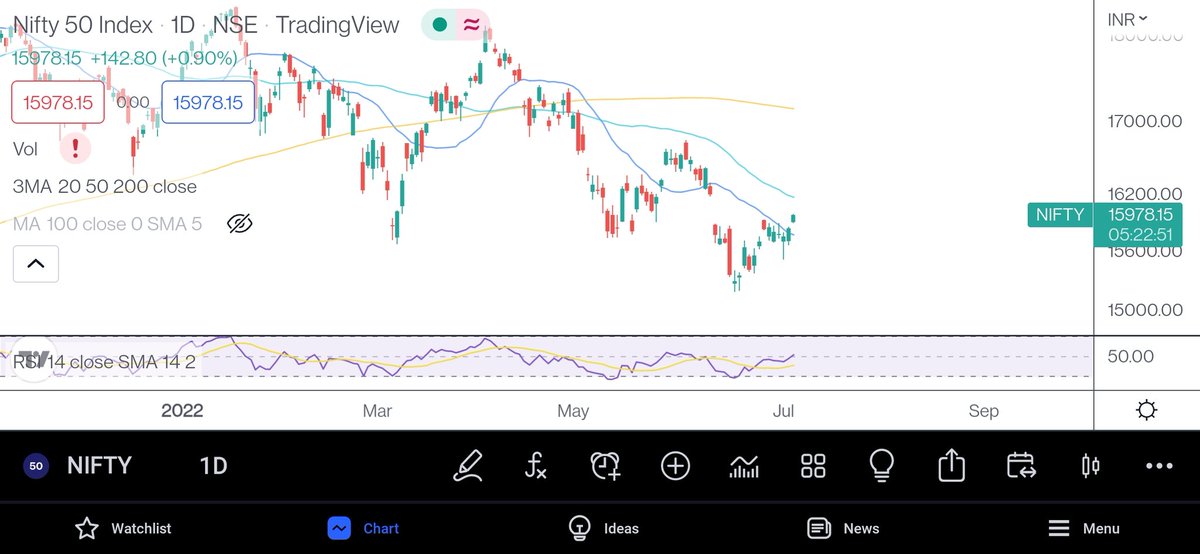
This is the maximum upside for now, post that I am looking for an 8-9% fall in index.#nifty50 pic.twitter.com/BcSOiwWuBs
— Aakash Gangwar (@akashgngwr823) June 24, 2022
Do read it completely to understand the stance and the plan.
This thread will present a highly probable scenario of markets for the upcoming months. Will update the scenario too if there is a significant change in view in between.
— Aakash Gangwar (@akashgngwr823) May 15, 2022
1/n https://t.co/jfWOyEgZyd
1. The moving average structure - Many traders just look at the 200 ma test or closing above/below it regardless of its slope. Let's look at all the interactions with 200 ma where price met it for the first time after the trend change but with 200 ma slope against it
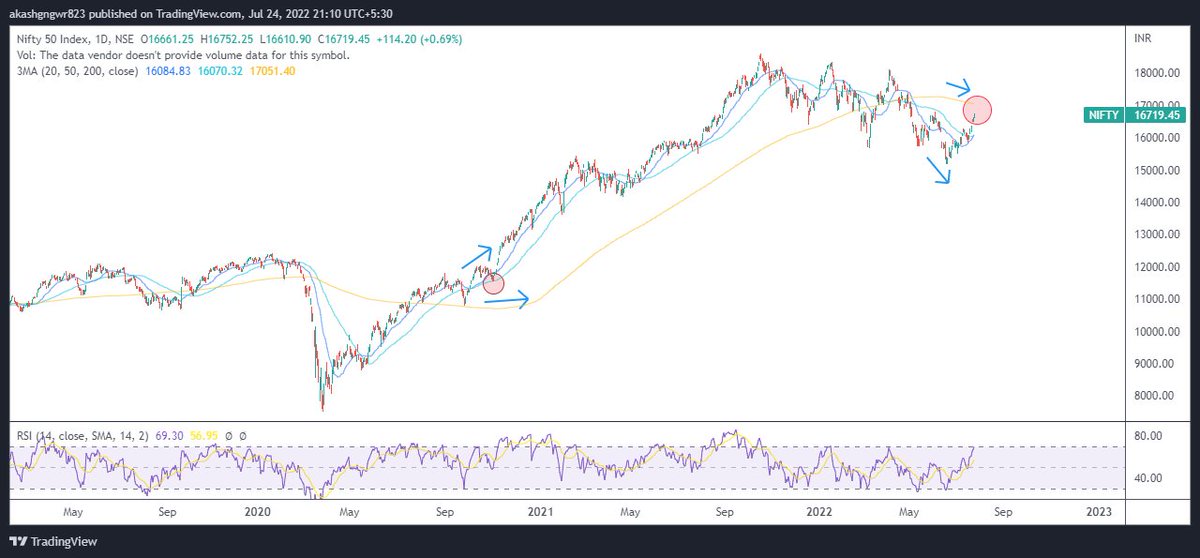
One can clearly sense that currently it is one of those scenarios only. I understand that I might get trolled for this, but an unbiased mind suggests that odds are highly against the bulls for making fresh investments.
But markets are good at giving surprises. What should be our stance if price kept on rising? Let's understand that through charts. The concept is still the same. Divergent 200 ma and price move results in 200 ma test atleast once which gives good investment opportunities.
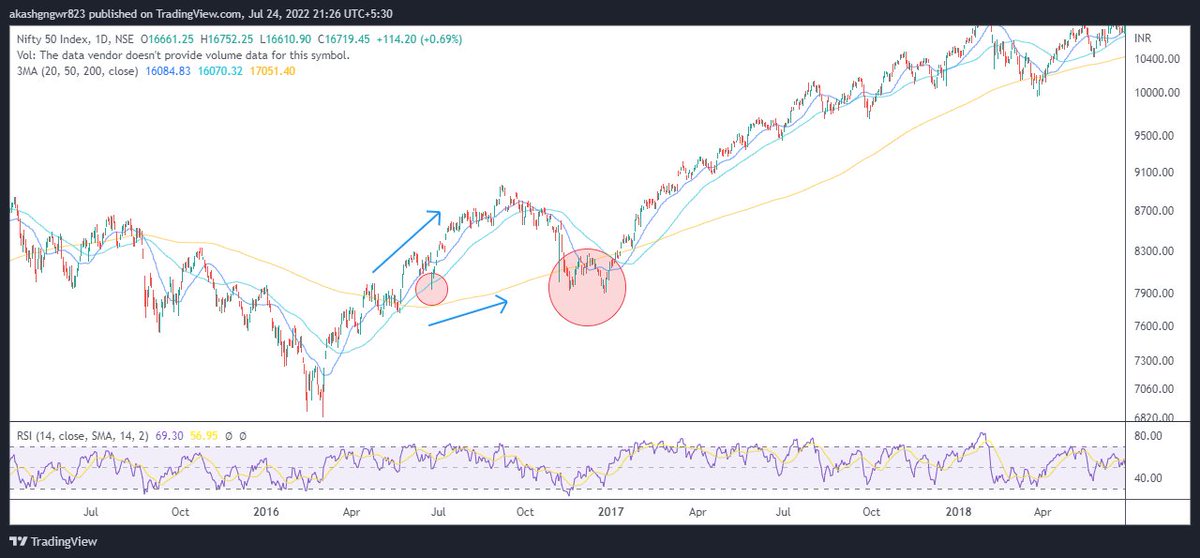
2. Zig-Zag bear market- There are two types of fall in a bear market, the first one is vertical fall which usually ends with ending diagonals (falling wedges) and the second one is zig zag one which usually ends with parabolic down moves.
You May Also Like


Legacy site *downloads* ~630 KB CSS per theme and writing direction.
6,769 rules
9,252 selectors
16.7k declarations
3,370 unique declarations
44 media queries
36 unique colors
50 unique background colors
46 unique font sizes
39 unique z-indices
https://t.co/qyl4Bt1i5x

PWA *incrementally generates* ~30 KB CSS that handles all themes and writing directions.
735 rules
740 selectors
757 declarations
730 unique declarations
0 media queries
11 unique colors
32 unique background colors
15 unique font sizes
7 unique z-indices
https://t.co/w7oNG5KUkJ

The legacy site's CSS is what happens when hundreds of people directly write CSS over many years. Specificity wars, redundancy, a house of cards that can't be fixed. The result is extremely inefficient and error-prone styling that punishes users and developers.
The PWA's CSS is generated on-demand by a JS framework that manages styles and outputs "atomic CSS". The framework can enforce strict constraints and perform optimisations, which is why the CSS is so much smaller and safer. Style conflicts and unbounded CSS growth are avoided.