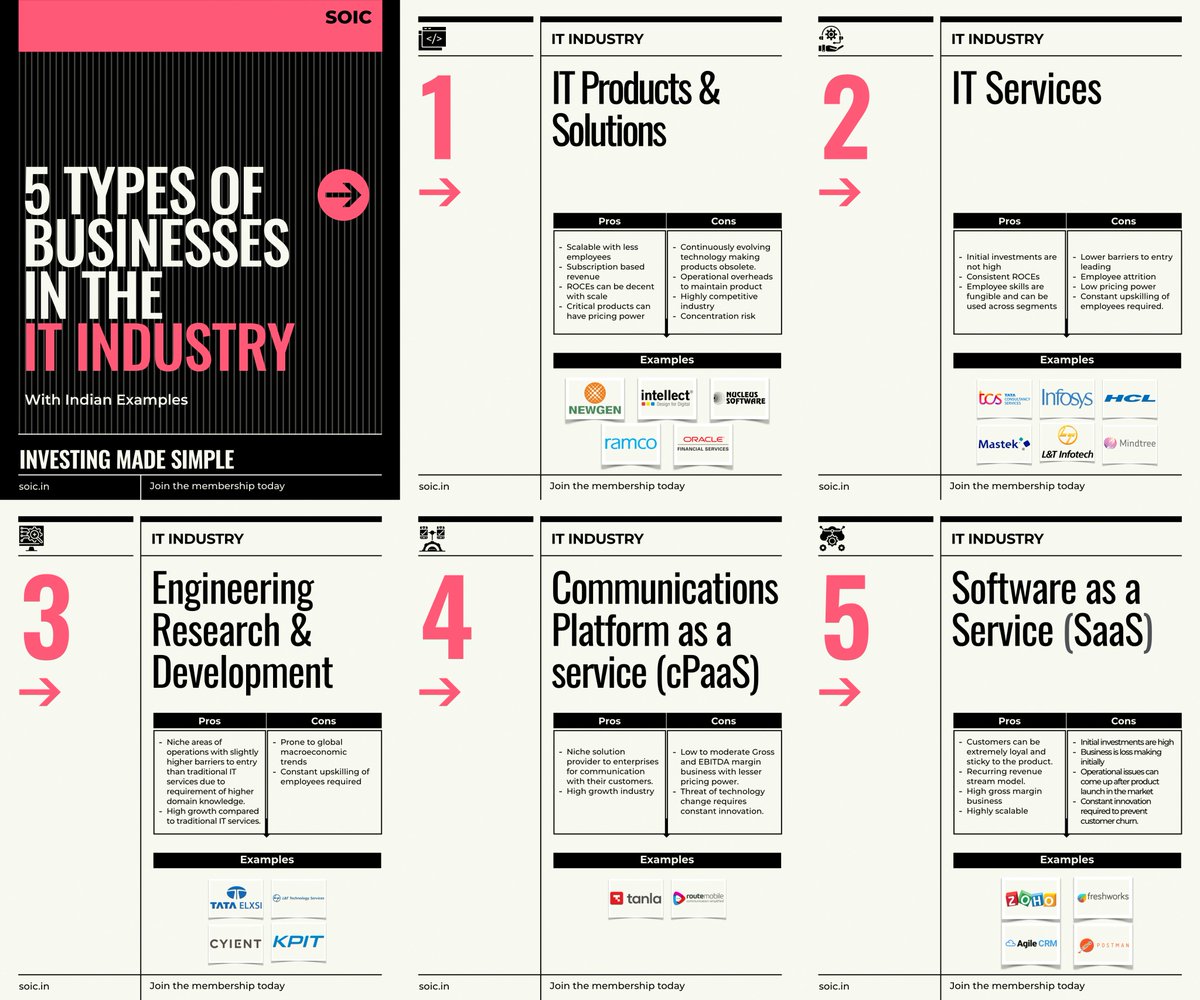
Creating segments and classifications about what really works in a sector can help you massively.

EG:- IT is just not about IT, there are Product companies, SAAS Businesses, services companies, ER&D companies and Corporate Learning Companies.

Banking&Finance is just not about Large Private Banks ⤵️

There are regional banks, Small Finance Bank, Public Sector Banks, Regional NBFCs, Deposit taking NBFCs, Housing Finance companies, Microfinance companies, CV Financiers etc.
Chemicals are not just speciality chemicals ⤵️

There are Bulk Chemicals like Phenol, Speciality Chemical and different chemistry chains expert like Fluorine, Bromine, Phosgene etc. Then there are niche product manufacturers like SDA or ATBS.
Retail is just not about Retail ⤵️

There are various segments within retail too! Someone might be doing value retail, someone might be doing luxury retail, Some companies might go for a COCO model (Company owned+Company Operated). Some might go for FOFO model (Franchise owned)
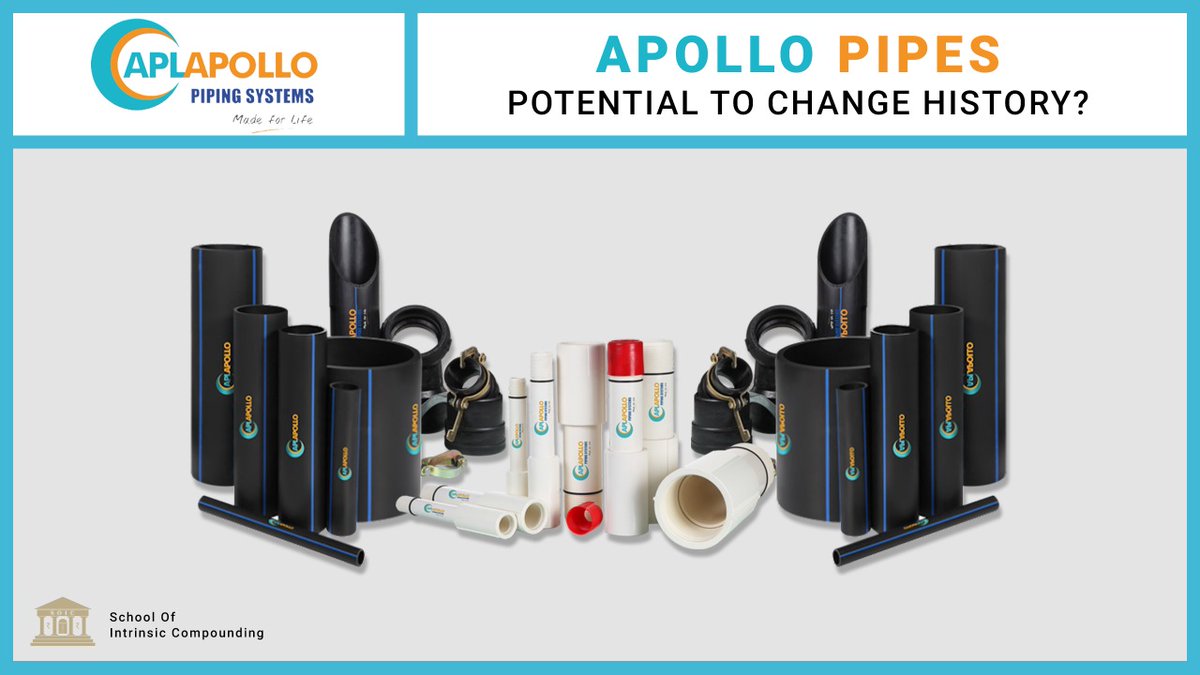
Pharma Contract Manufacturing has various types too ⤵️

Some Like Windlas are just CMO's for generics (low margin), some are present throughout the value chain Like Syngene (Complete CRAMS), some are just in Contract Development and manufacturing of intermediates (Suven)
Key Learnings for the investor:-

1. Sub-segmentation of sectors is a practice that you must use in Funda analysis.

2. Getting an idea on return ratios and margins for each sub sector will help you identify the business strategy.

3. It will help you build ⭕️ of competence.

More from Intrinsic Compounding

More from Valuation

You May Also Like

"I really want to break into Product Management"

make products.

"If only someone would tell me how I can get a startup to notice me."

Make Products.

"I guess it's impossible and I'll never break into the industry."

MAKE PRODUCTS.

Courtesy of @edbrisson's wonderful thread on breaking into comics –
https://t.co/TgNblNSCBj – here is why the same applies to Product Management, too.


There is no better way of learning the craft of product, or proving your potential to employers, than just doing it.

You do not need anybody's permission. We don't have diplomas, nor doctorates. We can barely agree on a single standard of what a Product Manager is supposed to do.

But – there is at least one blindingly obvious industry consensus – a Product Manager makes Products.

And they don't need to be kept at the exact right temperature, given endless resource, or carefully protected in order to do this.

They find their own way.