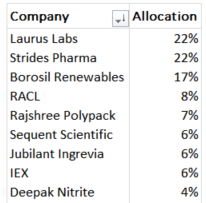
Promised to share my portfolio, so here it is.
None of this is investment advice, please do your own research. I may choose to exit, reduce or add anytime to these.
More from Tar ⚡
250: Electricity in India won't grow
300: It just makes 4paise per trade
350: MBED will erode it's profitablilty
500: Maybe what @itsTarH said about IEX = NSE + Zerodha was right
570: Buys IEX
#JourneyOfAPessimist
Zerodha + NSE = IEX \U0001f4a1\u26a1\ufe0f
— Tar \u26a1 (@itsTarH) June 20, 2021
A business like Universal which controls more than 1/3rd of all published music globally is selling for less than 6x FY20 Sales.
Why are Indian businesses like Saregama / Tips selling for 11x, 20x their sales?
If I include all of the revenue generated by entire firm, its selling for ~4.5x FY20 Sales
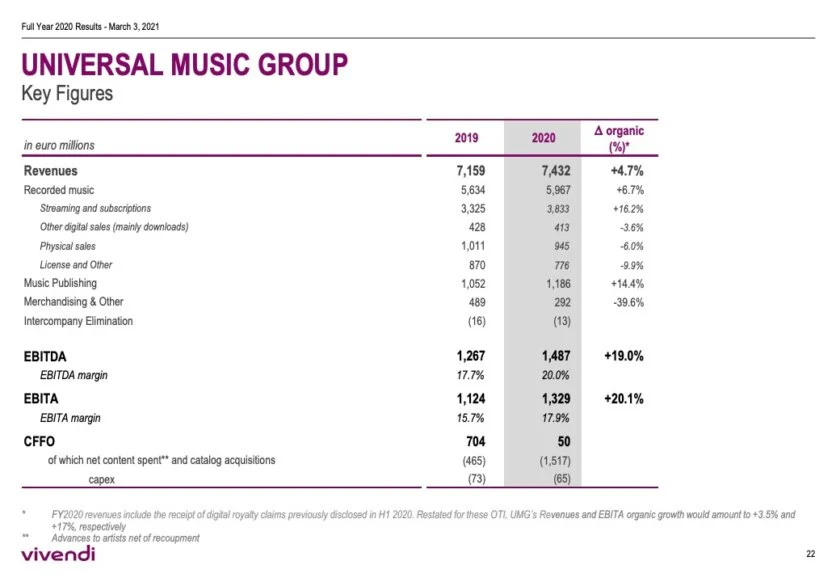
Universal Listing Market Cap ~ 40 Billion USD
FY 20 Revenues ~ 8.87 B USD or 7.4B EUR
Catalogue of Music includes every international artist you can possibly name
Either Universal is grossly undervalued or Saregama/Tips are grossly overvalued.
https://t.co/aHzWSYtcUt
Homework for all the interested participants here:
— Intrinsic Compounding (@soicfinance) June 27, 2021
Q1.Why 20% and not 50%+ Margins for UMG
Q2. Differences in dynamics between Western&Indian cos?
Q3. Trends in West vs Trends in India in the industry.
Research and find the answers. My job is done \U0001f601\U0001f64f
https://t.co/v0EMoCuYKX
If you see the ebitda of universal music its low 20% compared to our saregama 30% or tips 50%. So when you compare earnings saregama is 40x and tips is 30x and universal music is 30x. Also these type of companies are less( low or no capex with excellent and growinh cashflows)
— Srikanth V (@mynameisnani75) June 27, 2021


OPM: 23%
Free Float: <5%
QoQ continuous increase in ownership by institutions
ROE: ~20%
ROCE: ~28%
EV by EBITDA: 15
Leading developer of Indigenous Military Drones
Exports are prime focus for the company
D: Invested, not a recommendation
Lots of under owned stocks with robust financials within Defense Sector \U0001fa96\U0001f396\ufe0f
— Tar \u26a1 (@itsTarH) April 12, 2022
You don't even have to try looking very hard to find something interesting
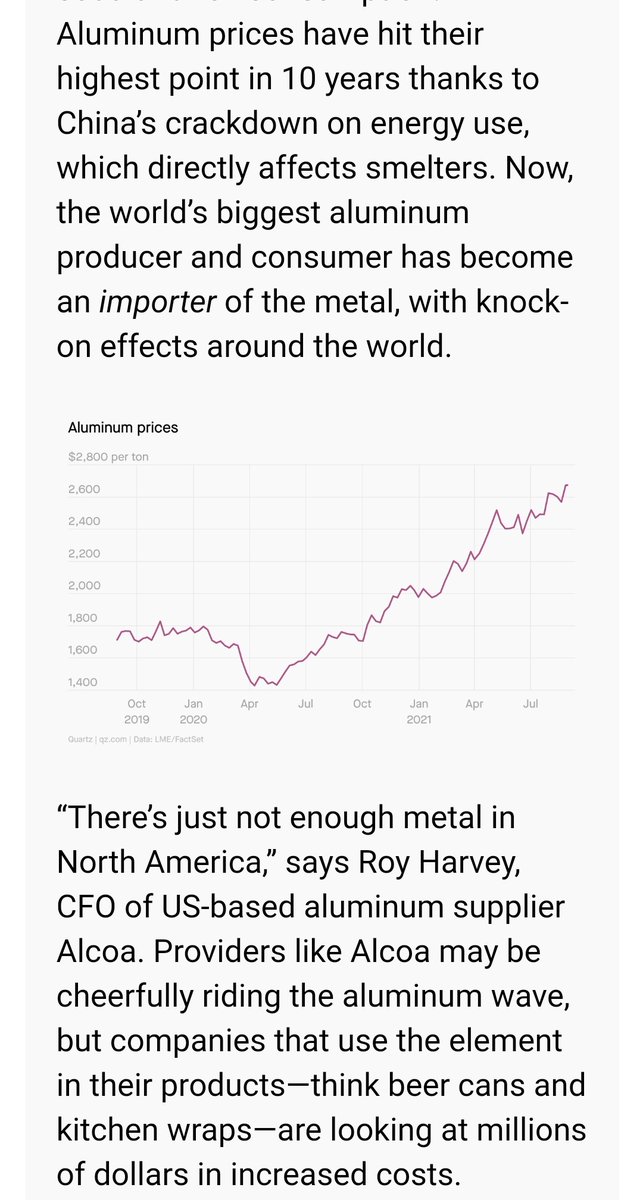
Crackdown on factories in China driven by political rulings to curb emissions
Nalco delivers the highest grossing quarter ever
2+2 = 20 https://t.co/paEk76EaGT
Common theme coming out of China is
— Tar \u26a1 (@itsTarH) August 31, 2021
1\u20e3 Govt wants to focus on general prosperity than just prosperity of a few
2\u20e3 Large focus on limiting emissions
3\u20e3 Willing to lose market share and global dominance in some categories to achieve the above
Bodes well for some sectors in India.
https://t.co/eabqmzuU2v
Aluminum prices have risen almost 40% this year on the LME. https://t.co/yWD0I1yECY pic.twitter.com/IhaJD53mmX
— Lisa Abramowicz (@lisaabramowicz1) August 31, 2021
VP Thread on
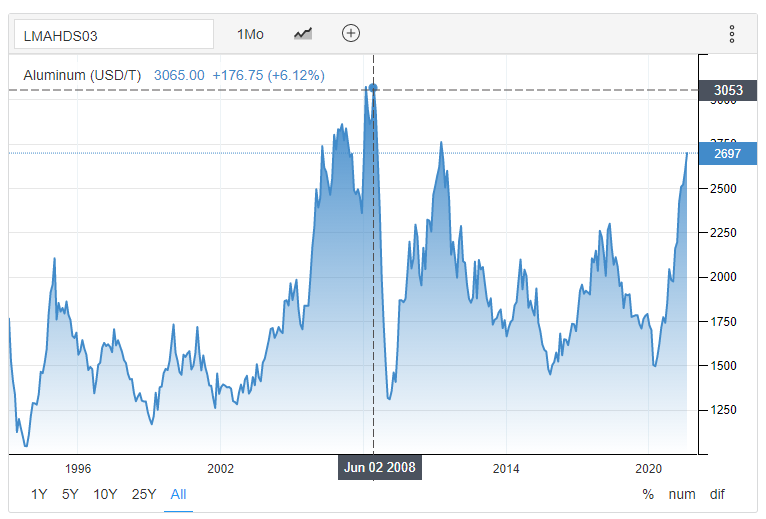
Nalco's earnings have very high sensitivity to aluminum price. In fact, it’s earnings double for every US$400/t increase in aluminum
Aluminum Prices just ~14% away from their ATH of 3000+ USD/T
More from Uvlearnings

Asian Paints is the TCS of 'Home Improvement' space
Think in terms of ::
- Sustainability of Leadership over decades
- Sustainability of Consumption Megatrend
- Sustainability of CFO and Governance
- Quality of Balance Sheet
Rather than absolute MCap
Conviction | Patience
— Sajal Kapoor (@unseenvalue) December 30, 2019
TCS of CDMO in the making over the next 15Y \U0001f1ee\U0001f1f3
Compounding @ 25% since the IPO.
Syngene | Revisit 2030-2040 https://t.co/PHd8UEod5X
You May Also Like

As a dean of a major academic institution, I could not have said this. But I will now. Requiring such statements in applications for appointments and promotions is an affront to academic freedom, and diminishes the true value of diversity, equity of inclusion by trivializing it. https://t.co/NfcI5VLODi
— Jeffrey Flier (@jflier) November 10, 2018
We know that elite institutions like the one Flier was in (partial) charge of rely on irrelevant status markers like private school education, whiteness, legacy, and ability to charm an old white guy at an interview.
Harvard's discriminatory policies are becoming increasingly well known, across the political spectrum (see, e.g., the recent lawsuit on discrimination against East Asian applications.)
It's refreshing to hear a senior administrator admits to personally opposing policies that attempt to remedy these basic flaws. These are flaws that harm his institution's ability to do cutting-edge research and to serve the public.
Harvard is being eclipsed by institutions that have different ideas about how to run a 21st Century institution. Stanford, for one; the UC system; the "public Ivys".


If everyone was holding bitcoin on the old x86 in their parents basement, we would be finding a price bottom. The problem is the risk is all pooled at a few brokerages and a network of rotten exchanges with counter party risk that makes AIG circa 2008 look like a good credit.
— Greg Wester (@gwestr) November 25, 2018
The benign product is sovereign programmable money, which is historically a niche interest of folks with a relatively clustered set of beliefs about the state, the literary merit of Snow Crash, and the utility of gold to the modern economy.
This product has narrow appeal and, accordingly, is worth about as much as everything else on a 486 sitting in someone's basement is worth.
The other product is investment scams, which have approximately the best product market fit of anything produced by humans. In no age, in no country, in no city, at no level of sophistication do people consistently say "Actually I would prefer not to get money for nothing."
This product needs the exchanges like they need oxygen, because the value of it is directly tied to having payment rails to move real currency into the ecosystem and some jurisdictional and regulatory legerdemain to stay one step ahead of the banhammer.