
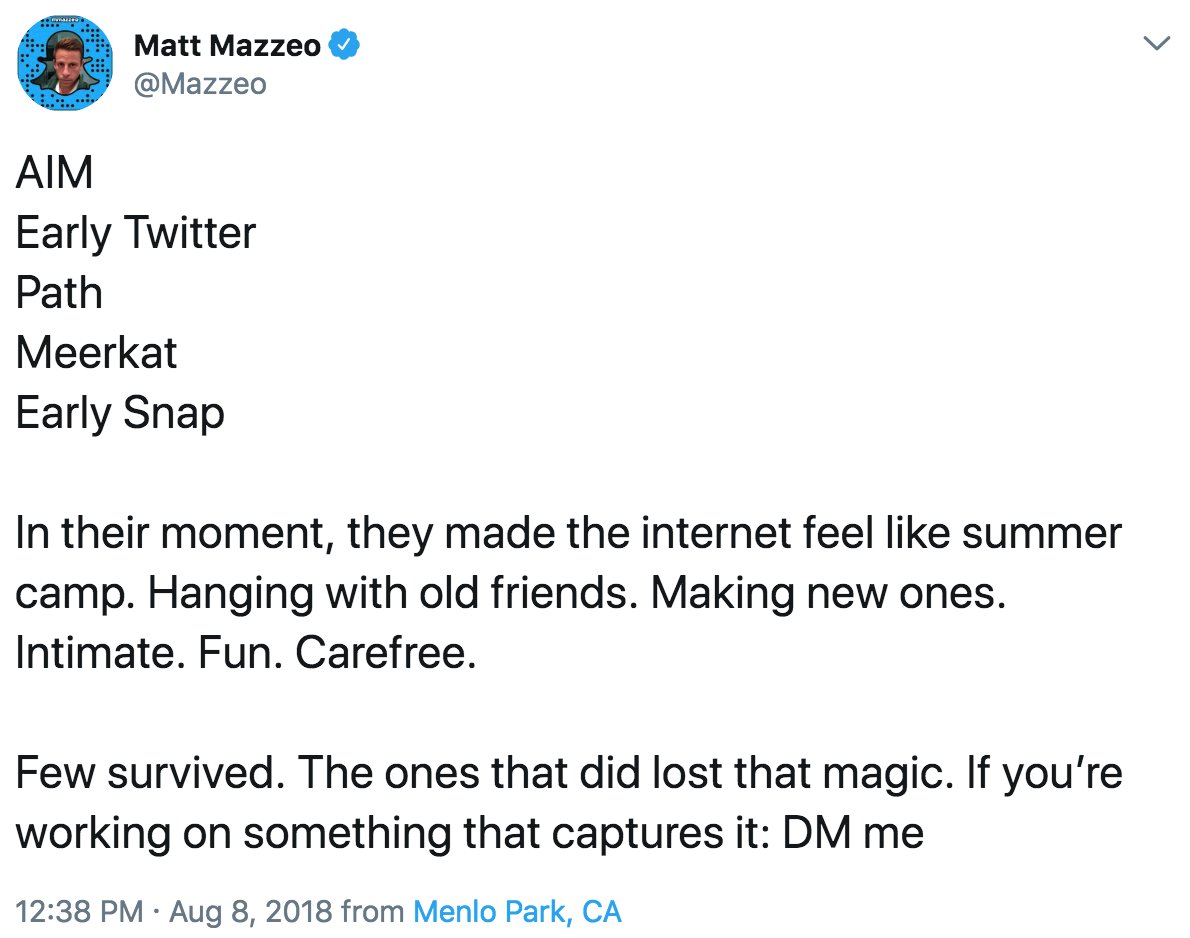
📱 Over the past 2-3 years, I screenshotted a ton of random tweets about social/product that made me think
Here they are, in chronological order, w highlights from @nikitabier, @BrianNorgard, @rsg, @Mazzeo, @prestonattebery, + many more
(sry for weird twtr cropping + threading)
literally have a folder of dozens of my fav screenshotted tweets on consumer social product stuff...and @nikitabier is well represented
— Adam O'Kane \U0001f4ad (@adamokane) February 13, 2021
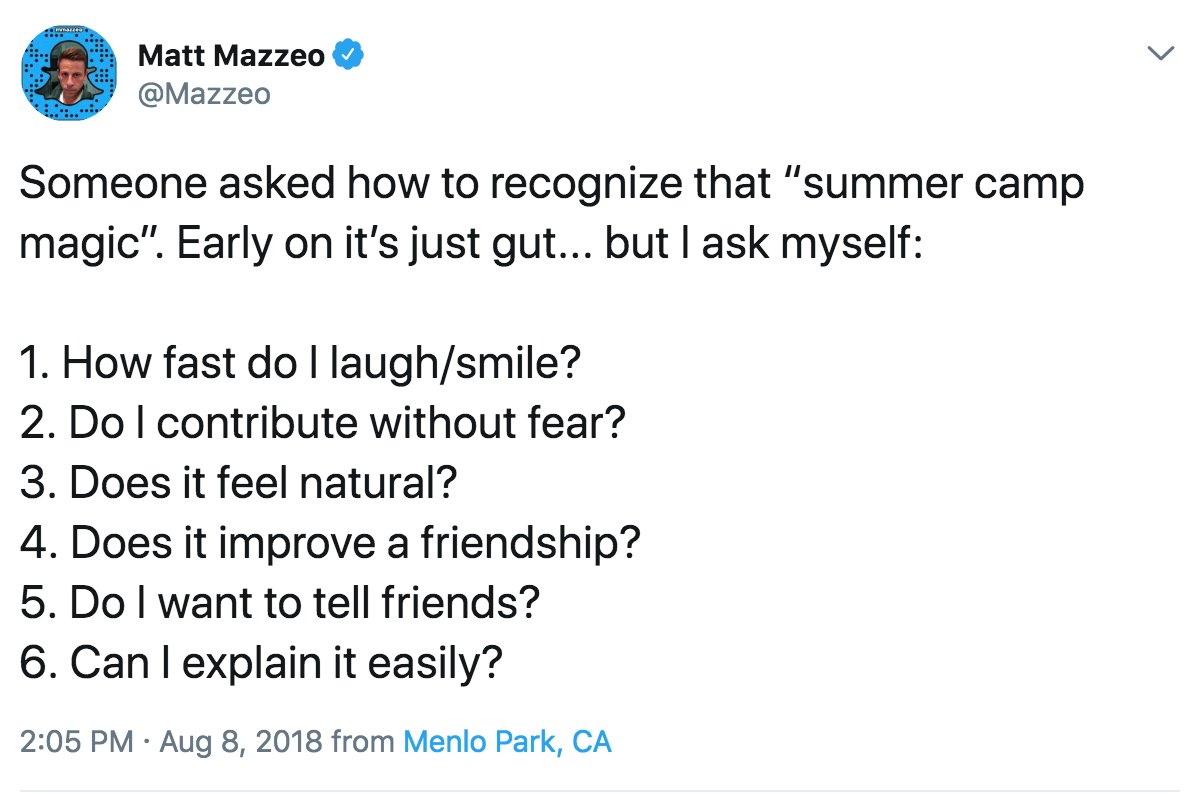
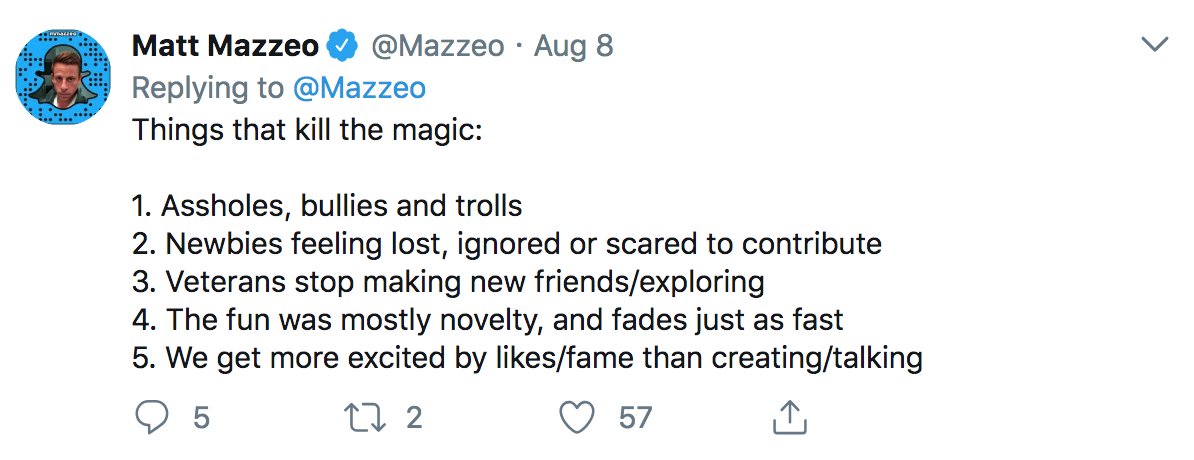



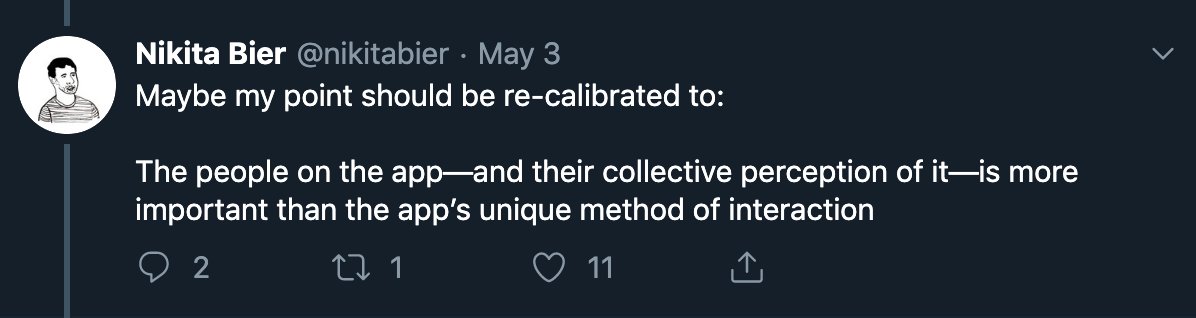


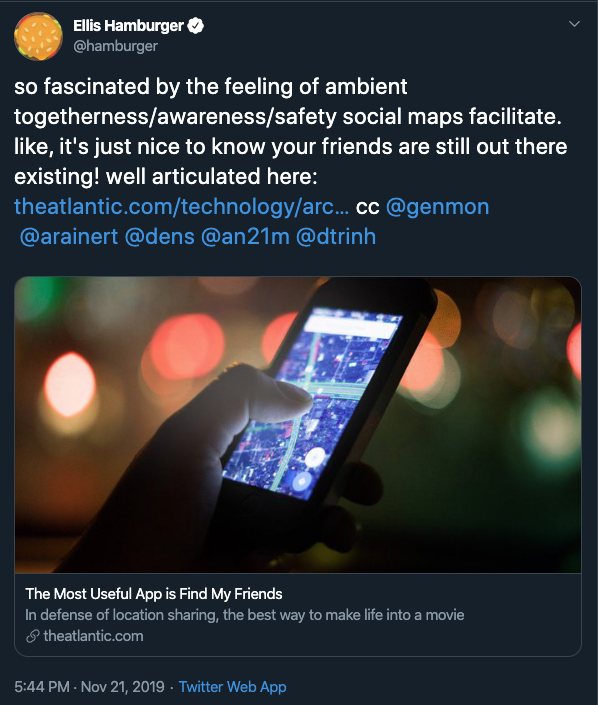


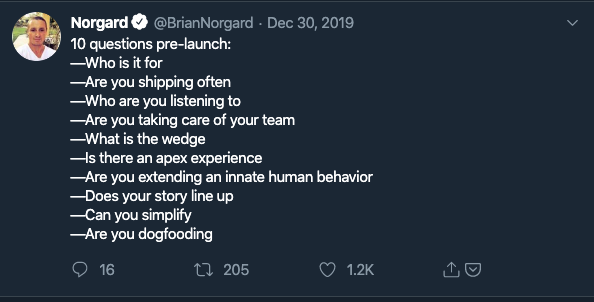


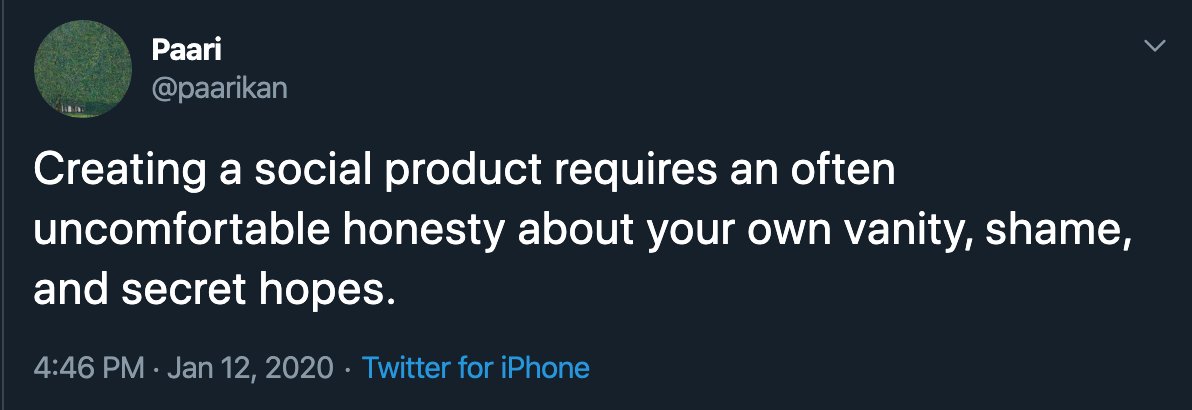


Takeaways from this: I should pay @nikitabier and the rest of you for your tweets. Can't believe this website is free!
More from Twitter

1/ Meta thread about "Going Pro" on Twitter.
I've been a Twitter power user since 2008 or so. Long time.
I've watched it change from an impromptu conversation or watch party platform to a place for people to build their professional reputations and network.
2/ In many ways it's matured into a more effective professional platform than LinkedIn.
LinkedIn is (mostly) about collecting the professional contacts you've met.
Twitter is a place to meet new people.
That much hasn't
3/ What also hasn't changed is its power for networking.
This is particularly useful if you break out of your echo chamber and talk, build relationships with people doing tangentially related things.
You're bricklaying and with patience it pays off.
4/ What has changed is a growing population of people being *intentional* about the use of Twitter for their professional lives.
Observations on what's working for them:
5/ They "Build in public" - sharing behind the scenes perspectives on whatever it is you're doing professionally.
What do people not know about what you do?
Stick within your expertise, with focus, where people see you are an authority - that’s where you grow a following.
I've been a Twitter power user since 2008 or so. Long time.
I've watched it change from an impromptu conversation or watch party platform to a place for people to build their professional reputations and network.
2/ In many ways it's matured into a more effective professional platform than LinkedIn.
LinkedIn is (mostly) about collecting the professional contacts you've met.
Twitter is a place to meet new people.
That much hasn't
Facebook is where you learn you don't like a lot of the people you know. Twitter is where you learn to like people you don't know already.
— Amanda Orson (@amandaorson) August 2, 2012
3/ What also hasn't changed is its power for networking.
This is particularly useful if you break out of your echo chamber and talk, build relationships with people doing tangentially related things.
You're bricklaying and with patience it pays off.
Back of the napkin math - over the last year I've referred (or retained) $500k+ worth of business to contacts in my network.
— Amanda Orson (@amandaorson) November 16, 2016
4/ What has changed is a growing population of people being *intentional* about the use of Twitter for their professional lives.
Observations on what's working for them:
5/ They "Build in public" - sharing behind the scenes perspectives on whatever it is you're doing professionally.
What do people not know about what you do?
Stick within your expertise, with focus, where people see you are an authority - that’s where you grow a following.


Today's Twitter threads (a Twitter thread).
Inside: Dependency Confusion; Adam Curtis on criti-hype; Catalytic converter theft; Apple puts North Dakota on blast; and more!
Archived at: https://t.co/Osts9lAjPo
#Pluralistic
1/

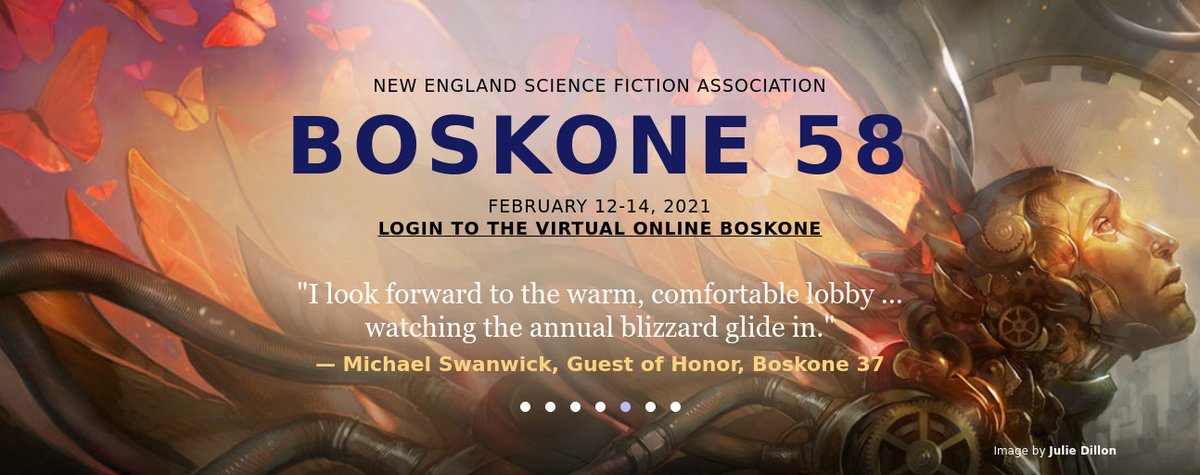
This weekend, I'll be participating in Boskone 58, Boston's annual sf convention, where I'm doing panels and a reading.
https://t.co/2LfFssVcZQ
2/
Dependency Confusion: A completely wild supply-chain hack.
https://t.co/TDRNHUX0Ug
3/

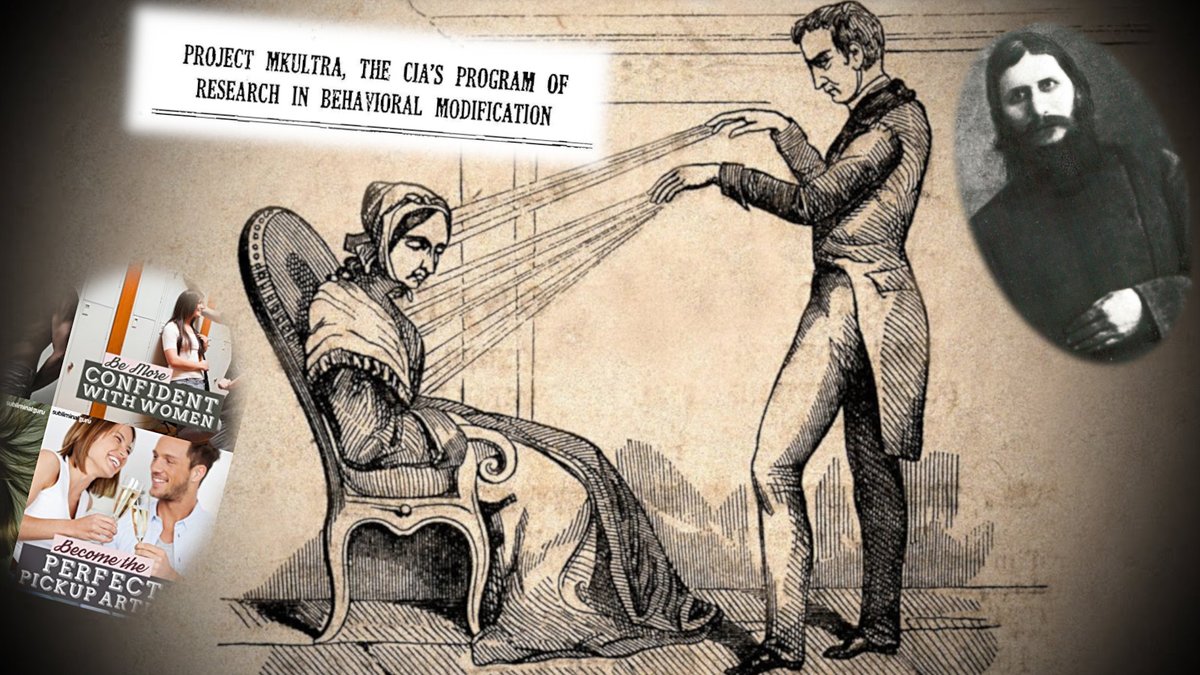
Adam Curtis on criti-hype: Big Tech as an epiphenomenon of sociopathic mediocrity, not supergenius.
https://t.co/MYmHOosTk3
4/
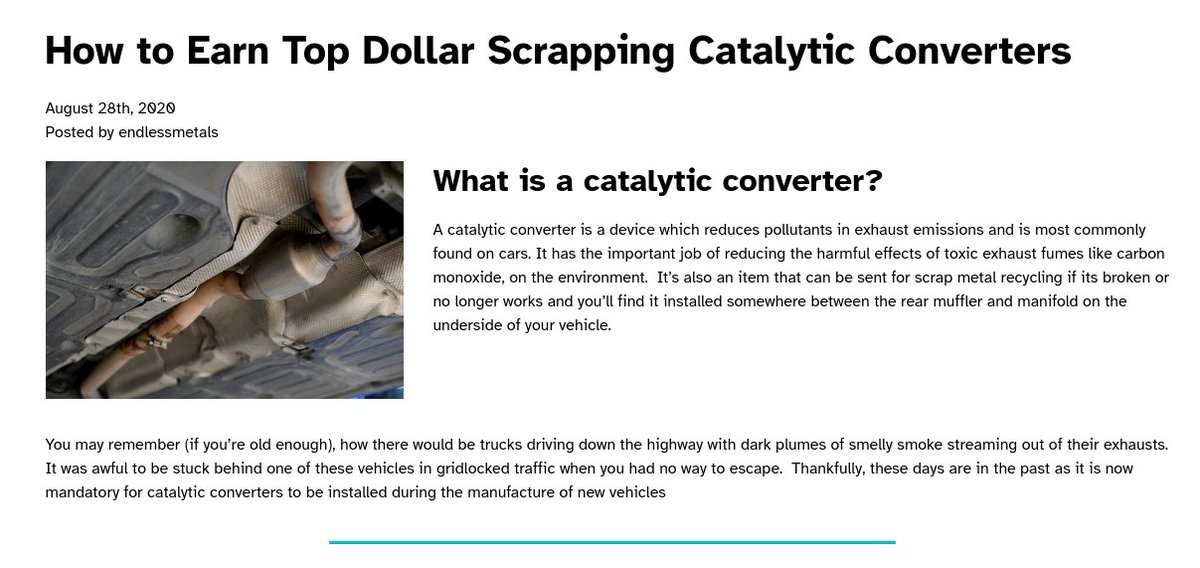
Catalytic converter theft: Rhodium at $21,900/oz.
https://t.co/SDMAXrQwdd
5/
Inside: Dependency Confusion; Adam Curtis on criti-hype; Catalytic converter theft; Apple puts North Dakota on blast; and more!
Archived at: https://t.co/Osts9lAjPo
#Pluralistic
1/
This weekend, I'll be participating in Boskone 58, Boston's annual sf convention, where I'm doing panels and a reading.
https://t.co/2LfFssVcZQ
2/
Dependency Confusion: A completely wild supply-chain hack.
https://t.co/TDRNHUX0Ug
3/
In "Dependency Confusion," security researcher @alxbrsn describes how he made a fortune in bug bounties by exploiting a new supply-chain attack he calls "dependency confusion," which allowed him to compromise "Apple, Microsoft and dozens of others."https://t.co/hn32EmF5qT
— Cory Doctorow #BLM (@doctorow) February 10, 2021
1/ pic.twitter.com/eqFr3GXlyX
Adam Curtis on criti-hype: Big Tech as an epiphenomenon of sociopathic mediocrity, not supergenius.
https://t.co/MYmHOosTk3
4/
Adam Curtis is a brilliant documentarian, and films like Hypernormalization and series like All Watched Over by Machines of Loving Grace had a profound effect on my thinking about politics, technology and human thriving.
— Cory Doctorow #BLM (@doctorow) February 11, 2021
1/ pic.twitter.com/gydJK358BX
Catalytic converter theft: Rhodium at $21,900/oz.
https://t.co/SDMAXrQwdd
5/
Back in the early 2010s, people started falling into open sewer entrances in New York City and other large metros - because a China-driven spike in the price of scrap metal, combined with post-2008 unemployment, gave rise to an army of metal-thieves.https://t.co/gtD72IDCPn
— Cory Doctorow #BLM (@doctorow) February 11, 2021
1/ pic.twitter.com/gdgVJoMoY8

This is from the official Under Secretary of Defense for Intelligence DOD account on Twitter. Ezra Cohen-Watnick - after being appointed by Trump to chair an influential declassification board - "likes" a tweet that implies he is "Q."
119/7 = 17 & Q = 17
https://t.co/LQShObYZqn

I can’t find the like , or it appears to have been “unliked” but here’s a video of someone who claims it was there just a few hours ago
This comes from the JFK grandchildren video singing “Timber”
@ 0:50 👀
https://t.co/AmjDZ74kCl

Check the domino. Posted to 4ch it has zero returns on tineye

Now check the domino
Posted to 4ch it has zero returns on tineye

119/7 = 17 & Q = 17
https://t.co/LQShObYZqn
119 \u27977 is now the Chairman of the Public Interest Declassification Board. This new information could be of importance to many. I wonder what that could mean for those who have taken actions to obscure potentially damaging information from the public view?
— 337Tomahawk (@absitminded) December 23, 2020
I can’t find the like , or it appears to have been “unliked” but here’s a video of someone who claims it was there just a few hours ago
— Dr. A. non Questry (@DQuestry) December 27, 2020
This comes from the JFK grandchildren video singing “Timber”
@ 0:50 👀
https://t.co/AmjDZ74kCl
Check the domino. Posted to 4ch it has zero returns on tineye
Now check the domino
Posted to 4ch it has zero returns on tineye


